Read Thai Script in Thailand: License Plates & Provinces
Read Thai script at every red light in Thailand: how a Thai license plate is built, the Thai letters on it and the province names, with pronunciation for each.
The cheapest place to read Thai script in Thailand is the back of the car in front of you. Every vehicle on the road carries a couple of Thai letters, a number, and — the part worth learning — the name of a province spelled out in full Thai script. Traffic gives you as long as you need, the letters are enormous, and nobody is waiting for you to finish. This beginner Thai lesson takes a Thai license plate apart piece by piece, teaches the province names you will actually see, and turns every red light into reading practice.
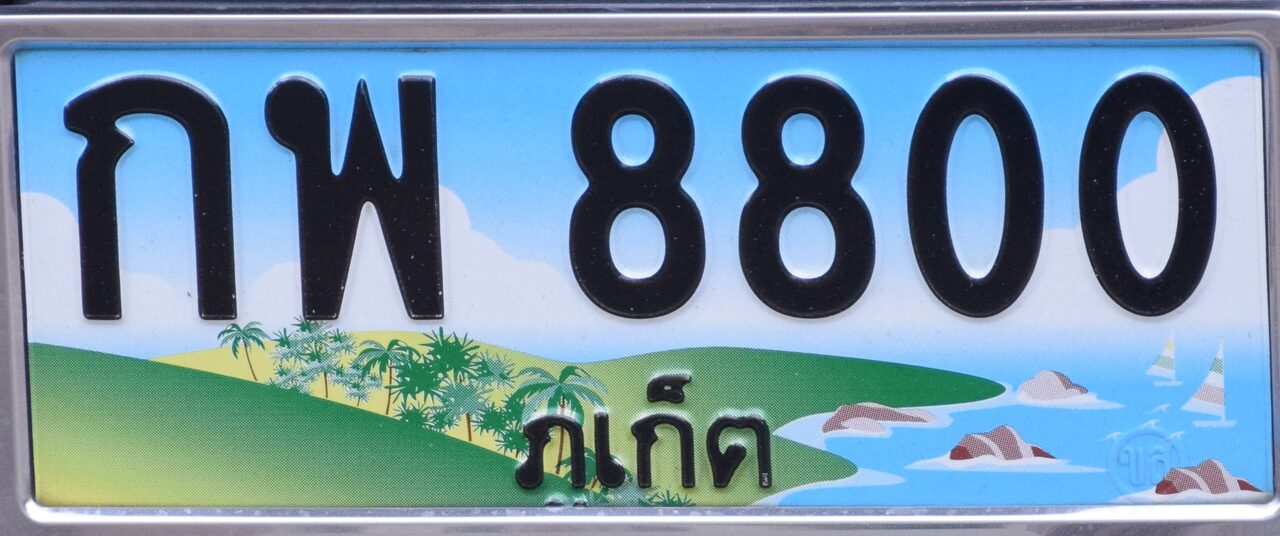
Most learners meet Thai letters on a chart and never see them again until a menu ambushes them. Plates fix that: standardised, repetitive, printed huge, and everywhere. You do not need to speak a word of the language to read Thai script off one, which makes it the lowest-pressure Thai pronunciation practice available anywhere in Thailand.
What is actually printed on a Thai license plate
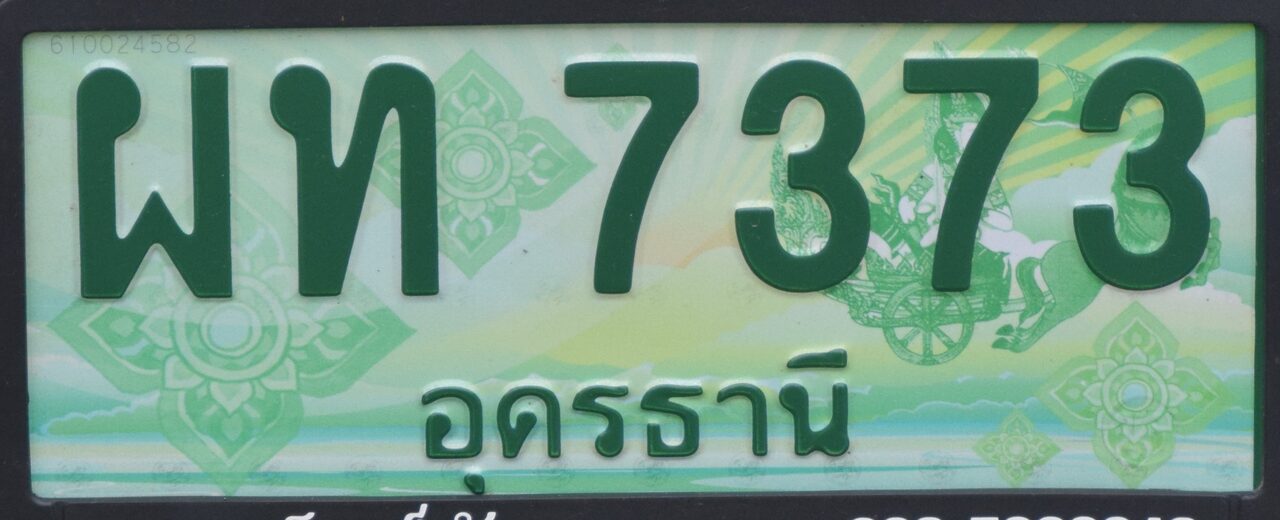
A current private-car plate has exactly three parts, and once you can name them the whole thing stops looking like decoration:
- One or two Thai consonants on the top line, sometimes with a digit in front of them. This is a series marker — a counter, nothing more.
- A number from 1 to 9999, in ordinary Western digits.
- A province name in Thai script along the bottom. This is the line worth your attention.
The single most common misunderstanding is that the letters stand for something — the owner's name, the car type, the district. They do not. Registrations simply run through letter pairs in order, and when a province exhausts its combinations the authorities add a digit in front, which is why you will see plates like 1กบ alongside plain two-letter ones. Bangkok ran out of pairs and switched to numbered prefixes years ago, so a leading digit is an unremarkable sight, not a special plate.
The Thai letters on the top line
Here is the quiet advantage for anyone starting to learn Thai alphabet shapes: the top line carries consonants only. No vowels, no tone marks, nothing to assemble. You are not reading a syllable, you are recognising a shape, which is exactly the skill a chart drills and a street rarely tests. A handful of Thai letters do most of the work:
| Letter | Name | Sound |
|---|---|---|
| ก | ko kai | g / k |
| ข | kho khai | kh |
| บ | bo baimai | b |
| จ | cho chan | j |
| ท | tho thahan | th |
| ธ | tho thong | th |
| ผ | pho phueng | ph |
| พ | pho phan | ph |
| ษ | so ruesi | s |
Notice ท and ธ sitting next to each other, and ผ next to พ. Thai has several letters per sound because the script kept distinct Sanskrit and Pali spellings alive, and telling those near-twins apart at a glance is the single most useful drill in the language. A plate at a red light is a better test of it than any worksheet.
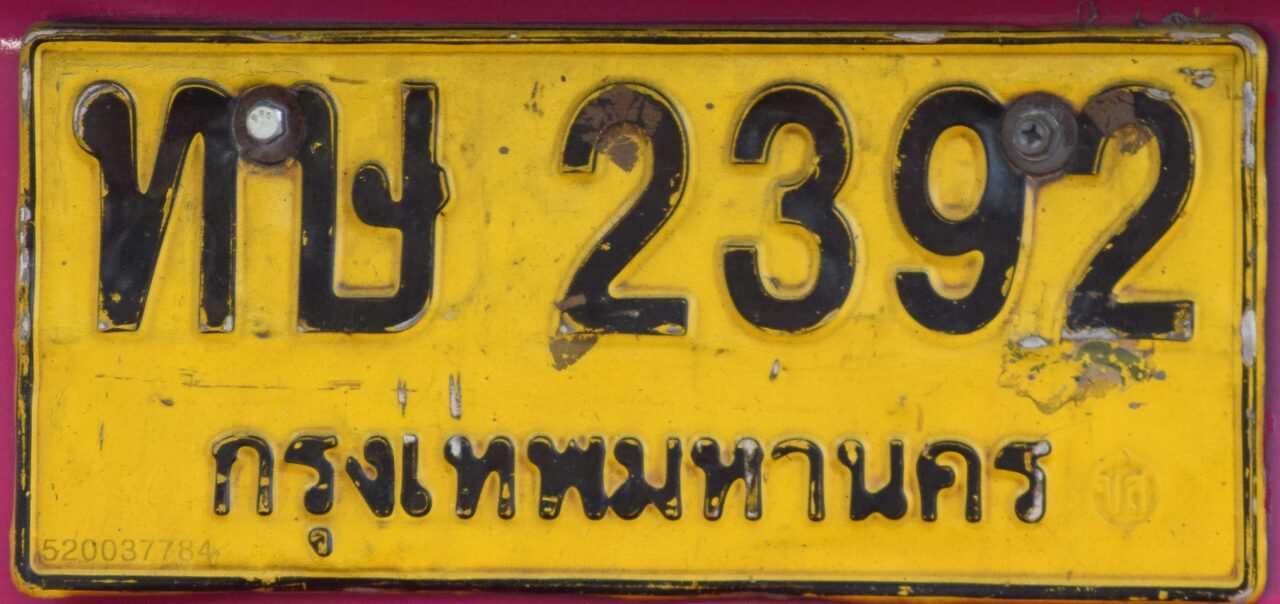
Read Thai script on the province line
This is where a plate earns its keep. The province name is real running Thai — consonants, vowels, the lot — printed at billboard size with a built-in answer key, because you already know roughly where you are. Start with the eight below and you will read Thai script on a large share of the traffic in and around Bangkok and the tourist south.
| Thai | Thai transliteration | Province |
|---|---|---|
| กรุงเทพมหานคร | krung-thêep má-hǎa-ná-khon | Bangkok |
| เชียงใหม่ | chiang-mài | Chiang Mai |
| ชลบุรี | chon-bù-rii | Chonburi |
| ภูเก็ต | phuu-gèt | Phuket |
| นนทบุรี | non-thá-bù-rii | Nonthaburi |
| ขอนแก่น | khǒn-gàen | Khon Kaen |
| สงขลา | sǒng-khlǎa | Songkhla |
| อุดรธานี | ù-don thaa-nii | Udon Thani |
Three endings that unlock half the map
Thai province names are built from a small stock of parts, so learning the parts beats memorising seventy-seven names:
- บุรี (bù-rii) — “city”, borrowed from Sanskrit puri. ชลบุรี is literally “water city”, สุพรรณบุรี “beautiful city”.
- ธานี (thaa-nii) — “town”. อุดรธานี is the “northern town”, อุบลราชธานี the “royal town of the lotus”.
- นคร (ná-khon) — “city” again, and usually the first word rather than the last: นครราชสีมา, นครปฐม, นครสวรรค์.
Spot those three and a strange plate becomes half-readable before you have sounded out a single vowel. The same trick works on road signs, which is why the province line is such good preparation for the rest of the country — more on that in our guide to reading Thai place names.
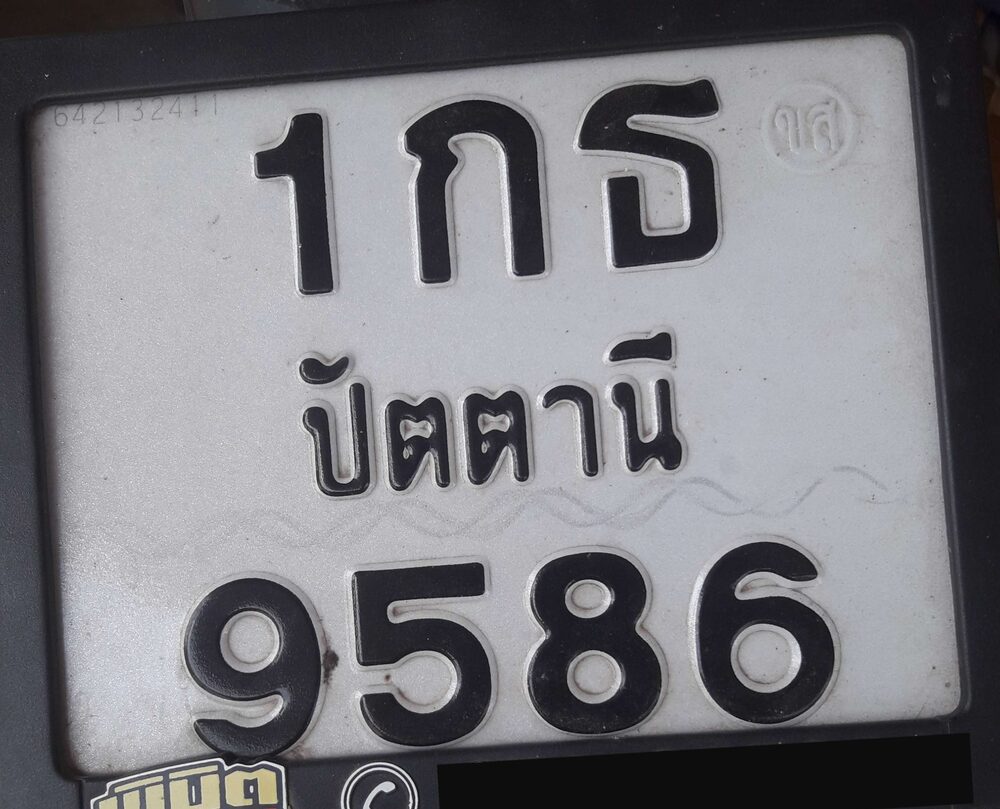
Motorcycle plates read top to bottom
Cars get a wide plate and two lines; motorbikes get a near-square one and three, reading downwards: series, province, number. Thailand has far more motorbikes than cars, so this is the layout you will meet most often, and it is the friendlier one to read Thai script on — the province sits alone in the middle of the plate with nothing crowding it.
What the colour is telling you
Plate colour is a category code, and three of them cover almost everything you will see:
- Black characters on white — an ordinary private car.
- Yellow plate, black characters — licensed to carry paying passengers. Taxis, tuk-tuks and songthaews. Worth knowing before you get in one.
- Green characters on white — a private pickup or goods vehicle, the workhorse of provincial Thailand.
There is also the famous ป้ายแดง (bpâai daeng), literally “red sign”: the temporary red plate on a brand-new vehicle that has not been permanently registered yet. If a Thai friend mentions their car is still ป้ายแดง, they are telling you it is new — a small piece of Thailand expat language that comes up more often than you would expect.
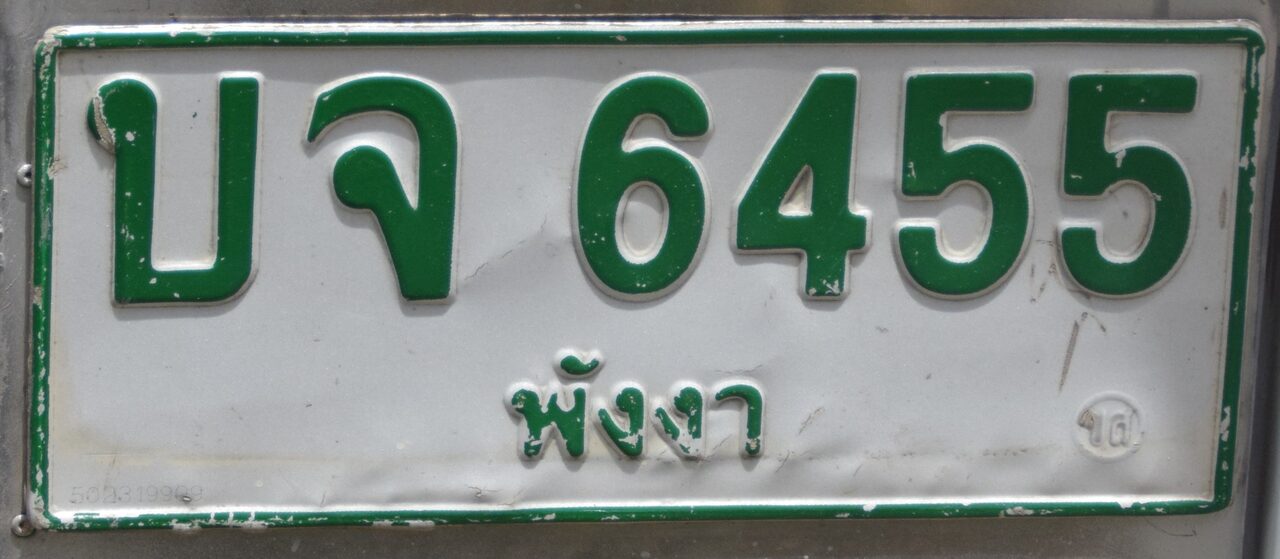
Turning a traffic jam into a beginner Thai lesson
Here is the method, and it needs no materials. Pick the plate in front of you and work through it in a fixed order: name the two consonants out loud, read the number, then take the province line letter by letter and try to say it before you recognise it. The guessing is the part that teaches. Check yourself against the English name you already know — the romanised form of a province is an answer key you carry in your head, and a painless introduction to how Thai transliteration works, and to why it so rarely matches the sound.
Two things will slow you down at first. Thai runs words together with no spaces, so a long province name looks like one unbroken wall until you learn to cut it at the syllable joins. And Thai vowels can sit before, above, below or after the consonant they are pronounced with, so the reading order is not always left to right. Neither problem goes away by staring at a chart; both dissolve with volume, and plates are volume. If the Thai consonants and vowels are still unfamiliar, our Thai alphabet reference lays out all 44 consonants with their names, and the free flashcard trainer drills the shapes until they arrive without effort.
A study tip that actually sticks
Give yourself one plate a day, not twenty. Photograph it, and that evening write the province name out by hand, letter by letter, saying each one as you form it. Handwriting is what moves a Thai letter from “I have seen that” to “I know that”. Within a month you will have a notebook of real Thai words, each attached to a specific road on a specific day — a far stickier memory than a list ever makes.
License plates will not teach you to hold a conversation. What they will do is break the spell that Thai script casts on new arrivals — the sense that it is an unbroken decorative ribbon rather than letters doing ordinary work. Once you can read Thai script on the car in front of you, menus, shop fronts and station signs stop looking like a different category of problem. Next, take the longest plate line of all apart in our breakdown of Bangkok's full ceremonial name, or learn the other numbering system Thailand prints everywhere in our guide to Thai numerals on prices and dates.