Bangkok's Real Name in Thai: The Longest Place Name
Learn to read Thai script by decoding Bangkok's real name, the longest place name on earth, with Thai script, transliteration, literal meaning and a study plan.
The first thing most visitors ever read Thai script for is not a word at all — it is an abbreviation. On the motorway in from the airport, the blue gantry sign says กรุงเทพฯ. Two short syllables, one small squiggle on the end, and hiding behind that squiggle is the longest place name in the world. If you are learning to read Thai script in the wild rather than in a workbook, that one sign is a better first lesson than most textbook pages: it contains an abbreviation mark, a compound word, and two centuries of history, all readable in about two seconds.
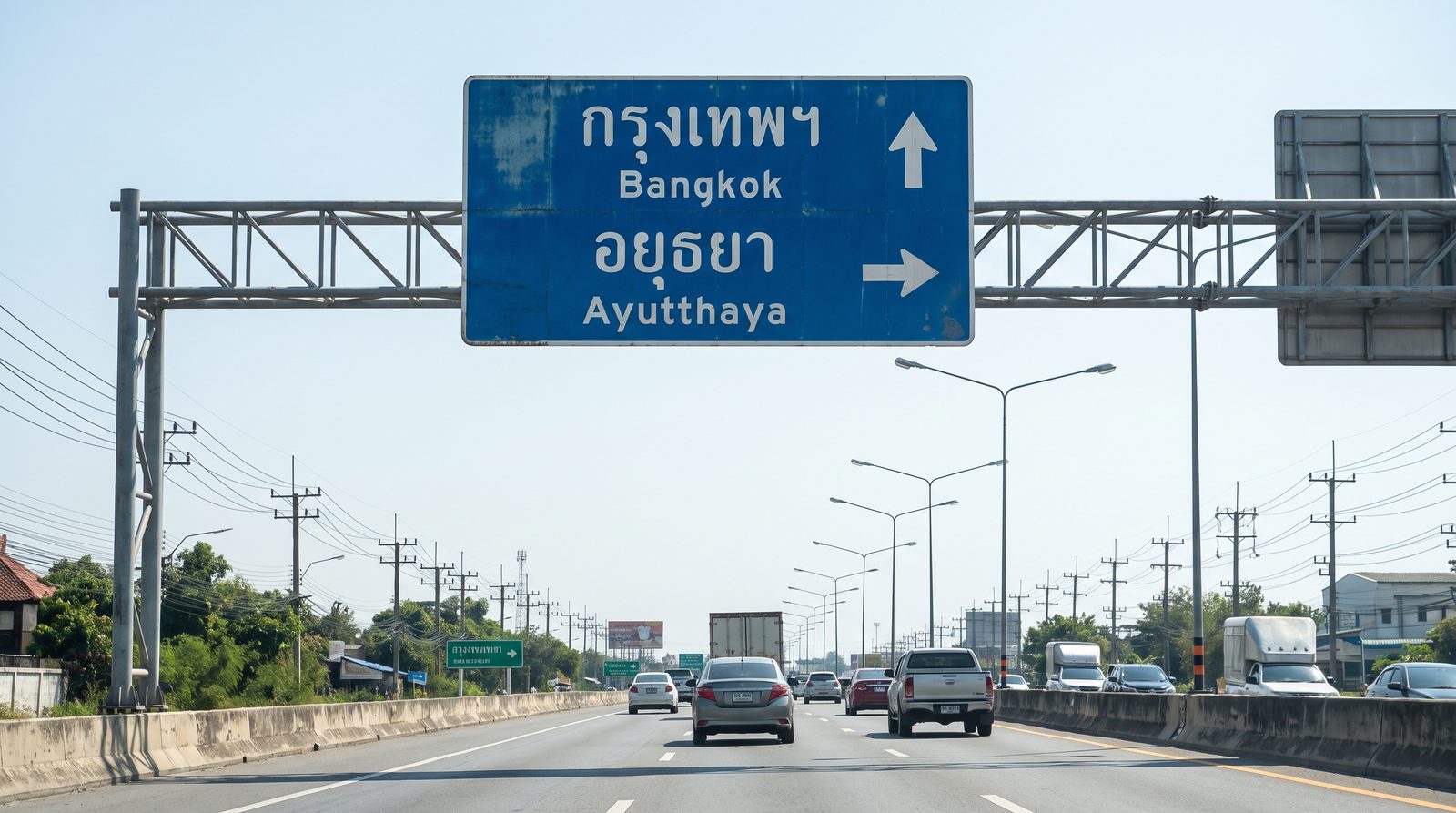
What the sign on the motorway actually says
Take กรุงเทพฯ apart and it is two ordinary words plus a punctuation mark:
- กรุง (krung, mid tone) — a capital city, the seat of a king
- เทพ (thep, falling tone) — a god, an angel, a celestial being
- ฯ (paiyan noi) — the “small et cetera”, an abbreviation mark
So the everyday name of the capital is literally City of Angels, and Thai people say it exactly like that: krung thep. The longer official short form you will see on government paperwork is กรุงเทพมหานคร (Krung Thep Maha Nakhon) — มหา (maha) “great” and นคร (nakhon) “city”, both borrowed from Sanskrit.
The word Bangkok does exist in Thai — บางกอก (baang gok) — but almost nobody uses it for the modern city. It was the name of the riverside settlement that stood there before 1782, and one common explanation reads it as บาง (baang, a village on a waterway) plus a local tree name. Foreign traders kept the old name; Thais moved on to the new one. That mismatch is why your map app and your taxi driver disagree.
The full ceremonial name, one readable chunk at a time
Here is the name the ฯ is standing in for. Do not try to swallow it whole. Thai place names of this kind are built out of stacked Pali and Sanskrit compounds, so the way to learn it — and the way to learn any long Thai word — is chunk by chunk.
| Thai | Transliteration | Roughly means |
|---|---|---|
| กรุงเทพมหานคร | Krung Thep Maha Nakhon | great city of angels |
| อมรรัตนโกสินทร์ | Amon Rattanakosin | immortal city of the emerald jewel |
| มหินทรายุธยา | Mahinthara Ayutthaya | great and unconquerable city of Indra |
| มหาดิลกภพ | Maha Dilok Phop | grand capital of the world |
| นพรัตนราชธานีบูรีรมย์ | Noppharat Ratchathani Burirom | royal capital of the nine gems, a delightful city |
| อุดมราชนิเวศน์มหาสถาน | Udom Ratchaniwet Mahasathan | abounding in great royal palaces |
| อมรพิมานอวตารสถิต | Amon Phiman Awatan Sathit | a heavenly home for a god who has come to earth |
| สักกะทัตติยวิษณุกรรมประสิทธิ์ | Sakkathattiya Witsanukam Prasit | given by Indra, built by Vishvakarman |
Strung together that is usually counted at 168 Thai letters, and Guinness World Records lists it as the longest place name on earth. Read the right-hand column downwards and you get a single sentence of royal propaganda from 1782: this is a divine city, containing a divine king, built by the gods themselves. The name was composed when Rama I moved the capital across the river, and it deliberately echoes อยุธยา (Ayutthaya), the older capital sacked in 1767 — which is the other name on that motorway sign.
Why these Thai letters look so intimidating
Notice how many rare characters appear in the table: ษ, ณ, ธ, ท with a little mark on top. These are the Thai letters that beginners meet late, and there is a reason. They exist mainly to spell Pali and Sanskrit loanwords faithfully, preserving distinctions that Sanskrit made and Thai does not. That is a large part of the answer to why Thai has 44 consonants for a sound system that needs about 21.
The practical consequence for a beginner Thai lesson is liberating rather than frightening: several different Thai consonants and vowels make the same noise in your mouth. ษ, ศ and ส are all just s. Once you know that, ceremonial spellings stop looking like a new alphabet and start looking like ordinary words in fancy dress.
Three Thai pronunciation rules this one name teaches
1. The killer mark silences a letter
The small circle-and-tail above a consonant — ์, called การันต์ (karan) — means “do not pronounce this letter”. In โกสินทร์ the final ร์ is silent, so the word is Kosin, not Kosinthon. Spot that mark and you can safely stop reading a word early, which is exactly what you need when a shop sign flashes past a taxi window.
2. Double รร is a vowel in disguise
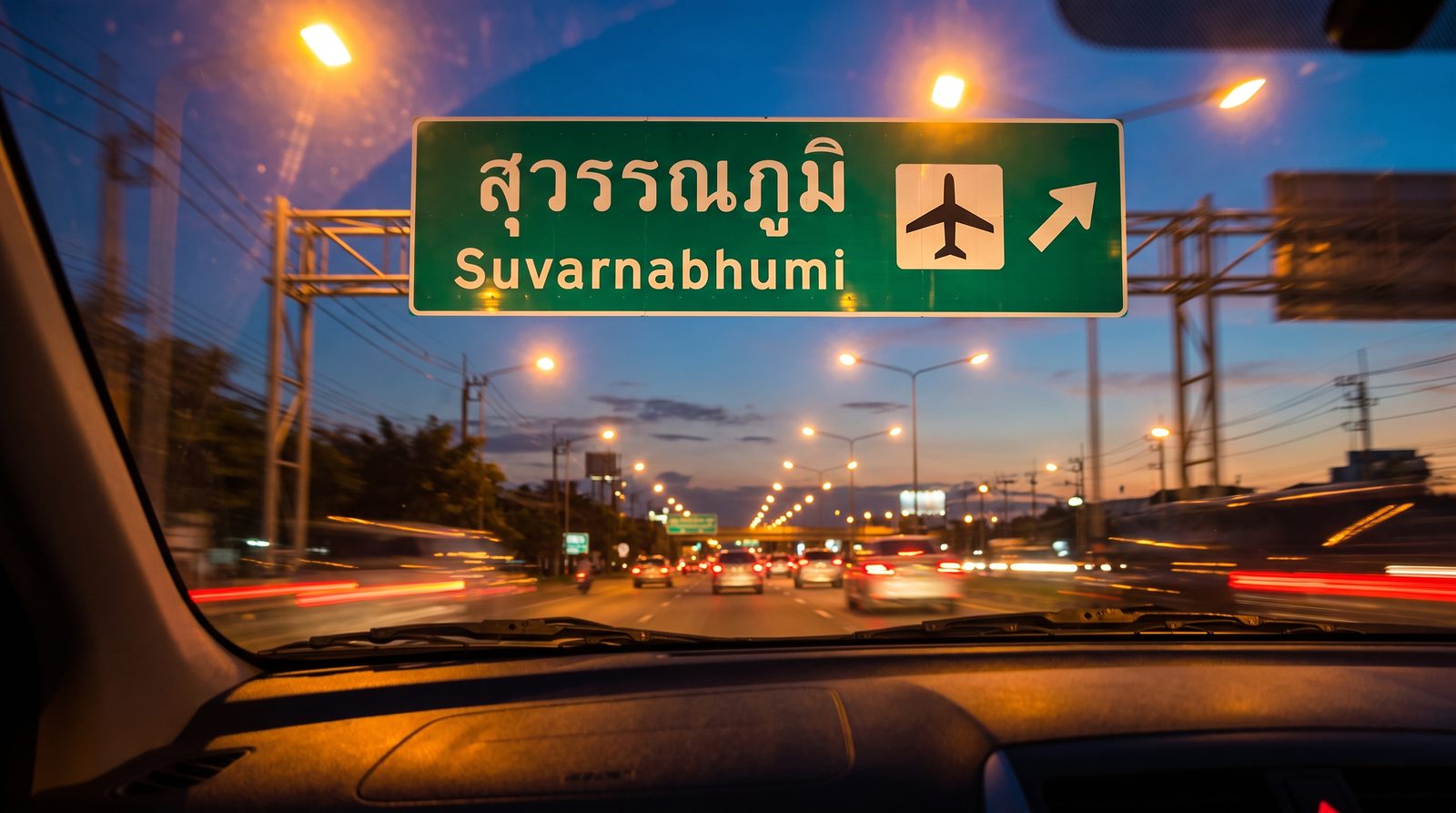
Two ร together, called รหัน (ro han), is not a rolled rr. It usually produces an -an sound. That is why สุวรรณ is su-wan and อมรรัตน begins amon-rat. This pattern turns up constantly in formal Thai vocabulary.
3. Some vowels are not written at all
This is the single biggest obstacle for anyone learning to read Thai script, and this name is full of it. นคร has three consonants and no vowel symbol, yet it is read na-khon: Thai supplies an unwritten short a between consonants that would otherwise be unpronounceable. Your eyes have to insert vowels the page does not show you. Drilling the consonant shapes until they are automatic is what makes that possible — the free ThaiLetters flashcard trainer and the full Thai alphabet chart exist for exactly this stage.
How to use the name without sounding strange
Nobody says the full version in conversation. Ever. In speech, and in almost all writing, the city is กรุงเทพฯ (krung thep). Two useful sentences, with the politeness particle attached:
- ผมมาจากกรุงเทพฯ ครับ (phom maa jaak krung thep khrap) — “I come from Bangkok.” Male speaker.
- ดิฉันมาจากกรุงเทพฯ ค่ะ (dichan maa jaak krung thep kha) — the same, female speaker.
Leaving off ครับ (khrap) or ค่ะ (kha) is not rude exactly, but it lands the way a bare “yeah” does in English — fine with friends, cold with strangers. For Thailand expat language habits, attaching the particle by default is the cheapest goodwill you will ever buy.
Reciting the full ceremonial name, on the other hand, is a party trick, and a well-received one. Most Thai adults can produce it themselves only by singing it: the 1989 pop song กรุงเทพมหานคร by the duo Asanee–Wasan sets the whole name to a tune and repeats it, and it has been the national mnemonic ever since. If you want to memorise it, learn the song, not the spelling.
One footnote for the pedantic: in February 2022 the Office of the Royal Society updated its official reference to write the capital as “Krung Thep Maha Nakhon (Bangkok)”. Headlines briefly reported that Bangkok had been renamed. It had not — the Royal Society confirmed both forms remain correct.
A study tip to finish
Use the name as a graded reading exercise rather than a memory stunt. Cover the transliteration column above and work through the eight chunks one per day, saying each one aloud and checking it against the Thai. By the end of a week you will have met the karan mark, รหัน, unwritten vowels, and a dozen of the rarer Thai letters — in context, attached to something worth knowing, which is how vocabulary actually sticks.
Then go and find the real thing. Photograph every sign you pass for a week and read the Thai line before you let yourself look at the English underneath. Road signs are the ideal place to practise: the vocabulary repeats, the transliteration is printed right there as an answer key, and you will be startled how quickly you stop sounding out กรุงเทพฯ and simply read it.