Learn Thai Vocabulary in Thailand: Thai Desserts & Sweets
Learn Thai vocabulary for desserts in Thailand: 10 Thai sweets in Thai script with pronunciation, literal meanings and the polite phrases to order them.
The fastest way to learn Thai vocabulary you will actually use the same afternoon is to stand in front of a dessert cart. Thai sweets — ขนม (kha-nǒm) — are sold in single portions for a few baht, labelled in big Thai letters, and named with a bluntness that makes them stick: “dropped gold”, “floating lotus”, “banana ordained as a nun”. This beginner Thai lesson gives you the words on the cabinet, the Thai script they are printed in, the Thai pronunciation, and the polite phrases that get you served in Thailand.
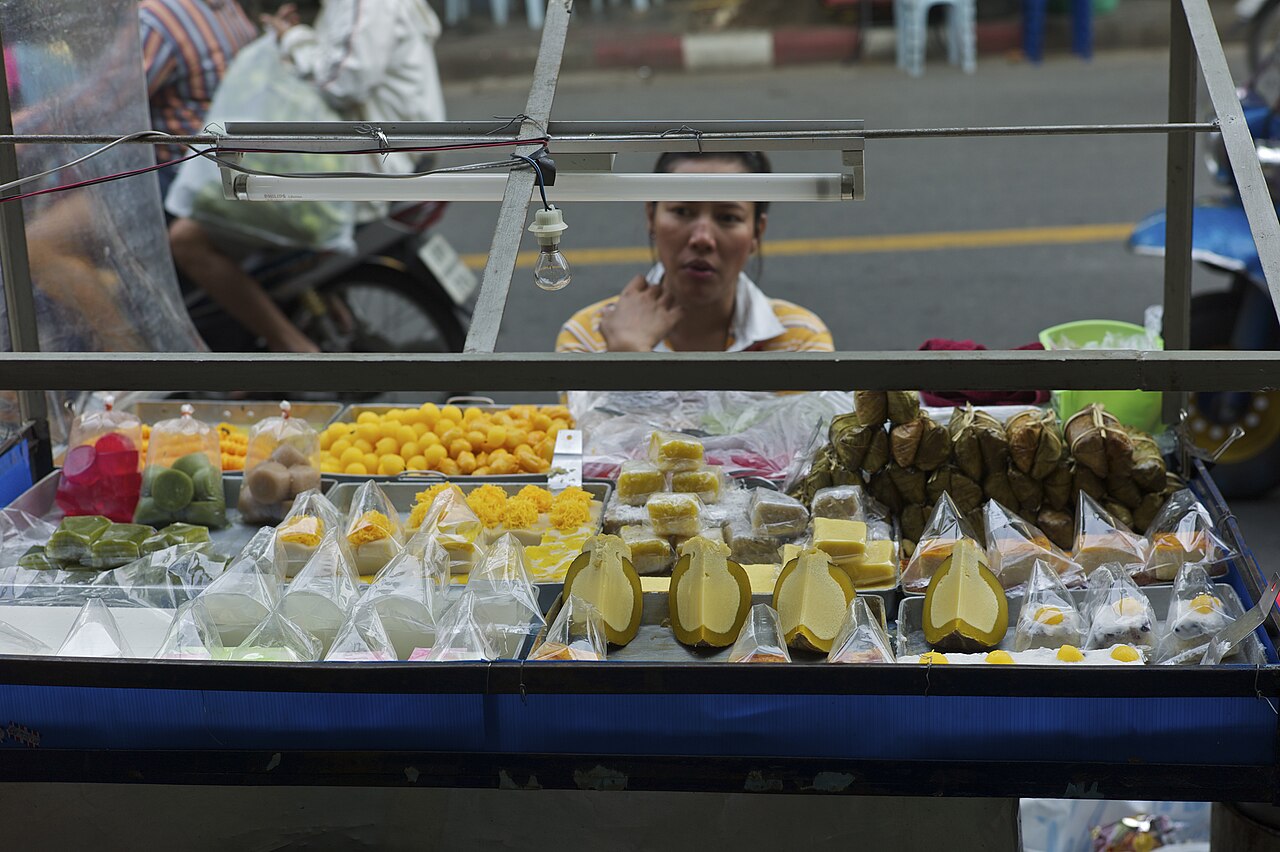
Food words have an advantage no textbook list can match: the object is in front of you, someone is willing to name it, and you know within seconds whether you got it right. Desserts are the friendliest corner of it, and the easiest place to learn Thai vocabulary without an audience — small portions, short transactions, and nobody minds if you point.
ขนม, ของหวาน and the words on the sign
Before the individual sweets, four words do most of the work on any sign in Thailand:
- ขนม (kha-nǒm) — the broadest word. A snack, a sweet, a small made thing. Confusingly it is not always sweet: ขนมจีน (kha-nǒm jiin) is a plate of fermented rice noodles with curry, no sugar anywhere.
- ขนมหวาน (kha-nǒm wǎan) — literally “sweet snack”. This is the sign above a dessert stall.
- ของหวาน (khǒng wǎan) — “the sweet thing”, the dessert course on a restaurant menu.
- กะทิ (gà-thí) — coconut milk, and the single most common ingredient word you will read on a dessert cabinet.
Learn those four and a whole category of Thai signage opens up. หวาน (wǎan, sweet) in particular turns up everywhere, including on your coffee order.
Learn Thai vocabulary: ten sweets you will meet first
These ten cover most of what sits in a typical cabinet. Read the literal column: Thai names describe exactly what happened to the ingredients, which makes them far easier to hold than an English dessert name ever is.
| Thai | Thai transliteration | Literally | What arrives |
|---|---|---|---|
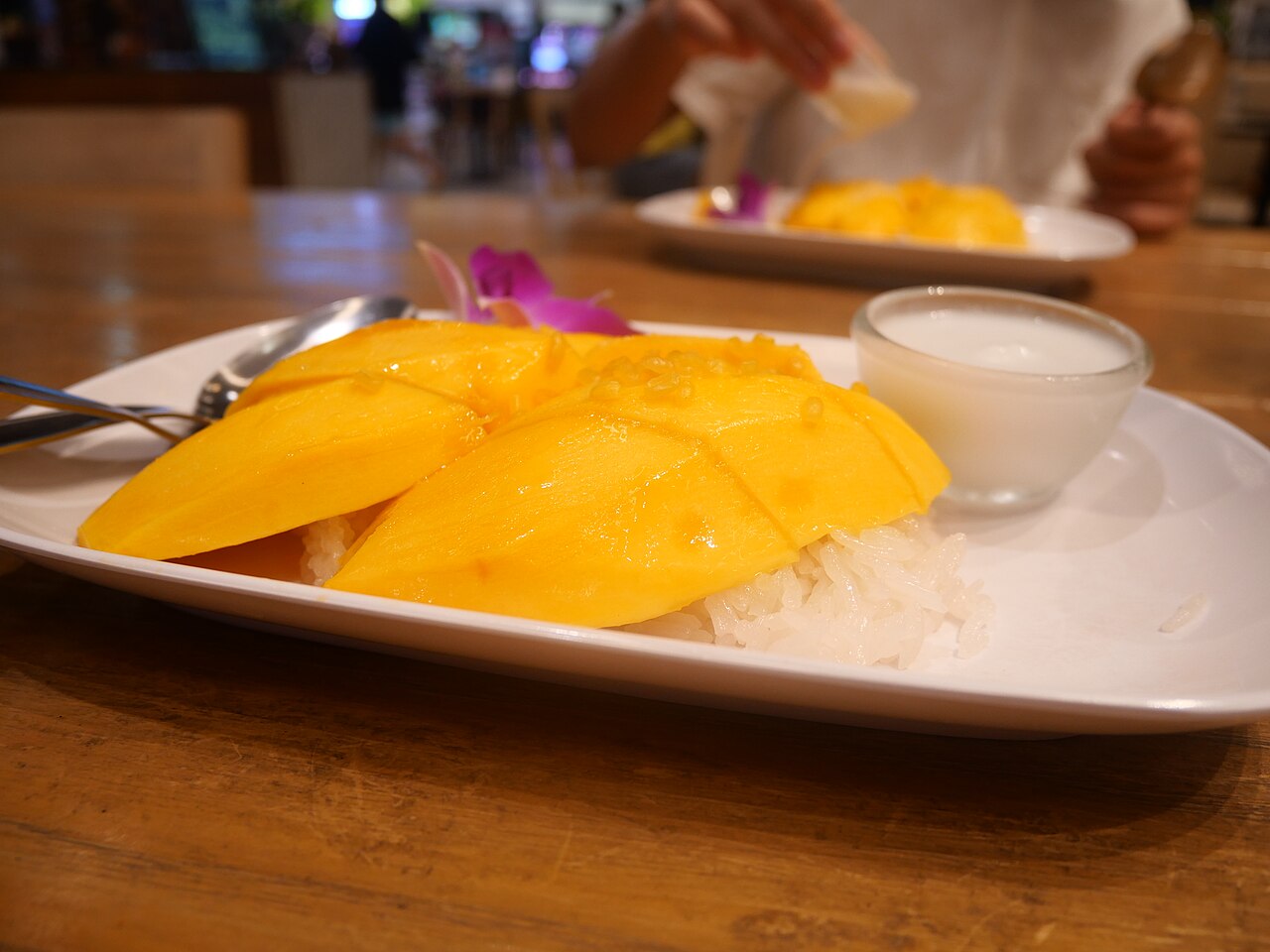
| ข้าวเหนียวมะม่วง | khâao nǐao má-mûang | sticky rice mango | Ripe mango, coconut sticky rice |
| ขนมครก | kha-nǒm khrók | mortar sweet | Coconut pancake halves |
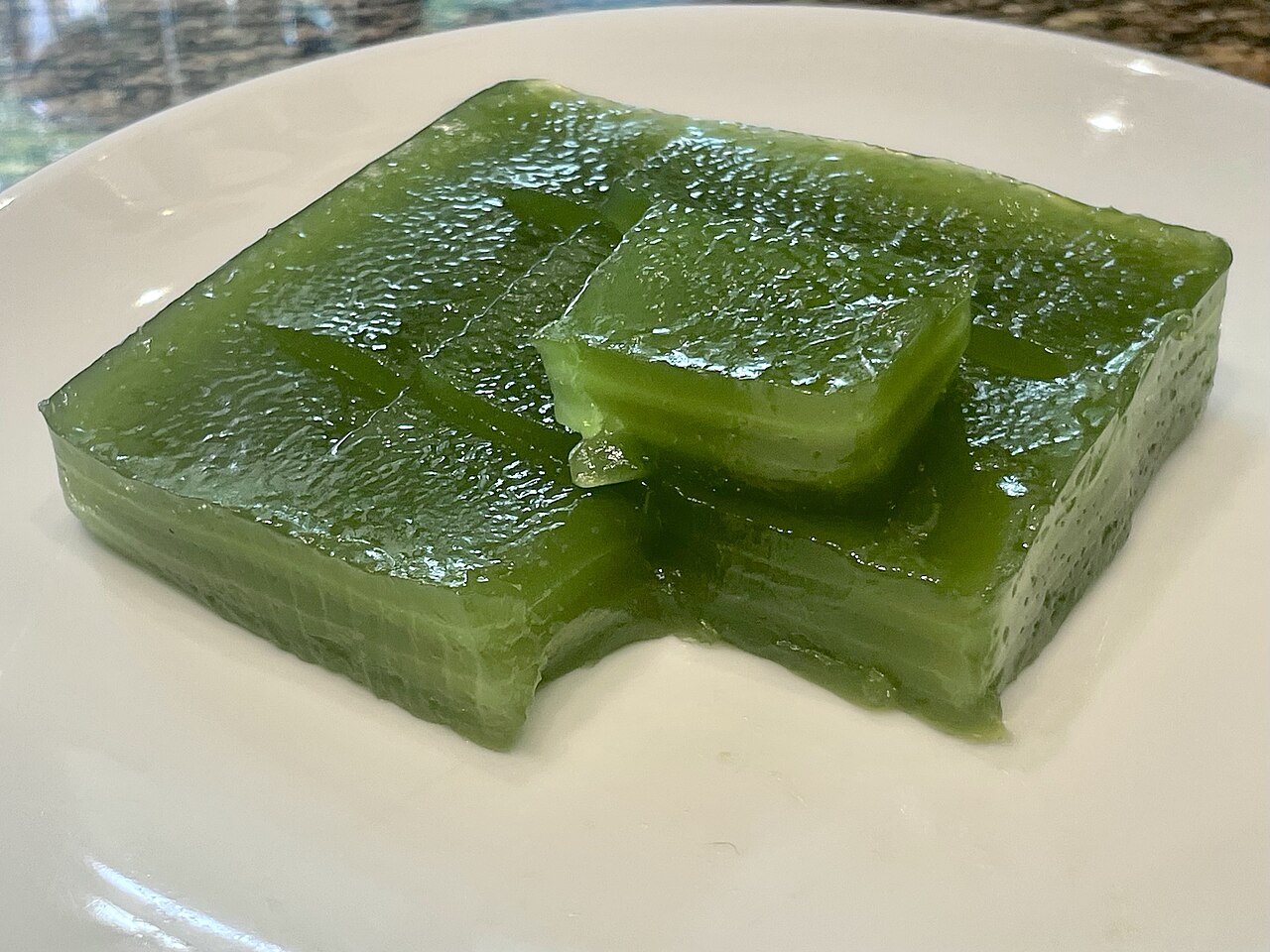
| ขนมชั้น | kha-nǒm chán | layer sweet | Steamed jelly in stacked layers |
| ลอดช่อง | lôt chông | through the slot | Green pandan noodles in coconut milk |
| บัวลอย | bua loi | floating lotus | Rice-flour balls in warm coconut milk |
| ทับทิมกรอบ | tháp-thim kròp | crisp rubies | Red water chestnut, ice, coconut milk |
| กล้วยบวชชี | glûai bùat chii | banana ordained as a nun | Banana simmered in sweet coconut milk |
| ขนมหม้อแกง | kha-nǒm môr gaeng | curry-pot sweet | Baked mung bean and coconut custard |
| สังขยา | sǎng-khà-yǎa | — | Pandan coconut custard, often on toast |
| โรตีสายไหม | roh-tii sǎai mǎi | silk-thread roti | Candy floss rolled in a thin pancake |
กล้วยบวชชี is the one people remember. บวช (bùat) is the verb for entering the monkhood and ชี (chii) is a nun, so the banana has gone white in its robe of coconut milk. Nobody finds this odd; it is simply what the dish is called.
Getting the Thai pronunciation close enough
Three habits will make you understood far more often than perfect tones will. First, ขนม is kha-NǒM, with the weight on the second syllable, not KHA-nom. Second, a final k, t or p is swallowed rather than released: khrók stops in the throat. Third, vowel length does real work — หวาน (wǎan) is long, and clipping it short gets you a blank look. Any Thai transliteration, this one included, is an approximation; the script is the exact record.
The gold sweets, and the woman who brought them
The yellow sweets glowing at the front of every cabinet are a separate family, and they are not originally Thai. They descend from Portuguese egg-yolk confections carried to the Ayutthaya court in the seventeenth century, during the reign of King Narai, and popularised by Maria Guyomar de Pinha — known in Thai as ท้าวทองกีบม้า (Tháo Thong Kîip Máa). Four centuries later they are served at Thai weddings and ordinations, because ทอง (thong) means gold.
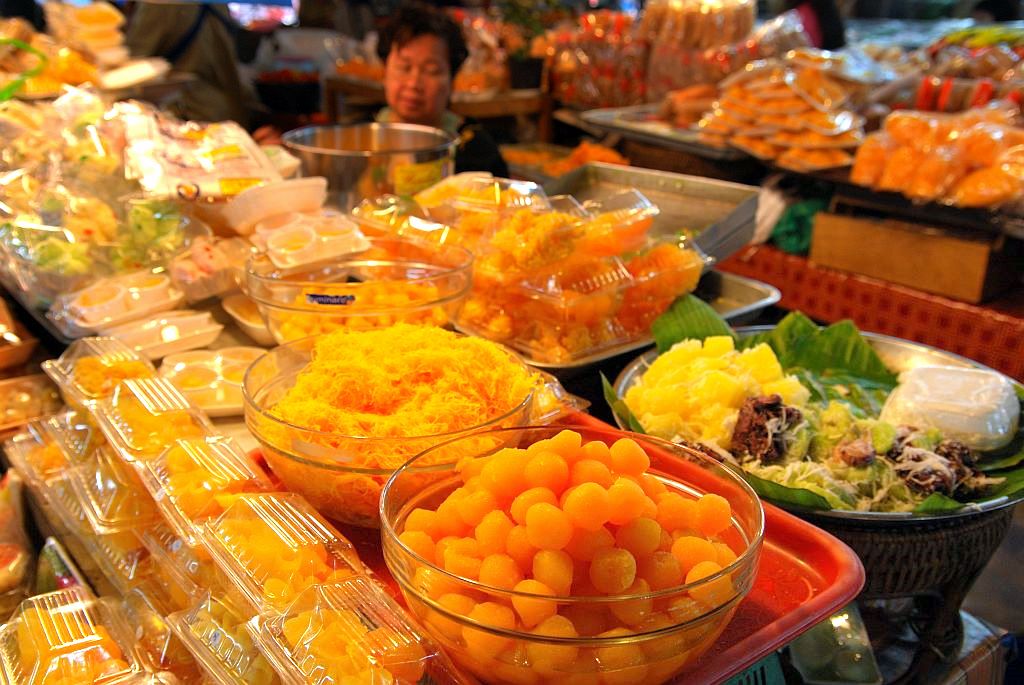
- ทองหยิบ (thong yíp) — “picked-up gold”, pinched into a flower shape.
- ทองหยอด (thong yòt) — “dropped gold”, a teardrop dripped into syrup.
- ฝอยทอง (fǒi thong) — “gold threads”, poured in fine strands.
- เม็ดขนุน (mét kha-nǍn) — “jackfruit seeds”, which contain no jackfruit at all; they are mung bean in a yolk coat, shaped like the seed.
Each name is a verb or a shape. Learn the pattern and you have four Thai words for the price of one.
Read Thai script on the cabinet: ขนมครก letter by letter
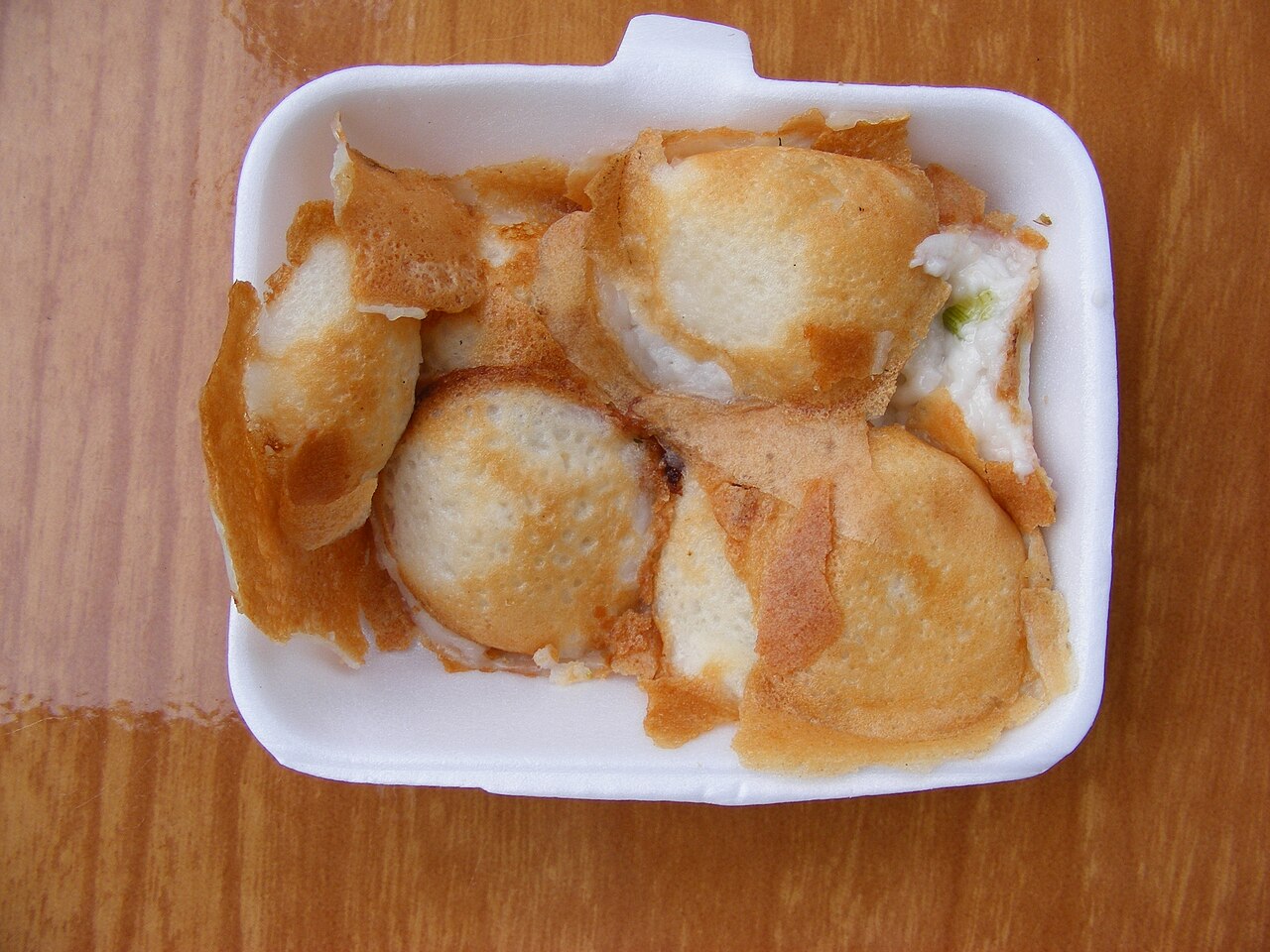
Look at ขนมครก closely, because it teaches the single strangest thing about Thai script: it contains six Thai letters and not one written vowel. Reading left to right you have ข (kh), น (n), ม (m), then ค (kh), ร (r), ก (k). Six consonants, and yet it is pronounced kha-nǒm khrók.
The vowels are there by convention. Where Thai consonants sit together with nothing between them, a short a is understood in an open syllable and a short o in a closed one. This is why Thai consonants and vowels have to be learned as one system rather than two lists, and why a word that looks unreadable resolves the moment you know the rule. If you are only starting to learn Thai alphabet shapes, our Thai alphabet reference lays out all 44 consonants with their names, and the free flashcard trainer drills the Thai letters until they arrive without effort.
How to order Thai sweets politely
Dessert stalls are relaxed places, but the politeness particle is not optional in Thailand. Men end a sentence with ครับ (khráp), women with ค่ะ (khâ) for a statement and คะ (khá) for a question. Drop it and you sound abrupt, even if every other word is right — the reason it is the first thing covered in our guide to speaking Thai politely.
| Thai | Thai transliteration | English |
|---|---|---|
| นี่อะไรครับ | nîi a-rai khráp | What is this? |
| ขออันนี้หน่อยค่ะ | khǒo an-níi nòi khâ | Some of this one, please |
| เอาสองถุงครับ | ao sǒong thùng khráp | I'll take two bags |
| หวานน้อยได้ไหมคะ | wǎan nói dâi mǎi khá | Can it be less sweet? |
| เท่าไหร่ครับ | thâo-rài khráp | How much? |
| อร่อยมากค่ะ | a-ròi mâak khâ | Very good, thank you |
Thai counts things with a classifier, and desserts have their own: ชิ้น (chín) for a cut piece, ถุง (thùng) for a bag, กล่อง (glòng) for a box, ห่อ (hòr) for a banana-leaf parcel and ถ้วย (thâuy) for anything in coconut milk. The pattern is number then classifier: sǒong thùng, two bags. Our classifiers guide has the rest, and if the price is quoted in Thai numerals rather than spoken, the Thai money and baht guide covers those.
When Thais actually eat ขนม
Not after dinner, mostly. ขนม is an any-hour food: bought on the way home, handed round an office, eaten at four in the afternoon with iced coffee. It is also the default gift. A box of sweets carried back from a trip is ของฝาก (khǒng fàak), literally “an entrusted thing”, and every Thai province is known for one. Offering it is a small piece of Thailand expat language worth getting right: hand the box over with both hands, or with your right hand and your left touching your forearm.
Gold sweets carry more weight again. Because of the name, they appear at weddings, ordinations and new-business openings, where the wish being made is explicit.
A study tip: one cabinet, one word a day
Do not try to memorise the table above in one sitting. Pick one sweet a day, photograph the label, and that evening copy the Thai letters out by hand while saying each one aloud. Handwriting is what moves a word from “I have seen that” to “I know that”, and a dessert label is short enough to finish. The slow way to learn Thai vocabulary is the one still with you next week.
Sweets are the gentlest place to learn Thai vocabulary because the stakes are nil: the worst outcome of a mispronounced order is a dessert you did not expect and will probably enjoy. When the cabinet stops looking like a wall of unfamiliar shapes, take the same method to the savoury side with our Thai street food vocabulary guide, or to the fruit stall with the guide to Thai fruit names.