Thai Numerals: Reading Prices, Dates and Tickets
Thai numerals appear on temple entrance boards, lottery tickets, government forms and occasionally on price lists. Ten shapes, one afternoon of practice, and a surprising amount becomes readable.
Thailand mostly uses Arabic numerals in daily commerce, which lulls visitors into thinking Thai numerals are optional. They are not quite. They show up on government forms, temple signage, licence plates, lottery tickets, some restaurant menus and — notably — on the occasional price board where the Thai-numeral price and the Arabic-numeral price are not the same.

The ten digits
There are only ten shapes, and unlike the consonants there is no tone system layered on top. This is the single cheapest piece of Thai literacy available.
- ๐ — 0, ศูนย์ (soon)
- ๑ — 1, หนึ่ง (nueng)
- ๒ — 2, สอง (song)
- ๓ — 3, สาม (saam)
- ๔ — 4, สี่ (see)
- ๕ — 5, ห้า (haa)
- ๖ — 6, หก (hok)
- ๗ — 7, เจ็ด (jet)
- ๘ — 8, แปด (paet)
- ๙ — 9, เก้า (gao)
They are positional and work exactly like Arabic numerals: ๒๕๖๙ is 2569. Watch for the pairs that trip people up — ๓ (3) against ๗ (7), and ๖ (6) against ๙ (9).
Two counting quirks worth knowing
Eleven is สิบเอ็ด (sip-et), not sip-nueng. The special form เอ็ด replaces "one" in every number ending in 1 above ten: 21 is ยี่สิบเอ็ด, 101 is หนึ่งร้อยเอ็ด.
Twenty is ยี่สิบ (yee-sip), not song-sip. Twenty is the only decade with an irregular form; thirty onward is regular (สามสิบ, สี่สิบ).
Above that, note that Thai has a dedicated word for ten thousand, หมื่น (muen), and for a hundred thousand, แสน (saen). A million is ล้าน (laan). Thai groups large numbers differently from English, so "three hundred thousand baht" is สามแสนบาท — three saen — rather than a construction built on "thousand".
Money
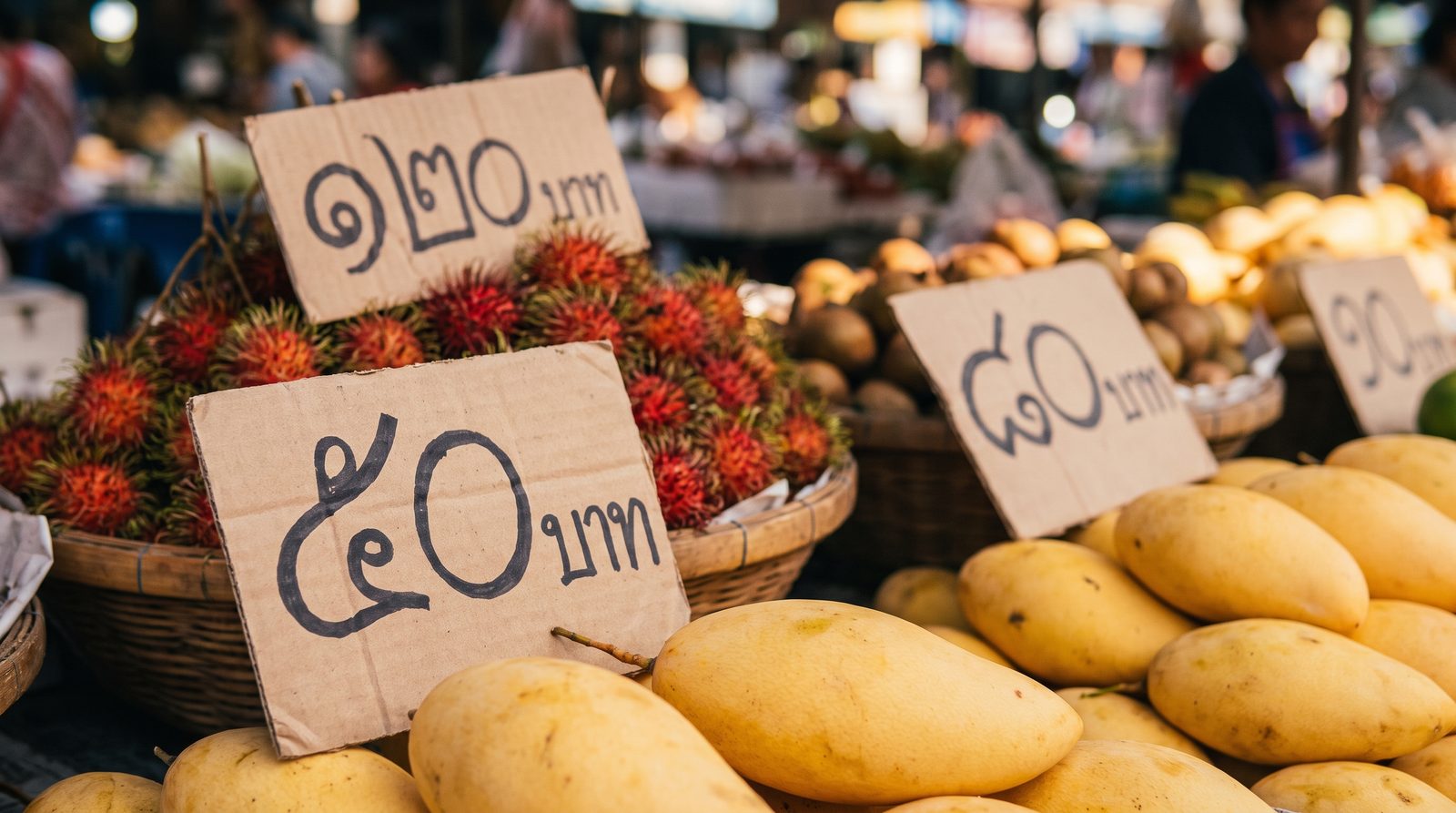
The baht (บาท, symbol ฿) divides into 100 satang (สตางค์). Satang coins barely circulate outside supermarket change, where totals get rounded, but you will see the unit written on price labels. Coins (เหรียญ, riian) come in 1, 2, 5 and 10 baht; banknotes (ธนบัตร, thanabat) start at 20 baht, and the colour coding — green for 20, blue for 50, red for 100, purple for 500, grey-brown for 1,000 — is worth learning before the numerals themselves, since you will use it before you can read a single Thai digit.
If you can read the numerals, you can also read the dual pricing boards that some attractions and national parks display — a Thai-language price for residents and a higher foreigner price, sometimes with only the Thai figure written in Thai numerals. Whatever you make of the practice, it is easier to have an opinion about it when you can read both numbers.
Dates
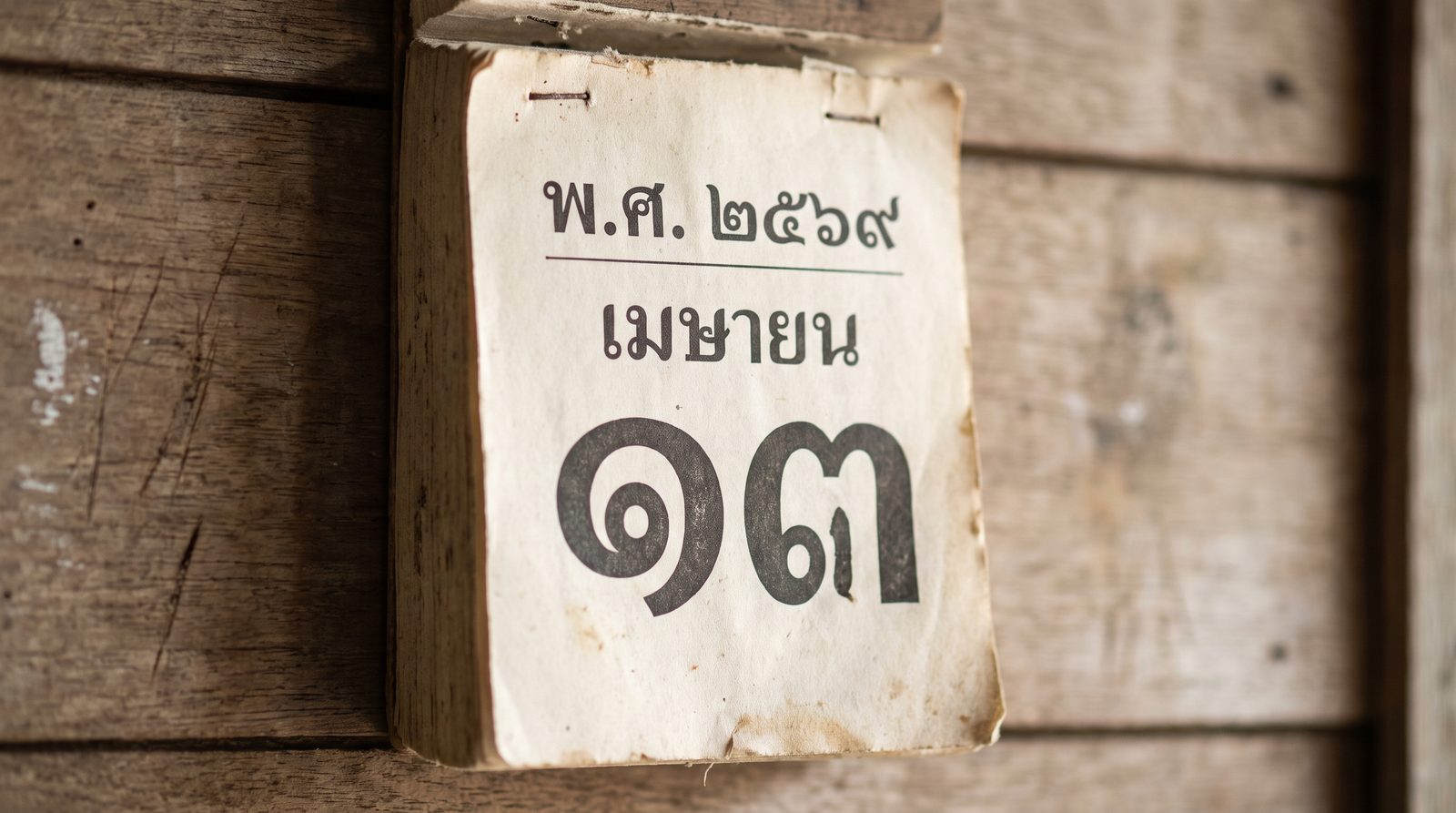
Thai dates run day-month-year, and the year is normally the Buddhist Era figure — Gregorian plus 543. A form dated ๑ มกราคม ๒๕๖๙ is 1 January 2026.
The month names are long but highly regular: months with 31 days end in -คม (-khom), months with 30 days end in -ยน (-yon), and February, the odd one out, ends in -พันธ์ (-phan). That ending alone tells you the length of the month, which is a nicer piece of design than anything English manages.
Percent signs, discounts and sale prices
Percent is เปอร์เซ็นต์ (per-sen), a loanword, but the % symbol itself is universal, so you will meet it everywhere sale signs appear. ลด (lot) means "reduce" or "discount", and it is usually the first word on a red sign: ลด ๒๐% reads as "reduce 20%". ลดราคา (lot raa-khaa) is the fuller phrase, "price reduced," and ราคาพิเศษ (raa-khaa phi-set) means "special price." ฟรี (free) is borrowed straight from English and needs no translation.
Thai retail prices are normally tax-inclusive already, so the number on the shelf tag is what you pay at the register — there is no percentage added on top the way there is in some countries, which makes the sticker price a reliable number to read and act on.
Reading a phone number or ID card aloud
Thai reads long numbers digit by digit rather than in the grouped, two-at-a-time pattern English speakers use for phone numbers. A mobile number written ๐๘๑-๒๓๔-๕๖๗๘ is spoken "soon-paet-nueng, song-saam-see, haa-hok-jet-paet" — zero eight one, two three four, five six seven eight — one digit at a time. The same applies to the 13-digit national ID number printed on Thai citizens' cards and on some forms foreigners fill in for visas: read it one digit at a time and you will be understood, even slowly.
Ordinal numbers: floors, dates and rankings
To turn a cardinal number into an ordinal, Thai adds ที่ (thii) in front: ที่หนึ่ง (thii nueng) is "first," ที่สอง (thii song) is "second," and so on. You will see it on building directories — ชั้นที่ ๓ (chan thii saam) is "3rd floor" — and in race results and class rankings. The day of the month works the same way when spoken formally: the 13th is วันที่ ๑๓ (wan thii sip-saam), literally "day that thirteen," which is the construction behind every date read aloud on the radio or spelled out on a form.
There is a full numeral converter and counting drill on the numbers page, and the month names are listed on the time, dates and colours page.