Learn Thai Vocabulary: Rice, Farm & Harvest Words Thailand
Learn Thai vocabulary for rice farming in Thailand: paddy, seedling, harvest and milled rice words in Thai script, with pronunciation and five real photos.
November is the best month of the year to learn Thai vocabulary about rice, because the whole of Thailand is busy with it. The main wet-season crop comes in from now until the end of December, and any bus ride outside a city takes you past fields of people cutting, bundling and drying. These are not farm-trivia words. ข้าว (khâao) means rice, and it also means food, a meal, and dinner — which is why กินข้าว (gin khâao), literally “eat rice”, is simply the Thai for “eat”.
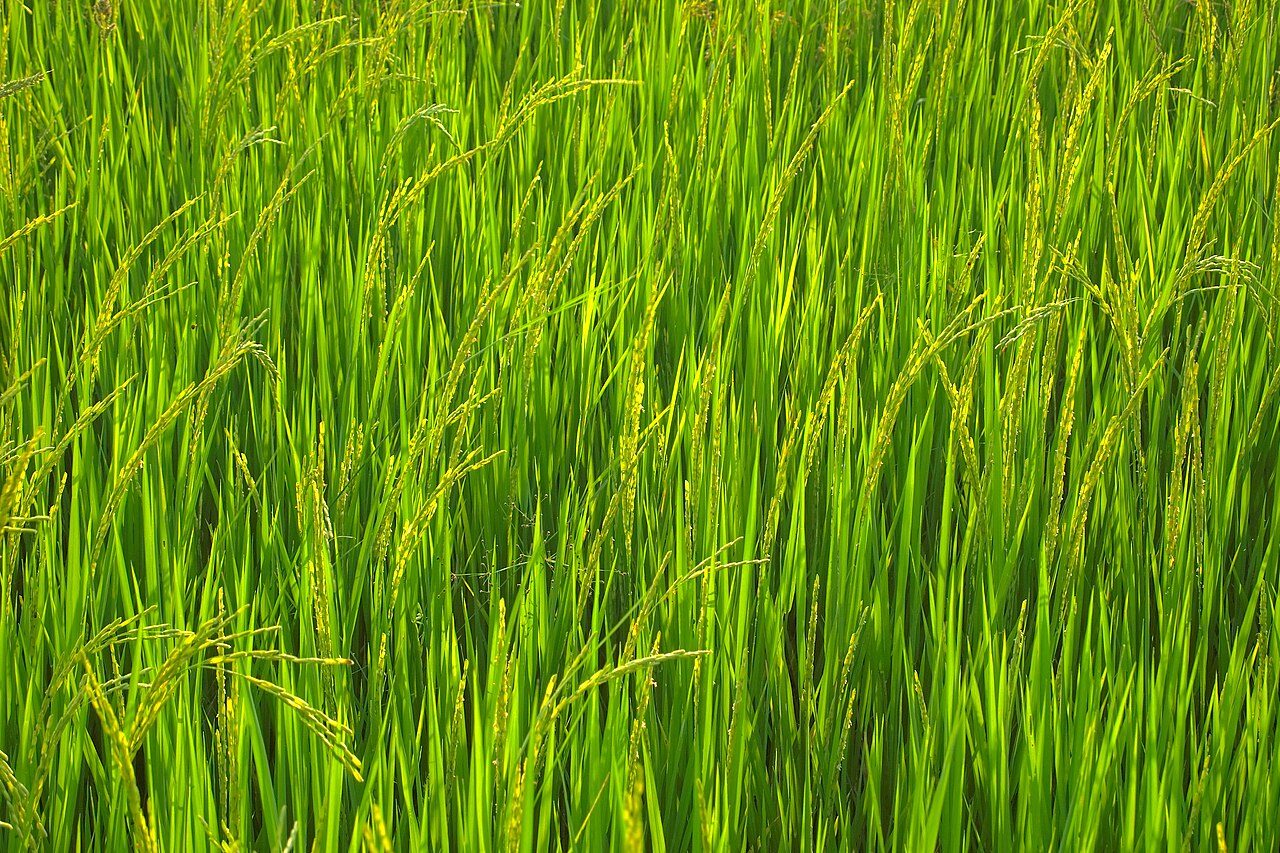
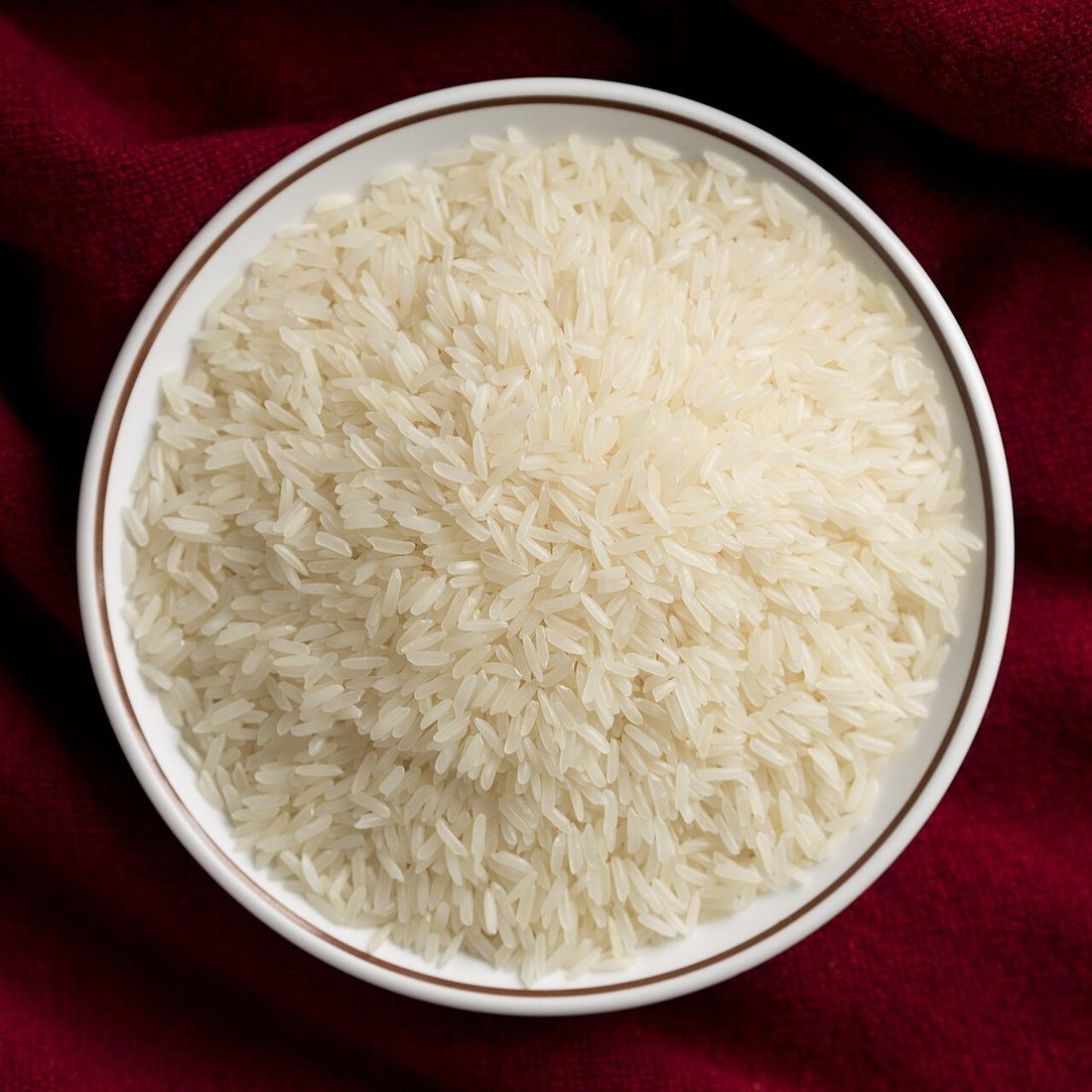
Everything below comes three ways: Thai script, a Thai transliteration you can say out loud, and the literal meaning, because with these words the literal meaning is the memory hook. The five photographs are real ones taken in Thailand — a harvest in Lampang, a planting line in Chiang Rai, a farmer with his sickle, the grain heads up close, and the milled rice that ends up in your bowl.
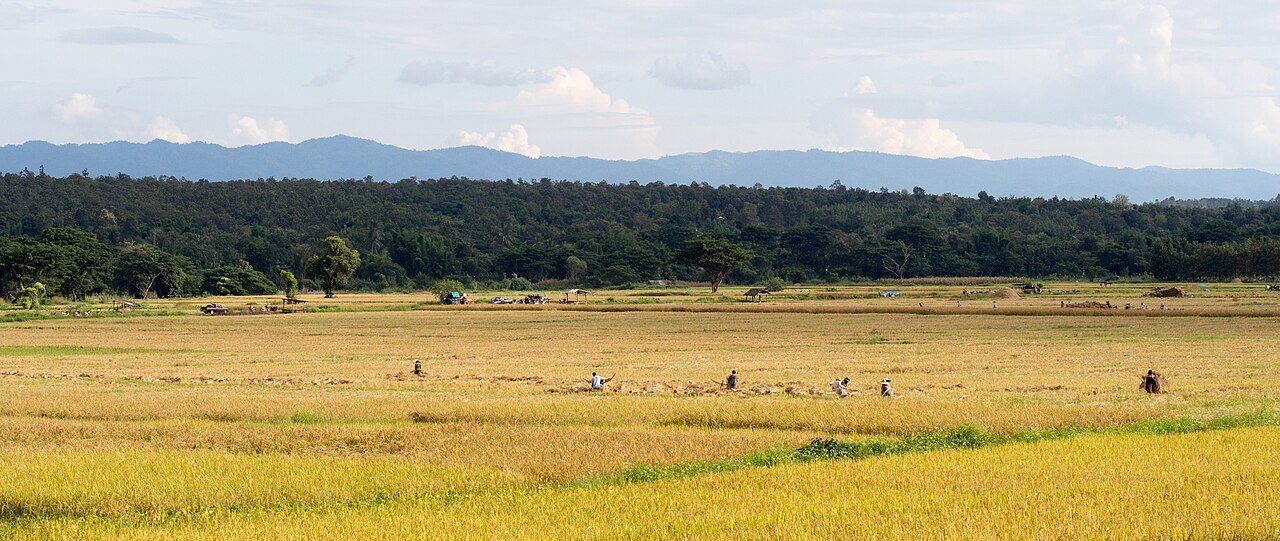
One word, four kinds of rice: learn Thai vocabulary that changes with the stage
English has one word, “rice”, and leans on adjectives. Thai splits it by stage, and each stage is a different noun. Getting this group straight is the single most useful thing on this page, because the words turn up in shops, on menus and in ordinary talk, not just on farms.
- ต้นข้าว (dtôn khâao) — the rice plant. ต้น is the word for any plant or trunk
- ต้นกล้า (dtôn glâa) — the seedling, grown in a nursery bed before being moved
- รวงข้าว (ruang khâao) — the ear, the drooping head of grain
- ข้าวเปลือก (khâao bplùeak) — paddy, rice still in its husk. เปลือก is “shell” or “peel”
- ข้าวสาร (khâao sǎan) — raw milled rice, the kind you buy in a sack. The backpacker street in Bangkok, ถนนข้าวสาร, is “milled rice road”, because that is what was traded there
- ข้าวสวย (khâao sǔay) — plain cooked rice, literally “beautiful rice”
- ข้าวเหนียว (khâao nǐao) — sticky rice, literally “sticky rice”, the staple of the north and north-east
Two more you will meet in every supermarket in Thailand: ข้าวหอมมะลิ (khâao hǎwm má-lí), jasmine rice, literally “jasmine-fragrant rice”, and ข้าวกล้อง (khâao glâwng), brown rice. If you want the eating side of this rather than the growing side, our guide to rice and food words in Thailand picks up where this one stops.
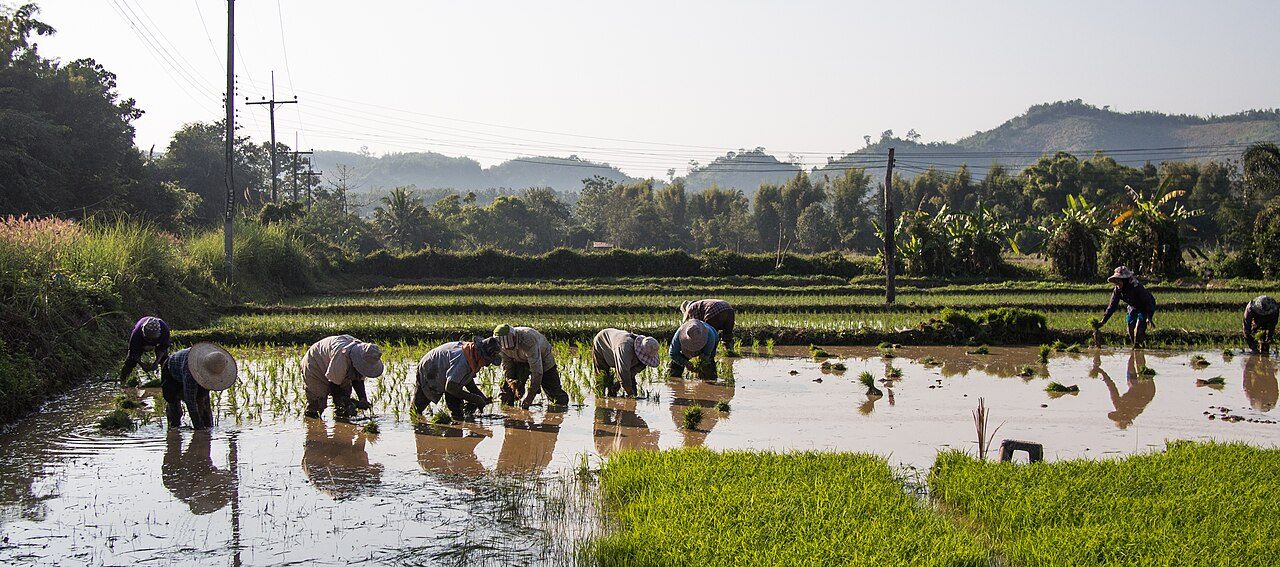
นา and ไร่: learn Thai vocabulary for the land itself
Thai is precise about what kind of field you mean, and the distinction is the opposite of a technicality — it tells you what is grown there and how much water it gets.
- นา (naa) — a wet paddy field, the flooded kind rice grows in
- ทุ่งนา (thûng naa) — the open paddy country, fields stretching away
- ไร่ (râi) — a dry upland field: maize, cassava, sugar cane. It is also the standard unit of land area in Thailand, 1,600 square metres
- สวน (sǔan) — an orchard or garden: fruit trees, rubber, vegetables
- ชาวนา (chaao naa) — a rice farmer. ชาว means “the people of”, so this is literally “paddy people”
- ทำนา (tham naa) — to farm rice, literally “to do paddy”
- เกษตรกร (gà-sèet-dtrà-gawn) — farmer, the formal word you see in news and on government signs
Because ไร่ is a unit as well as a place, you will hear it counted: สิบไร่ (sìp râi), ten rai, about 1.6 hectares. Thai counts almost everything with a classifier word, and land is one of the easy cases — if that system is still a puzzle, our guide to Thai classifiers is the fastest way through it.
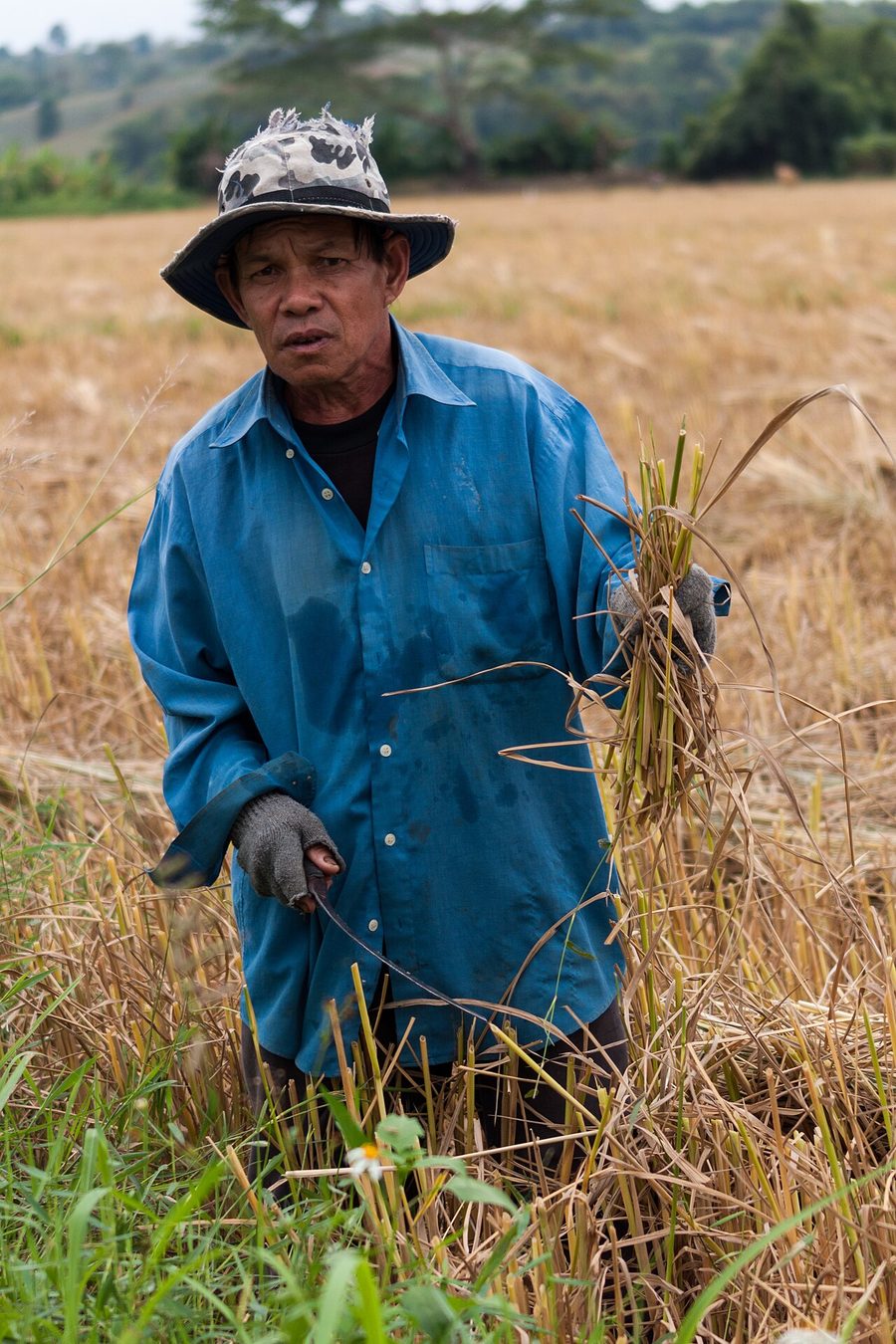
The farming year: ดำนา, เกี่ยวข้าว and the verbs in between
These verbs are worth a beginner Thai lesson of their own, because every one of them is a plain everyday word doing a second job.
- ไถนา (thǎi naa) — to plough · หว่าน (wàan) — to scatter seed by hand
- ดำนา (dam naa) — to transplant seedlings into the flooded paddy
- เกี่ยวข้าว (gìao khâao) — to harvest rice. เกี่ยว on its own means “to hook” or “to be connected to”
- นวดข้าว (nûat khâao) — to thresh. นวด is also the verb for a massage, as in our Thai massage vocabulary — the shared idea is working something over with pressure
- ตากข้าว (dtàak khâao) — to spread rice in the sun to dry · สีข้าว (sǐi khâao) — to mill it
- ฤดูเก็บเกี่ยว (rúe-duu gèp gìao) — harvest season, the phrase on every November news bulletin in Thailand
Two season words sort the whole calendar: นาปี (naa bpii), “year paddy”, is the main rain-fed crop you are watching now, and นาปรัง (naa bpraang) is the second, irrigated dry-season crop. The year is formally opened each May by the พระราชพิธีพืชมงคล (phrá râat-chá-phí-thii phûet mong-khon), the Royal Ploughing Ceremony in Bangkok — one of the fixed points in our guide to Thai calendar and festival words.
Tools, buffalo and machines
- ควาย (khwaai) — water buffalo. The polite, formal word is กระบือ (grà-bue); ควาย shouted at a person is a serious insult, so keep it for the animal
- รถไถ (rót thǎi) — tractor, literally “plough vehicle” · รถเกี่ยวข้าว (rót gìao khâao) — combine harvester, “rice-cutting vehicle”
- กระสอบ (grà-sàwp) — the woven sack rice is moved and sold in
- ยุ้งข้าว (yúng khâao) — the raised wooden rice barn · โรงสี (roong sǐi) — rice mill, literally “milling building”
- ฟาง (faang) — straw · แกลบ (glàep) — husk · รำ (ram) — bran
Notice how many of these are รถ (rót, vehicle) plus a job. Once you can read Thai script well enough to spot รถ at the start of a word, you start to learn Thai vocabulary in blocks instead of one word at a time — and the same trick works on traffic signs and shopfronts all over Thailand.
ข้าว, ข่าว, เข้า: a Thai pronunciation trap worth twenty minutes
Here is the one piece of real linguistics on this page, and it pays for itself. Three very common words differ only in tone and vowel length:
- ข้าว (khâao, falling tone) — rice
- ข่าว (khàao, low tone) — news
- เข้า (khâo, falling, short) — to enter
All three start with ข (khǎw khài), a high-class consonant, and the tone is decided by the little mark on top: ่ gives a low tone, ้ gives a falling one. That is not a quirk, it is the system — the class of the consonant plus the mark plus the vowel. Half an hour on our Thai tone marks page will explain it properly, and it is the highest-value half hour of Thai pronunciation work a beginner can do.
If the shapes themselves are still slow, that is the thing to fix first. Keep our free Thai alphabet chart on your phone to learn Thai alphabet forms and the Thai consonants and vowels that build them, then drill the Thai letters in the ThaiLetters flashcard trainer for ten minutes a day. Reading ข้าวสาร on a sack beats memorising it from a list.
Weather, water and a bad year
Rice talk in Thailand is weather talk, so learn Thai vocabulary from this short group too: it turns up in ordinary Thailand expat language all year — in the news, in the taxi, at the shop.
- ฝน (fǒn) — rain · น้ำ (náam) — water
- ชลประทาน (chon-lá-bprà-thaan) — irrigation · เขื่อน (khùean) — dam · คลอง (khlawng) — canal
- ภัยแล้ง (phai láeng) — drought · น้ำท่วม (náam thûam) — flood
- ราคาข้าว (raa-khaa khâao) — the price of rice, a political subject in Thailand every single year
How to say it politely
If you want to speak Thai about this with someone whose family farms — and in Thailand that is a great many people — a few rules keep it warm. End what you say to a stranger with ครับ (khráp, if you are a man) or ค่ะ (khâ, if you are a woman). Three openers that always work:
- ที่บ้านทำนาไหมครับ/คะ (thîi bâan tham naa mǎi khráp/khá) — “does your family farm rice?”
- ปีนี้ข้าวดีไหมครับ/คะ (bpii níi khâao dii mǎi khráp/khá) — “is the rice good this year?”
- กินข้าวหรือยัง (gin khâao rǔe yang) — “have you eaten yet?”, the everyday Thai hello
One thing to avoid: do not treat farming as a hard-luck story. ชาวนา is a plain, respectable word, and the correct register is interest, not sympathy. And keep ควาย pointed at buffalo only.
A study tip: five words, then go and look at a field
Take five from this page — ข้าว, นา, ชาวนา, เกี่ยวข้าว, ข้าวสาร — and use them out loud this week: with the woman who sells you rice, with a colleague, with a taxi driver on the way out of town. Five words said badly to a real person stick harder than fifty read silently, and in harvest season everyone knows what you are talking about.
Then take a bus somewhere flat and watch. You will see คันนา, ฟาง, รถเกี่ยวข้าว and ยุ้งข้าว inside twenty minutes, and because you already own the words, you will see them as words instead of scenery. That is the whole method: the way to learn Thai vocabulary that stays learnt is to meet a word on the page first, then meet it in Thailand a few days later. If this one worked for you, our fresh market vocabulary guide does the same job on the place all of this ends up.