Thai Festival Words: Songkran, Loi Krathong, Wan Phra
Thailand runs on more than one calendar at once. A short guide to the festival and calendar vocabulary you will see on signs, bank holidays and shop shutters — and what each one actually marks.
Thailand keeps several timekeeping systems running side by side: the Gregorian calendar for business, the Buddhist Era for official dates, and a lunar calendar that governs religious observance and most of the big festivals. That is why a bank holiday can move by three weeks from one year to the next, and why the year on your receipt looks 543 years too high.
Here are the terms that account for most of it.
สงกรานต์ — Songkran
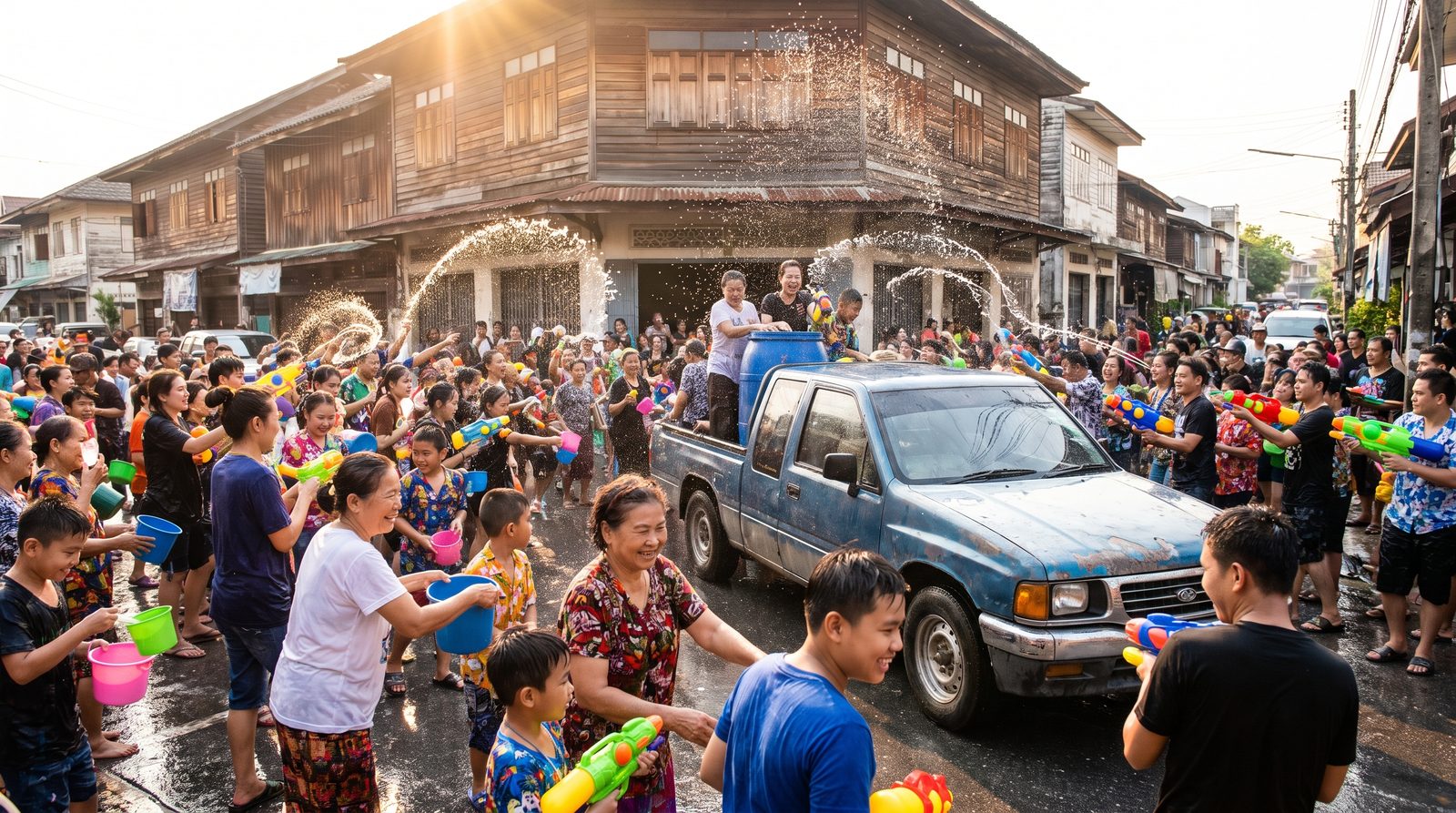
The traditional Thai New Year, fixed to 13–15 April. The name comes from a Sanskrit word meaning "passage" or "movement" — originally the sun's passage into Aries.
The water is the part everyone knows, but the water started as something gentler: pouring scented water over Buddha images and over the hands of elders as a blessing and a mark of respect (รดน้ำดำหัว, rot nam dam hua). The city-wide water fights grew out of that. Both versions run simultaneously — a morning at the temple, an afternoon of getting soaked on the street.
UNESCO inscribed "Songkran in Thailand, traditional Thai New Year festival" on its Representative List of the Intangible Cultural Heritage of Humanity in December 2023, Thailand's fourth such listing after Khon masked drama, traditional Thai massage and Nora dance.
ลอยกระทง — Loi Krathong
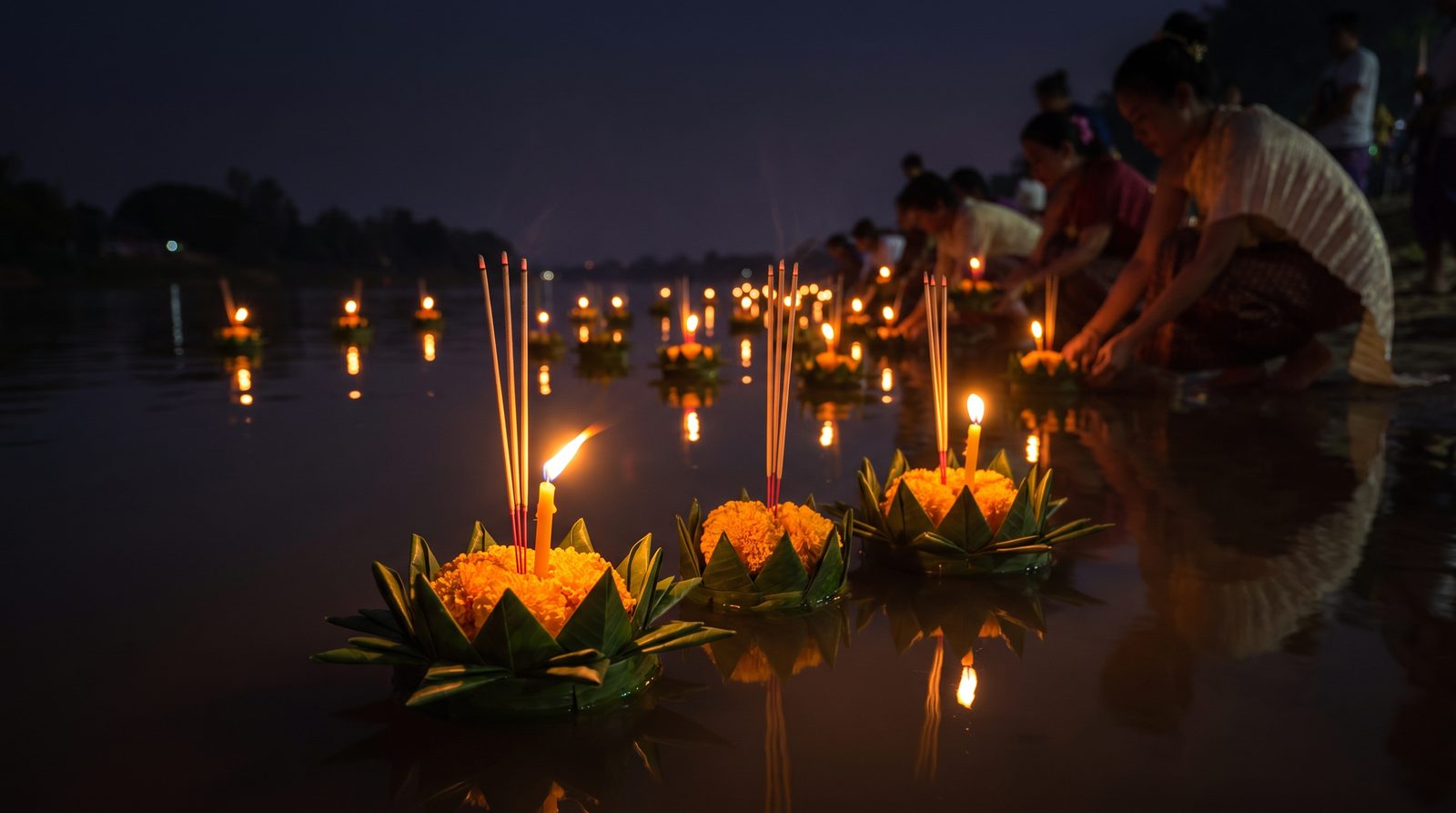
Held on the full moon of the twelfth lunar month, which usually falls in November. ลอย (loi) means "to float"; a กระทง (krathong) is the small decorated float, traditionally made from a slice of banana trunk with folded banana leaves, a candle and incense.
Floating one is variously described as paying respect to the water goddess, apologising to the river for polluting it, and letting go of the past year's grudges and bad luck. Most people will tell you some combination of all three.
In the north, the same period brings Yi Peng, the lantern festival most associated with Chiang Mai. The two are distinct but overlap, which is why the sky-lantern photographs get labelled "Loi Krathong" so often.
วันพระ — Wan Phra
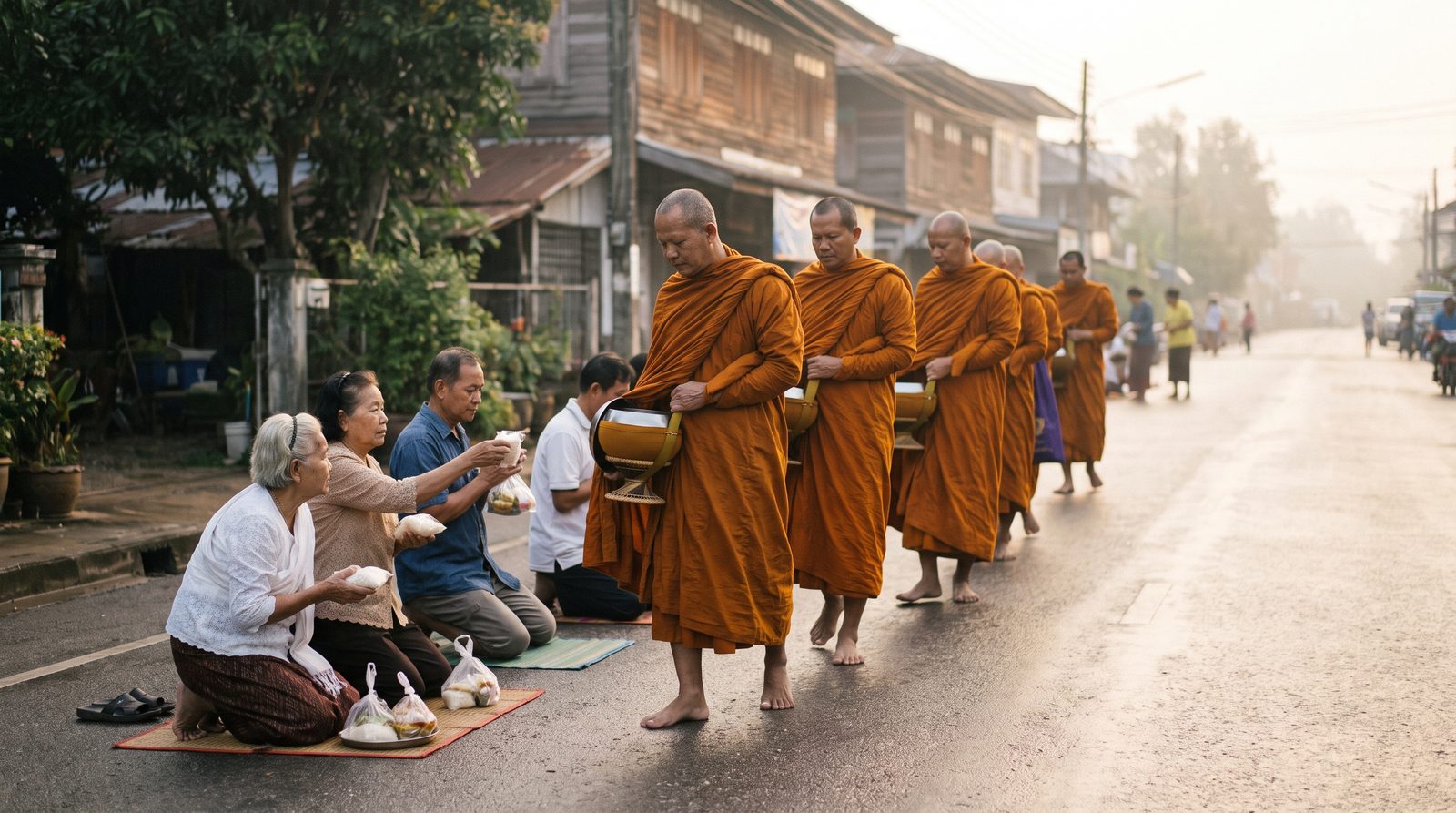
The Buddhist observance day, falling roughly weekly on the phases of the moon. Temples are busier; more devout Thais may observe additional precepts.
The practical consequence for visitors: on major Buddhist holidays — Makha Bucha (มาฆบูชา), Visakha Bucha (วิสาขบูชา) and Asalha Bucha (อาสาฬหบูชา), all lunar and therefore movable — alcohol sales are restricted nationwide and many bars close. Asalha Bucha is followed immediately by Khao Phansa (เข้าพรรษา), the start of the three-month Buddhist Lent or "rains retreat", which ends with Ok Phansa (ออกพรรษา).
พ.ศ. — the Buddhist Era year
Official Thai dates use the Buddhist Era, abbreviated พ.ศ. (Phor Sor, for พุทธศักราช). The conversion is simple arithmetic: add 543 to the Gregorian year. So 2026 CE is 2569 BE.
You will see it on ID cards, receipts, government forms, product expiry dates and newspaper mastheads. The Gregorian year, when it appears, is marked ค.ศ. (Khor Sor). If a date looks impossibly far in the future, this is why.
The days themselves
Thai day names come from the same planetary sources as the European ones, and each has a traditional colour attached — which is why civil servants and school pupils sometimes coordinate outfits by weekday. วันจันทร์ (Monday) is yellow, วันอังคาร (Tuesday) is pink, วันพุธ (Wednesday) is green.
Other public holidays worth knowing
Beyond the festivals above, a handful of fixed-date holidays round out the Thai calendar. วันขึ้นปีใหม่ (wan khuen pii mai), New Year's Day, is 1 January — imported wholesale from the Gregorian calendar and celebrated alongside Songkran rather than instead of it. วันแม่ (wan mae), Mother's Day, falls on 12 August, the birthday of the late Queen Mother Sirikit, and วันพ่อ (wan phor), Father's Day, falls on 5 December, the birthday of the late King Bhumibol. วันปิยมหาราช (wan piya maharat), Chulalongkorn Day, on 23 October, commemorates King Chulalongkorn (Rama V) and is marked by wreath-laying at his statues nationwide. วันรัฐธรรมนูญ (wan rattathammanun), Constitution Day, falls on 10 December.
All of these are government holidays: banks and post offices close, but most shops, restaurants and tourist attractions stay open as normal — a useful distinction from the lunar Buddhist observance days above, which affect alcohol sales rather than opening hours.
Useful phrases for talking about the calendar
A short set of phrases covers most calendar small talk. วันนี้วันอะไร (wan nii wan arai) asks "what day is it today"; the answer just names the day, e.g. วันนี้วันจันทร์, "today is Monday." เมื่อไหร่ (meua rai) is "when," as in สงกรานต์เมื่อไหร่, "when is Songkran." สัปดาห์หน้า (sap-daa naa) is "next week" and สัปดาห์ที่แล้ว (sap-daa thii laeo) is "last week"; swap สัปดาห์ for เดือน (deuan, month) or ปี (pii, year) to say "next month," "last year," and everything in between.
The full set of days, months, colours and the 24-hour and traditional six-hour clock systems is laid out on our time, dates and colours page.