Learn Thai Vocabulary in Thailand: Body & Massage Words
Learn Thai vocabulary for the body and the massage shop in Thailand: head, shoulder, back and foot in Thai script, with pronunciation and real sign photos.
The quickest way to learn Thai vocabulary that sticks is to tie it to something you will physically do in Thailand this week. A massage is the perfect hook. Every shop sign is a labelled diagram of the human body, the prices are a free reading drill, and the five or six phrases you need inside the shop are the same five or six phrases you will need at a doctor, a pharmacy and a gym. Learn the body once and you have bought yourself four vocabulary sets.
Everything below is given in Thai script, a Thai transliteration you can say out loud, and a literal translation wherever the literal meaning is the thing worth knowing. The photographs are real shop banners, market price boards and temple diagrams from Chiang Mai, Bangkok and Surin, so what you learn here is what is actually painted on the wall.
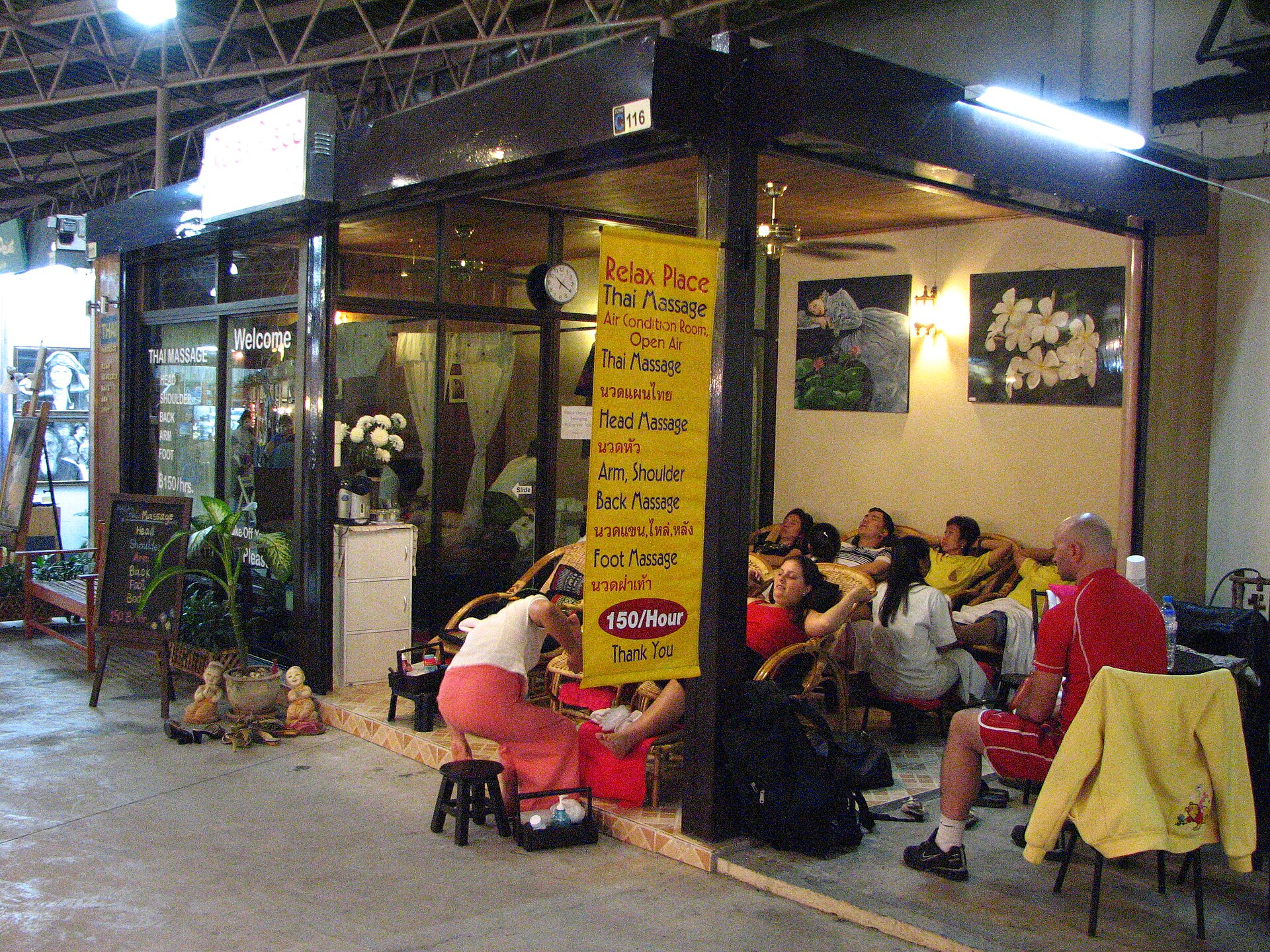
นวด: the word on every massage sign in Thailand
One syllable does most of the work. นวด (nûat) means “to massage”, and Thai builds the whole menu by putting it in front of a body part or a style. There is no grammar to learn in between — นวด + เท้า is simply “massage foot”. If you are still working through the Thai alphabet chart, this is a tidy three-letter word to decode: น (naaw nǔu), ว (waaw wǎaen) and ด (daaw dèk), with the vowel hidden inside the consonants the way Thai so often hides it.
- นวดแผนไทย (nûat phǎen thai) — traditional Thai massage, literally “massage, Thai system”
- นวดแผนโบราณ (nûat phǎen boo-raan) — “ancient-system massage”, the same thing on an older sign
- นวดเท้า (nûat tháao) / นวดฝ่าเท้า (nûat fàa tháao) — foot massage, sole massage
- นวดน้ำมัน (nûat nám-man) — oil massage, literally “massage oil”
- นวดตัว (nûat dtua) — full body massage, literally “massage body”
- ร้านนวด (ráan nûat) — massage shop; หมอนวด (mǎaw nûat) — the therapist, literally “massage doctor”
- ลูกประคบ (lûuk bprà-khóp) — the steamed herbal compress ball
Learn Thai vocabulary head to toe: the body parts worth knowing
These are the words a beginner Thai lesson usually saves for chapter nine, which is a mistake — you need them the first time anything aches. Thai body words are short, concrete and mostly single syllables, which makes them some of the easiest nouns in the language to pronounce.
- หัว (hǔa) — head. The formal word on medical signs is ศีรษะ (sǐi-sà).
- คอ (khaaw) — neck; บ่า (bàa) — the top of the shoulder; ไหล่ (lài) — shoulder
- หลัง (lǎng) — back; เอว (eew) — waist, lower back
- แขน (khǎen) — arm; มือ (mue) — hand; นิ้ว (níu) — finger
- ขา (khǎa) — leg; เข่า (khào) — knee; เท้า (tháao) — foot
- ท้อง (tháawng) — stomach; ตา (dtaa) — eye; หู (hǔu) — ear; ปาก (bpàak) — mouth
- ร่างกาย (râang-gaai) — the body as a whole
Two pairs are worth saying slowly, because the only difference is a vowel or a tone. หัว (hǔa, head) and หู (hǔu, ear) sit one small vowel apart, and ขา (khǎa, leg) against ค่ะ (khâ, the polite particle) is a reminder that Thai pronunciation lives and dies on the tone. If the marks above the letters still look decorative, our guide to Thai tone marks explains what each one is telling your voice to do, and the ThaiLetters flashcard trainer will drill the Thai consonants and vowels until the shapes read themselves.
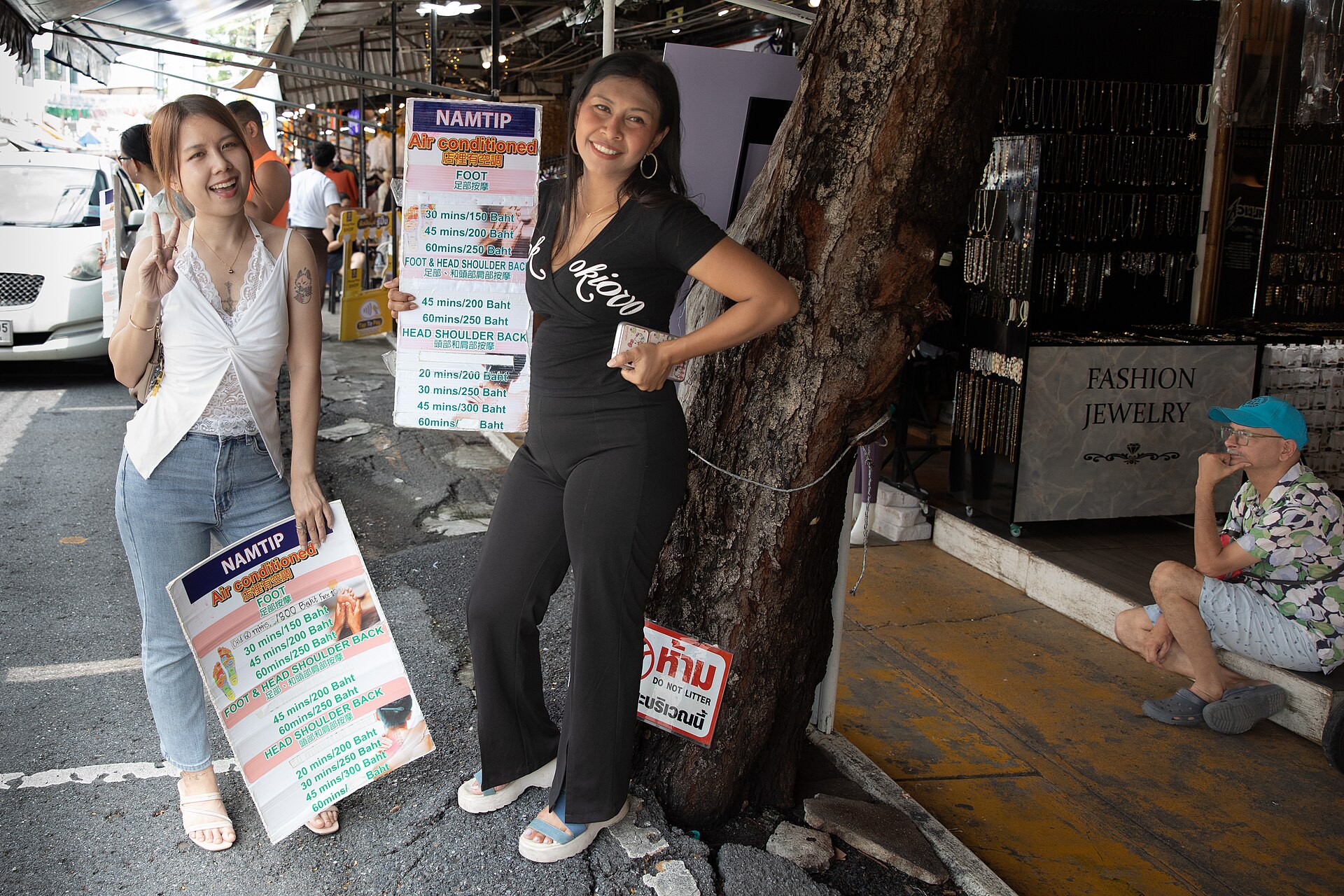
Read Thai script on a price board: minutes, hours and baht
Price boards are an easy place to practise, because the numbers carry most of the meaning and you can check your reading against the English underneath. It is also the cheapest way to learn Thai vocabulary by sight: you read Thai script, guess, and get the answer two lines down. The three words below cover almost every board in Thailand, and they transfer straight to parking signs, phone plans and gym memberships.
- นาที (naa-thii) — minute; ชั่วโมง (chûa-moong) — hour
- ครึ่งชั่วโมง (khrûeng chûa-moong) — half an hour
- ราคา (raa-khaa) — price; บาท (bàat) — baht
- ๑๕๐ บาท / ชั่วโมง — 150 baht per hour, written with Thai numerals on older boards
- ว่าง (wâang) — free, available. A ว่าง sign in the window means someone can take you now.
Thai numerals turn up on handwritten boards far more often than visitors expect; our guide to Thai money words and prices and the Thai numbers page will get you reading ๑ to ๙ in about ten minutes. It is the single highest-value hour of reading practice available in Thailand.
Speak Thai in the shop: harder, softer, and “that hurts”
This is where you stop collecting nouns and start to speak Thai, and it is the part that changes the experience rather than just decorating it. Thai massage is firm by design, and the therapist will usually ask once whether the pressure is right. Being able to answer in Thai — rather than smiling through it — is a genuinely useful piece of Thailand expat language.
- เจ็บ (jèp) — it hurts, sore to the touch; ปวด (bpùat) — a dull ache, as in ปวดหลัง (bpùat lǎng), backache
- แรง (raeng) — strong, hard; เบา (bao) — light, soft
- เบาๆ หน่อยครับ (bao bao nàauy khráp) — “a bit lighter, please”
- แรงกว่านี้ได้ไหมคะ (raeng gwàa níi dâai mǎi khá) — “could you go harder than this?”
- ตรงนี้เจ็บ (dtrong níi jèp) — “it hurts right here”, the phrase to say while pointing
- พอแล้วครับ (phaaw láeo khráp) — “that’s enough, thank you”
- สบายมาก (sà-baai mâak) — “very comfortable”, the compliment at the end
Every one of those sentences needs its polite particle: men finish with ครับ (khráp), women with ค่ะ (khâ) for a statement and คะ (khá) for a question. Dropping it does not make you rude exactly, but it makes you sound abrupt in a situation built on care — our guide to khrap and kha covers when each one changes shape. The same vocabulary carries over almost unchanged to a clinic, so pair this with our Thai words for the doctor and hospital.
Head high, feet low: the etiquette hiding in the vocabulary
Thai culture ranks the body from top to bottom, and the words carry that ranking with them. The หัว is the highest and most respected part of a person: do not pat an adult on the head, and avoid reaching over someone's head for your bag. The เท้า is the lowest and least polite: do not point your feet at a person or a Buddha image, and step over nobody's legs. None of this is fussiness — it is why a massage therapist will often say ขอโทษค่ะ (khǎaw thôot khâ), “excuse me”, before working near your head.
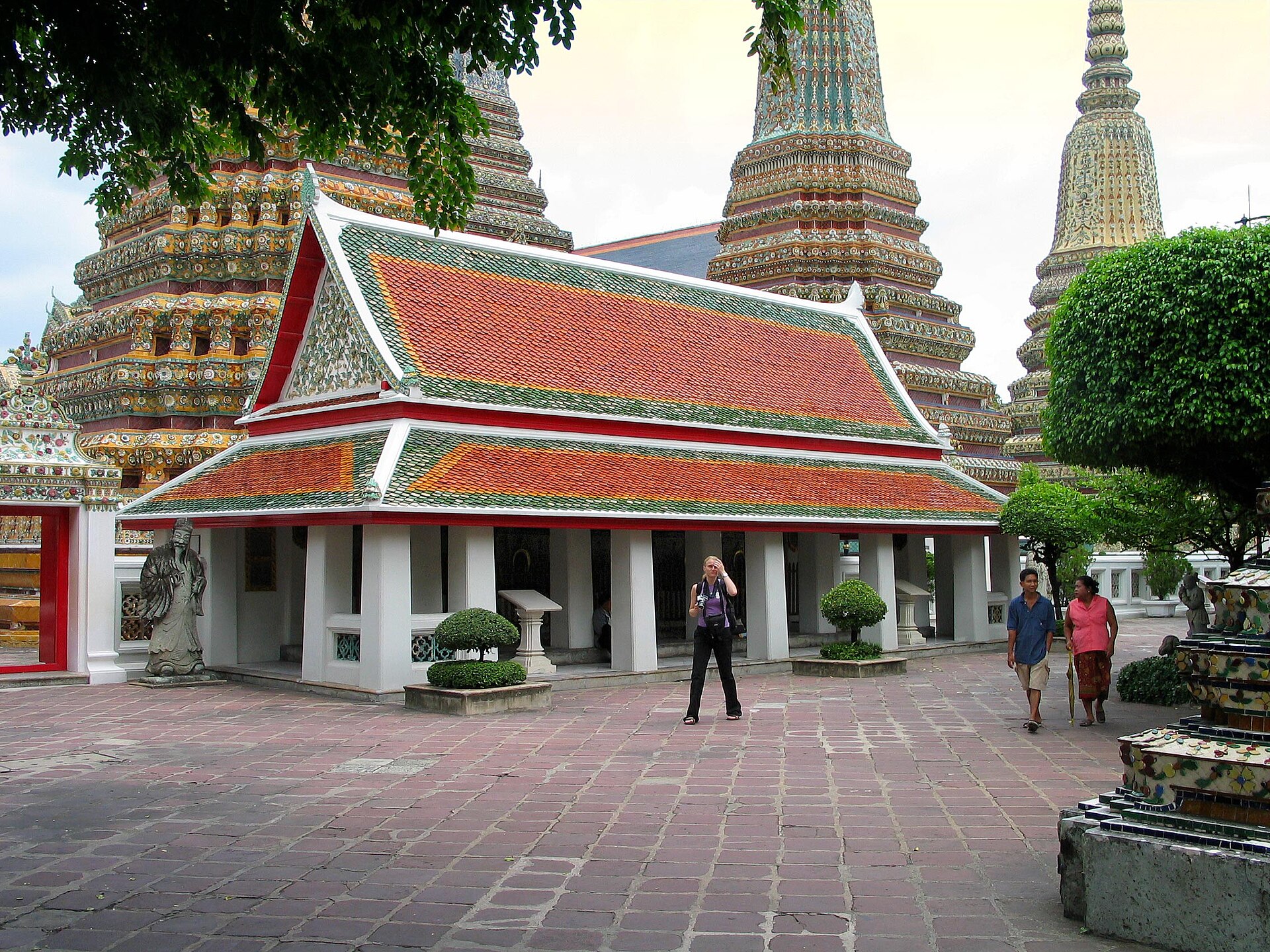
Where the words come from, and why they are everywhere
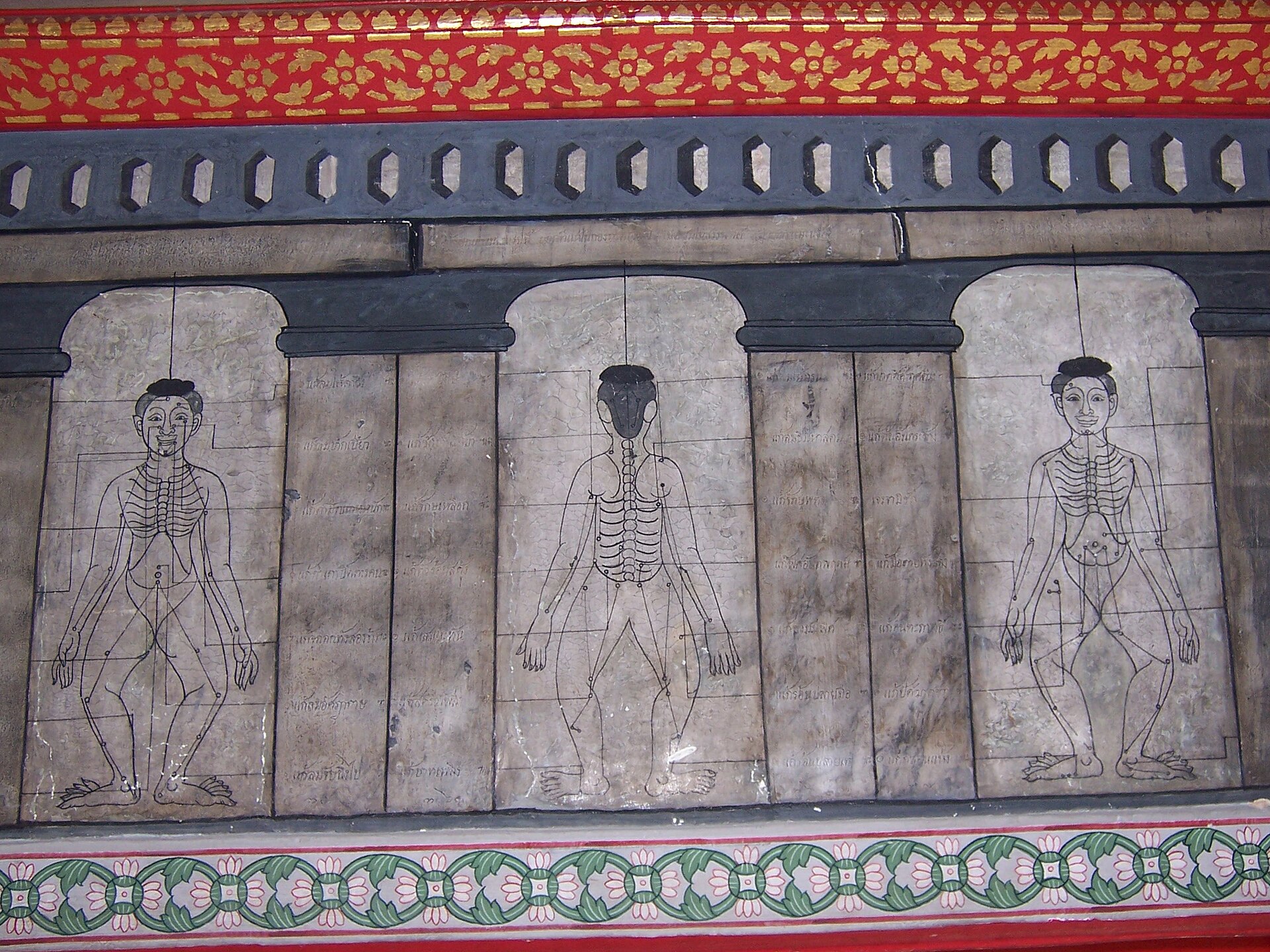
Traditional Thai massage is not only a tourist purchase. It is taught at Wat Pho's school in Bangkok, recognised by UNESCO, and offered inside government hospitals as แพทย์แผนไทย (phâet phǎen thai), “Thai traditional medicine”. That is why แผนไทย keeps reappearing on signs: it marks the traditional system as opposed to the modern one, แผนปัจจุบัน (phǎen bpàt-jù-ban). Recognising those two phrases tells you at a glance which department of a Thai hospital you are standing in — a small reminder that when you learn Thai vocabulary from a shop sign, you are usually learning the hospital, the government form and the newspaper headline at the same time.
A study tip: name the part that hurts
Do not try to memorise thirty body words at once. Use the one that is currently complaining. Walked too far today? Say ปวดขา (bpùat khǎa) out loud. Slept badly on a hard pillow? ปวดคอ (bpùat khaaw). Carried a laptop bag on one shoulder all week? ปวดบ่า (bpùat bàa). Your body supplies a new flashcard most days, and a word learned at the moment you need it almost never has to be learned twice.
Then close the loop by reading. The next time you pass a ร้านนวด, stop at the board and work along the line of prices before you look at the English — that is five seconds of real-world practice, repeated on every street in Thailand. The fastest way to learn Thai vocabulary permanently is to meet it in the wild, and with our free Thai alphabet chart at your back, a massage sign is about the friendliest wild there is.