Learn Thai Vocabulary in Thailand: Rice & Food Words
Learn Thai vocabulary for rice and food in Thailand: how ข้าว means rice, meals and hunger, with Thai script, transliteration, real photos and stall phrases.
If you learn only one Thai word properly, make it ข้าว (khâao) — rice. It is the highest-value entry on any learn Thai vocabulary list, because in Thailand the word does four jobs at once: it means the grain in the field, the bag in the kitchen, the food on your plate, and the meal itself. Thai people do not ask “have you eaten?” They ask กินข้าวหรือยัง (gin khâao rǖe yang), “have you eaten rice yet?” — and they ask it of someone who has just put down a bowl of noodles.
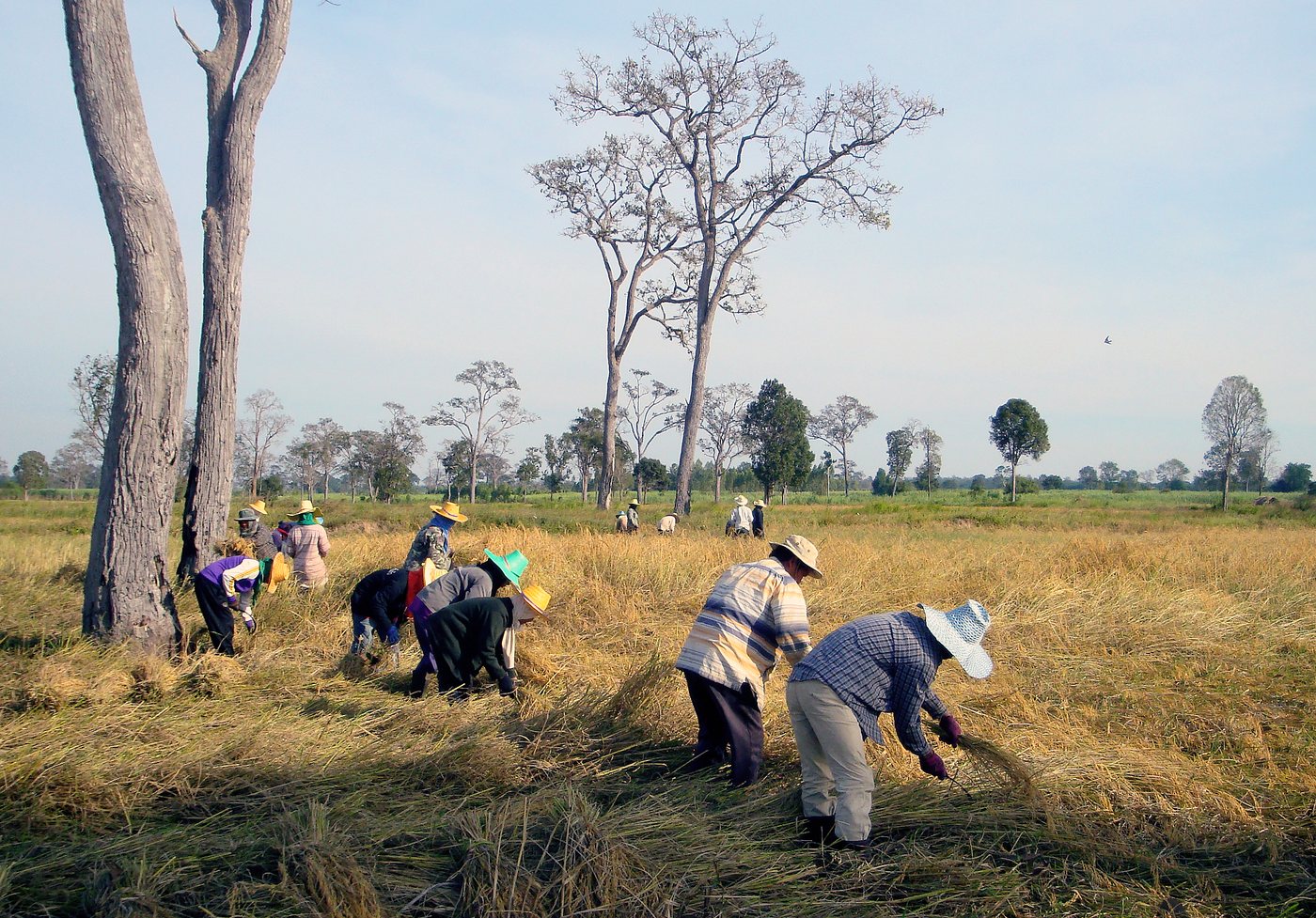
This guide walks the whole ข้าว family, from the paddy to the plate. Everything comes with Thai script, Thai transliteration and the literal translation, because nearly every word here is a compound built from pieces a beginner already owns: ข้าวสวย is “beautiful rice”, ข้าวเหนียว is “sticky rice”, and a farmer is simply a “field person”. Five real photographs — a paddy in the northern hills, a farmer cutting by hand near Mae Chan, a harvest crew in Surin, a rice-and-curry shop in Bangkok and a plate of mango sticky rice — show you where each word lives in the wild.

ข้าว: the word every beginner Thai lesson should start with
English has one word for rice and lets context do the rest. Thai does the opposite: it names each state of the grain, and those names are among the first things a learner meets on a menu, a shopping list or a market sign. Get these six and you can read most of what a rice shop puts on its board. Note the tone marker in the transliteration — ข้าว is a falling tone, dropping from high to low like a disappointed “oh”.
- ข้าว (khâao) — rice; also food, and a meal. The default assumption is cooked white rice.
- ข้าวสวย (khâao sǐuay) — steamed white rice, literally “beautiful rice”. This is what you ask for with a curry.
- ข้าวเหนียว (khâao nǐao) — sticky rice, literally “sticky rice”. Eaten with the fingers, and the staple of the north-east.
- ข้าวสาร (khâao sǎan) — uncooked milled rice, the kind sold in sacks. Bangkok’s Khaosan Road is named after it.
- ข้าวเปลือก (khâao bplüeak) — unhusked paddy rice, literally “rice with its skin on”.
- ข้าวต้ม (khâao dôm) — rice boiled into a soupy breakfast, literally “boiled rice”.
กินข้าว: why “eat rice” means “eat anything”
Here is the cultural part, and it matters more than the grammar. กินข้าว (gin khâao) literally means “eat rice”, but it is the ordinary Thai verb for eating a meal, whatever is actually on the plate. Pizza, pad thai, a bowl of soup — all กินข้าว. The phrase also works as a greeting, an invitation and a kindness, which is why it is worth more to a learner than a hundred nouns — and why it is the first thing most people pick up of everyday Thailand expat language.
- กินข้าวหรือยังครับ/คะ (gin khâao rǖe yang khráp/khâ) — “have you eaten yet?” Used the way English uses “how are you?”
- กินข้าวกัน (gin khâao gan) — “let’s eat together”. An offer, not a question.
- หิวข้าว (hǐu khâao) — “hungry”, literally “hungry for rice”. Thai attaches the hunger to the rice.
- อิ่มแล้ว (ìm láeo) — “I’m full already”. The polite way to stop a host refilling your bowl.
- หม้อหุงข้าว (mâw hǔng khâao) — rice cooker, literally “rice-cooking pot”: in almost every Thai kitchen.
Two politeness notes that save a beginner real embarrassment. First, always close the question with ครับ (khráp, male speaker) or คะ (khâ, female speaker) when you are speaking to anyone older, senior to you, or simply not a close friend. Second, กิน (gin) is the everyday verb; to a monk, an elder you want to honour, or in formal writing, Thai switches to ทาน (thaan) or รับประทาน (ráp bprà-thaan). Using กิน with your Thai friends is right; using it in a speech is not.
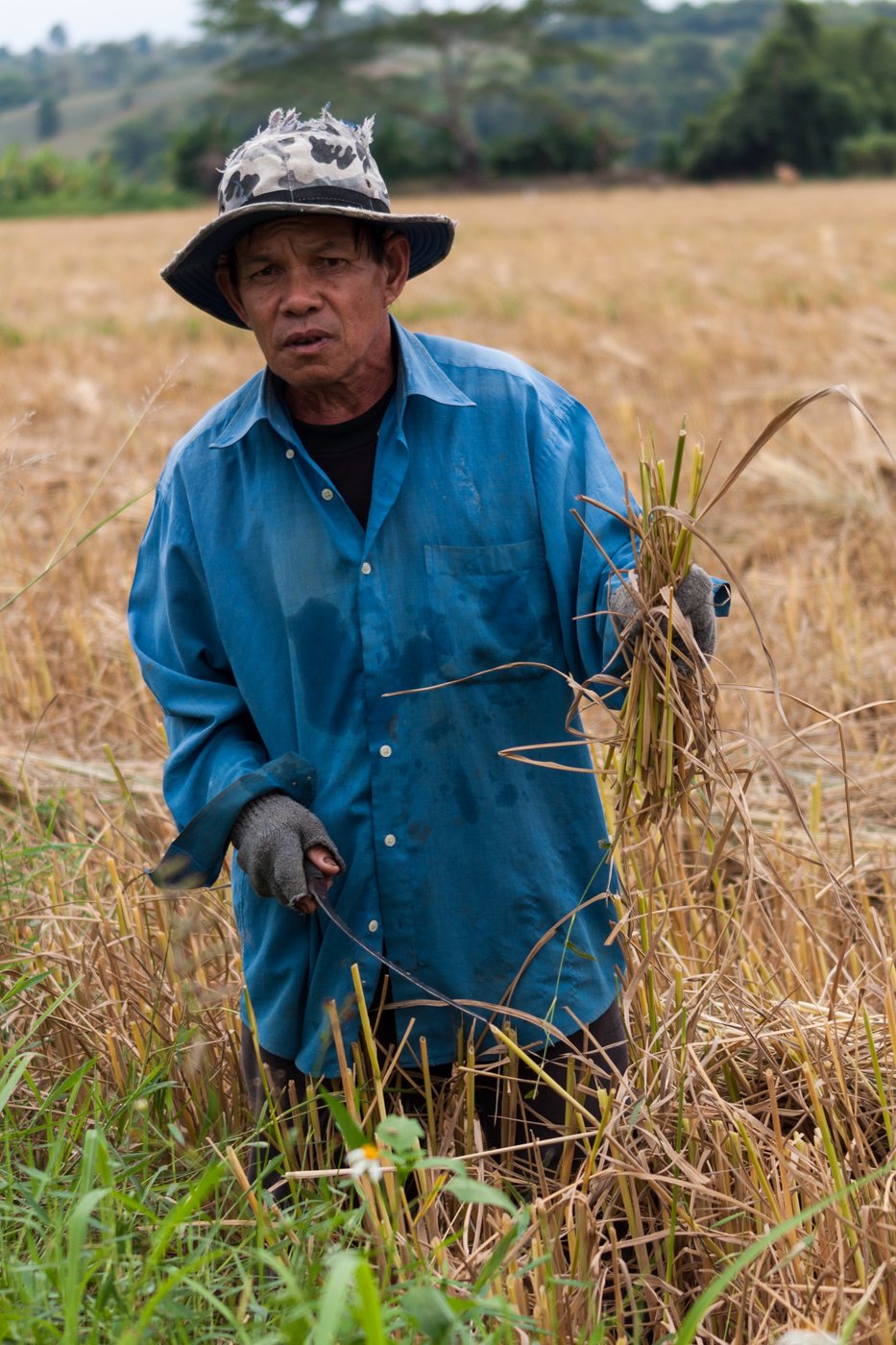
From field to bowl: learn Thai vocabulary for growing rice
You do not need farming words to order lunch, but you do need them to read a news headline, understand a song, or follow why everyone in the office is driving home in November — so they belong in any serious effort to learn Thai vocabulary beyond the tourist phrasebook. Rice is Thailand’s calendar, and these words turn up constantly in ordinary conversation.
- ทำนา (tham naa) — to farm rice, literally “to do the field”.
- ดำนา (dam naa) — to transplant rice seedlings, the bent-over work done by hand.
- เกี่ยวข้าว (gìao khâao) — to harvest rice; เกี่ยว is the verb for cutting with a sickle.
- โรงสี (rohng sǐi) — rice mill, literally “milling works”.
- ข้าวหอมมะลิ (khâao hǒwm má-lí) — jasmine rice, literally “jasmine-fragrant rice”. Printed on every export sack.
- ควาย (khwaai) — water buffalo. Also an insult, so use it only about animals.
Read Thai script on a rice-and-curry shop sign
The cheapest lunch in Thailand is also the best reading exercise, because the sign is always short, always the same, and always in big letters. The green banner below says ข้าวราดแกง (khâao râat gaeng) — “rice poured over with curry”. Learn to read Thai script on this one phrase and you can eat anywhere in the country for forty baht.
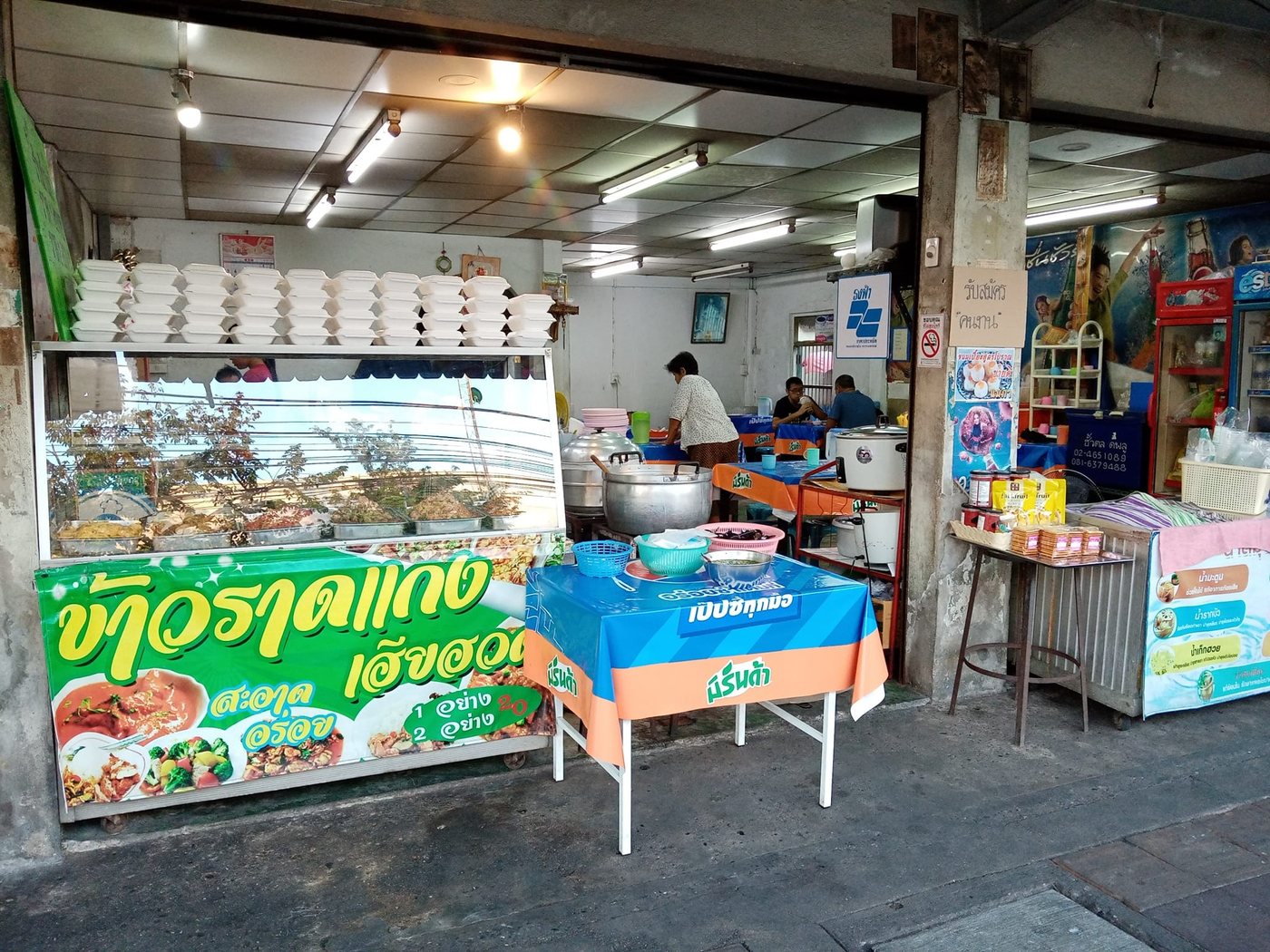
- อย่าง (yàang) — “kind” or “item”. 2 อย่าง means two curries on your rice, not two plates.
- ราด (râat) — to ladle over. The same verb shows up in ราดหน้า (râat nâa), noodles under gravy.
- แกง (gaeng) — curry. Note the vowel แอ wrapped around the consonant: Thai writes some vowels before the letter they are pronounced after.
- สั่งกลับบ้าน (sàng glàp bâan) — takeaway, literally “order back home”. The stacked foam boxes in the photo are for exactly this.
That trick with แ is the single biggest hurdle in learning to read Thai letters: four vowels are written to the left of their consonant, so แกง is spelled “vowel-g-ng” but read “gaeng”. Drill the shapes until they are automatic with our free Thai alphabet chart, which lays out all 44 Thai consonants and vowels with their sounds and classes.
Speak Thai at the rice stall: six sentences
Rice stalls are the friendliest place in Thailand to speak Thai out loud, because the vendor already knows what you want and only needs two details: which topping, and how spicy. They are also the cheapest place to learn Thai vocabulary, since you hear the same twenty words every single day. Keep the sentences short and finish each one with the politeness particle — that single syllable does more for you than perfect tones.
- ขอข้าวสวยหนึ่งจานครับ/ค่ะ (khǒw khâao sǐuay nùeng jaan khráp/khâ) — “one plate of rice, please.”
- ขอข้าวเหนียวครับ/ค่ะ (khǒw khâao nǐao khráp/khâ) — “sticky rice, please.”
- ไม่เผ็ดครับ/ค่ะ (mâi phèt khráp/khâ) — “not spicy.” Say it before they serve, not after.
- เผ็ดนิดหน่อย (phèt nít nòi) — “a little spicy”, if you want to be brave but not reckless.
- เท่าไรครับ/คะ (thâo rài khráp/khá) — “how much?” Note the rising tone on คะ in a question.
- อร่อยมากครับ/ค่ะ (à-ròi mâak khráp/khâ) — “very delicious.” The best-value sentence in the language.
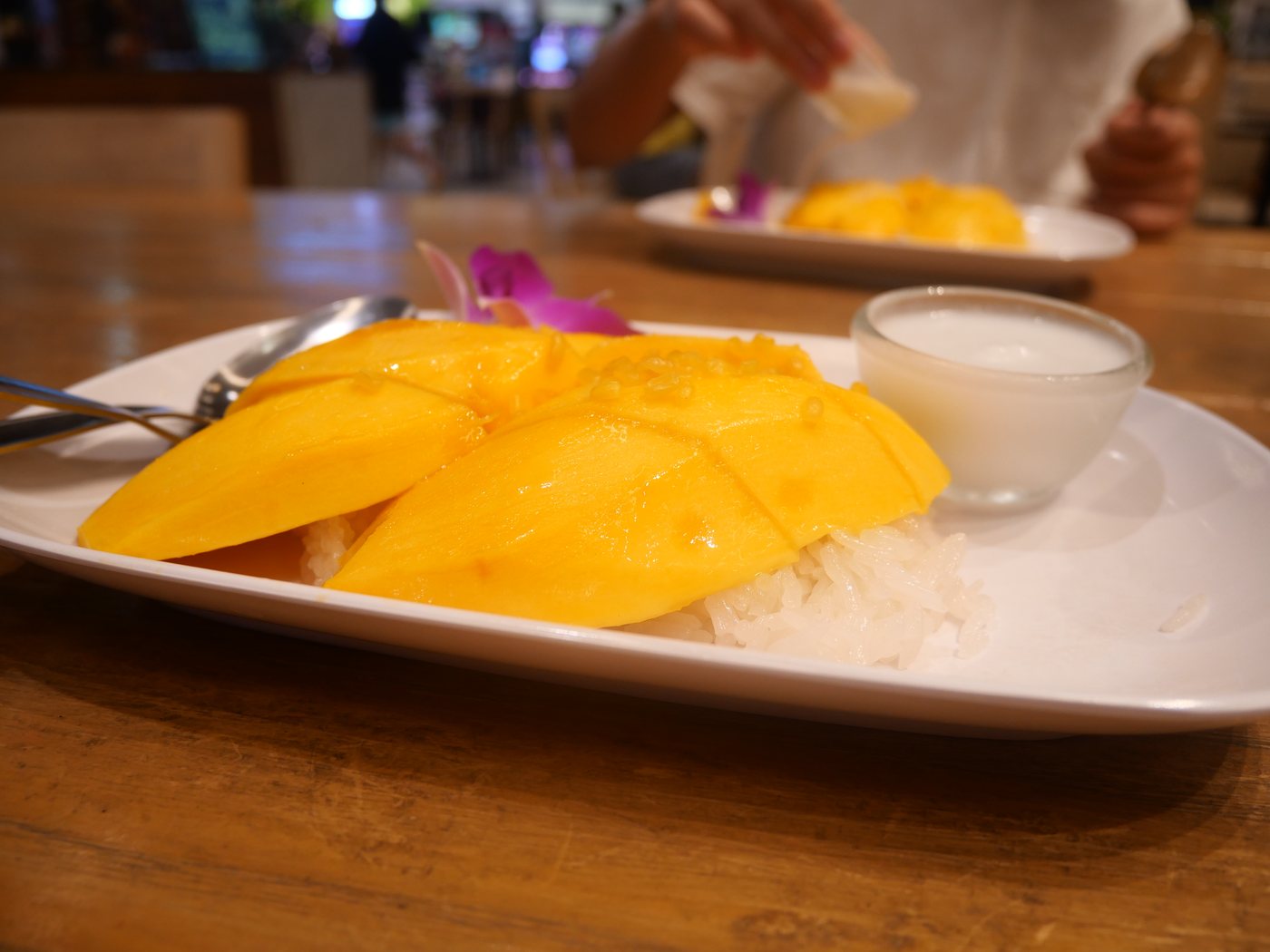
A study tip: one bowl, one sentence, every day
Here is a drill that costs nothing and fits around real life in Thailand. Every time you sit down to eat, name what is in front of you out loud in Thai before you pick up the spoon — ข้าวสวย, แกง, ไก่, น้ำ — then say one complete sentence about it, even a clumsy one. Three meals a day is twenty-one repetitions a week, attached to something you were going to do anyway, which is exactly how you learn Thai vocabulary that sticks instead of a list that fades. Vocabulary learned next to the object it names is remembered; vocabulary learned on a flashcard alone usually is not.
When you want the letters behind these words, work through our free Thai alphabet chart for the consonants and vowels, then drill recognition with the ThaiLetters flashcard trainer until ข and ช stop looking like the same letter. Start with ข้าว — three letters, one word, and the whole country eats it twice a day.