Learn Thai Vocabulary: Songkran & Thai New Year Thailand
Learn Thai vocabulary for Songkran in Thailand — water, temple and blessing words in Thai script with pronunciation, plus real photos and sign-reading tips.
Most visitors arrive in April knowing exactly one thing about Songkran: people throw water. That is true for about six hours a day on one street in each town, and it is the smallest part of the festival. If you want to learn Thai vocabulary that actually earns you a smile in Thailand, the words worth carrying are not the ones shouted behind a water gun — they are the quiet ones said at a temple, at a grandmother’s chair, and on the hand-painted programme sign taped to a lamppost at the end of the lane.
This Thai language guide works through about fifty Songkran words in three columns: Thai script, a Thai transliteration you can say out loud, and the literal meaning, because with these words the literal meaning is the lesson. The five photographs are real ones from Thailand — Si Lom Road in Bangkok at full volume, a community notice board, two temple rituals and a row of sand stupas.
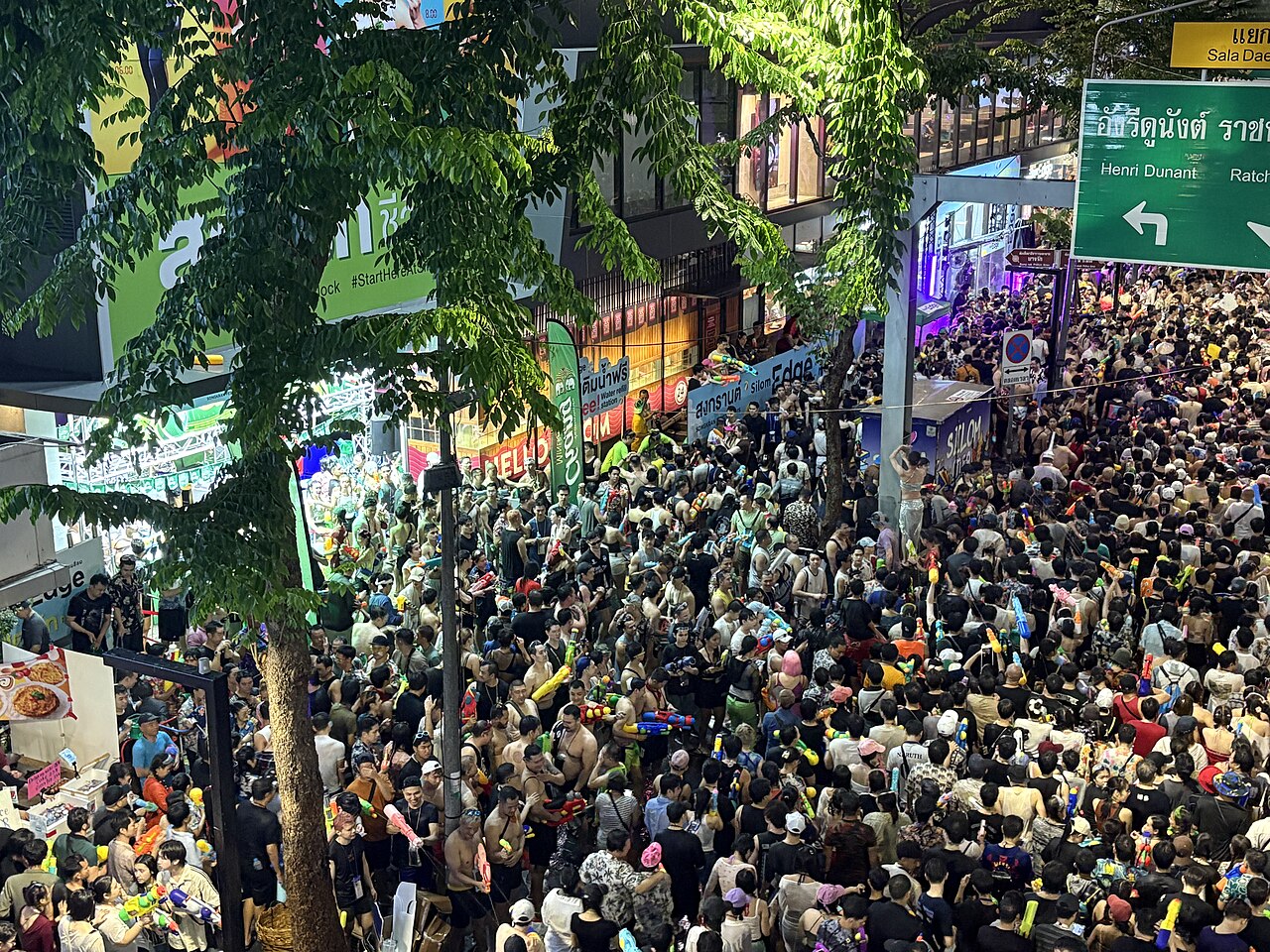
สงกรานต์: what the word actually means
สงกรานต์ (sǒng-graan) is not a Thai word at all in origin. It comes from Sanskrit saṃkrānti, “a passing over” — the moment the sun moves from one sign of the zodiac into the next. That is why the date is fixed to the sky and not to a calendar page, and why nothing in the word refers to water. Start with the frame words:
- สงกรานต์ (sǒng-graan) — Songkran, literally “the passage” of the sun
- วันสงกรานต์ (wan sǒng-graan) — Songkran day · เทศกาล (thêet-sà-gaan) — festival
- ปีใหม่ไทย (bpii mài thai) — Thai New Year, literally “year new Thai”
- เมษายน (mee-sǎa-yon) — April, abbreviated เม.ย. on every sign
- ประเพณี (bprà-phee-nii) — tradition · กิจกรรม (gìt-jà-gam) — activity, event
The holiday officially runs 13–15 April, and each day has its own name and its own social job:
- วันมหาสงกรานต์ (wan má-hǎa sǒng-graan), 13 April — “great Songkran day”, also วันผู้สูงอายุ, National Elderly Day
- วันเนา (wan nao), 14 April — the “in-between” day, now also วันครอบครัว (wan khrâwp-khrua), Family Day
- วันเถลิงศก (wan thà-lǒeng sòk), 15 April — “the day the new era is raised up”
Read Thai script on the community programme sign
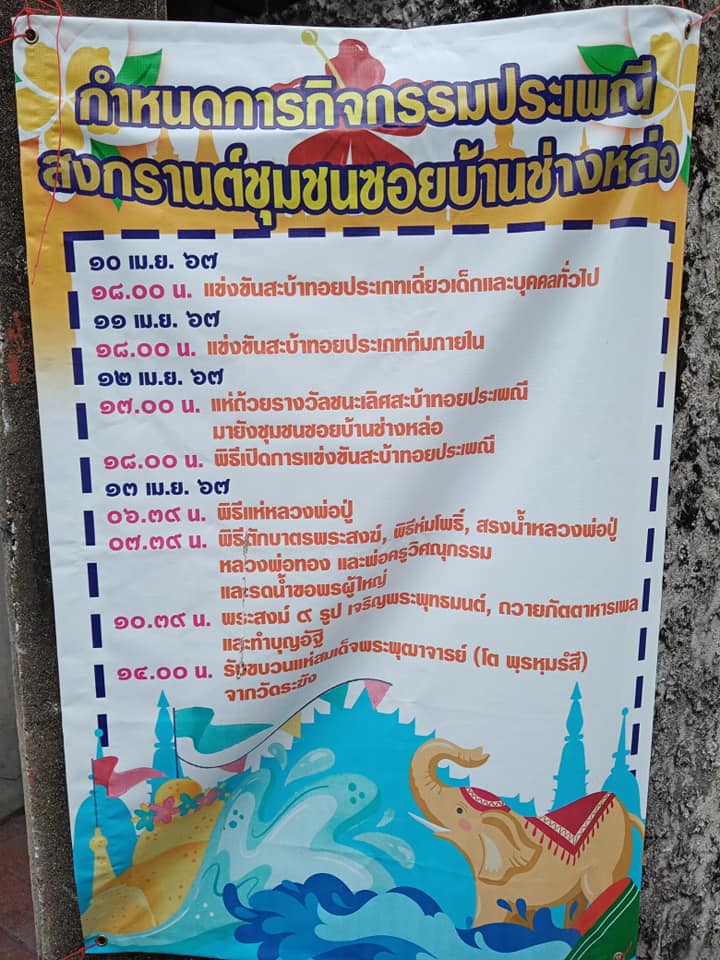
Signs like this one are the best free beginner Thai lesson in the country and the quickest way to read Thai script that was written for Thai people rather than for you, because the shape is predictable — time on the left, activity on the right — so you can read for meaning instead of guessing. Four reading habits make it fast:
- Thai digits first. ๐ ๑ ๒ ๓ ๔ ๕ ๖ ๗ ๘ ๙ are 0–9, and a Songkran sign is full of them. Our guide to reading Thai numerals covers the shapes in an evening
- Years are Buddhist Era. พ.ศ. ๒๕๖๗ is 2024 — subtract 543 — and signs often shorten it to the last two digits
- Month names are abbreviated with a full stop: ม.ค. January, เม.ย. April, ธ.ค. December
- Expect ชุมชน (chum-chon, community) and ซอย (soi, lane) in the title — this sign belongs to one lane, not to the city
Down the right-hand column of that banner sit the real events of a Thai Songkran: ตักบาตร (dtàk bàat, giving alms), สรงน้ำ (sǒng náam, bathing a Buddha image), รดน้ำขอพรผู้ใหญ่ (pouring water to ask a blessing of elders), แห่ (hàe, a procession) — and a สะบ้า (sà-bâa) tournament, a traditional disc-throwing game almost no guidebook mentions. Not one line of it is about water fights.
Learn Thai vocabulary for the street: เล่นน้ำ and สาดน้ำ
That said, you will get wet. The vocabulary of the street is small and worth drilling before you land, because people will say these words to you at speed:
- เล่นน้ำ (lên náam) — to play in the water, the normal phrase for joining in
- สาดน้ำ (sàat náam) — to throw or splash water at someone
- ปืนฉีดน้ำ (bpuen chìit náam) — water gun, literally “gun that squirts water”
- ขันน้ำ (khǎn náam) — the metal bowl the older generation still prefers
- น้ำอบไทย (náam òp thai) — Thai scented water, jasmine-sweet, used for the gentle rituals
- ดินสอพอง (din-sǎw phong) — the chalky white powder · ประแป้ง (bprà bpâeng) — to daub it on a cheek
- เปียก (bpìak) — wet · เย็น (yen) — cool · ร้อน (ráwn) — hot, which April certainly is
Two sentences cover nearly every exchange on a wet street: ขอเล่นด้วยได้ไหมครับ/คะ (khǎw lên dûay dâi mǎi khráp/khá), “may I join in?”, and ไม่เอาครับ/ค่ะ (mâi ao khráp/khâ), “no thank you” — said with a smile and a palm out, and almost always respected.
สรงน้ำพระ: the polite half of the festival
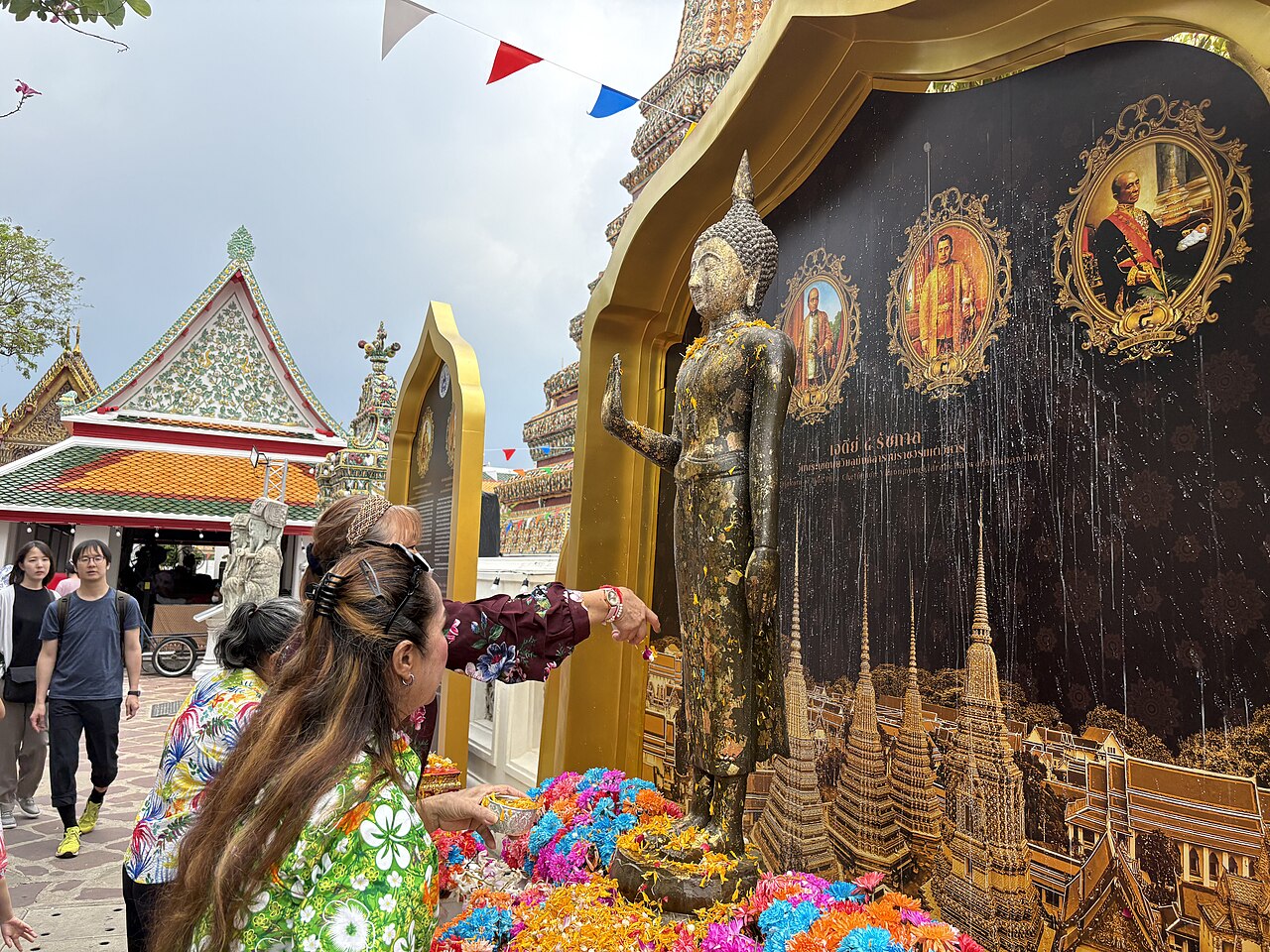
Thai keeps a separate register for monks, Buddha images and royalty, and Songkran is where a learner meets it for the first time. If you learn Thai vocabulary in only one place this week, make it the temple courtyard — these are the words you need inside the gate:
- สรงน้ำพระ (sǒng náam phrá) — to bathe a Buddha image or a monk
- ทำบุญ (tham bun) — to make merit, literally “to do goodness”
- ตักบาตร (dtàk bàat) — to put food in a monk’s alms bowl
- พวงมาลัย (phuang maa-lai) — a flower garland · ธูป (thûup) — incense
- ไหว้ (wâi) — the palms-together greeting · กราบ (gràap) — to bow to the floor
If temple vocabulary is new to you, our guide to Thai temple and merit words goes further into the monk register before you need it in person.
รดน้ำดำหัว: the words that show respect for age
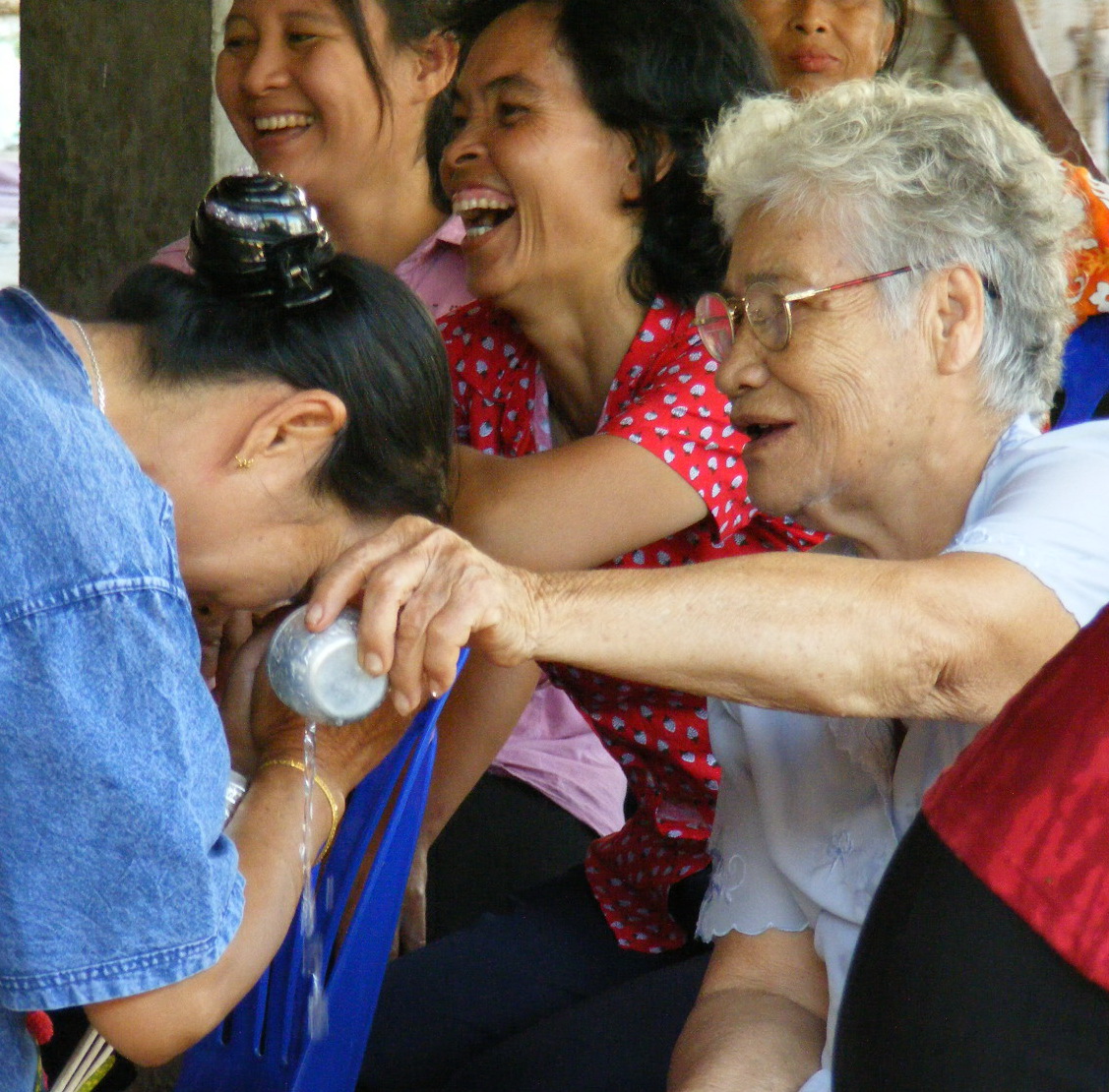
This is where Thai social hierarchy becomes visible, and where a handful of words will take you further than a hundred memorised nouns. รดน้ำดำหัว (rót náam dam hǔa) literally means “pour water, wash the head” — ดำหัว is a northern Thai phrase — though in practice the water is poured over cupped hands.
- ผู้ใหญ่ (phûu yài) — an elder or senior, literally “big person”
- ขอพร (khǎw phawn) — to ask for a blessing · อวยพร (uay phawn) — to give one
- ขอขมา (khǎw khà-mǎa) — to ask forgiveness for the past year
- กตัญญู (gà-dtan-yuu) — gratitude to those who raised you, a cornerstone word in Thai
- คุณย่า (khun yâa) — paternal grandmother · คุณยาย (khun yaai) — maternal grandmother. Thai insists you know which side
End every sentence here with ครับ (khráp) if you are a man or ค่ะ (khâ) if you are a woman. Dropping the particle in front of somebody’s grandmother is the one mistake that genuinely lands badly — our explainer on khrap and kha is ten minutes well spent before April.
เจดีย์ทราย and the merit-making words
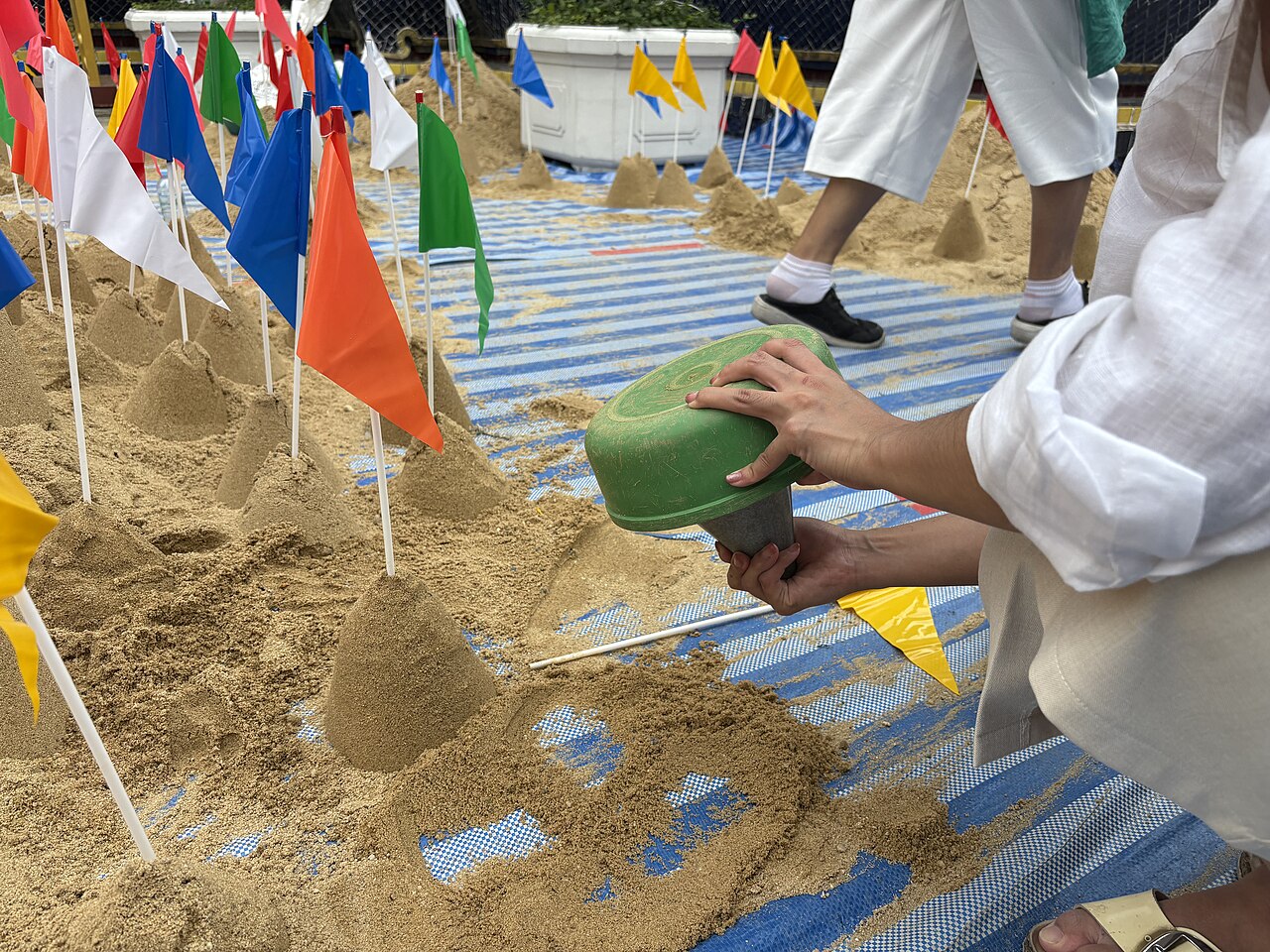
- เจดีย์ทราย (jee-dii saai) — sand stupa · ทราย (saai) — sand
- ธง (thong) — flag · วัด (wát) — temple · ลานวัด (laan wát) — the temple courtyard
- ปล่อยนกปล่อยปลา (bplòi nók bplòi bplaa) — “release birds, release fish”, a merit act
- กลับบ้าน (glàp bâan) — to go home, which is what the entire country does that week
Build a sand stupa badly and nobody minds; say เจดีย์ทราย out loud while you build it and whoever is kneeling beside you will correct your tones for free. That is the whole method this site believes in: learn Thai vocabulary with your hands busy and a Thai speaker within earshot, and Thai pronunciation stops being theoretical.
Greetings, and when to stop splashing
Three greetings cover the week, and Thai people are delighted when a foreigner uses the second one:
- สวัสดีปีใหม่ (sà-wàt-dii bpii mài) — happy new year
- สุขสันต์วันสงกรานต์ (sùk-sǎn wan sǒng-graan) — happy Songkran
- ขอให้มีความสุข (khǎw hâi mii khwaam sùk) — “may you have happiness”, the standard blessing
And the etiquette, which matters more than any phrase: do not splash monks, babies, police officers, or anyone in office clothes carrying a laptop. Do not throw ice water. Watch for ห้ามสาดน้ำ (hâam sàat náam), “no splashing”, posted outside hospitals and government offices — ห้าม is the prohibition word on every warning sign in Thailand. And treat the roads with respect: the Thai press calls the holiday period เจ็ดวันอันตราย (jèt wan an-dtà-raai), “the seven dangerous days”, for good reason.
A study tip: learn the sign, not the list
Do not try to memorise this page. Photograph one community programme sign like the one above, and work through it line by line with our free Thai alphabet chart open beside you — ten lines of real Thai will teach you more about Thai consonants and vowels in context than an hour of drilling, and the repeated words (วัน, น้ำ, พระ, บุญ) will start jumping out at you by the fourth line. Then put the twenty words you actually met into the flashcard trainer for the week.
That is the honest shortcut for anyone trying to learn Thai vocabulary for real in Thailand expat language terms: one real sign, one temple visit, one grandmother. Songkran gives you all three in a single afternoon, and the words you pick up on 13 April are the ones still working for you in November.