Learn Thai Vocabulary: Immigration Words in Thailand
Learn Thai vocabulary for immigration offices in Thailand: border signs, counter phrases and form words in Thai script with pronunciation and translation.
Nobody sets out to learn Thai vocabulary at a government counter, and yet the immigration office is where a surprising amount of it finally sticks. You are standing still, there is a queue, and every wall around you is covered in short official phrases repeated in Thai and English. For anyone living in Thailand on a long stay, that makes the immigration office the single best free reading classroom in the country — and it is a room you will visit again whether you study the words or not.
This Thai language guide walks through the words you meet in order: the sign over the border post, the phrases you say at the desk, the vocabulary printed on the forms, and the handful of words attached to the one thing everyone wants to avoid. Each entry gives the Thai script, a Thai transliteration you can actually pronounce, and a literal translation, because the literal meaning is usually what makes the word stay in your head. Every photograph below is a real one, and three of them show signs and paperwork you can practise reading right now.
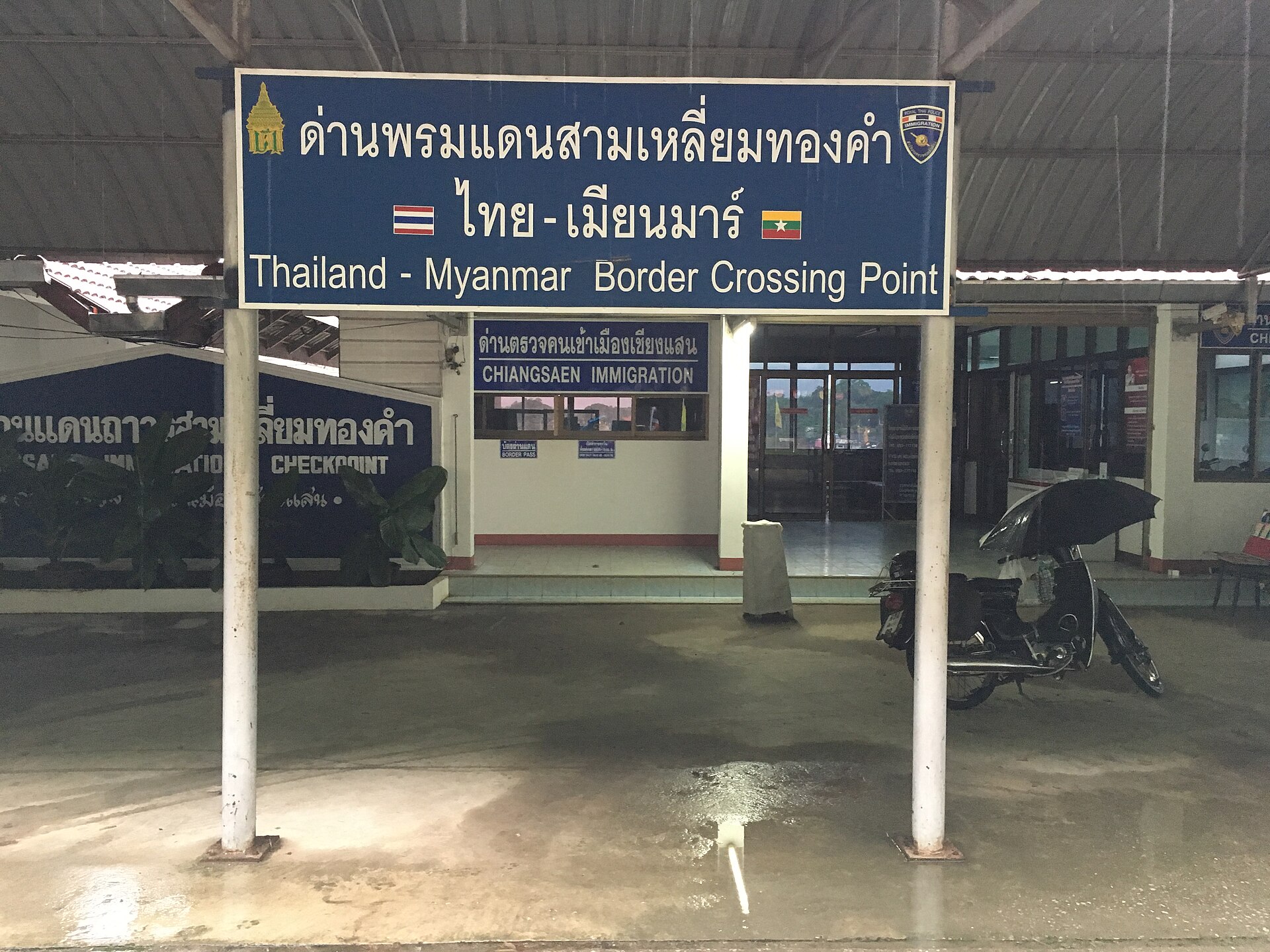
Reading the sign before you reach the counter
Four words do most of the work on every immigration sign in the country, and they are the best place to start if you want to learn Thai vocabulary that repays the effort. All four are compounds — ordinary short words glued together. Break them apart and they stop looking intimidating:
- ด่าน (dàan) — a checkpoint or toll post. One syllable, low tone, and it appears on road signs long before you reach any border.
- ตรวจคนเข้าเมือง (trùat khon khâo mueang) — “immigration”, but literally “inspect · people · entering · the country”. Thai builds the idea out of four words you will meet separately elsewhere.
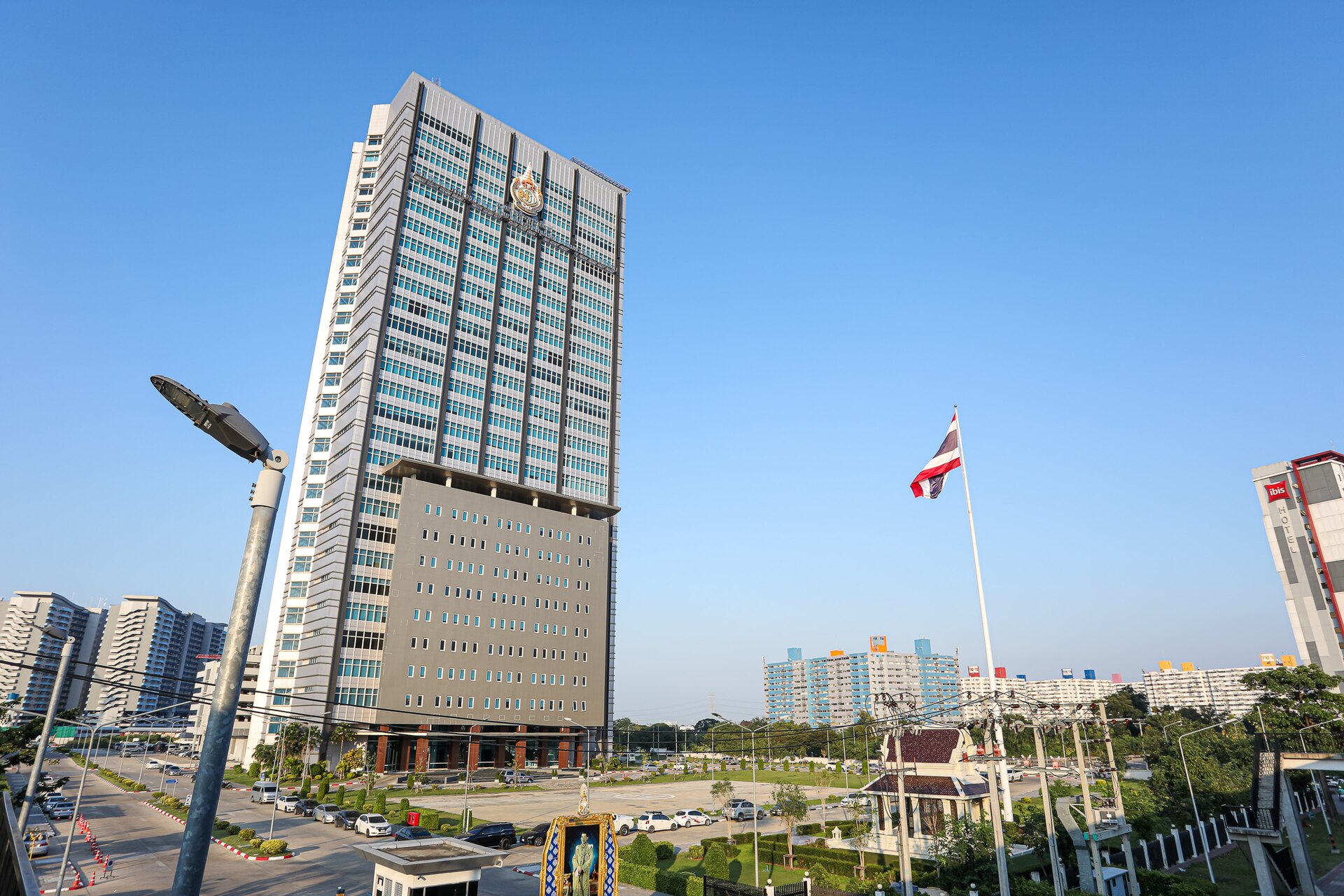
- ตม. (tɔɔ mɔɔ) — the abbreviation, read as the names of its two letters. Thai shortens long official names this way constantly, and once you can say the letter names you can decode dozens of them.
- พรมแดน (phrom-daen) — border. แดน on its own means “land” or “territory”.
Two more worth memorising before you fly: ขาเข้า (khǎa-khâo), arrivals, and ขาออก (khǎa-ɔ̀ɔk), departures. The literal reading is “leg in” and “leg out”, which is a far easier hook than the English. They are painted above every airport corridor in Thailand and on ferry piers and bus terminals too.
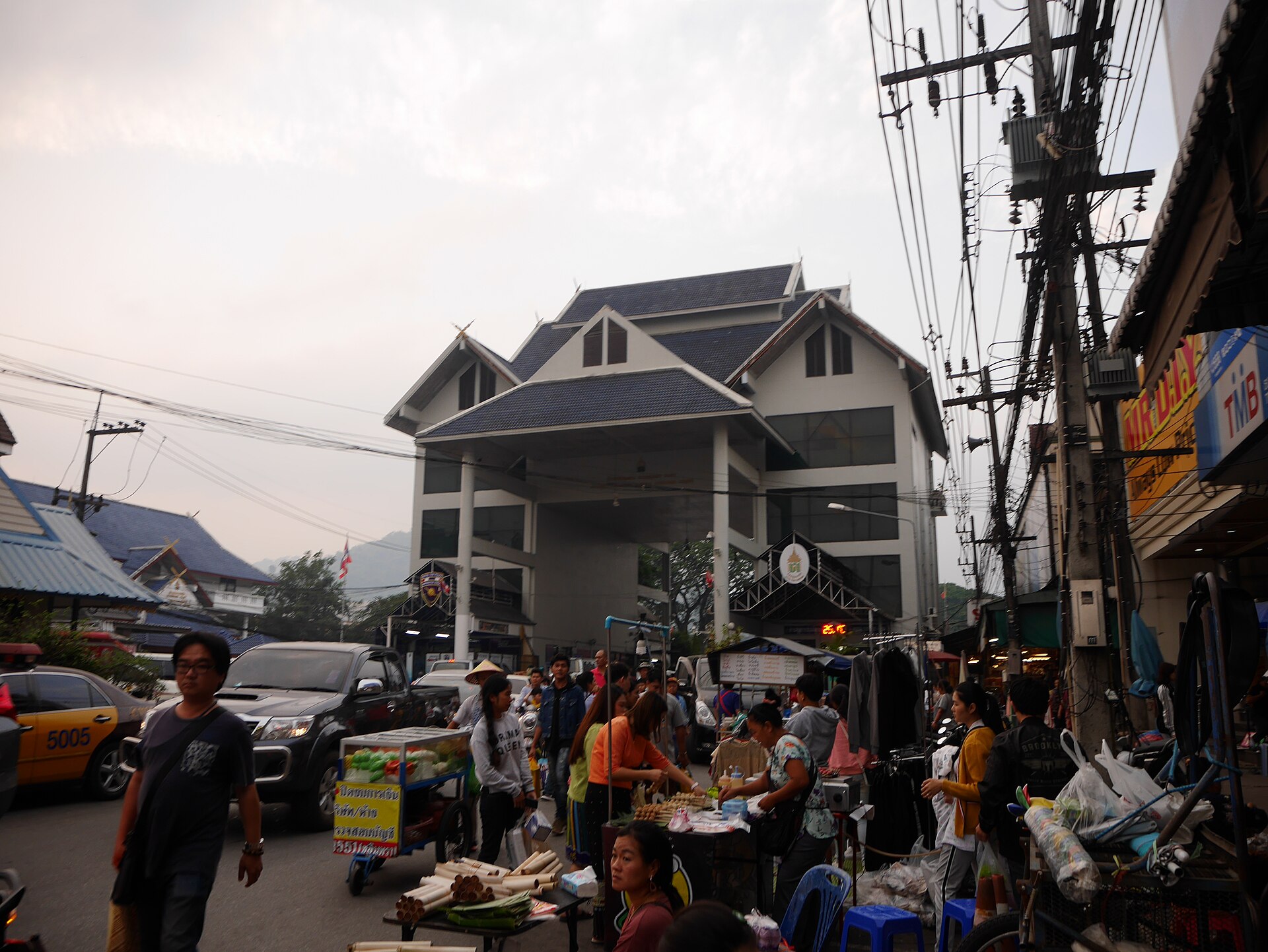
What you actually say at the desk
Officers will usually switch to English, so treat Thai here as a courtesy rather than a necessity — which is exactly why it lands well. Lead with the verb and finish with your politeness particle, ครับ (khráp) for men and ค่ะ (khâ) for women:
- ขอต่อวีซ่าครับ (khǒɔ tɔ̀ɔ wii-sâa khráp) — “I’d like to extend my visa.” ขอ is the all-purpose polite “may I have”; ต่อ means to join or extend, the same word used for extending a phone contract.
- หนังสือเดินทาง (nǎng-sǔe dəən-thaang) — passport, literally “travel book”. หนังสือ alone is “book”, so this is two words you already half-know.
- เอกสาร (èek-gà-sǎan) — documents — and สำเนา (sǎm-nao), a photocopy. Expect to be asked for both.
- บัตรคิว (bàt khiu) — queue ticket — and ช่อง (chôɔng), the counter or window your number is called to. คิว is simply English “queue” borrowed whole.
- ไม่เข้าใจครับ (mâi khâo jai khráp) — “I don’t understand” — and พูดช้าๆ ได้ไหมครับ (phûut cháa cháa dâai mǎi khráp), “could you speak slowly?” These two are worth more than any amount of vocabulary.
One phrase is worth recognising even if you never say it: อนุญาตให้อยู่ถึงวันที่ (à-nú-yâat hâi yùu thǔeng wan-thìi) — “permitted to stay until the date”. It is printed on the entry stamp itself, and the date beside it is the only number on the page that matters. อนุญาต (à-nú-yâat), “to permit”, turns up everywhere once you notice it: ใบอนุญาต is a licence, and ห้าม (hâam), “forbidden”, is the word that does the opposite job. Spotting one root doing several jobs like that is the quickest way to learn Thai vocabulary at speed.
Form words: the 90-day report and friends
Thai paperwork vocabulary is small and repetitive, which makes it ideal for a beginner Thai lesson — and a chance to learn Thai vocabulary you will reuse at the bank, the hospital and the post office. Learn these six and most official forms become navigable:
- กรอกแบบฟอร์ม (grɔ̀ɔk bàep-fɔɔm) — fill in the form. The second half is English “form” in Thai letters.
- รายงานตัว (raai-ngaan tua) — to report in person, literally “report · body”. The รายงานตัว 90 วัน notice is the 90-day report every long-stay resident knows.
- ที่พักอาศัย (thîi-phák aa-sǎi) — place of residence. ที่ means “place” and พัก means “to rest” — the same ที่พัก you see on hotel signs.
- เจ้าบ้าน (jâo-bâan) — the householder or landlord, literally “owner of the house”; the person who files the accommodation notification for you.
- แจ้ง (jâeng) — to notify or declare. แจ้งที่พัก is “notify accommodation”; แจ้งความ is to report something to the police.
- เซ็นชื่อ (sen chûue) or ลงชื่อ (long chûue) — to sign. The first borrows English “sign”; the second is the formal one printed on documents.
The paper arrival card, บัตรขาเข้า (bàt khǎa-khâo), long known to everyone as the TM6, has now been replaced for most arrivals by an online form filed before you fly. The vocabulary outlived the slip of paper: the same words appear on the digital version, and บัตร (bàt), “card”, is one of the most reusable nouns in the language — bank card, ID card, queue ticket, name card.
The words on the fine slip
Overstaying — อยู่เกินกำหนด (yùu gəən gam-nòt), literally “stay beyond the set limit” — carries a daily ค่าปรับ (khâa-pràp), a fine. The amounts and the consequences change with the rules, so check the Immigration Bureau rather than any blog, this one included. The words, though, are stable, and they are the same ones used for traffic fines and late fees: ค่า is a charge, ปรับ is to penalise, and วันละ (wan-lá) means “per day”.
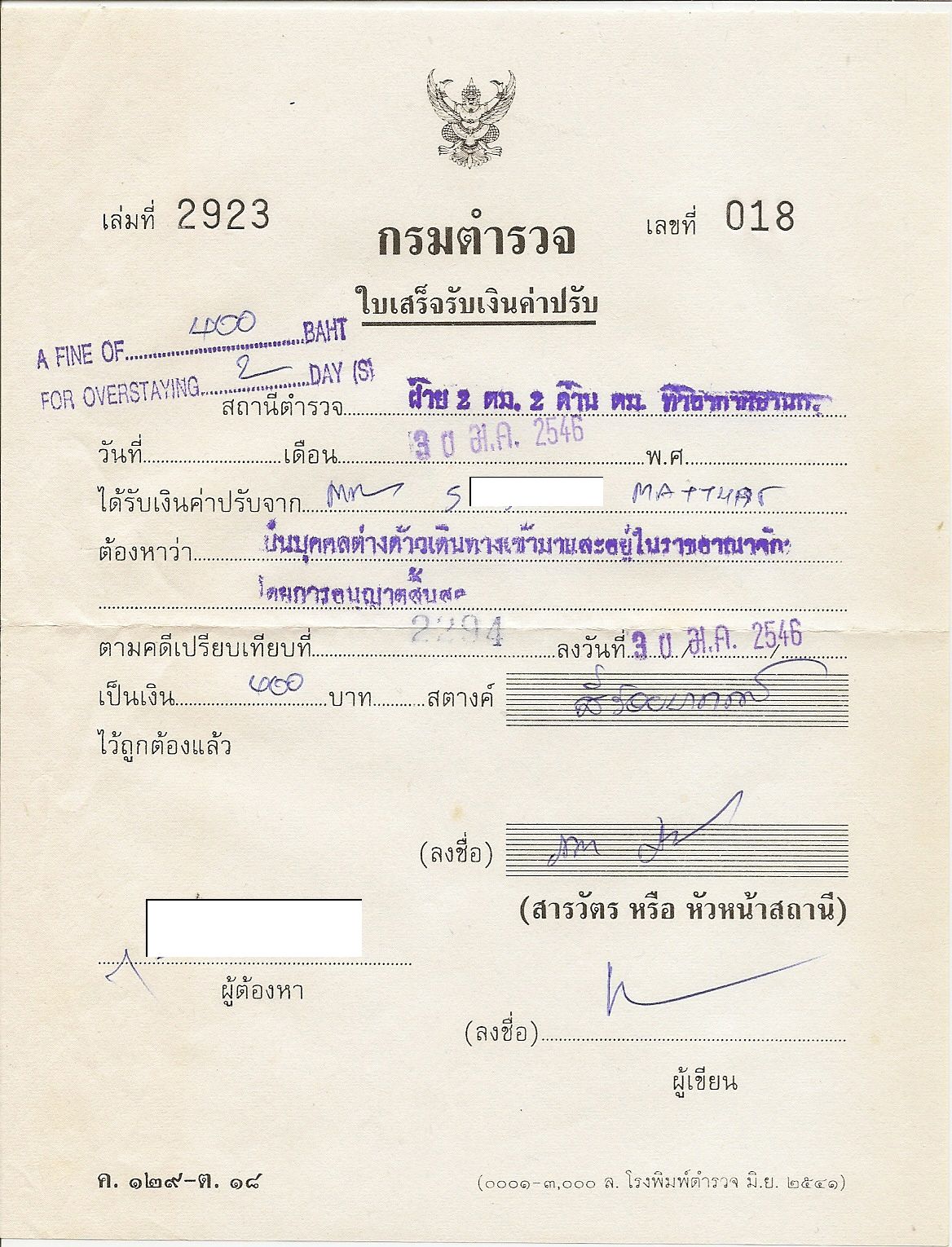
Thai numerals hide on official paper
Shops and road signs switched to Arabic digits decades ago, but government forms did not. The receipt above uses ๐๑๒๓๔๕๖๗๘๙ for its reference numbers and its print date, and the year is a พ.ศ. (phɔɔ sǔɔ) Buddhist Era year, 543 ahead of the Western one. If that arithmetic is still slow, our Buddhist date calculator does it instantly, and our guide to reading Thai numerals drills the digits themselves.
A study tip: collect the compounds, not the sentences
Almost every word in this guide is two or three ordinary words stuck together — travel book, inspect-people-entering-country, stay-beyond-limit, report-body. That is how Thai officialdom builds its vocabulary, and it means each new term you meet is mostly made of parts you already have. So when you photograph a sign, do not file the whole phrase. Break it at the seams, learn the pieces, and the next sign will be half-translated before you start. It is a far more durable way to learn Thai vocabulary than memorising phrases whole.
Then give yourself the reading half. Ten minutes a day on our free flashcard trainer will fix the Thai consonants and vowels in these words in place, our Thai alphabet chart covers the letters that keep appearing in official spellings, and our guide to reading Thai warning signs handles the other kind of sign you need to understand first time. Start with ด่าน and ขาเข้า. You will read them within a week of looking.