Learn Thai Vocabulary: Thai Zodiac Years in Thailand
Learn Thai vocabulary for the 12 Thai zodiac years in Thailand: ปีนักษัตร names in Thai script, pronunciation, birth-year temples and how to answer politely.
If you learn Thai vocabulary in the order it actually gets used in Thailand, the twelve zodiac years arrive surprisingly early. The question เกิดปีอะไร (gə̀ət pii à-rai) — “which year were you born in?” — is small talk here in the way the weather is small talk in Britain, and Thai people asking it are not after a number. They are asking which of the twelve animals of the Thai zodiac years belongs to you. Answer it correctly and you have done more for the conversation than ten minutes of careful grammar. That is the appeal of the ปีนักษัตร: twelve short words that come up every single week.
This Thai language guide covers all twelve year names in Thai script with a Thai transliteration you can say out loud, the everyday animal words they are paired with, the temple each year is assigned to in the north, and the polite way to ask and answer. Every photograph below is real, and three of them show signs you can go and read for yourself.
Why the year matters more than the number
Asking someone's age outright — อายุเท่าไหร่ (aa-yú thâo-rài) — is far less rude in Thailand than it is in Britain or America, because age decides how people address each other. Someone older than you is พี่ (phîi), someone younger is น้อง (nɔ́ɔng), and nobody can place you until they know. The zodiac question is the gentler version of the same question: give your animal, and any Thai speaker can work out your age to within a year, because the cycle runs exactly twelve years long.
It also explains a lot of what you see at temples, in newspapers and on New Year merchandise. If you have ever wondered why one animal is suddenly everywhere each January, this is why — 2026 is ปีมะเมีย, the year of the horse, and 2027 will be ปีมะแม, the goat.
Learn Thai vocabulary: the twelve zodiac year names
Here is the full cycle. The first word is the zodiac name — most of them came into Thai from Old Khmer and are used for almost nothing else — and the second is the everyday animal word you would use at the zoo. Learning them as pairs is the fastest route, and it means you learn Thai vocabulary for animals at the same time:
- ปีชวด — pii chûat — rat. Everyday word: หนู (nǔu).
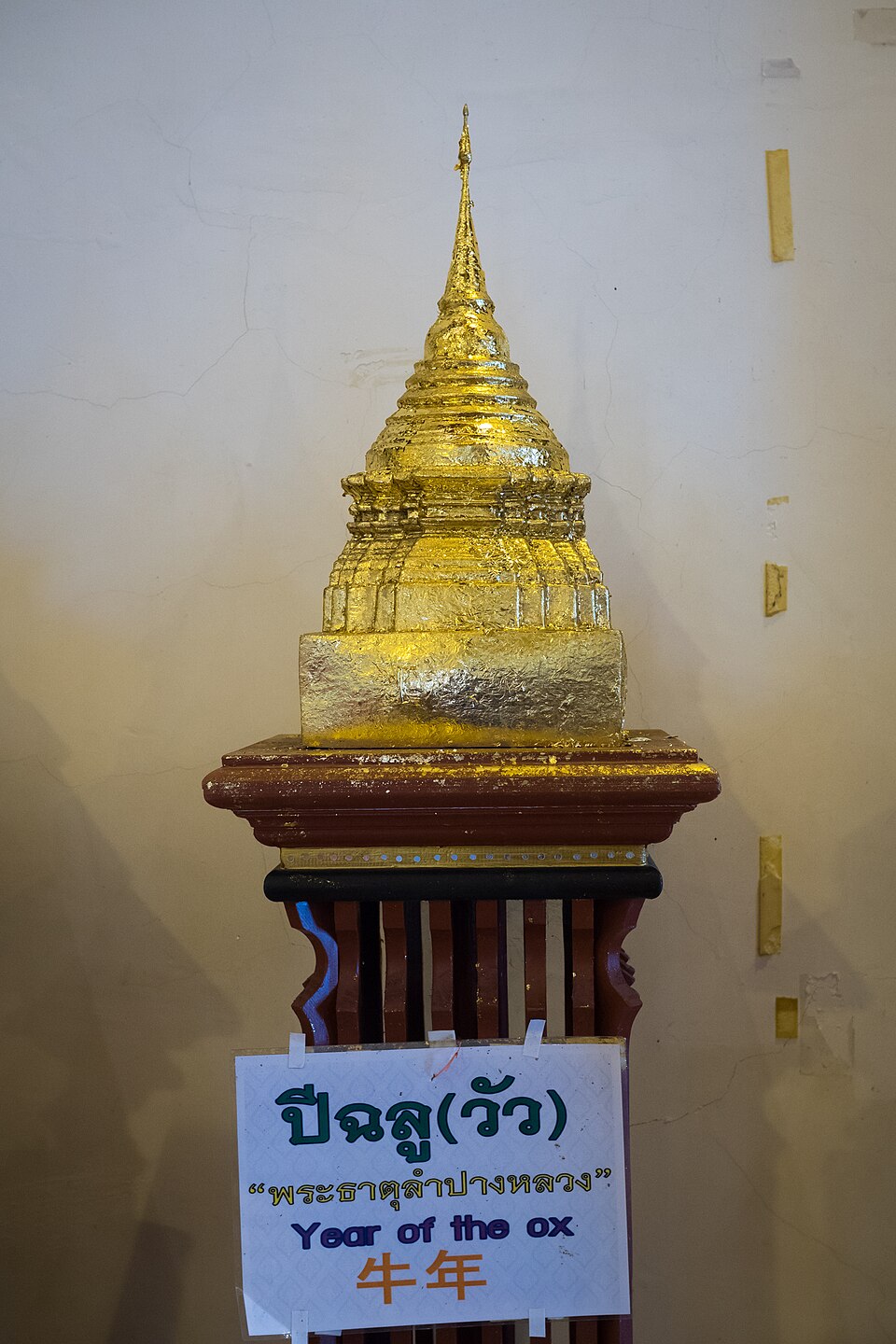
- ปีฉลู — pii chà-lǔu — ox. Everyday word: วัว (wua).
- ปีขาล — pii khǎan — tiger. Everyday word: เสือ (sǔa).
- ปีเถาะ — pii thɔ̀ — rabbit. Everyday word: กระต่าย (grà-tàai).
- ปีมะโรง — pii má-roong — great serpent, understood as the dragon. Everyday word: มังกร (mang-gɔɔn).
- ปีมะเส็ง — pii má-sěng — small snake. Everyday word: งู (nguu).
- ปีมะเมีย — pii má-mia — horse. Everyday word: ม้า (máa).
- ปีมะแม — pii má-mɛɛ — goat. Everyday word: แพะ (phɛ́).
- ปีวอก — pii wɔ̂ɔk — monkey. Everyday word: ลิง (ling).
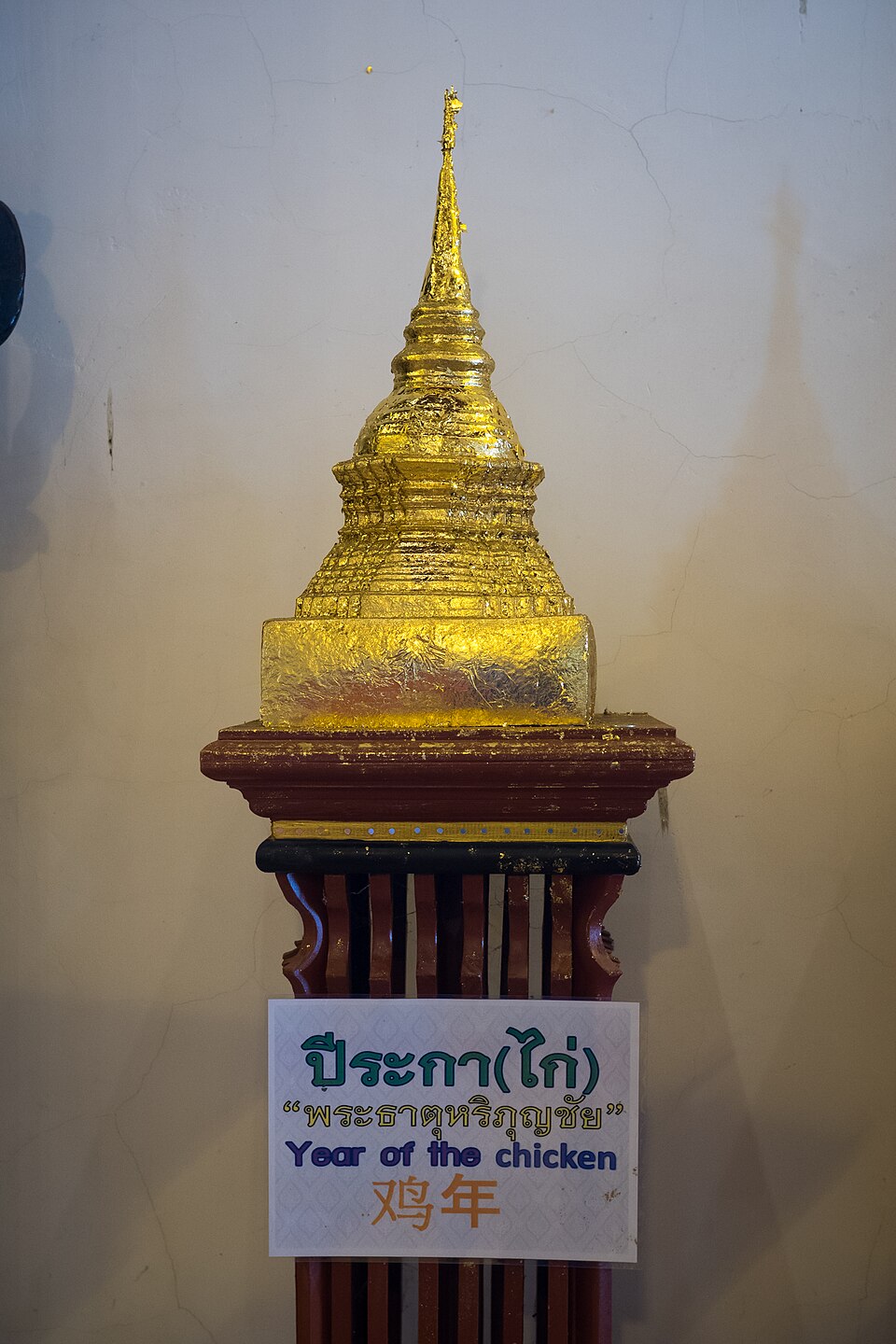
- ปีระกา — pii rá-gaa — rooster. Everyday word: ไก่ (gài).
- ปีจอ — pii jɔɔ — dog. Everyday word: หมา (mǎa).
- ปีกุน — pii gun — pig. Everyday word: หมู (mǔu).
Two Thai pronunciation notes that save embarrassment. ปีมะเมีย (horse) and ปีมะแม (goat) sit next to each other in the cycle and differ by one vowel — -mia against -mɛɛ — so slow down on both. And หมู (mǔu, pig) against หมา (mǎa, dog) is the classic beginner swap; if you want the tone rules behind those rising tones, our tone marks explainer works through them letter class by letter class.
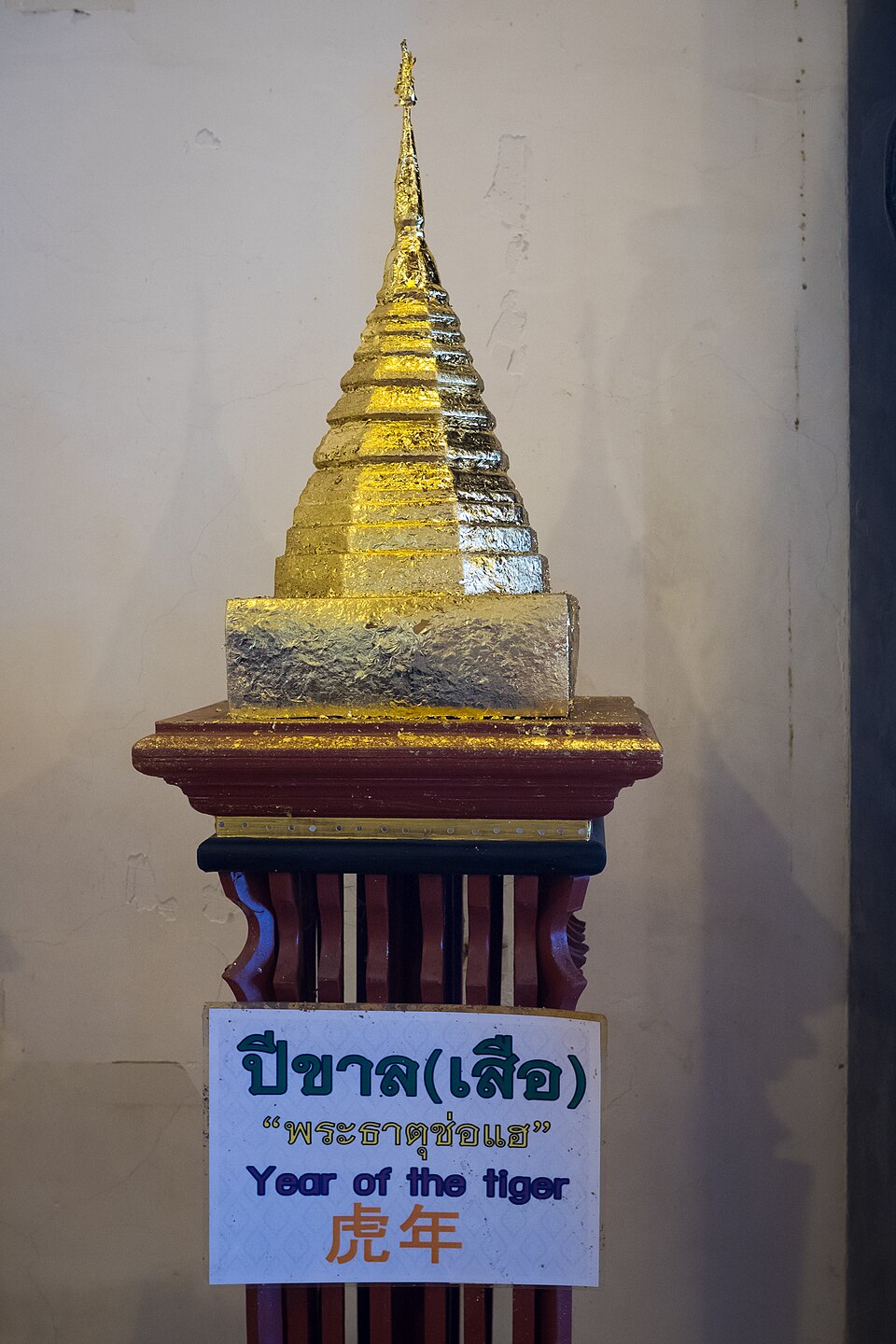
Read Thai script: the shape of a birth-year sign
These signs make an ideal beginner Thai lesson, because they repeat the same template twelve times over — a painless way to learn Thai vocabulary in context rather than off a list. Three pieces are worth learning as whole units:
- ปี — pii — year. Two Thai letters, ป plus the vowel ี perched above it — a useful reminder that Thai vowels sit around the consonant, not only after it.
- พระธาตุ — phrá thâat — a relic stupa. พระ is the honorific you already know from monks and Buddha images; ธาตุ means relic or element. The final ุ is not pronounced — the word ends on the t.
- ประจำปีเกิด — prà-jam pii gə̀ət — “assigned to the year of birth”. Put the two together and พระธาตุประจำปีเกิด is the standard phrase for a birth-year stupa.
If the vowel placement in those words is still slowing you down, this is a good moment to go back and learn Thai alphabet order properly: the full Thai alphabet chart lays out the Thai consonants and vowels one by one, with the anchor word Thai children use for each letter.
Your birth-year temple: พระธาตุประจำปีเกิด
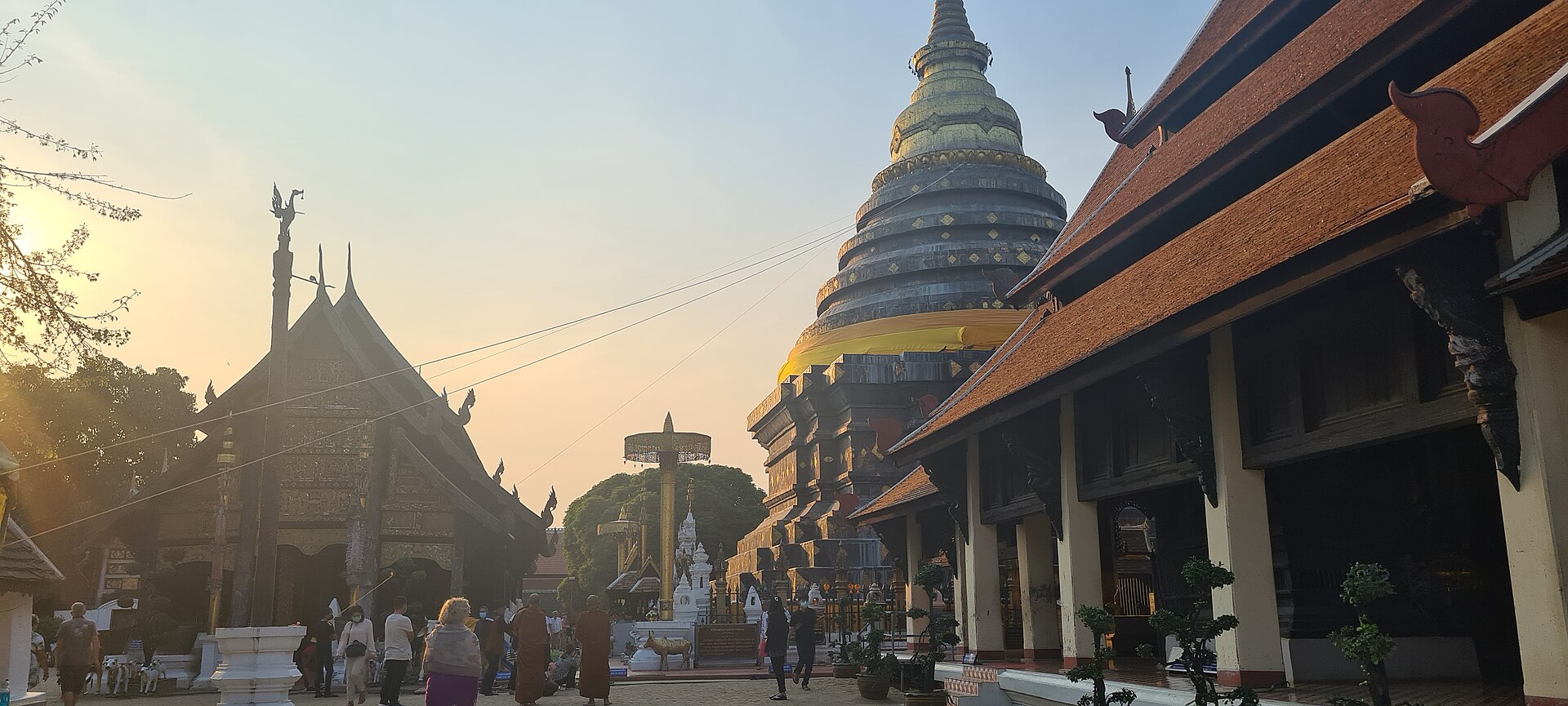
In northern Thailand the twelve years are not only a way of counting. Each one is attached to a particular stupa, and a Lanna tradition holds that you should make the pilgrimage to yours at least once in your life. That is why the model stupas in these photographs exist at all: Wat Phra Singh in Chiang Mai lines up all twelve so that visitors can find their own.
- ปีชวด rat — พระธาตุศรีจอมทอง, Chiang Mai
- ปีฉลู ox — พระธาตุลำปางหลวง, Lampang
- ปีขาล tiger — พระธาตุช่อแฮ, Phrae
- ปีเถาะ rabbit — พระธาตุแช่แห้ง, Nan
- ปีมะโรง dragon — พระธาตุวัดพระสิงห์, Chiang Mai
- ปีมะเส็ง snake — the Bodhi tree at Bodh Gaya in India, so people in Thailand visit a replica instead
- ปีมะเมีย horse — Shwedagon in Myanmar, with พระบรมธาตุเมืองตาก in Tak as the usual stand-in
- ปีมะแม goat — พระธาตุดอยสุเทพ, Chiang Mai
- ปีวอก monkey — พระธาตุพนม, Nakhon Phanom
- ปีระกา rooster — พระธาตุหริภุญชัย, Lamphun
- ปีจอ dog — พระธาตุจุฬามณี, which tradition places in the heavens, so Wat Ket Karam in Chiang Mai serves as the earthly substitute
- ปีกุน pig — พระธาตุดอยตุง, Chiang Rai
Speak Thai: asking and answering politely
The exchange is short enough to memorise today. Men end the sentence with ครับ (khráp); women use คะ (khá, rising) for a question and ค่ะ (khâ, falling) for a statement — a distinction worth getting right, because it is one of the first things a Thai ear notices.
- คุณเกิดปีอะไรครับ — khun gə̀ət pii à-rai khráp — “which year were you born in?” (male speaker)
- ผมเกิดปีมะเมียครับ — phǒm gə̀ət pii má-mia khráp — “I was born in the year of the horse.” (male speaker)
- ดิฉันเกิดปีระกาค่ะ — di-chǎn gə̀ət pii rá-gaa khâ — “I was born in the year of the rooster.” (female speaker)
- ปีนี้ปีอะไร — pii níi pii à-rai — “what year is this one?” Easy to use, and the answer teaches you something.
One more word to watch for around New Year: ปีชง (pii chong), the “clashing year” — the Chinese-Thai belief that certain animals clash with the incoming year and need a corrective blessing, แก้ชง (gɛ̂ɛ chong). Temples in Bangkok and Chonburi advertise it on banners every January, and now you can read them.
Working out which animal you are
Count in twelves. 2026 is the horse, so 2014, 2002 and 1990 were horse years too, and you can reach any other year by stepping back or forward in twelves from one you know. Two complications are worth knowing before you announce your answer with confidence:
- The Buddhist Era. Thai documents count in พ.ศ. (phɔɔ sɔ̌ɔ), which runs 543 years ahead of the Western year, so 2026 is พ.ศ. ๒๕๖๙. Our Buddhist date calculator converts either way while the arithmetic is still slow.
- Where the year turns. The calendar year starts on 1 January, but the zodiac year traditionally turns at Songkran in April, and Chinese-Thai families often count from Chinese New Year instead. Anyone born in January, February or March may be given two different animals by two different people. That is a normal ambiguity, not a mistake on your part.

A study tip: twelve words, one sentence
Do not try to memorise the cycle as a list. Learn one sentence — ผมเกิดปี…ครับ or ดิฉันเกิดปี…ค่ะ — and slot your own animal into it until it comes out without thinking. That single sentence is the one you will actually need, and it gives you a frame to hang the other eleven words on as you hear them. Then add the animals in pairs, zodiac name beside everyday name, because hearing ไก่ will remind you of ระกา long before the reverse is true. Chasing one useful word through every context you meet it in is a far better way to learn Thai vocabulary than collecting fifty words you never use.
For the reading half, ten minutes a day on our free flashcard trainer will fix the letters in these words in place, and our guide to Thai animal words picks up the dogs, geckos and water buffalo that fill the gaps between zodiac animals. Learn your own year first; the other eleven arrive on their own, one conversation at a time.