Learn Thai Vocabulary: Fried Insects in Thai Markets
Learn Thai vocabulary at the fried insect cart in Thailand: cricket, silkworm and grasshopper names in Thai script, reading the price cards, and what to say.
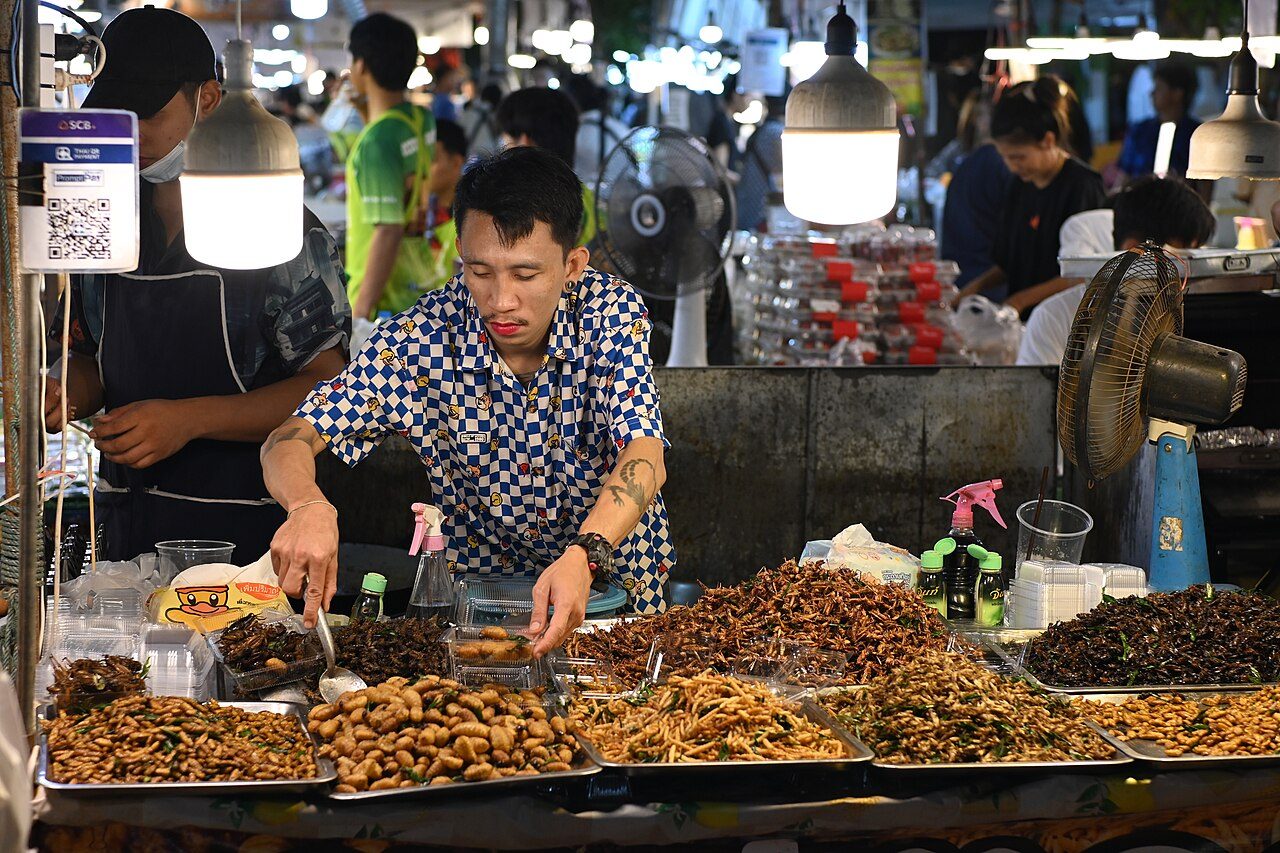
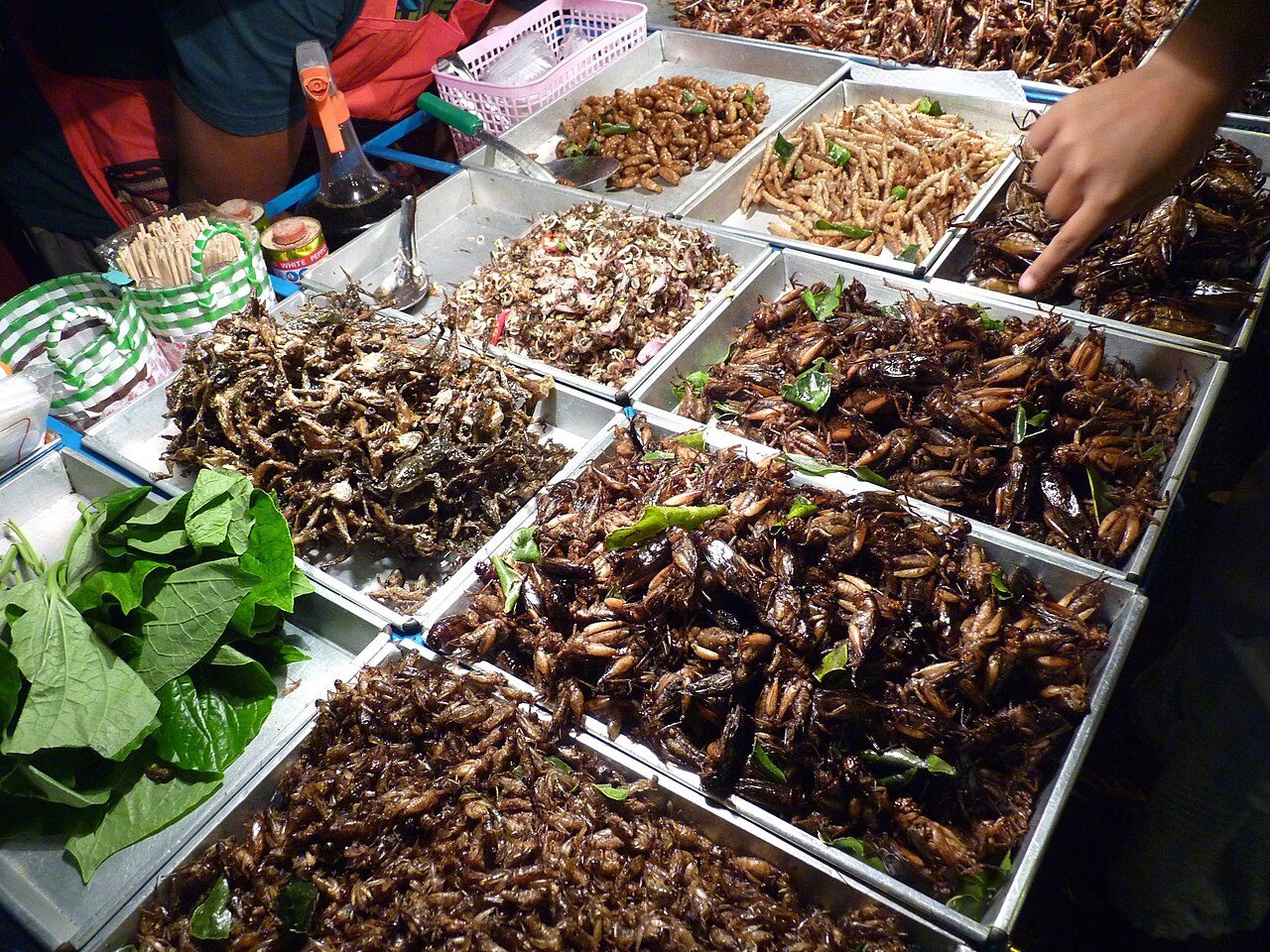
Somewhere between the grilled pork skewers and the fruit cart, on almost every night market street in Thailand, there is a glass trolley lit by a bare bulb and stacked with metal trays of fried insects. Most visitors photograph it and walk on. That is a missed lesson, because this one cart is the single best free classroom on the street: six or seven items, each one labelled in Thai script, each one priced, and a vendor who is entirely used to explaining them. Learn Thai vocabulary here and you walk away with animal names, a cooking verb, a unit of weight and four sentences you will reuse in every market in the country.
Everything below gives the Thai script, a plain Thai transliteration you can say out loud, and the literal meaning wherever it helps the word stick. You do not need any grammar you have not already met.
Start with one word: แมลงทอด
The whole category is แมลงทอด (má-lɛɛng thôɔt), literally “insect · deep-fried”. Both halves are worth more than this one cart. แมลง is the standard word for any insect, and ทอด (thôɔt) is the verb for deep-frying that sits on the end of half the dishes in Thailand — ไก่ทอด fried chicken, ปลาทอด fried fish, กล้วยทอด fried banana. Food words in Thai are usually built this plainly: ingredient first, cooking method second.
Now look at แมลง as a piece of read Thai script practice, because it is a famous trap. It is written with four letters — ม, ล, ง and the vowel แ◌ — yet it is said with two syllables, má-lɛɛng. The written vowel แ◌ belongs to ล, not to the ม it sits in front of, and the ม quietly takes a short unwritten “a”. Thai does this constantly, and it is the main reason beginners who have learned every one of the Thai consonants and vowels still cannot pronounce a word on sight. Treat แมลง as a free beginner Thai lesson in spotting the unwritten vowel. If the three consonant classes are still fuzzy, our Thai alphabet chart lays them out on one screen.
Learn Thai vocabulary for what is actually in the trays
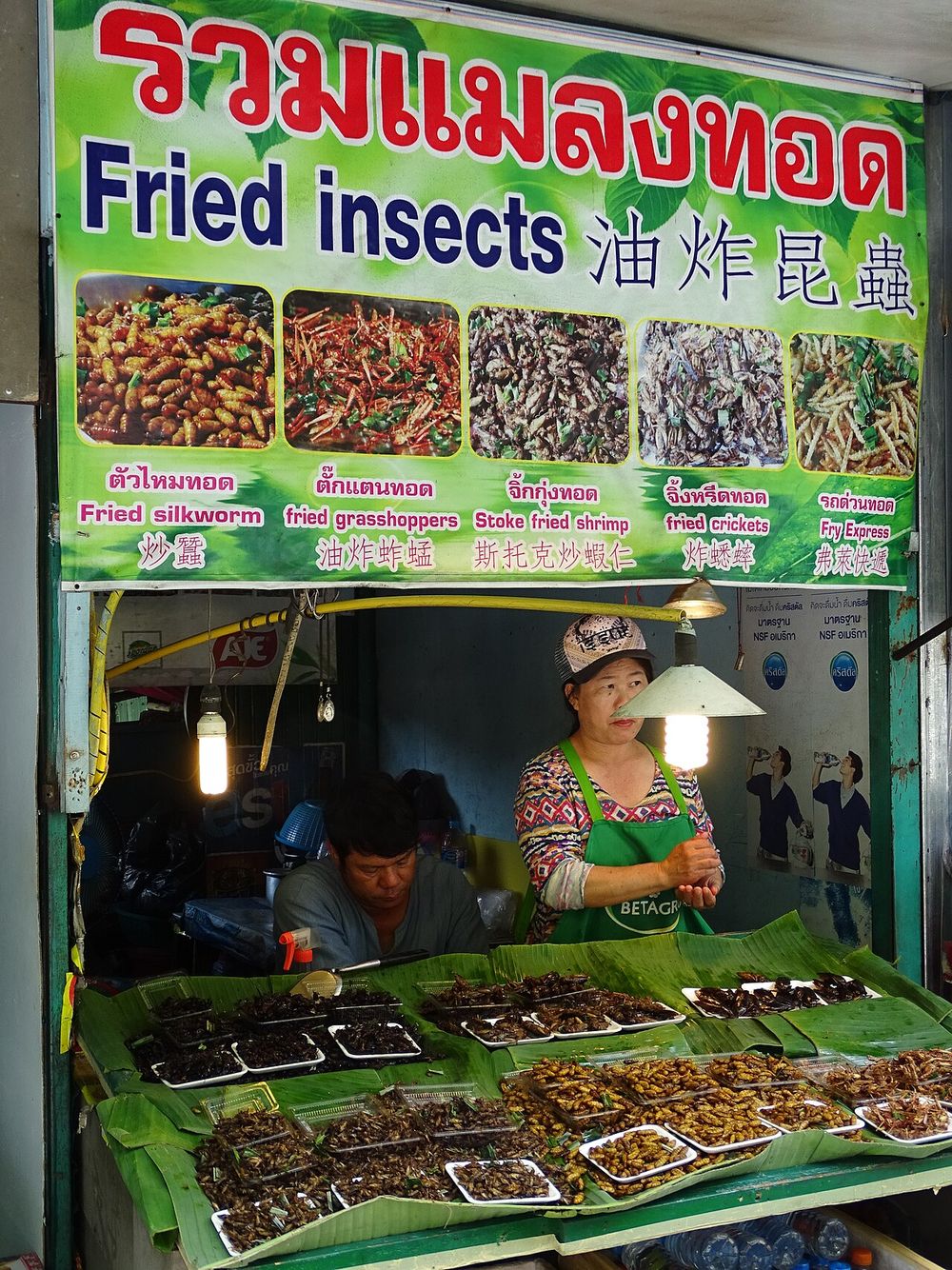
Nine names cover virtually every cart in the country. Say the word and point — pointing is normal here and nobody minds:
- จิ้งหรีด (jîng-rìit) — cricket. The default, farmed by the tonne in the northeast.
- จิ้งโกร่ง (jîng-kròɔng) — the big brown field cricket, meatier and usually a few baht more.
- ตั๊กแตน (ták-kà-tɛɛn) — grasshopper or locust, the long reddish ones.
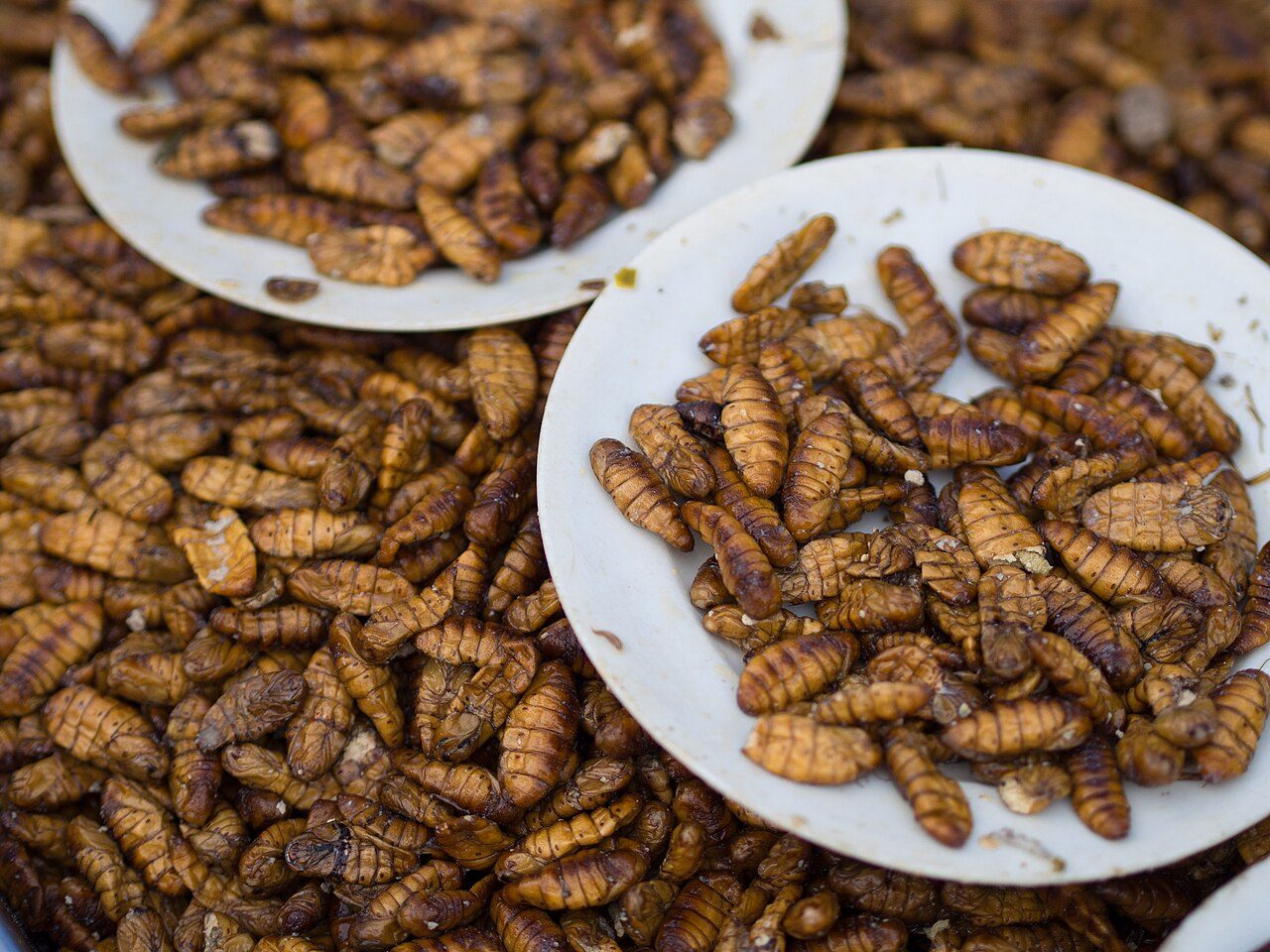
- ดักแด้ (dàk-dɛê) — pupa. On its own it means silkworm pupae; the full name is ดักแด้ไหม or ตัวไหม (tua mǎi, “silk creature”).
- รถด่วน (rót dùan) — bamboo caterpillar, literally “express train”. The formal name is หนอนไม้ไผ่ (nǒɔn mái phài), “bamboo worm”.
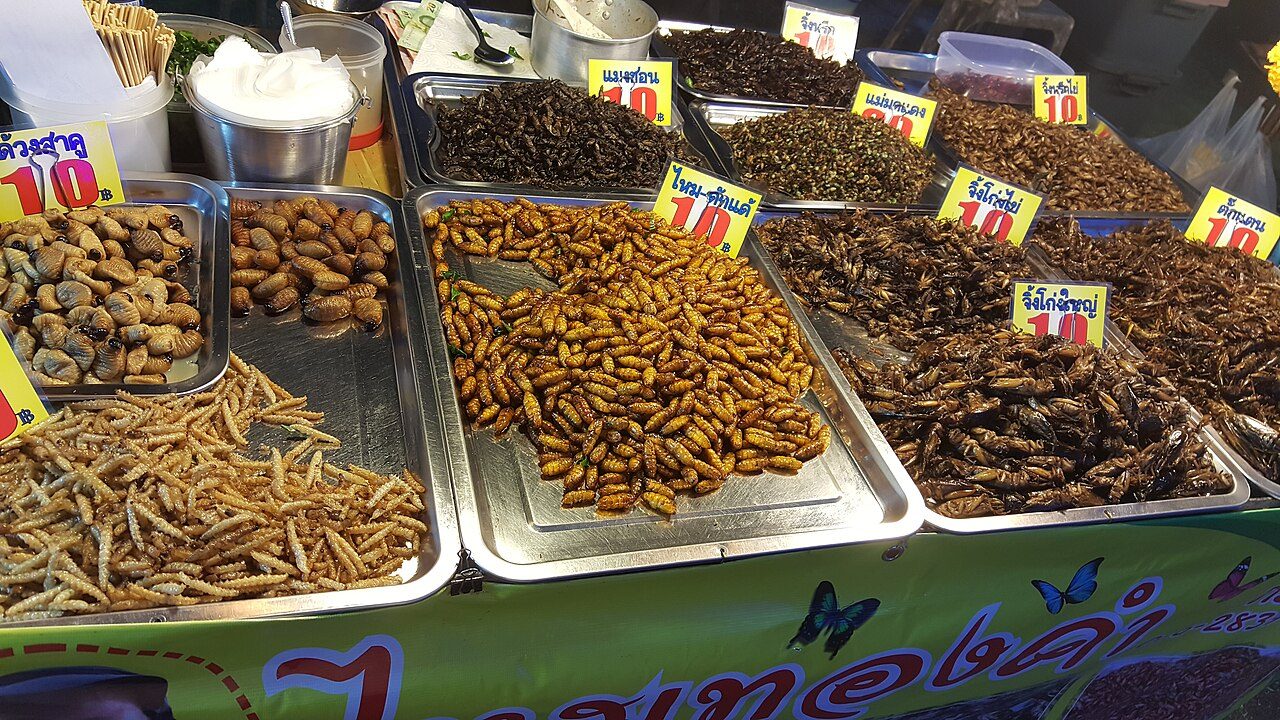
- ด้วงสาคู (dûang sǎa-khuu) — sago palm grub. ด้วง is any beetle.
- แมงดา (mɛɛng-daa) — giant water bug, the big flat one. Usually sold singly, not by weight.
- แมงป่อง (mɛɛng-pòɔng) — scorpion. A tourist item, priced accordingly.
- ไข่มดแดง (khài mót dɛɛng) — red ant eggs, literally “egg · ant · red”. Seasonal, and a delicacy.
You will have noticed two spellings for the same idea: แมลง and แมง (mɛɛng). แมลง is the textbook word; แมง is the everyday and northeastern one, and it is what you will actually hear and read on handwritten cards. Thai is comfortable with both, and so should you be.
One Thai pronunciation note while you are here, because it explains a word you will say a lot. จิ้งหรีด is written with a ห in front of the ร that is never pronounced. That silent leading ห — หนำ (hǒɔ nam, “leading ho”) — lends its own high-class tone rules to the letter behind it, which is why the word lands as jîng-rìit with a low second syllable instead of the mid one the letters seem to promise. The same quiet ห is doing the same job in หมา (dog), หนู (mouse) and หลาย (many). Spot it once and a whole family of “irregular” words turns regular — our guide to Thai tone marks and tone rules works through the rest.
Reading the yellow price cards
The other half of the transaction is the money, and this is where you learn Thai vocabulary that transfers to every stall in the country. Two units do all the work. ขีด (khìit) is 100 grams, and it is the unit Thai markets think in — not grams, not pounds. ถุง (thǒng) is a bag, the small scoop the vendor tips into a paper cone. Prices are written with Arabic numerals almost everywhere, followed by บาท or the symbol ฿. Thai numerals (๑๒๓) do still appear on older handwritten cards and on official signs, which is why they are worth half an hour of your time — our guide to reading Thai numerals, prices and dates covers them.
Speak Thai at the cart: five sentences
These five will carry an entire transaction. Add ครับ (khráp, said by men) or ค่ะ (khâ, said by women) to the end of every one of them:
- อันนี้อะไร (an níi à-rai) — “what is this one?” Point as you say it.
- ขอชิมได้ไหม (khǒɔ chim dâi mǎi) — “may I taste?” The answer is almost always yes, and this is how you find out what you like before you buy.
- เอาอันนี้หนึ่งขีด (ao an níi nìng khìit) — “I’ll take 100 grams of this one.” Halve it with ครึ่งขีด (khrâng khìit).
- กี่บาท (kìi bàat) — “how many baht?” Shorter and more natural here than the textbook ราคาเท่าไหร่.
- ไม่ใส่ซอส (mâi sài sóɔt) — “no sauce.” Worth knowing before the bottle comes out.
That little word ขอ (khǒɔ, “may I have”) and the tag ได้ไหม (dâi mǎi, “is it possible?”) are the two most portable things in this whole guide. Bolt them around any noun or verb and you have a polite request. Drop ครับ or ค่ะ, however, and the same sentence lands as an order — which is the fastest way to sound rude by accident, so attach the particle to everything while you are learning. Our explainer on speaking Thai politely with ครับ and ค่ะ goes into when each one shifts.
What goes on top
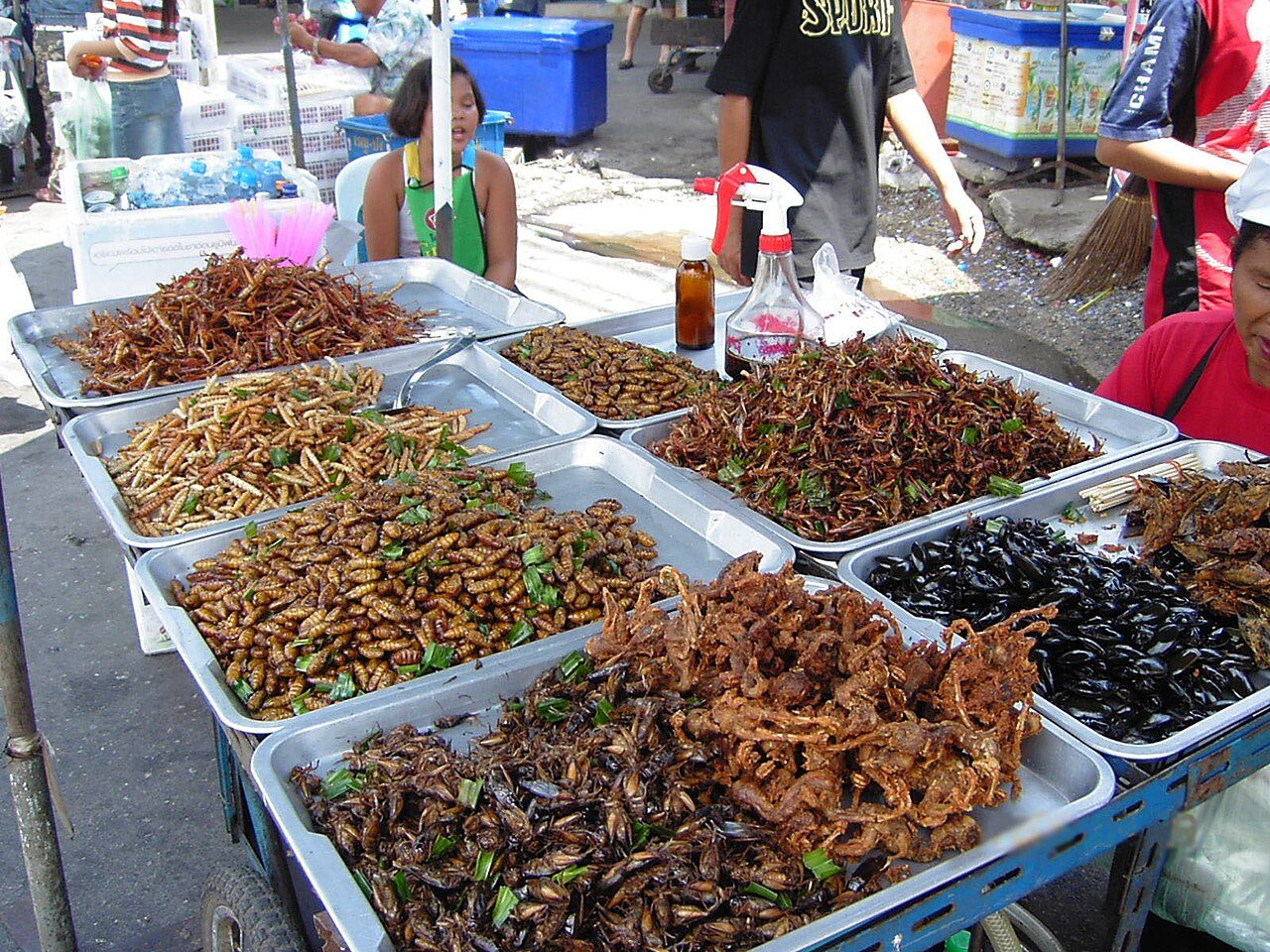
Everything here is seasoned the same way, so a handful of words covers it: ซอส (sóɔt, the sweet soy sauce from the squeeze bottle), พริกไทย (phrík thai, white pepper), ใบมะกรูด and sometimes ตะไคร้ (tà-khrái, lemongrass). The adjective you want is กรอบ (kròɔp, crispy) — and the compliment that will genuinely please the vendor is อร่อย (à-ròi, delicious), ideally said with your mouth full.
The social part nobody tells you
One thing to get right. Fried insects are not a stunt in Thailand and treating them as one will cool a conversation fast. They are ordinary protein, strongly associated with อีสาน (ii-sǎan), the northeast, where cricket farming is now a serious industry with its own co-operatives and export trade. Reacting with disgust in front of the person selling them reads roughly the way it would at a cheese counter in France.
The polite moves are small and they work everywhere: buy something before you photograph the trolley, and if you want the vendor in the shot, ask — ขอถ่ายรูปได้ไหม (khǒɔ thàai rûup dâi mǎi), “may I take a photo?”. That single sentence is one of the highest-value pieces of Thailand expat language you can own, and it is the same construction you just learned at the cart.
A study tip: the one-tray rule
Here is the method, and it costs you nothing but a few baht. Each time you pass an insect cart, learn exactly one tray. Read its card out loud, buy that one item, eat it, and write the word in your phone that evening with the English next to it. One word, one taste, one evening.
This beats drilling a list of nine names at your desk, because each word arrives attached to a flavour, a price and a short conversation with a stranger — three hooks instead of none. Inside two weeks of ordinary evening walks you will have the whole cart, plus ขีด, ถุง, ทอด and กรอบ, all of which transfer straight to the fruit stall and the fish counter. The same slow-walk approach works across a whole Thai night market, and the letters themselves drill fastest on the free ThaiLetters flashcard trainer.
That is how adults actually learn Thai vocabulary that lasts: take one small, repeating corner of Thai life, learn the ten words that run it, and use them the same week in front of a real person. The insect cart is the perfect size for it — a fixed menu, a printed vocabulary list and a patient teacher, all under one light bulb. Next time you pass one, do not reach for the camera first. Read the yellow card, say the word, and buy a ขีด.