Learn Thai Vocabulary: Gold Shops & Pawnshops in Thailand
Learn Thai vocabulary for Thai gold shops and pawnshops: read the hang thong sign, gold weight in baht and salueng, purity words and the phrases to use inside.
A Thai gold shop is the loudest shopfront on the street: red and gold paint, a wall of chains behind glass, strip lighting you can see from fifty metres. It is also one of the most useful places in Thailand for a learner to stand and read. Learn Thai vocabulary for gold and you walk away with three things at once — a handful of words that appear on shop signs in every town in the country, a whole unit system in which บาท means something other than money, and a price board that reprints itself twice a day for free reading practice.
You never have to buy a gram of it. Everything below gives the Thai script, a plain Thai transliteration you can say out loud, and the literal sense of each word where the literal sense makes it stick.
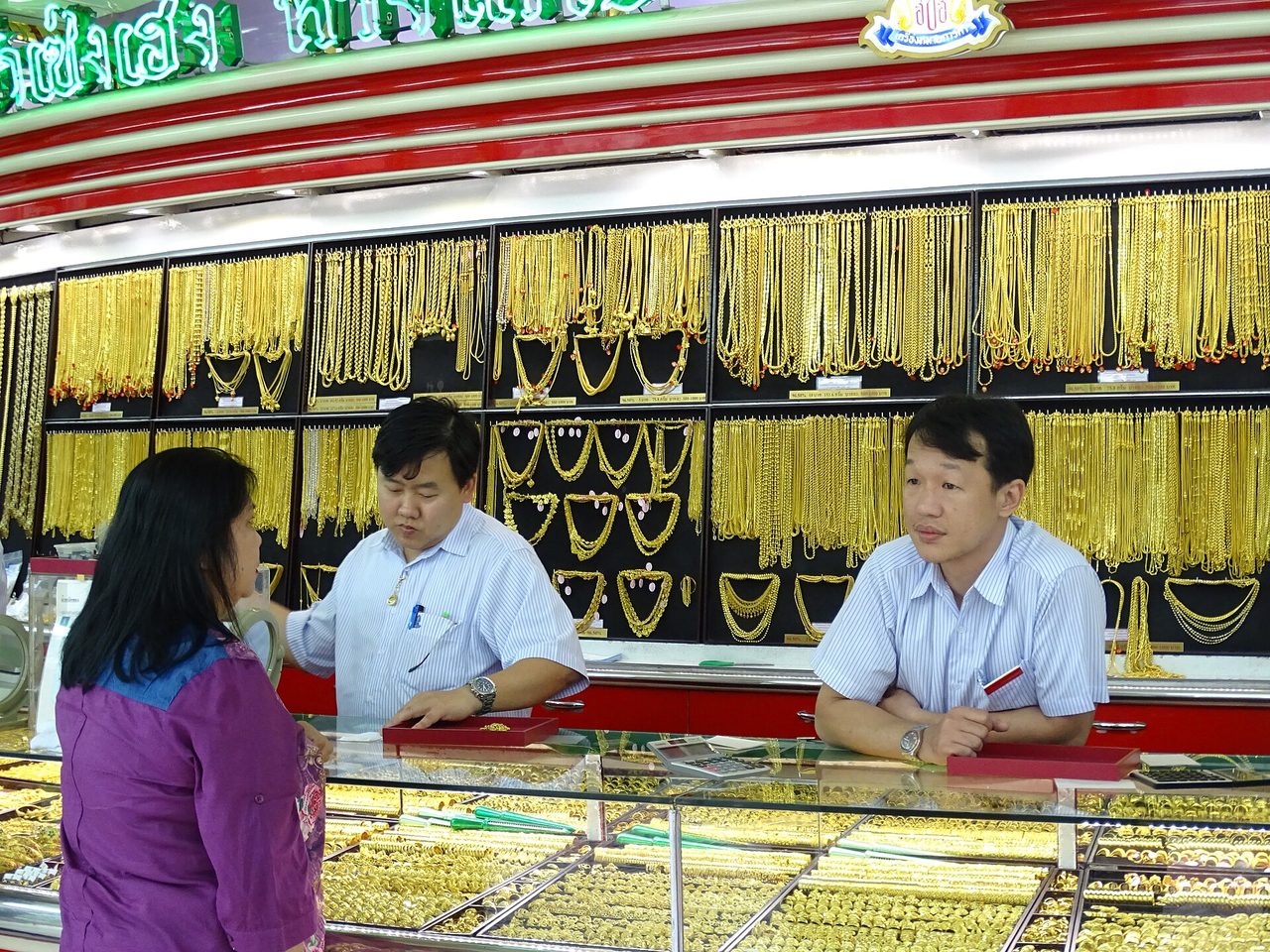
ห้างทอง: the two words that mark a gold shop
Start with the noun. ทอง (thɔɔng) is gold; the formal version, the one on documents and news bulletins, is ทองคำ (thɔɔng-kham). Shops then label themselves in one of three ways:
- ห้างทอง (hâang thɔɔng) — “gold firm”, the most common wording on a serious shop.
- ห้างขายทอง (hâang khǒɔi thɔɔng) — literally “firm · sell · gold”.
- ร้านทอง (ráan thɔɔng) — “gold shop”, the everyday spoken version.
The difference between ห้าง and ร้าน is scale and formality, not meaning: ห้าง is a firm or a department store, ร้าน is any shop at all. In speech almost everyone says ร้านทอง, even while standing under a sign that says ห้างทอง.
One point of Thai pronunciation is worth getting right before you say any of this out loud. ทอง is a low-class consonant in a live syllable with no tone mark, so it takes a mid tone — flat, unremarkable, no drama. Add the tone mark ◌้ and you get ท้อง (thóɔng), which means stomach, or pregnant. Gold and belly differ by one small mark, which is as good an argument as any for learning the tone rules properly; our Thai alphabet chart lays out the three consonant classes on one screen.
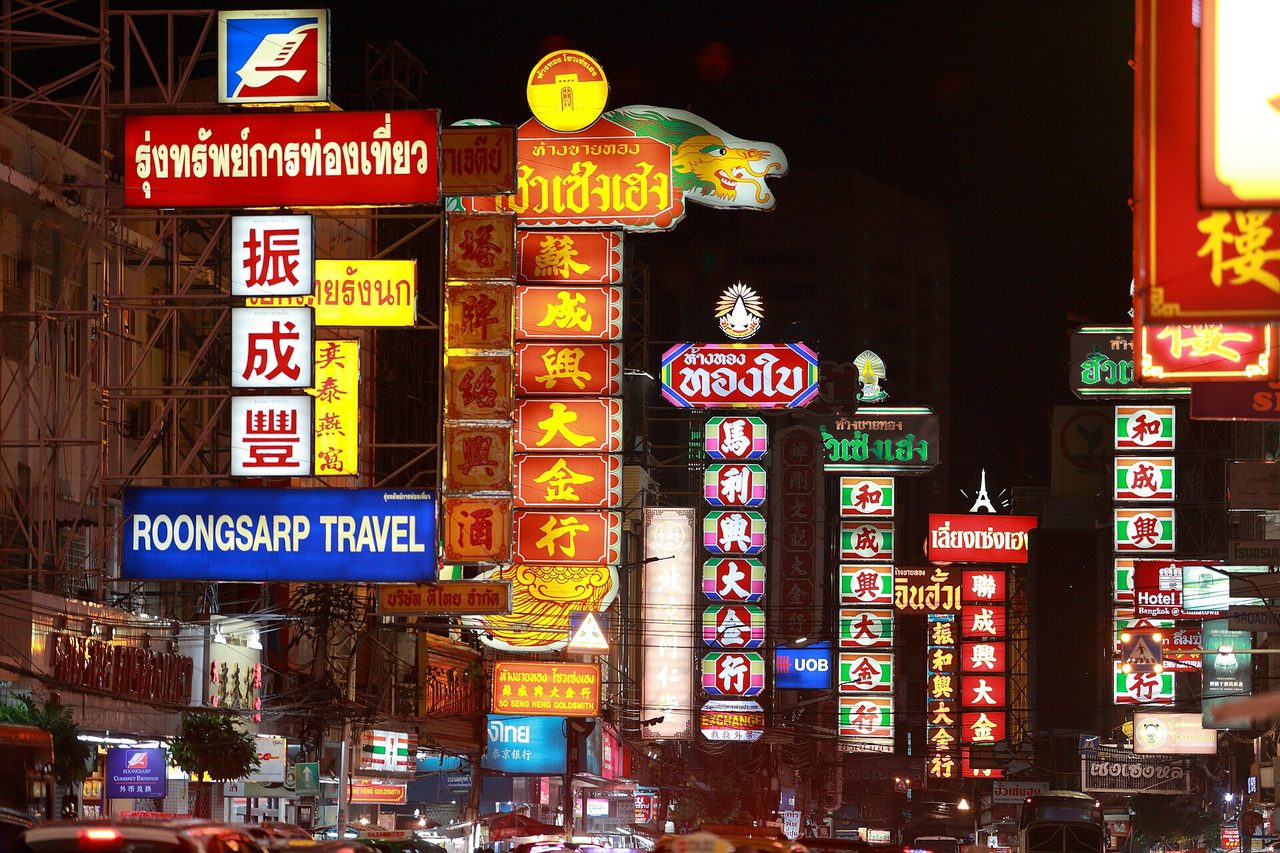
Learn Thai vocabulary for weight: when บาท is not money
Here is the thing that confuses every foreigner in a Thai gold shop. Gold in Thailand is not priced per gram. It is priced per บาท (bàat) — the same word as the currency, but used as a unit of weight of roughly 15.2 grams. Ornamental gold is reckoned at 15.16 g to the baht; bars are 15.244 g. The quarter unit is สลึง (sà-lɯ̌ng), so four สลึง make one บาท, and a small chain is often sold as สองสลึง, two salueng, a half. กรัม (kram) exists, borrowed straight from English, but you will mostly hear it in bank advertising.
The two product words divide the whole trade:
- ทองรูปพรรณ (thɔɔng rûup-phan) — worked gold, meaning jewellery. Literally “gold · shaped form”.
- ทองคำแท่ง (thɔɔng-kham thêng) — gold bar; แท่ง is a bar or ingot, the same word used for a stick of chalk.
Purity is the other number on every tag: Thai shops work to 96.5%, written on the tags simply as 96.5 or ทอง 96.5%. That is higher than the 18-karat gold most Western buyers know, which is why Thai chains look so yellow and feel so soft.
Read Thai script on the price board
Every shop posts the day’s rate on a board by the door, and that board is a compact beginner Thai lesson you can do from the pavement:
- ราคาทองวันนี้ (raa-khaa thɔɔng wan-níi) — “today’s gold price”.
- รับซื้อ (ráp sɯ́ɯ) — “we buy”: what the shop pays you.
- ขายออก (khǒɔi òɔk) — “sell out”: what you pay the shop.
- บาทละ (bàat lá) — “per baht” of weight.
- ค่ากำเหน็จ (khâa kam-nèt) — the workmanship charge added to a piece of jewellery.
The gap between รับซื้อ and ขายออก is the shop’s margin, and reading those two lines correctly is the single most valuable piece of Thailand expat language on this page — and the fastest way to learn Thai vocabulary that pays for itself. The figures are normally in Western digits, but if the board uses Thai numerals instead, our guide to reading Thai numerals, prices and dates will get you through it.
Learn Thai vocabulary for the things in the case
Six nouns cover almost everything a gold shop sells, and all of them are high-frequency words outside the shop too:
- สร้อยคอ (sɔ̂ɔi khɔɔ) — necklace, literally “chain · neck”
- สร้อยข้อมือ (sɔ̂ɔi khɔ̂ɔ-mɯɯ) — bracelet, “chain · wrist”
- แหวน (wɜ̌ɜn) — ring
- กำไล (kam-lai) — bangle
- ต่างหู (tàang-hǔu) — earrings, “beside · ear”
- จี้ (jîi) — pendant
Notice how many of these are built from a body part. That pattern — a general word plus the place it belongs — runs right through the language, and spotting it is far more useful than memorising the six items one at a time.
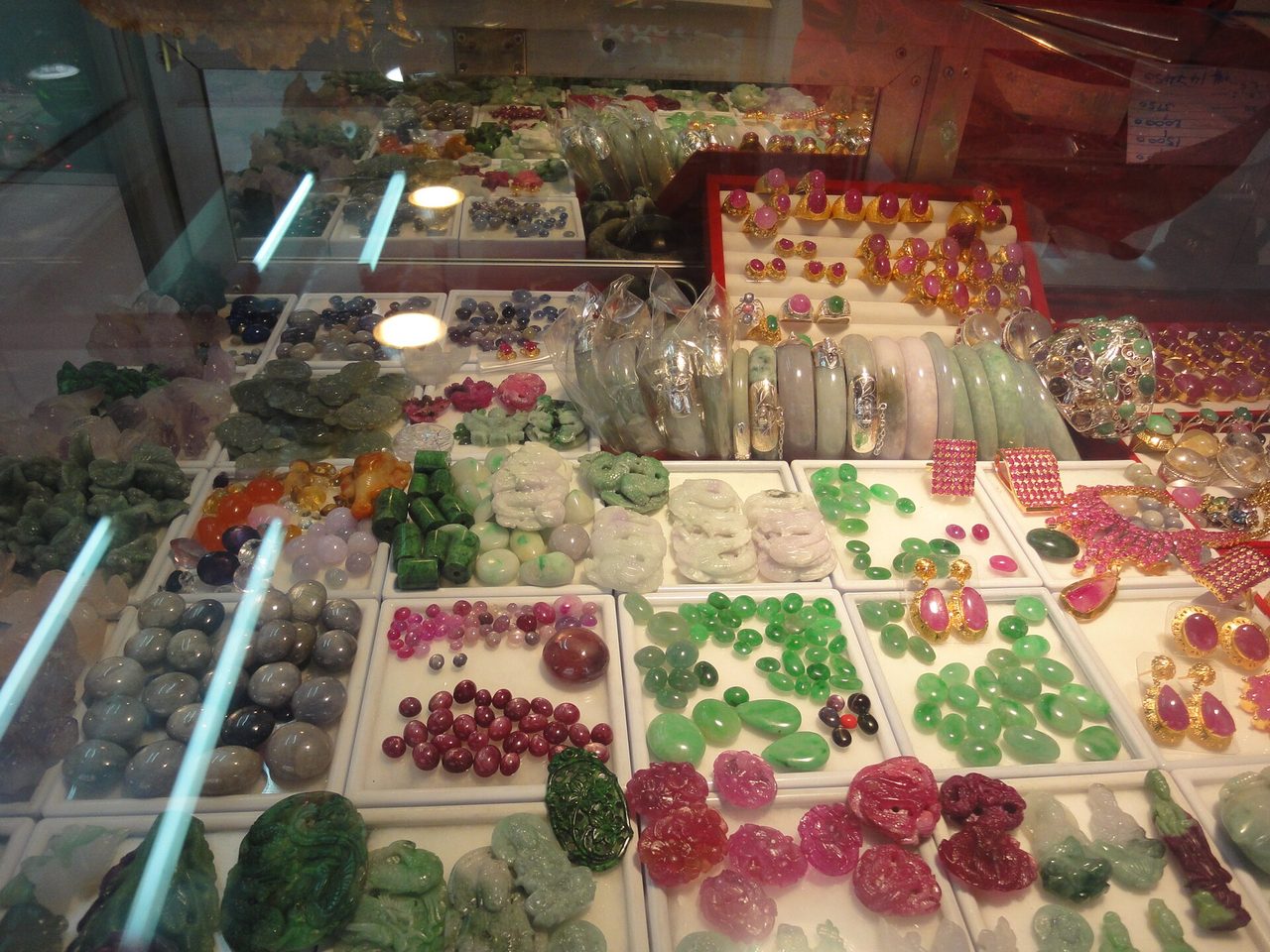
Speak Thai at the counter
Gold shop staff are used to pointing and nodding, so five short lines will carry you further than you expect. Attach ครับ (khráp, said by men) or ค่ะ (khâ, said by women) to every one of them — in a shop handling this much value, politeness is not decoration:
- ขอดูหน่อย (khǒɔ duu nòi) — “may I have a look?”
- อันนี้กี่บาท (an-níi kìi bàat) — “how many baht is this one?” In a gold shop this asks the weight, not the price.
- ราคาเท่าไหร่ (raa-khaa thâo-rài) — “how much does it cost?” This is the money question.
- ชั่งให้หน่อยได้ไหม (châng hâi nòi dâai mǎi) — “could you weigh it for me?” ตาชั่ง (taa-châng) is the scales.
- มีใบรับประกันไหม (mii bai ráp-prà-kan mǎi) — “is there a certificate?” Ask for the ใบเสร็จ (bai sèt, receipt) too; both matter if you ever sell the piece back.
One etiquette note that no phrasebook prints: do not haggle over the gold price. It tracks a nationally published rate and the shop cannot move it. The only genuinely soft number is ค่ากำเหน็จ, the workmanship charge, and even there one polite question is the whole negotiation.
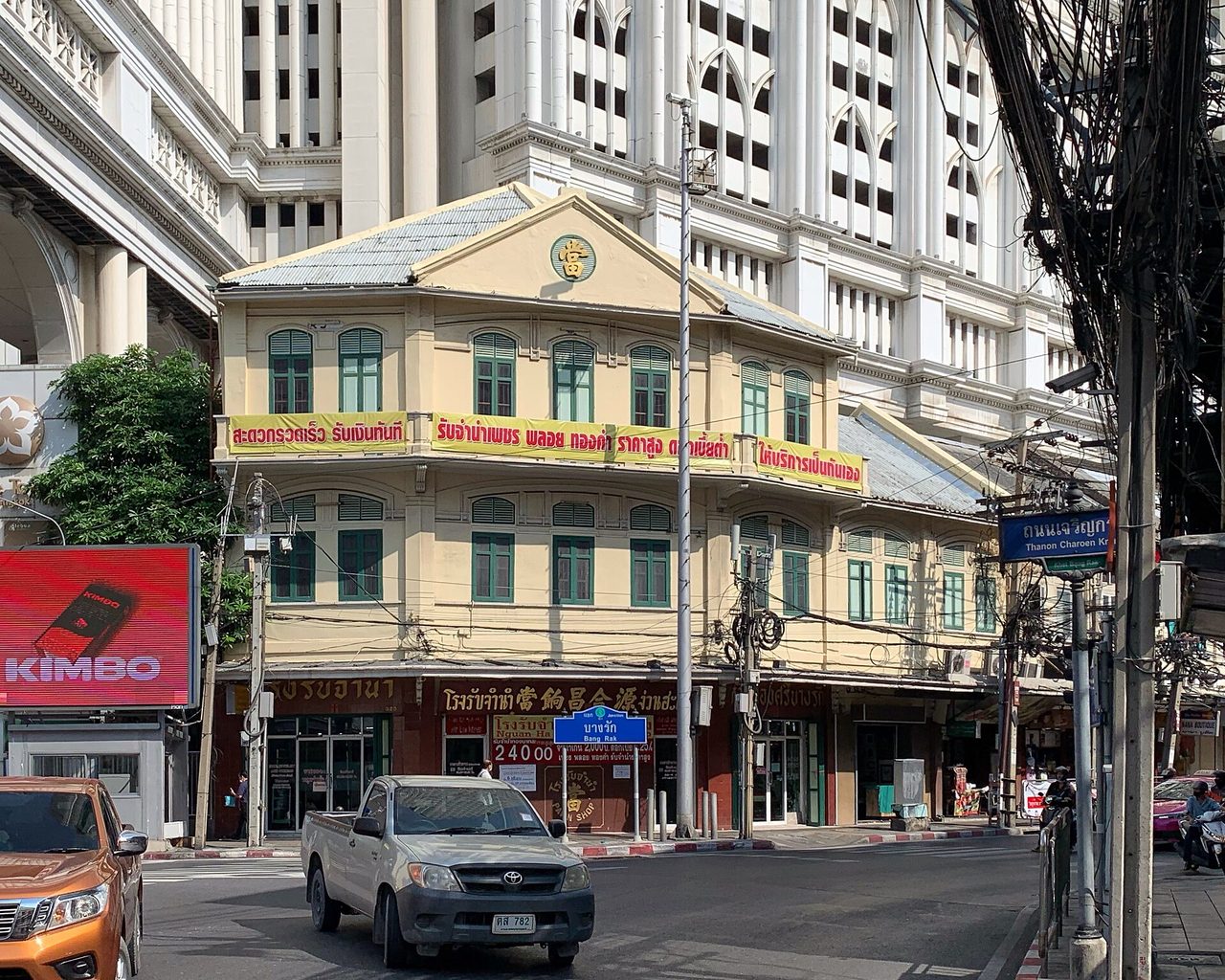
โรงรับจำนำ: the pawnshop next door
Gold is savings in Thailand, so the pawnshop is the other half of the same system, and its sign is a gift to anyone learning to read Thai script: โรงรับจำนำ (roong ráp jam-nam), literally “building · receive · pawn”. โรง is the same word you have already met in โรงเรียน (school) and โรงพยาบาล (hospital), which is exactly how Thai consonants and vowels start paying you back: one known syllable unlocks the next sign.
Five more words finish the subject, and they are worth adding to any list you keep when you learn Thai vocabulary for daily life:
- จำนำ (jam-nam) — to pawn
- ตั๋วจำนำ (tǔa jam-nam) — the pawn ticket; ตั๋ว is any ticket, bus or cinema included
- ดอกเบี้ย (dòɔk-bîa) — interest, charmingly literal: “flower · money”
- ไถ่คืน (thài khɯɯn) — to redeem, to buy back
- หลุดจำนำ (lùt jam-nam) — forfeited, when the ticket expires unredeemed
A study tip: the two-line price board drill
Here is a drill that costs sixty seconds a day and works because the material refreshes itself. Walk past any gold shop and photograph the price board. That evening, copy out just two lines — รับซื้อ and ขายออก — with their numbers, and say them aloud. Tomorrow the numbers will have changed and the words will not, which is precisely the repetition a learner needs: the same Thai letters in the same order, in a real place, with a reason to look.
After a fortnight you will read those two lines at a glance from a moving taxi, and the habit spreads — first to the shop names, then to the banners, then to everything else on the street. If the individual letters are still slowing you down, fifteen minutes with the free ThaiLetters flashcard trainer will fix that faster than any amount of staring at signs.
That is the whole method, and it is how adults actually learn Thai vocabulary: take one narrow corner of real life, learn the twenty words that run it, and read them somewhere real the same week. You now have the shop names, the weight system, the purity number, the jewellery nouns, the counter phrases and the pawnshop sign. The next time you pass a wall of gold chains in Thailand, you will not see decoration — you will see a page of Thai you can read.