Learn Thai Vocabulary in Thailand: Clothes, Sizes & Laundry
Learn Thai vocabulary for clothes in Thailand: sizes, trying things on, bargaining and laundry signs in Thai script, with pronunciation and real photos.
Nobody moves to Thailand planning to shop for clothes. Then the rain arrives, or the overnight bus sets its aircon to Arctic, or a wedding invitation turns up and your only clean shirt has a beer logo on it. A clothes stall is one of the best places there is to learn Thai vocabulary, because every single word has an object attached to it — something you can point at, hold up, and be gently corrected about on the spot.
This guide covers the garments themselves, the words for size and fit, the few phrases that get you into a changing room, and the part most lists skip: the Thai on a laundry sign. Everything comes with Thai script, a Thai transliteration you can say out loud, and a literal translation wherever the literal meaning is the thing that makes the word stick. Every photograph is a real market or shopfront in Thailand.
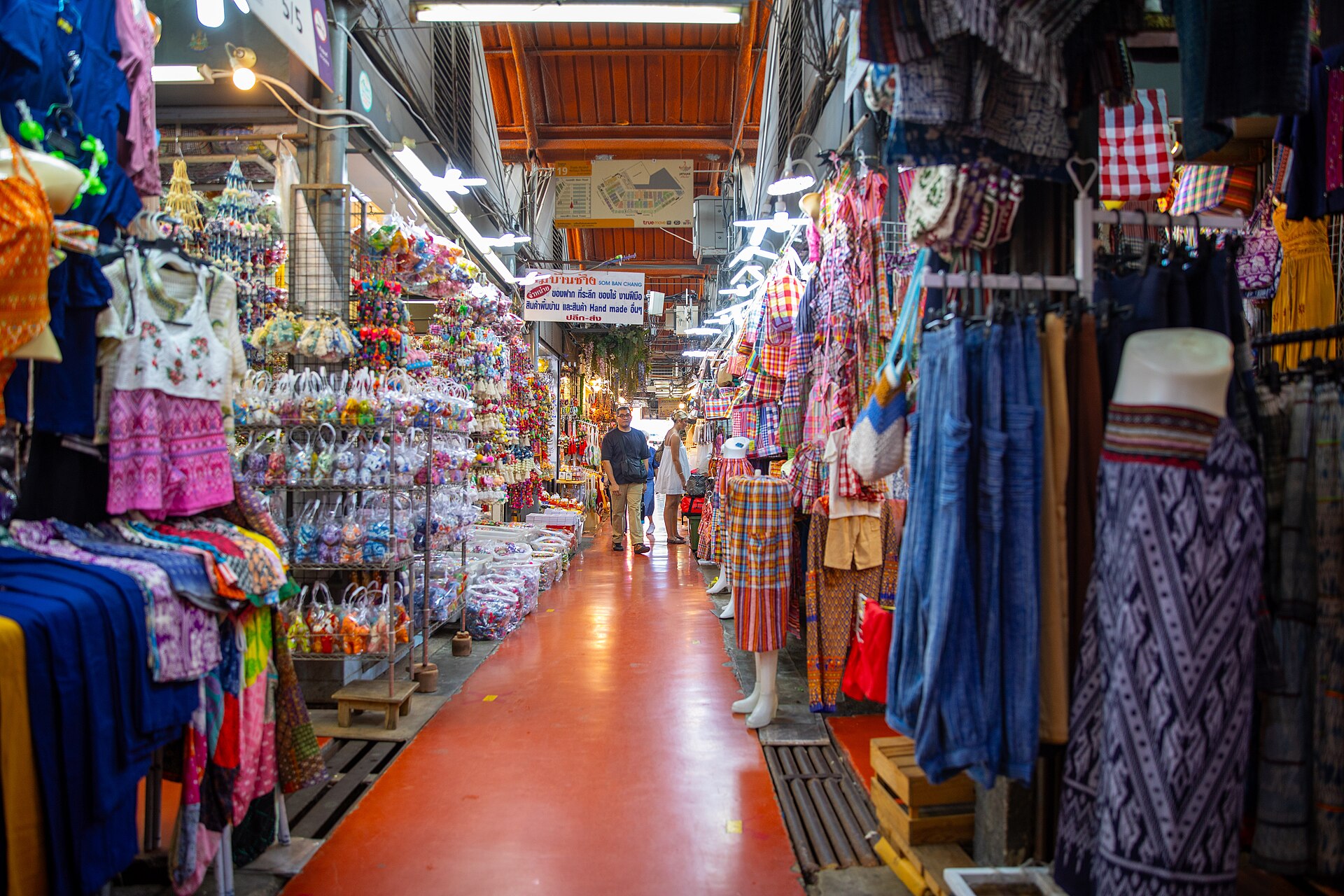
เสื้อผ้า: learn Thai vocabulary for clothes
Thai builds clothing words out of a few repeating pieces, which makes this an unusually efficient beginner Thai lesson. Learn ถุง (thǔng) “bag” and เท้า (tháo) “foot” and you are handed socks for free.
- เสื้อผ้า (sûea phâa) — clothing in general, literally “shirt cloth”
- เสื้อ (sûea) — any top; เสื้อยืด (sûea yûet) — T-shirt, literally “stretchy shirt”
- เสื้อเชิ้ต (sûea chóet) — a collared shirt, borrowed straight from English “shirt”
- กางเกง (gaang-geeng) — trousers; กางเกงขาสั้น (gaang-geeng khǎa sân) — shorts, “trousers short-leg”
- กระโปรง (grà-bproong) — skirt
- รองเท้า (raawng tháo) — shoes, literally “under-foot”; รองเท้าแตะ (raawng tháo dtàe) — flip-flops, “shoes that touch lightly”
- ถุงเท้า (thǔng tháo) — socks, “foot bags”; ถุงมือ (thǔng mue) — gloves, “hand bags”
- หมวก (mùak) — hat; แว่นตา (wâen dtaa) — glasses
- เข็มขัด (khěm khàt) — belt; กระเป๋า (grà-bpǎo) — bag
- เสื้อกันหนาว (sûea gan nǎao) — jacket or jumper, “shirt that guards against cold”
One word does an enormous amount of work: ชุด (chút), “a set”. It gives you ชุดนอน (chút naawn) pyjamas, ชุดว่ายน้ำ (chút wâai náam) swimwear, ชุดนักเรียน (chút nák riian) a school uniform and ชุดไทย (chút thai) traditional Thai dress. If you only ever remember one clothing word in Thai, make it this one.
Sizes and fit: Thai pronunciation that matters in a changing room
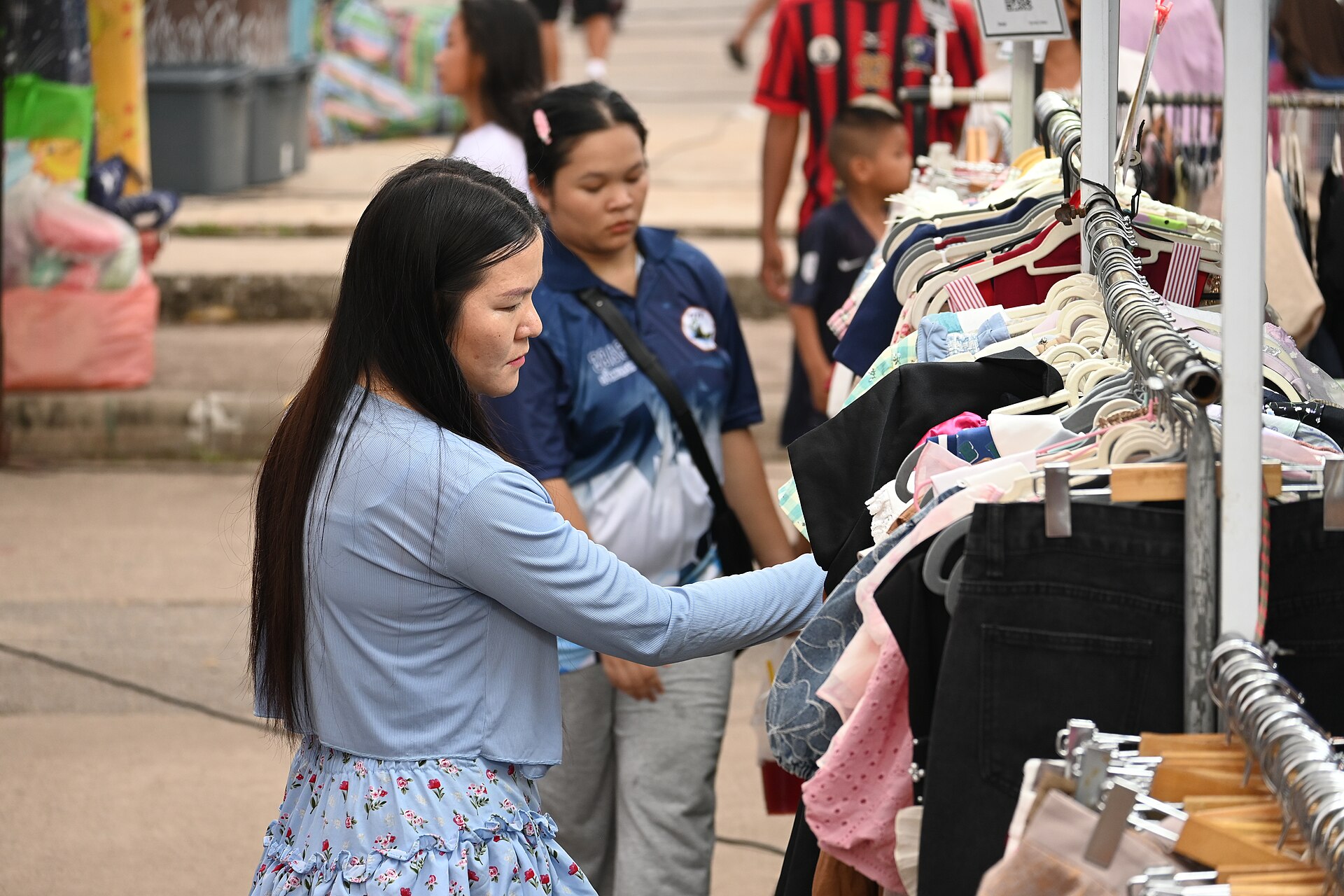
- ไซส์ (sái) — size, from English; เบอร์ (bəə) — number, used for shoe sizes
- ใหญ่ (yài) big · กลาง (glaang) medium · เล็ก (lék) small
- พอดี (phaaw dii) — a perfect fit, literally “enough good”
- คับ (kháp) — too tight; หลวม (lǔam) — too loose
- ลองใส่ได้ไหม (laawng sài dâi mǎi) — “may I try it on?”, the single most useful sentence here
- ห้องลอง (hâawng laawng) — fitting room, “trying room”
- มีไซส์ใหญ่กว่านี้ไหม (mii sái yài gwàa níi mǎi) — “do you have a bigger size than this?”
Watch คับ (kháp, tight) carefully, because it sits one consonant away from ครับ (khráp), the polite particle men end sentences with. In fast speech plenty of Thai men shorten khráp to something that sounds almost identical — context does the work, but it is a good reminder that Thai pronunciation rewards you for hearing the ร rather than guessing it. Sizes in Thailand also run small by European standards, so expect to go up one letter and do not take it personally.
Thai also needs a classifier every time you say “this one”. Shirts and trousers take ตัว (dtua, literally “body”), shoes and socks take คู่ (khûu, “pair”), and bags take ใบ (bai, “leaf”). So เอาตัวนี้ครับ (ao dtua níi khráp) means “I’ll take this one”. Our guide to Thai classifiers has the full set if that system is still catching you out.
ลดได้ไหม: the bargaining words that go with the clothes
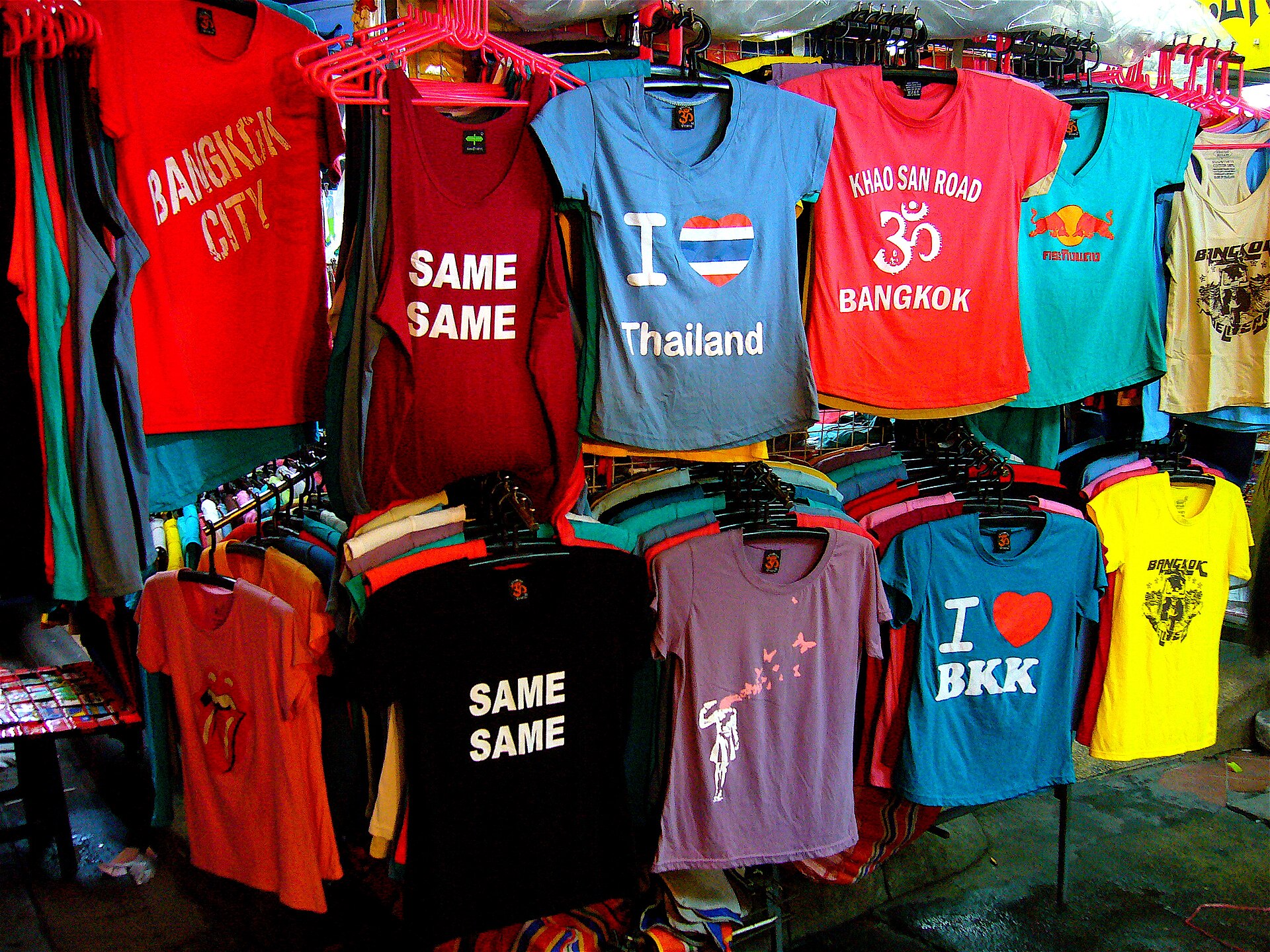
- เท่าไหร่ (thâo rài) — how much?; ราคา (raa-khaa) — price
- แพง (phaeng) expensive · ถูก (thùuk) cheap
- ลดได้ไหม (lót dâi mǎi) — “can you come down?”
- ลดราคา (lót raa-khaa) — a sale or discount; the two words printed on half the signs in any Thai shopping street
- เหมา (mǎo) — to buy the whole lot for one price, which is where the real discount lives
- ไม่เอาครับ / ค่ะ (mâi ao khráp / khâ) — “no thanks”, said with a smile and no further explanation
Prices are also where most visitors learn Thai vocabulary without noticing, because you hear the same six numbers forty times in an afternoon. Bargaining itself is quiet, cheerful and quick in Thailand — a raised voice loses you the discount rather than winning it. The numbers fly past fast, so if prices spoken aloud still ambush you, half an hour with our guide to Thai money words and prices pays for itself on the first stall.
Read Thai script on a laundry sign
A laundry shop is the cheapest place in Thailand to learn Thai vocabulary, because you need the same handful of words every single week. Nearly every soi in Thailand has a laundry shop, and their signs use the same four or five words everywhere, which makes them ideal training wheels: you already know roughly what the sign must say, so you only have to confirm it.
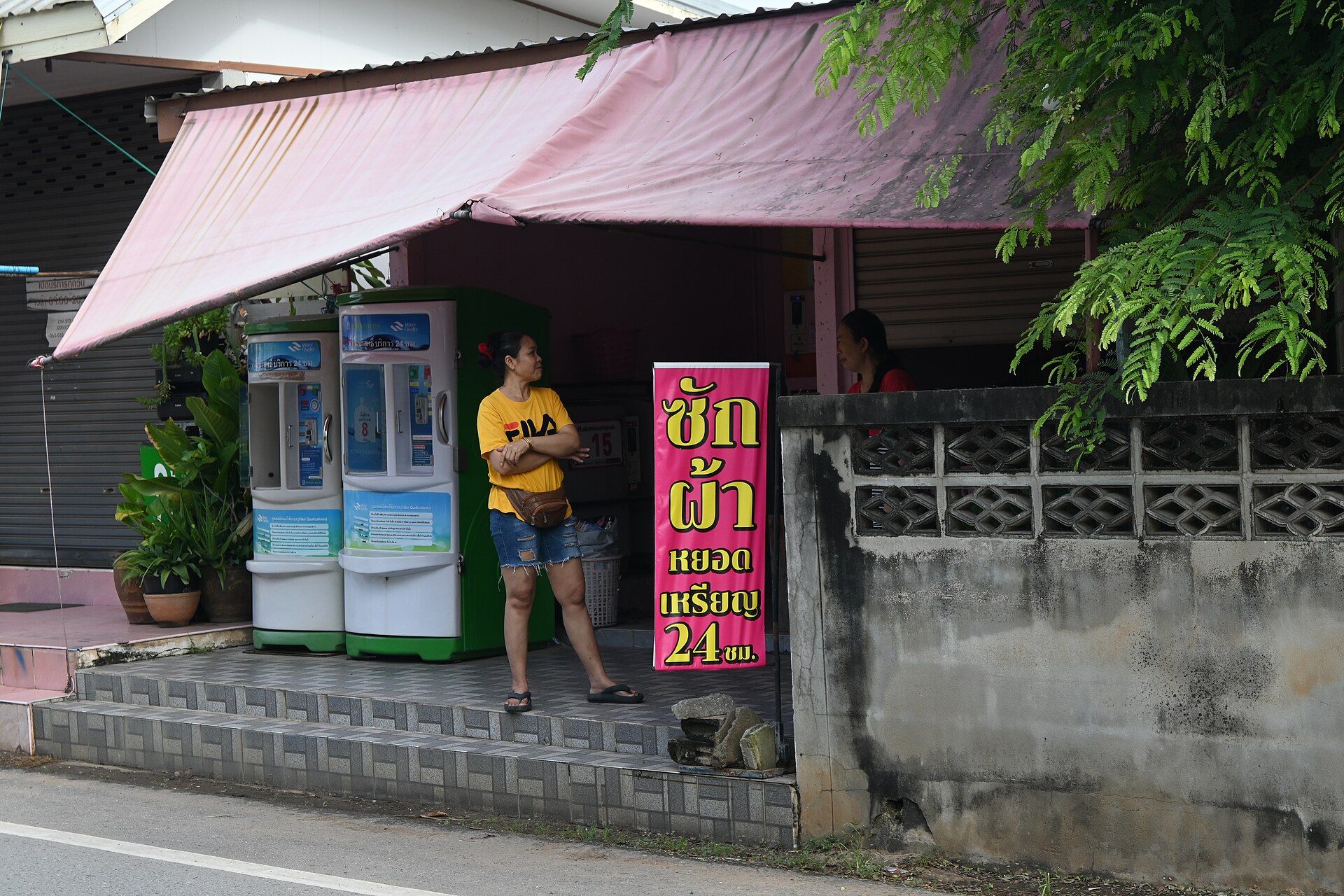
- ซัก (sák) — to wash fabric (ล้าง láang is for dishes and hands)
- ซักผ้า (sák phâa) — to do the laundry; เครื่องซักผ้า (khrûeang sák phâa) — washing machine
- หยอดเหรียญ (yàawt rǐian) — coin-operated, literally “drop a coin”
- ซักอบรีด (sák òp rîit) — “wash, dry, iron”, the full-service shop where you hand over a bag
- ซักแห้ง (sák hâeng) — dry cleaning, literally “dry wash”
- คิดเป็นกิโล (khít bpen gì-loo) — charged by the kilo, which is how most shops price it
- รับเมื่อไหร่ (ráp mûea rài) — “when can I collect it?”
Notice how much of that sign is built from Thai consonants and vowels you meet in your first week: ซ, ก, ผ and the short vowel ◌ั sitting above the line. If those Thai letters still arrive as a solid block, take an hour to learn the Thai alphabet properly with our free Thai alphabet chart, then drill the letters in the ThaiLetters flashcard trainer — shop signs are the first real-world reading that most learners crack, precisely because the vocabulary repeats.
ผ้าไหม: fabric words and getting something made
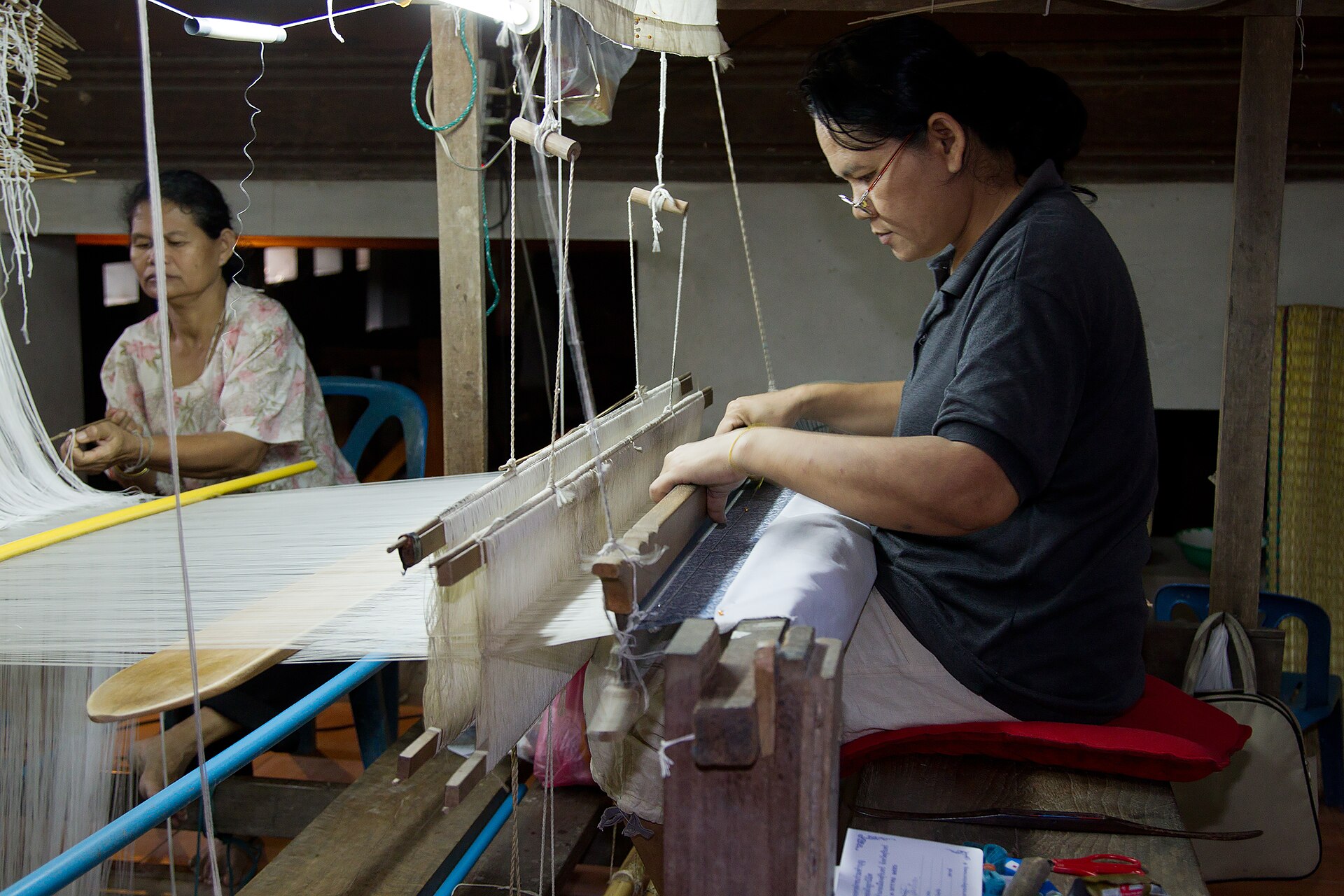
- ผ้า (phâa) — cloth, fabric
- ผ้าไหม (phâa mǎi) — silk; ผ้าฝ้าย (phâa fâai) — cotton
- ผ้าซิ่น (phâa sîn) — the wrapped tube skirt worn across the north and north-east
- มัดหมี่ (mát mìi) — the tie-dyed ikat pattern Surin and Isan are known for
- ร้านตัดเสื้อ (ráan dtàt sûea) — tailor, literally “shirt-cutting shop”; ตัด (dtàt) to cut, เย็บ (yép) to sew, แก้ (gâe) to alter
There is a small joke hiding in ผ้าไหม. The word for silk, ไหม (mǎi), is spelled exactly like the yes-or-no question particle ไหม that ends half the sentences in this guide. Same letters, same tone, entirely unrelated meanings — a reminder that in Thai, position in the sentence carries as much information as spelling does. Details like that are the reason it pays to learn Thai vocabulary in groups rather than one word at a time, and they are what makes Thailand expat language click after a few months: you stop decoding words one at a time and start reading whole phrases.
Khrap, kha, and what to call the person selling to you
Market Thai is friendly and informal, but the politeness particles stay on. Men end sentences with ครับ (khráp), women with ค่ะ (khâ), shifting to คะ (khá) when asking a question. Address a stallholder older than you as พี่ (phîi), “older sibling”, and a younger one as น้อง (náawng). Calling someone พี่ when they are in fact younger is a free compliment and nobody will correct you; our guide to khrap and kha walks through the rest of the system.
Two more lines worth having ready: ขอดูหน่อยครับ (khǎaw duu nàwy khráp), “may I have a look”, which you say before touching anything on a rack, and กำลังดูอยู่ค่ะ (gam-lang duu yùu khâ), “I’m just looking”. Both buy you the browsing time that a silent foreigner never quite gets.
A study tip: get dressed in Thai
Do not drill this as a list. Drill it as a routine. Every morning for a week, name what you put on, in order, top to bottom: เสื้อยืด → กางเกง → เข็มขัด → ถุงเท้า → รองเท้า. Five words, one per garment, already attached to an action you perform anyway — which is why they stick when a deck of thirty flashcards slides off.
Then let the street test you. Read the laundry sign on your soi before you ask anyone what it says, check the ลดราคา boards in a shopping centre, and ask one stallholder ลองใส่ได้ไหม this week. People who learn Thai vocabulary fastest are not the ones with the best app — they are the ones willing to speak Thai badly in front of a stranger holding a shirt. Say it wrong, get handed the right size anyway, and remember the word forever.