Learn Thai Vocabulary: Chinese Words Used in Thailand
Learn Thai vocabulary borrowed from Chinese: food, family, luck and gold-shop words in Thai script with pronunciation, literal meanings and sign-reading.
The quickest way to learn Thai vocabulary in Thailand is to start with the words you are already saying by accident. Order a bowl of noodles, sit on a plastic stool, pay the owner and wish her luck for the new year, and you will have used four words that are not really Thai at all. They came from Teochew Chinese, carried in by families who settled around Bangkok's Yaowarat Road from the nineteenth century onwards, and today they sit in the middle of ordinary conversation with nobody thinking twice about them.
This Thai language guide collects the most useful of them: food you can order, the words traders use to address one another, the vocabulary of luck and money, and the signs that make Chinatown the best free reading lesson in the country. Each entry gives the Thai script, a Thai transliteration you can say out loud, and the literal sense where it helps. There is also a reading trick at the end that will let you spot a Chinese loanword on a menu before you know what it means.
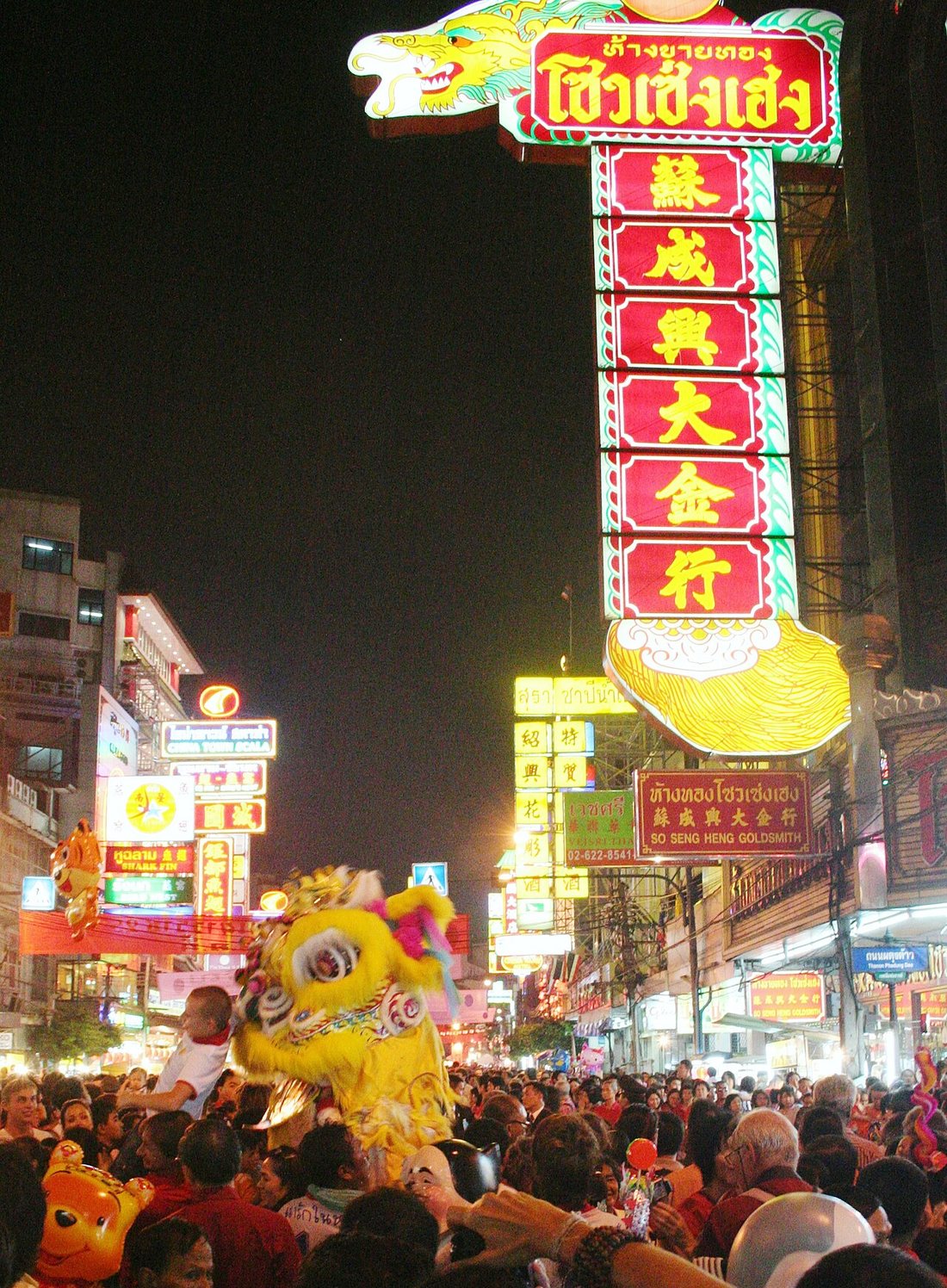
Why so much Chinese is hiding in everyday Thai
Thai has borrowed from two directions, and the two sets of loanwords behave very differently. Sanskrit and Pali gave the language its formal, ceremonial and governmental vocabulary — long words, elaborate spellings, silent letters. Chinese, and specifically the Teochew dialect called แต้จิ๋ว (tɛ́ɛ jǐu) in Thai, gave it the opposite: short, blunt, practical words for food, trade, furniture and family. โต๊ะ (tó), a table, and เก้าอี้ (kâo-îi), a chair, are both Chinese. So is the ยี่ in ยี่สิบ (yîi sìp), twenty.
That split is useful when you learn Thai vocabulary. If a word is short, concrete and slightly informal, there is a fair chance it arrived by boat; if it is long and dignified, it came from India. Knowing which bucket a word sits in tells you how formal it sounds before you ever use it.
Food words you have already ordered
Thai street food vocabulary is thick with Chinese, which makes a menu board the easiest place to learn Thai vocabulary quickly. Most of these are already in your mouth if you have eaten in Thailand for a week:
- ก๋วยเตี๋ยว (kǔay tǐao) — rice noodles, and the noodle dish built on them. Our full guide to ordering noodle soup in Thai takes this one apart properly.
- บะหมี่ (bà-mìi) — yellow egg noodles, literally “meat · noodle”.
- เกี๊ยว (kíao) — wonton. เกี๊ยวกุ้ง is the prawn one.
- ซาลาเปา (saa-laa-bao) — the white steamed bun sold from every convenience-store steamer.
- โจ๊ก (jóok) — rice porridge, the standard Thai breakfast.
- เต้าหู้ (tâo-hûu) — tofu: “bean · curd”, exactly as in Chinese.
- เกาเหลา (kao-lǎo) — the same soup served without the noodles. Say it and you will be taken for a regular.
- เจ (jee) — the strict Buddhist vegetarian diet, written on yellow and red flags each autumn; see our guide to eating vegetarian in Thailand.
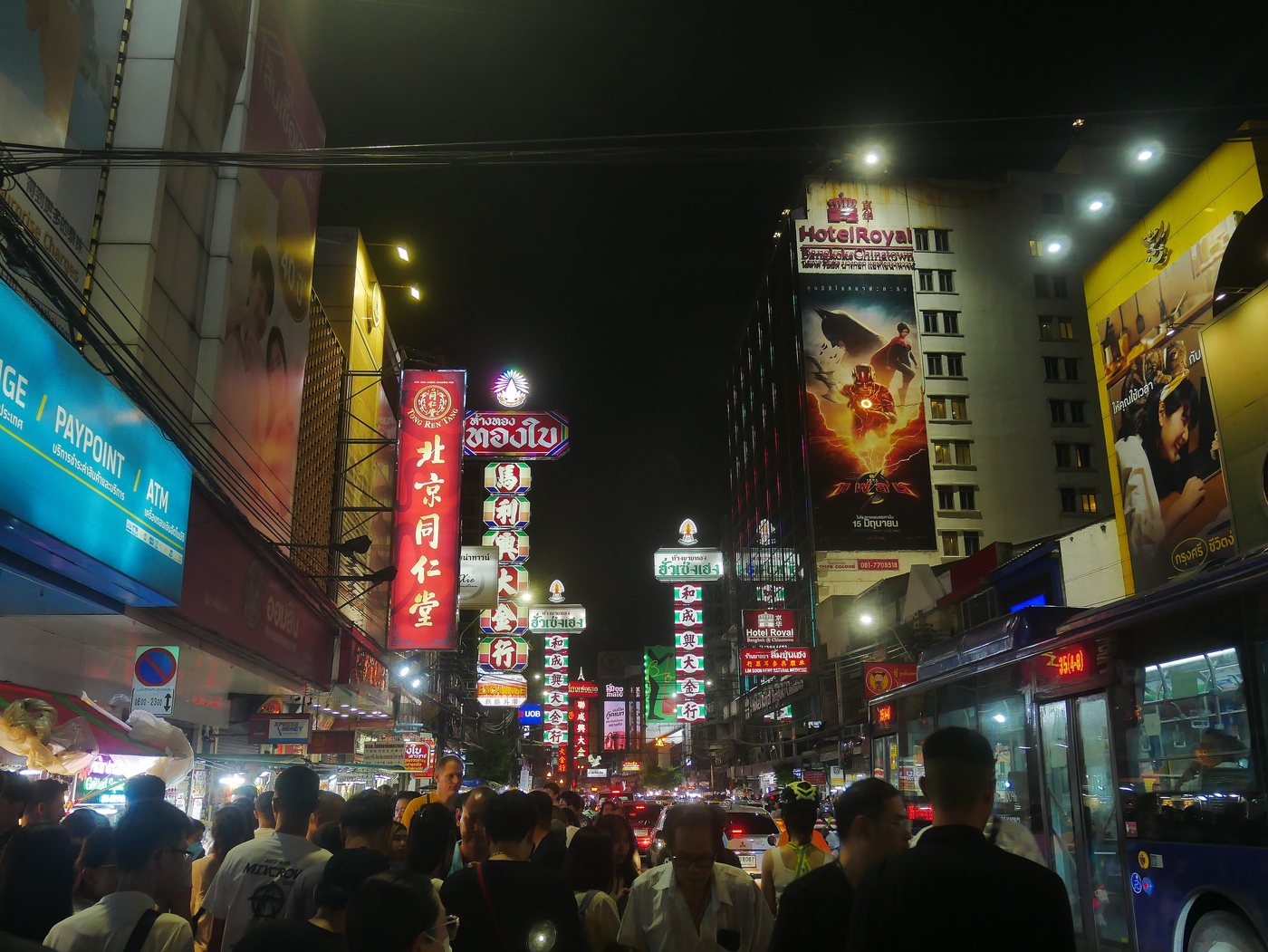
Thai family words that are really Chinese
Walk into a shophouse and listen to how people address each other. Alongside the usual Thai พี่ (phîi) and น้อง (nɔ́ɔng) you will hear a parallel set of Thai family words borrowed wholesale from Teochew. They are warm, informal and used far beyond actual relatives:
- เจ๊ (jée) — older sister, and the standard friendly way to address a woman running a stall or a shop.
- เฮีย (hía) — older brother, the male equivalent. อาเฮีย is a softer version.
- อาม่า (aa-mâa) — grandmother · อากง (aa-kong) — grandfather. Both are affectionate and widely used by Thai-Chinese families.
- ซิ้ม (sím) — aunt, in the sense of an older married woman of the family.
- เถ้าแก่ (thâo-kɛ̀ɛ) — the boss or owner of a business; เถ้าแก่เนี้ย (thâo-kɛ̀ɛ-nía) is the woman who actually runs it.
- เสี่ย (sìa) — a rich man, half respectful and half teasing · เจ้าสัว (jâo sǔa) — a tycoon, the word newspapers use for the country's business dynasties.
Two notes on the social side, because they matter. First, finish these the way you finish everything: ครับ (khráp) if you are a man, ค่ะ (khâ) if you are a woman. เจ๊ and เฮีย are friendly rather than rude, but they are not polite on their own. Second, they are for people of Chinese descent, typically traders — to a Thai market vendor with no Chinese background, พี่ or ป้า is the natural choice. And one word to leave alone entirely: เจ๊ก (jék), an old term for a Chinese person, is now plainly offensive. The neutral phrase is คนไทยเชื้อสายจีน, a Thai of Chinese descent.
Luck, money and the word that sounds like “beautiful”
This small group earns its place in any beginner Thai lesson: Thais of every background use these constantly, and they are the fastest way to learn Thai vocabulary that the textbooks leave out:
- เฮง (heng) — lucky, prosperous. The New Year wish is เฮงๆ รวยๆ (heng heng ruay ruay), “luck and riches”, and เฮง is baked into hundreds of shop names.
- ซวย (suay) — unlucky, jinxed. Handle with care: it is one tone away from สวย (sǔay), “beautiful”. Telling a shopkeeper she is ซวย when you meant สวย is the classic Thai pronunciation disaster.
- เจ๊ง (jéng) — to go bust, of a business or a plan.
- กงสี (kong-sǐi) — the shared family firm and its common purse, the structure a great many Thai-Chinese businesses still run on.
- อั่งเปา (àng-pao) — the red envelope of money given at New Year: “red · packet”.
- ยี่ห้อ (yîi-hɔ̂ɔ) — a brand. ยี่ห้ออะไร means “what brand?”, useful in any shop in the country.
- ห้าง (hâang) — a commercial firm, from the Chinese for a trading house. It opens ห้างทอง, a gold shop, and ห้างสรรพสินค้า, a department store.
At New Year you will also hear the full Teochew greeting shouted along Yaowarat: ซินเจียยู่อี่ ซินนี้ฮวดไช้ (sin jia yù yìi, sin níi huat cháai) — roughly “may your wishes come true, may you prosper in the new year”. Nobody expects a foreigner to produce it, which is exactly why it lands so well.
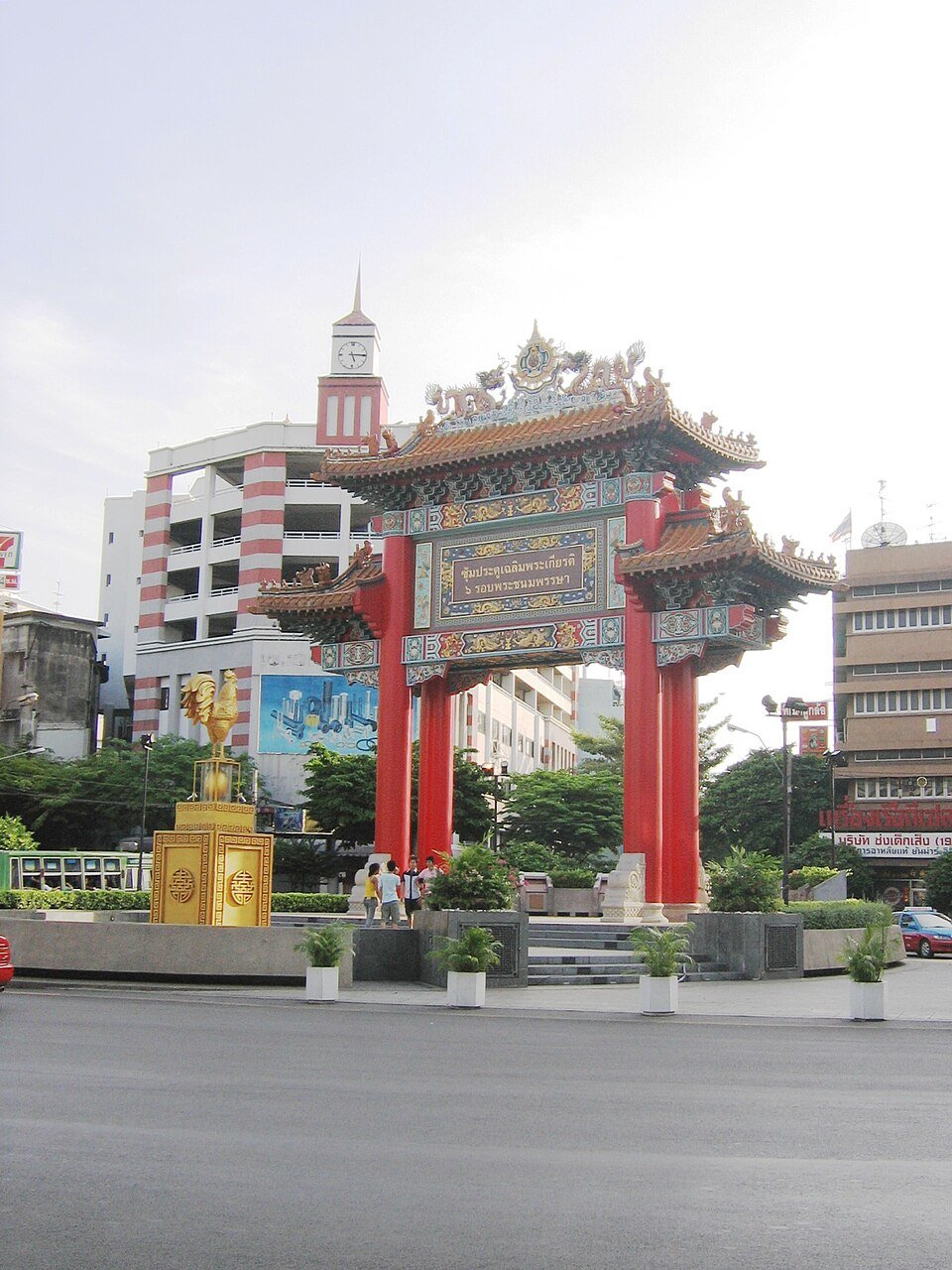
Read Thai script on the signs of Chinatown
Yaowarat is an unusually kind place to read Thai script, because so many signs say the same thing twice — once in Thai, once in Chinese, sometimes a third time in English. Four words unlock most of what you will see:
- ห้างทอง / ห้างขายทอง (hâang thɔɔng) — gold shop. There are dozens on one street.
- ร้าน (ráan) — shop, the word that opens almost every business name in Thailand.
- ศาลเจ้า (sǎan jâo) — a Chinese shrine, literally “court · lord”. Not the same thing as a วัด.
- สำเพ็ง (sǎm-pheng) — Sampeng, the wholesale lane running parallel to Yaowarat.
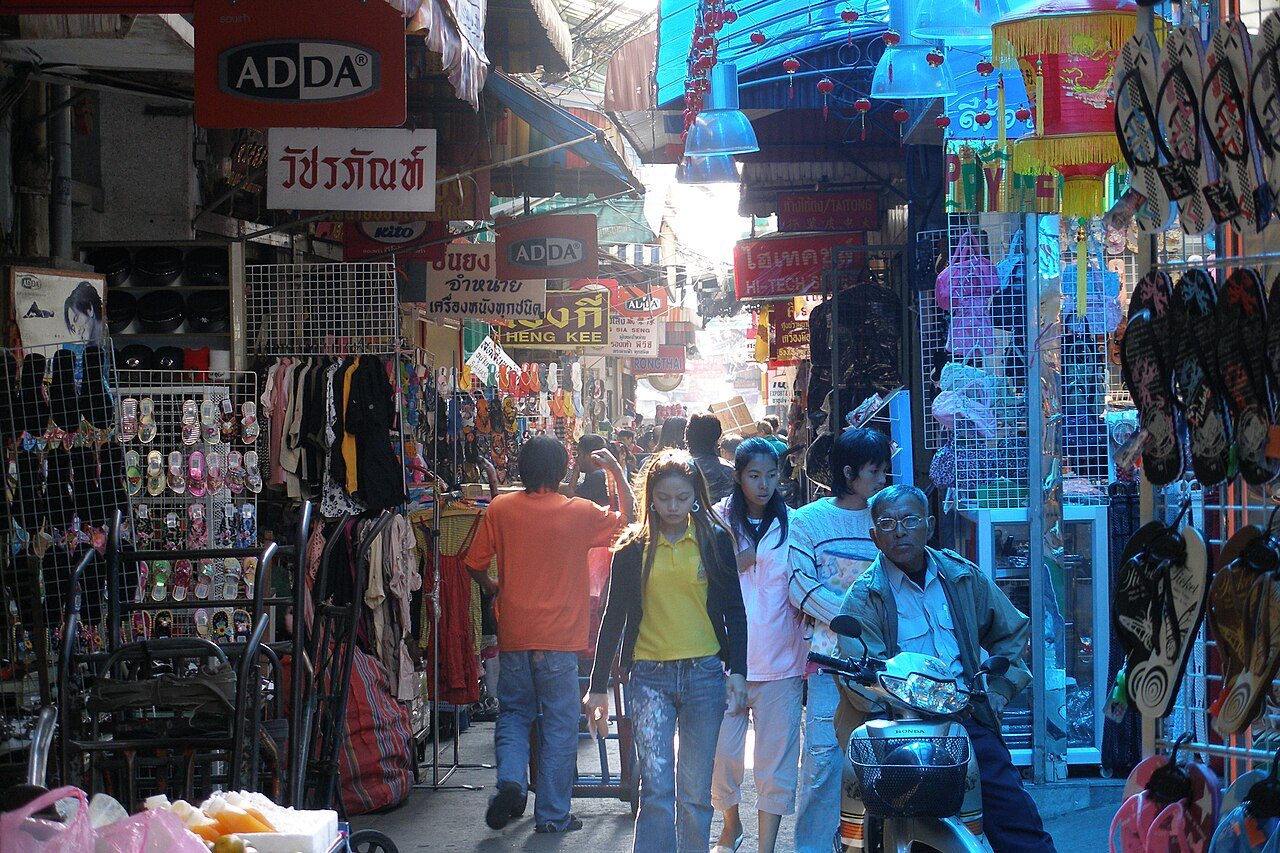
วัด and ศาลเจ้า are not the same building
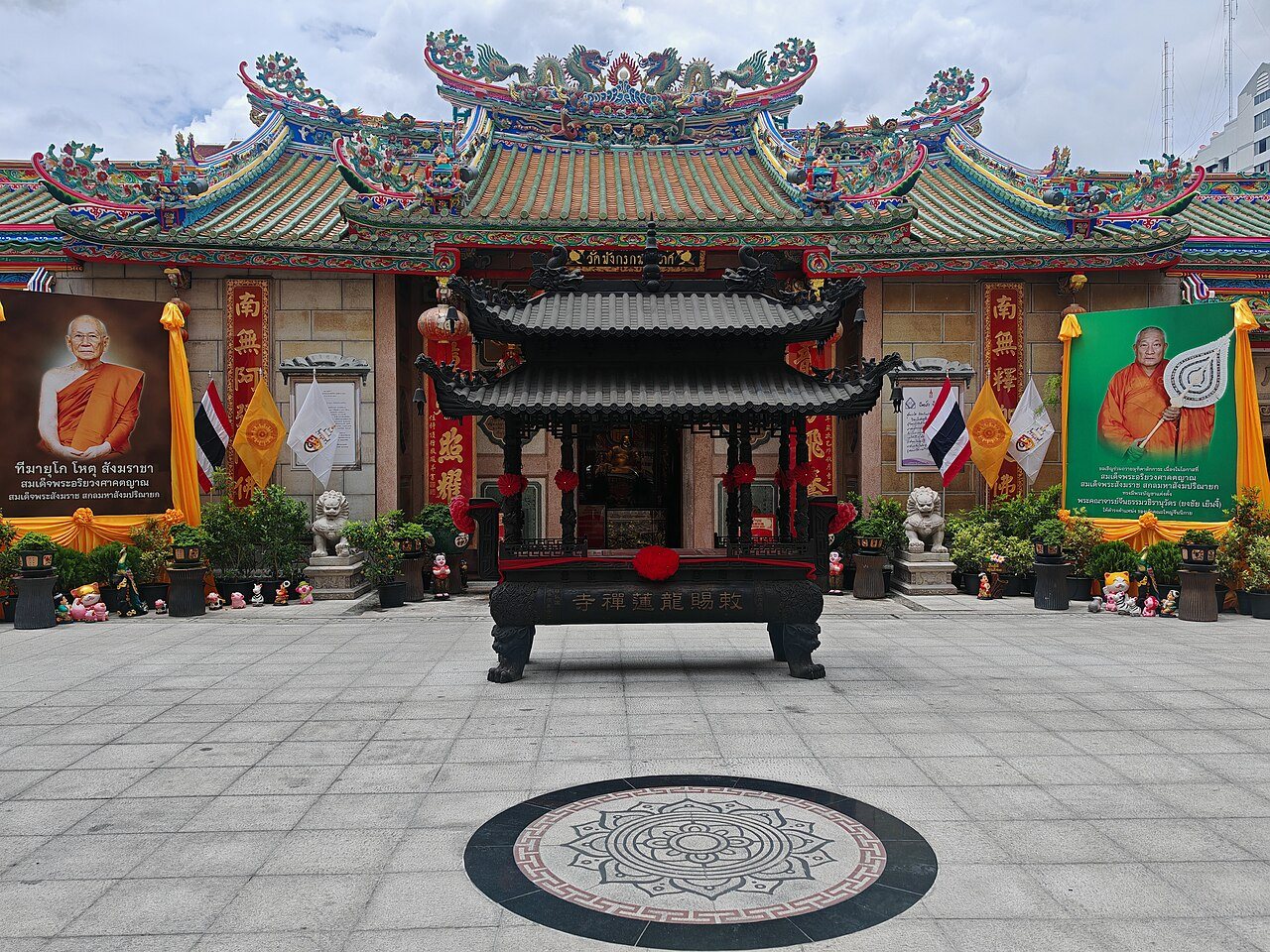
A วัด (wát) is a Buddhist monastery with resident monks; a ศาลเจ้า is a Chinese shrine to a deity, with no monks and no ordination hall. Chinatown has both, plus a few places that are formally วัด while looking thoroughly Chinese.
A study tip: let the tone marks give the loanword away
Here is the trick promised at the start, and it is a genuine shortcut for anyone learning to read Thai script. Thai has four tone marks, but native Thai words lean heavily on the first two, ไม้เอก and ไม้โท. The third and fourth — ไม้ตรี (the little ๊) and ไม้จัตวา (the small ๋) — are comparatively rare, and when you do see them there is a good chance you are looking at a borrowed word.
Check it against this guide: ก๋วยเตี๋ยว, เกี๊ยว, โจ๊ก, เจ๊, เจ๊ง, ตั๋ว. Every one of them carries ๊ or ๋, and every one of them came from Chinese. Those two marks exist largely because Thai spelling had to stretch to fit sounds the borrowed words insisted on keeping. Our guide to Thai tone marks sets out how all four work together with Thai consonants and vowels to fix a syllable's tone.
So the study plan is simple. Spend one evening on Yaowarat with your phone, photograph ten shop signs, and sort them into two piles that night: words you can break into Thai parts, and words with a ๊ or ๋ that almost certainly arrived from Teochew. It is a better way to learn Thai vocabulary than any word list, because every word stays attached to a place you stood. Then drill the letters that keep reappearing with our free flashcard trainer and the Thai alphabet chart. Start with ห้างทอง and เฮง, and by the end of the street you will be reading shop names out loud.