Learn Thai Vocabulary: Eating Vegetarian in Thailand
Learn Thai vocabulary for eating vegetarian in Thailand: เจ and มังสวิรัติ, the red-on-yellow jay sign, hidden fish sauce, and phrases that work at any stall.
Thailand looks like an easy country to be vegetarian in. Markets overflow with greens, every second shophouse has a wok going, and the country is overwhelmingly Buddhist. Then the papaya salad arrives with dried shrimp through it, and the “vegetable soup” turns out to be built on pork broth. The gap between those two experiences is not unkindness — it is vocabulary. Learn Thai vocabulary for two words and a short list of hidden ingredients, and the problem very largely disappears.
This Thai language guide covers both Thai words for “vegetarian” — they do not mean the same thing — the red-on-yellow sign that marks meat-free food, the sentences to say at a street cart, and why a Bangkok noodle shop happily sells “vegetarian red pork”. Everything comes with Thai script, a Thai transliteration you can say out loud, and a literal translation, because the literal meanings are what make these words stick.

เจ and มังสวิรัติ: two words, two different diets
English has one word where Thai has two, and this is the first pair to add when you learn Thai vocabulary for eating out.
- เจ (jay) — the strict one. No meat, no fish, no fish sauce, normally no egg or dairy, and no “pungent” vegetables either: garlic, onion, shallot and chives are all left out. The word comes from Chinese 齋 (zhāi), a Buddhist and Taoist fast, and reached Thailand with Chinese communities. The closest English is “vegan, and then some”.
- มังสวิรัติ (mang-sà-wí-rát) — ordinary vegetarian. It is Sanskrit: māṃsa “flesh” plus virati “abstaining from”. Egg, milk, garlic and onion are usually fine.
- กินเจ (gin jay) — literally “eat jay”, the phrase you will hear in conversation.
- อาหารเจ (aa-hǎan jay) — “jay food”; ร้านอาหารเจ (ráan aa-hǎan jay) is a jay restaurant.
A Thai pronunciation warning on the longer word. มังสวิรัติ ends in ติ, but you do not say that final vowel: it is mang-sà-wí-rát, four syllables, stopping on a hard t. Sanskrit loanwords in Thai often carry silent tails like this, and pronouncing every letter you can see is a reliable way to be misunderstood. If in doubt, say เจ — one syllable, impossible to mangle.
Which one should you use? If you eat no animal products at all, say กินเจ. If you eat eggs and dairy, say มังสวิรัติ and add that eggs are fine — otherwise a careful cook will take everything out and you will be handed plain rice.
Speak Thai at the stall: the sentences that work
Thai food is cooked to order, so one short polite sentence at the right moment beats any amount of pointing. Ordering is also where you learn Thai vocabulary fastest, because the feedback is immediate and edible. Men end a sentence with ครับ (khráp), women with ค่ะ (khâ) — and คะ (khá) when it is a question. Our guide to khrap and kha explains why those syllables matter more than perfect grammar.
- ผมกินเจครับ (phǒm gin jay khráp) — “I eat jay.” Women: ดิฉันกินเจค่ะ (dì-chǎn gin jay khâ).
- มีอาหารเจไหมครับ (mii aa-hǎan jay mǎi khráp) — “Do you have jay food?” Literally “have jay food, question?”
- ไม่ใส่เนื้อสัตว์ได้ไหมคะ (mâi sài núea sàt dâai mǎi khá) — “Could you leave the meat out?” ไม่ใส่ (mâi sài, “don’t put in”) is the single most useful frame in this guide: hang any ingredient off the end of it.
- ไม่ใส่น้ำปลาครับ (mâi sài náam-plaa khráp) — “No fish sauce.”
- กินไข่ได้ค่ะ (gin khài dâai khâ) — “Egg is fine for me.”
One trap worth knowing early: เนื้อ (núea) on its own usually means beef on a menu. The word for meat in general is เนื้อสัตว์ (núea sàt), literally “animal flesh”. Say ไม่กินเนื้อ and you may well be brought chicken.
Why the menu says “pork” when there is no pork
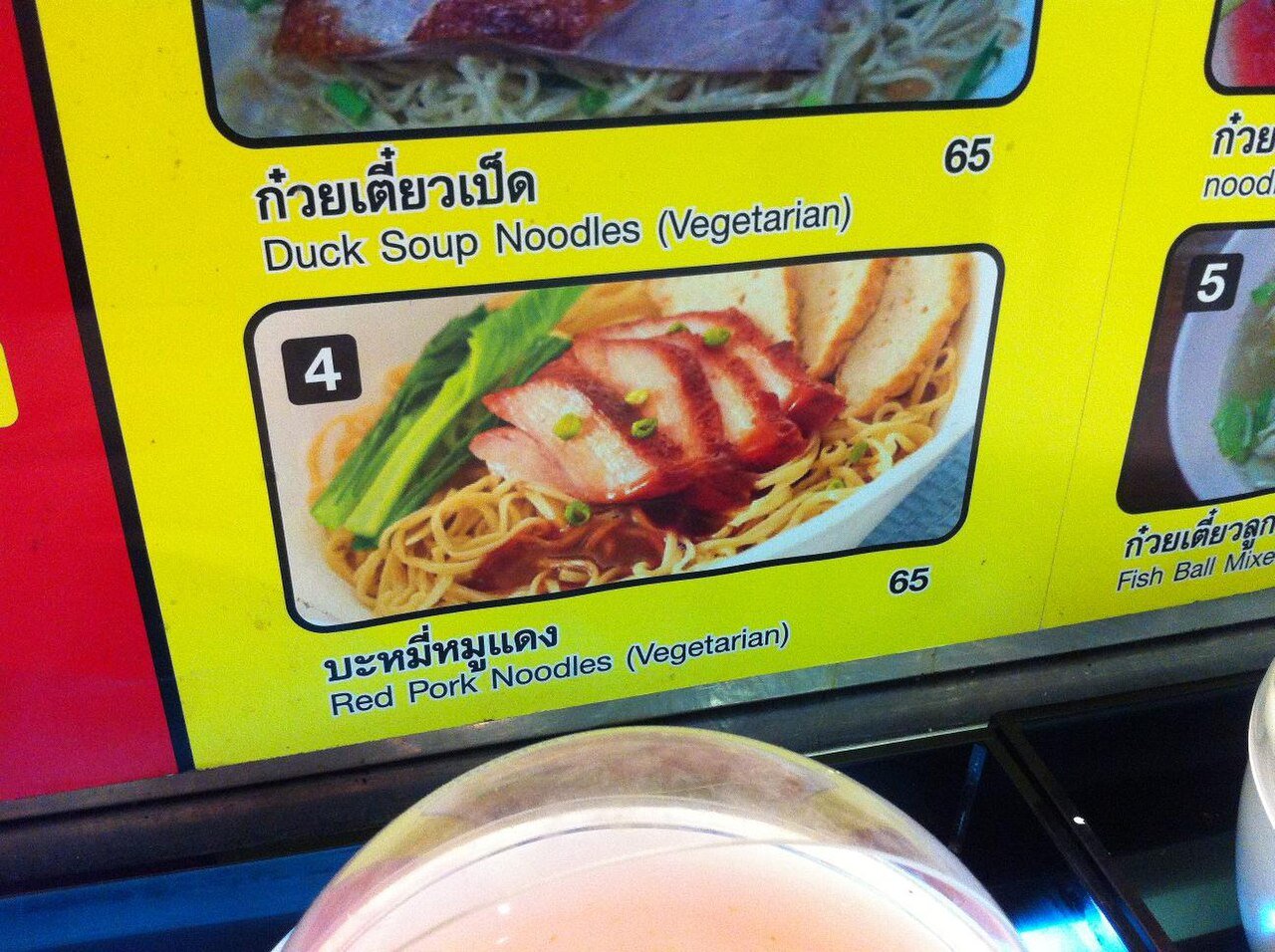
Thai mock meat is a Chinese-Thai craft, and its names describe the shape and flavour being imitated rather than what is in the bowl. Because Thai modifiers follow the noun, เจ is simply tacked onto the end of the usual dish name:
- หมูเจ (mǔu jay) — “jay pork”, usually soy protein
- เป็ดเจ (bpèt jay) — “jay duck”, often layered tofu skin
- ลูกชิ้นเจ (lûuk-chín jay) — “jay meatballs”
- ส้มตำเจ (sôm-dtam jay) — papaya salad made without dried shrimp, fish sauce or fermented fish
There is a grammar lesson hiding in that lunch order. Once you see that เจ behaves like an adjective glued to the back of a noun, Thai word order stops looking arbitrary — and you can build the pattern yourself with any dish on the board.
The ingredients that hide inside “vegetable” dishes
Most accidental mouthfuls in Thailand come from seasoning rather than from obvious meat. These are the words to listen for, and the ones to put after ไม่ใส่:
- น้ำปลา (náam-plaa) — fish sauce, literally “fish water”. It is in nearly everything savoury.
- กะปิ (gà-bpì) — shrimp paste, the base of most curry pastes and of papaya salad.
- กุ้งแห้ง (gûng-hâeng) — dried shrimp, literally “dry shrimp”.
- น้ำมันหอย (náam-man hǒi) — oyster sauce, “oyster oil”, standard in stir-fried vegetables.
- ปลาร้า (bplaa-ráa) — fermented fish, everyday seasoning in Isaan cooking.
- น้ำซุปหมู (náam-súp mǔu) — pork broth, the default base of noodle soup.
Ask with a question particle and a smile: ใส่น้ำปลาไหมคะ (sài náam-plaa mǎi khá) — “do you put fish sauce in?” Vendors hear the question all the time, and a dedicated เจ stall will keep a separate wok and separate utensils as a matter of course.
เทศกาลกินเจ: nine days when the whole country turns vegetarian
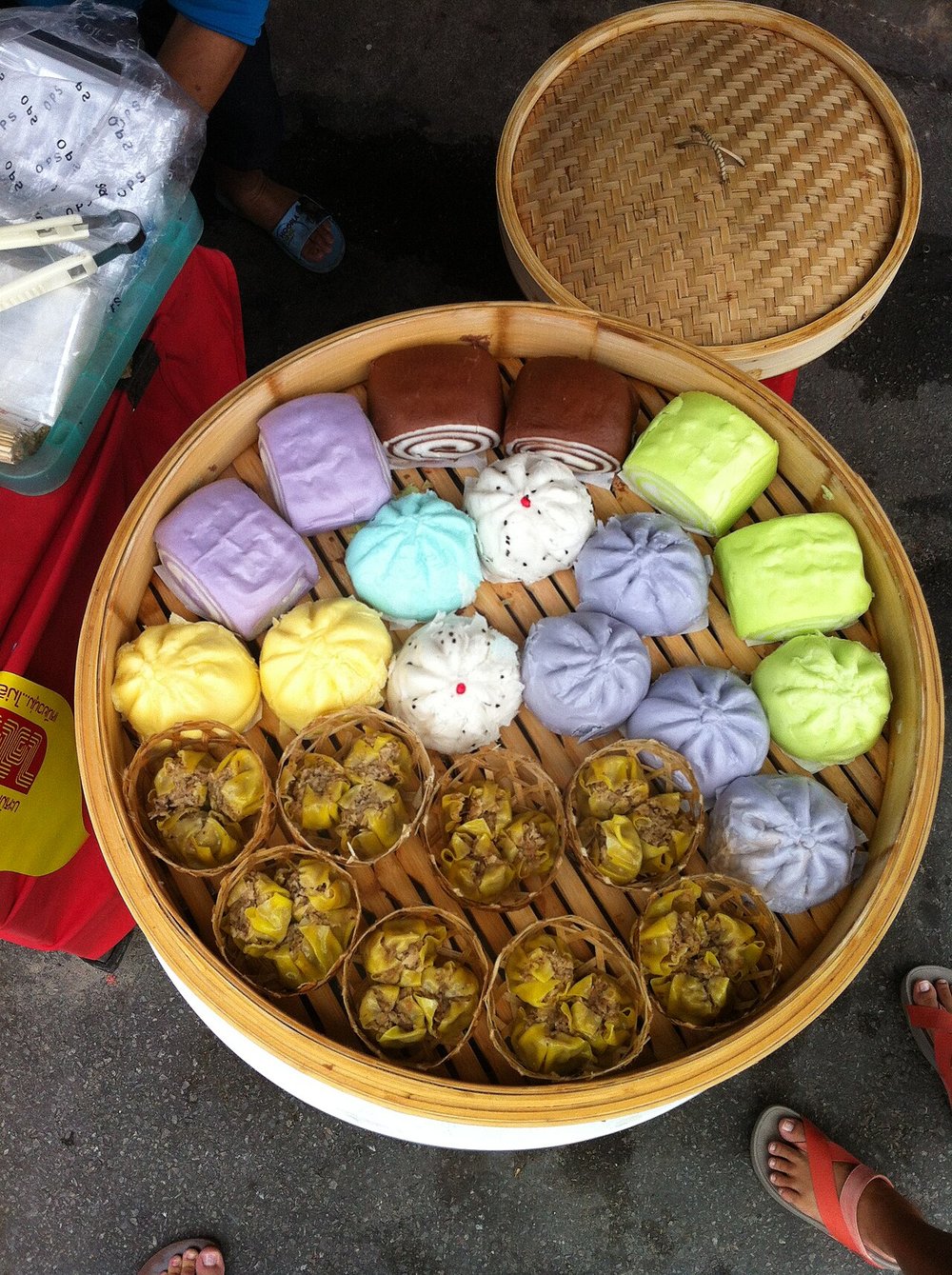
Once a year every word in this guide goes up on every street in the country. เทศกาลกินเจ (thêt-sà-gaan gin jay), the Vegetarian Festival, runs for nine days in the ninth month of the Chinese lunar calendar — in practice, late September or October. Yellow flags appear outside restaurants, convenience stores relabel their shelves, and ordinary pork-and-rice stalls hang out a เจ sign for the week. Phuket’s version, with its processions and famously extreme devotional rites, is the one that makes the news, but the food is everywhere from Chiang Mai to the smallest provincial market.
For a beginner it is the cheapest way to learn Thai vocabulary that Thailand offers. The word you just met is painted on half the awnings you walk past, which is exactly the kind of repetition that turns a shape on a page into something you simply read without translating.
Everyday vegetarian ordering, the other fifty-one weeks
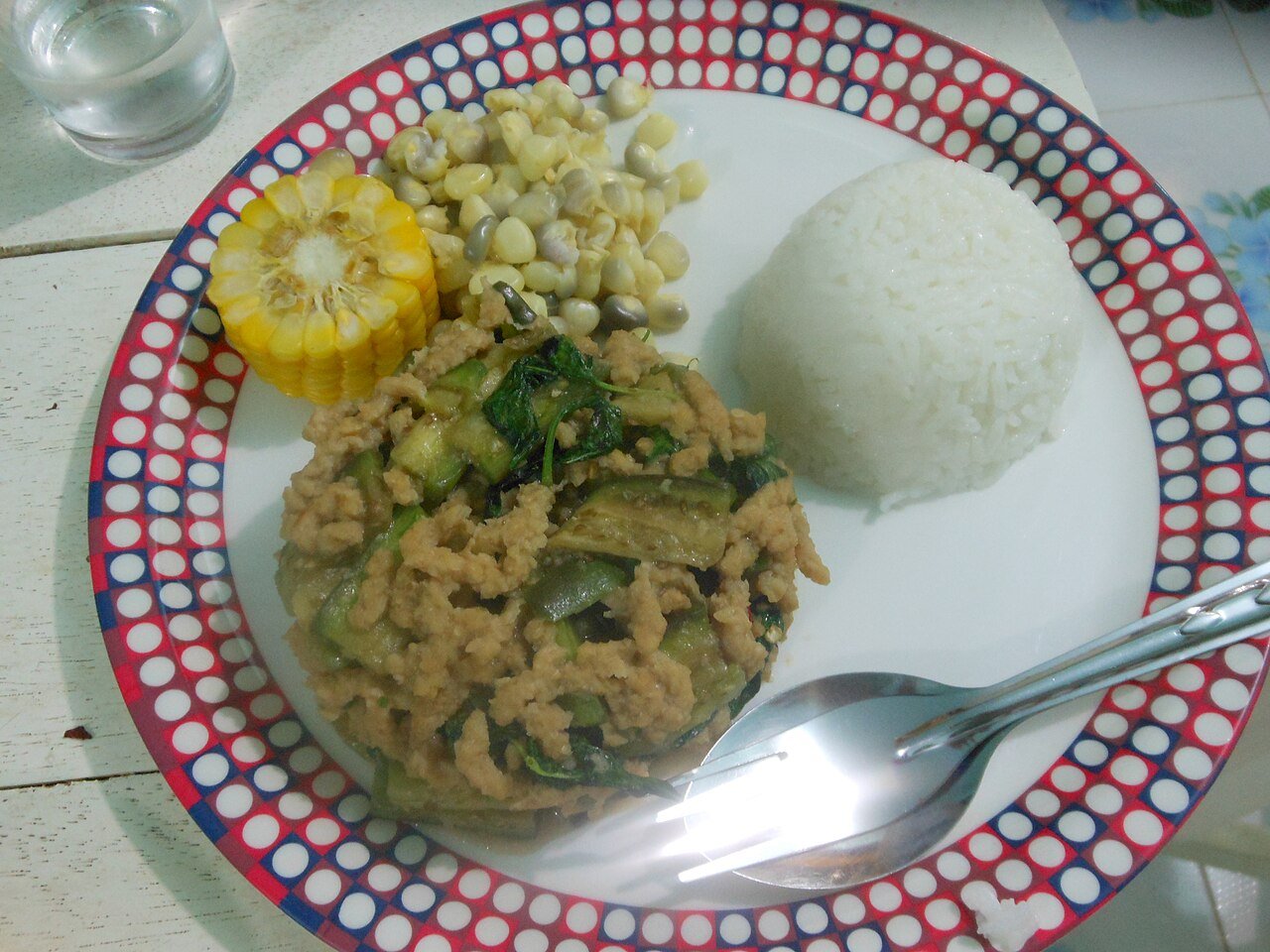
Outside festival season, a handful of dishes will carry you anywhere. ผัดผักรวมมิตร (phàt phàk ruam-mít) is stir-fried mixed vegetables; add ไม่ใส่น้ำมันหอย and it is safe. เต้าหู้ (dtâo-hûu) is tofu, and ผัดกะเพราเต้าหู้ (phàt gà-phrao dtâo-hûu), holy-basil stir-fry with tofu, is available almost everywhere once you ask for it. These are the dishes to learn Thai vocabulary for first; our guide to Thai cooking words and menus breaks down how such dish names are assembled from their parts. For anyone settling in, this is core Thailand expat language — the words you will use several times a week for years.
A study tip: read เจ before you can read anything else
Here is why this particular word deserves a beginner’s attention. เจ is two characters: the consonant จ (jor jaan, “j as in plate”) and the vowel เ (sara e). The vowel is written to the left of the consonant but pronounced after it — the first rule about Thai consonants and vowels that every learner has to swallow, and far easier to accept on a real sign than in a table. Learning to read Thai script begins with exactly this kind of two-character word, which is why our Thai alphabet chart introduces the leading vowels early rather than saving them for later.
So give yourself a week of spotting. Walk your usual route and count the เจ signs; find อาหารเจ on an awning, and use ไม่ใส่ out loud at least once a day. Then spend ten minutes each evening with our free flashcard trainer, putting จ alongside the other Thai letters so it stops being “the jay shape” and becomes a letter you know. A word you genuinely need, met in the wild and drilled at home, is how a beginner Thai lesson turns into real reading — and it is why food remains the best textbook this country has to offer.