Learn Thai Vocabulary: Animal Words & Signs in Thailand
Learn Thai vocabulary for animals in Thailand: elephant, buffalo, soi dog and gecko, with Thai script, pronunciation and real road-sign photos to read.
If you want to learn Thai vocabulary that sticks, start with animals. Thai gives you a bonus no other beginner topic does: twelve of the forty-four Thai consonants are taught with an animal attached to them, so the moment you learn the Thai alphabet you have already met the chicken, the buffalo, the snake and the elephant. This guide takes that classroom zoo out onto the road, using real photographs from Nam Nao, Chiang Mai, Nong Khai and Lopburi.
Everything below comes with Thai script, a Thai transliteration you can say out loud, and a literal translation where the literal meaning is the thing worth knowing. You will finish able to read the animal warning signs bolted beside Thai highways, name the creatures that actually turn up in your street, and avoid the one animal word that is a genuine insult in Thailand.
Learn the Thai alphabet and you learn twelve animals free
Every Thai consonant has a name-word that fixes its shape in the memory, the way “A is for apple” does in English. Twelve of those words are animals, which means a beginner Thai lesson on Thai letters is secretly a vocabulary lesson too. Learn the pairing once and you get the letter, the sound and a usable noun in the same breath.
- ก ไก่ (gaaw gài) — chicken
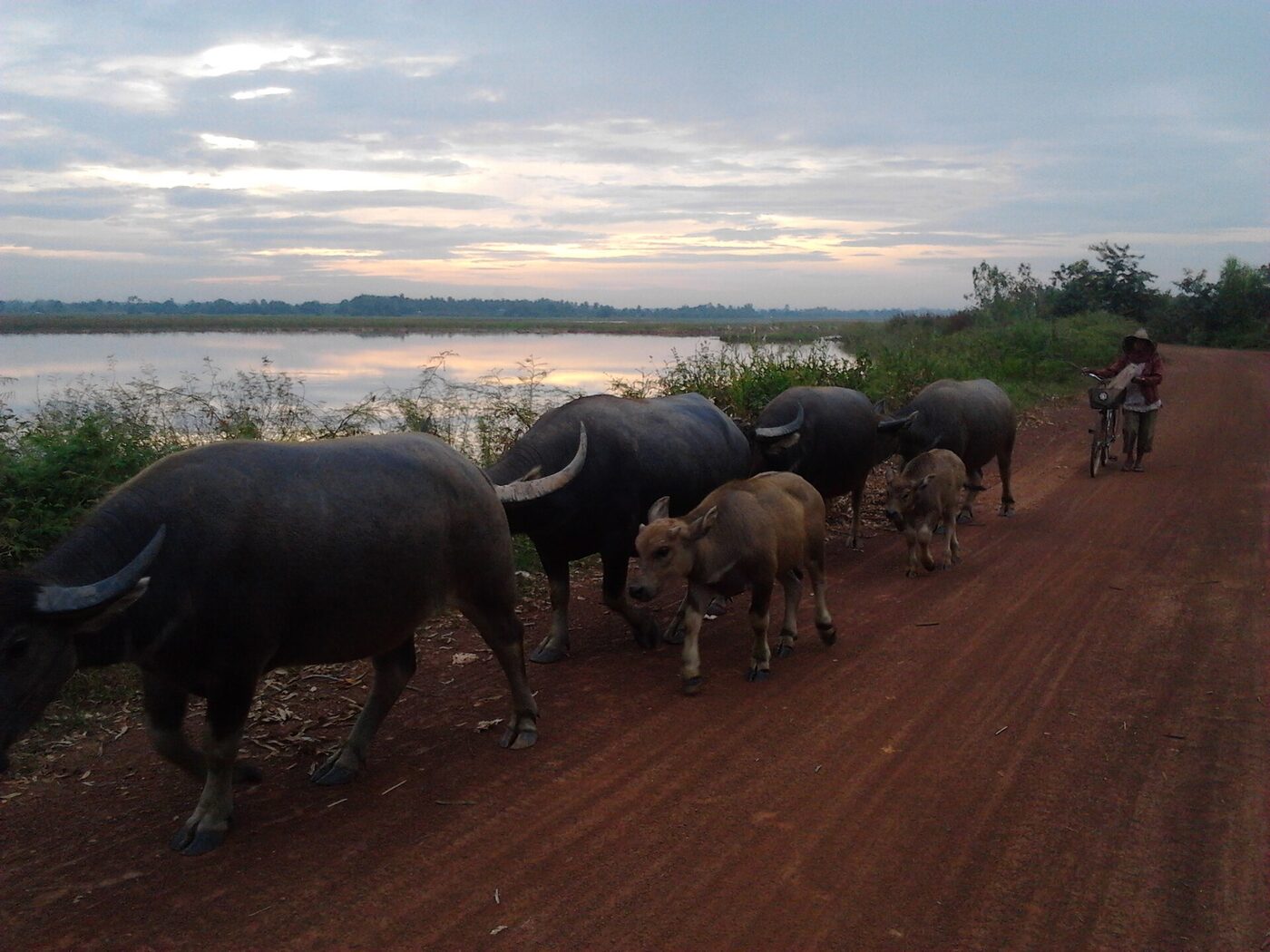
- ค ควาย (khaaw khwaai) — water buffalo
- ง งู (ngaaw nguu) — snake
- ช ช้าง (chaaw cháang) — elephant
- ต เต่า (dtaaw dtào) — turtle
- น หนู (naaw nǔu) — mouse
- ป ปลา (bpaaw bplaa) — fish
- ผ ผึ้ง (phǎaw phûeng) — bee
- ม ม้า (maaw máa) — horse
- ล ลิง (laaw ling) — monkey
- ส เสือ (sǎaw sǔea) — tiger
- ฮ นกฮูก (haaw nók-hûuk) — owl
Our free Thai alphabet chart lays out all forty-four consonants with their animal words, and the ThaiLetters flashcard trainer will drill the Thai consonants and vowels until the shapes stop looking like decoration. Two umbrella words tie the set together: สัตว์ (sàt) is “animal”, สัตว์เลี้ยง (sàt líang) is a pet, literally a “raised animal”, and สัตว์ป่า (sàt bpàa) is a wild one, literally “forest animal”.
ระวัง: read Thai script on animal warning signs
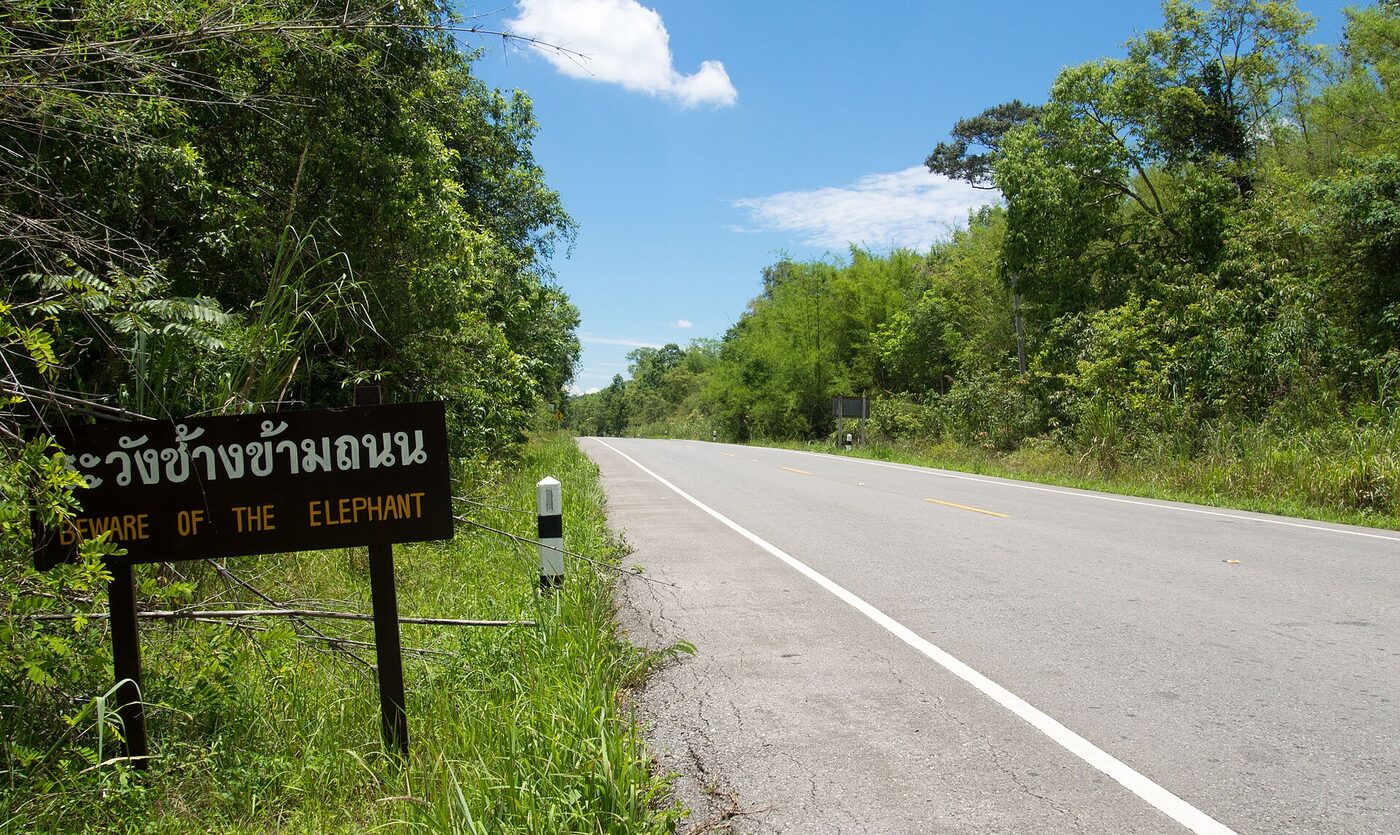
One word opens almost every animal sign in Thailand. ระวัง (rá-wang) means “beware, take care”, and it is followed simply by the thing to beware of — no grammar in between. Once you can read Thai script well enough to spot those five letters, the rest of the sign is one noun you can look up. Roadside signs are a free place to learn Thai vocabulary, because the pictogram above the words tells you at once whether you read them correctly. It is the friendly cousin of ห้าม (hâam), the hard ban covered in our guide to Thai warning and no-entry signs.
- ระวังช้าง (rá-wang cháang) — beware elephants, on highways through Khao Yai, Nam Nao and Kui Buri
- ระวังสุนัขดุ (rá-wang sù-nák dù) — beware of the fierce dog, the Thai “beware of dog” on gates
- ระวังงู (rá-wang nguu) — beware of snakes
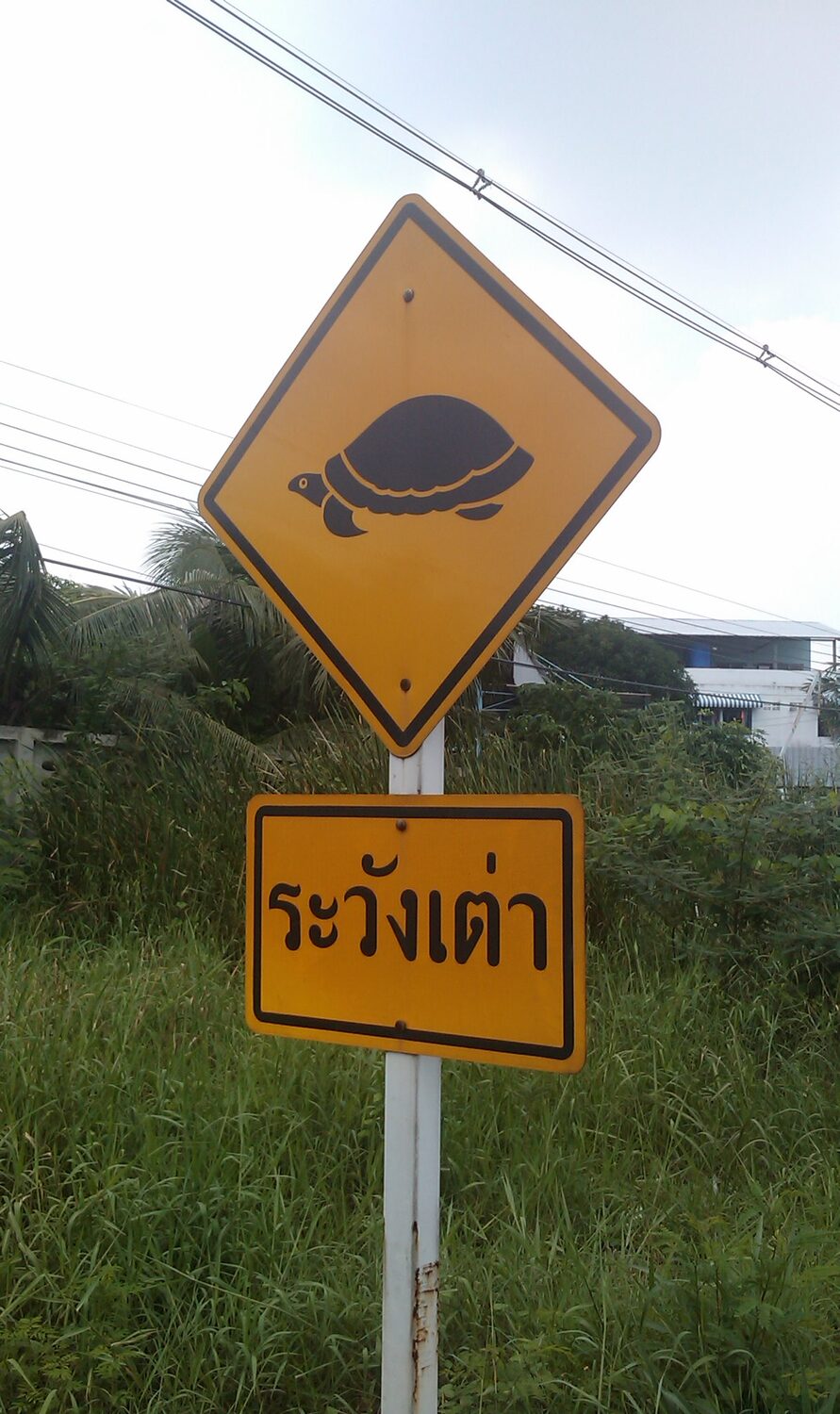
- ระวังเต่า (rá-wang dtào) — beware of turtles, common near ponds and coastal lanes
- ห้ามให้อาหารสัตว์ (hâam hâi aa-hǎan sàt) — do not feed the animals, literally “forbid give food animal”
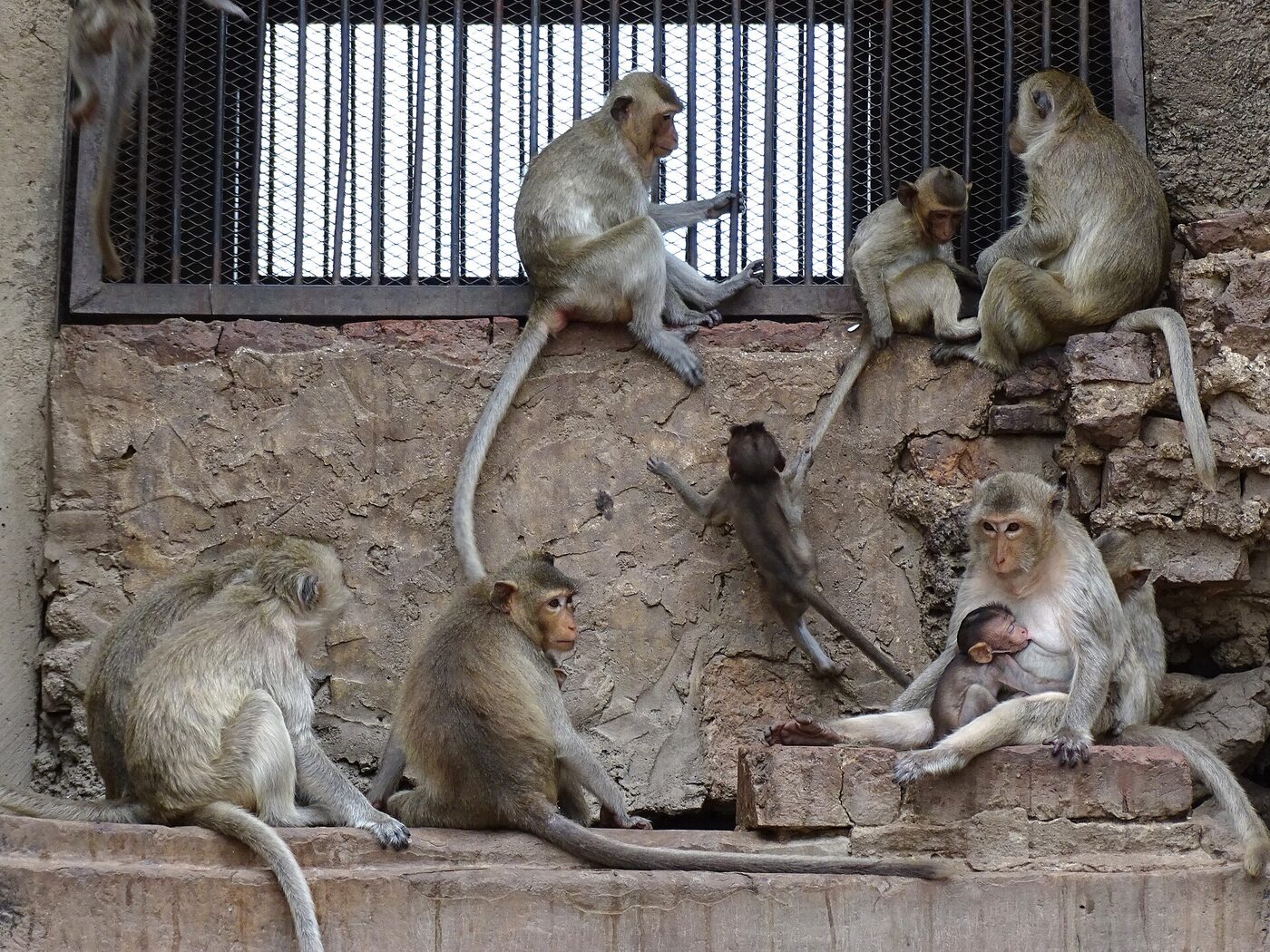
- ระวังลิงขโมยของ (rá-wang ling khà-mooei khǎawng) — beware of monkeys stealing things. In Lopburi this is a warning, not a joke.
- เขตอนุรักษ์สัตว์ป่า (khèet à-nú-rák sàt bpàa) — wildlife conservation zone
ช้าง: the elephant words every visitor to Thailand hears
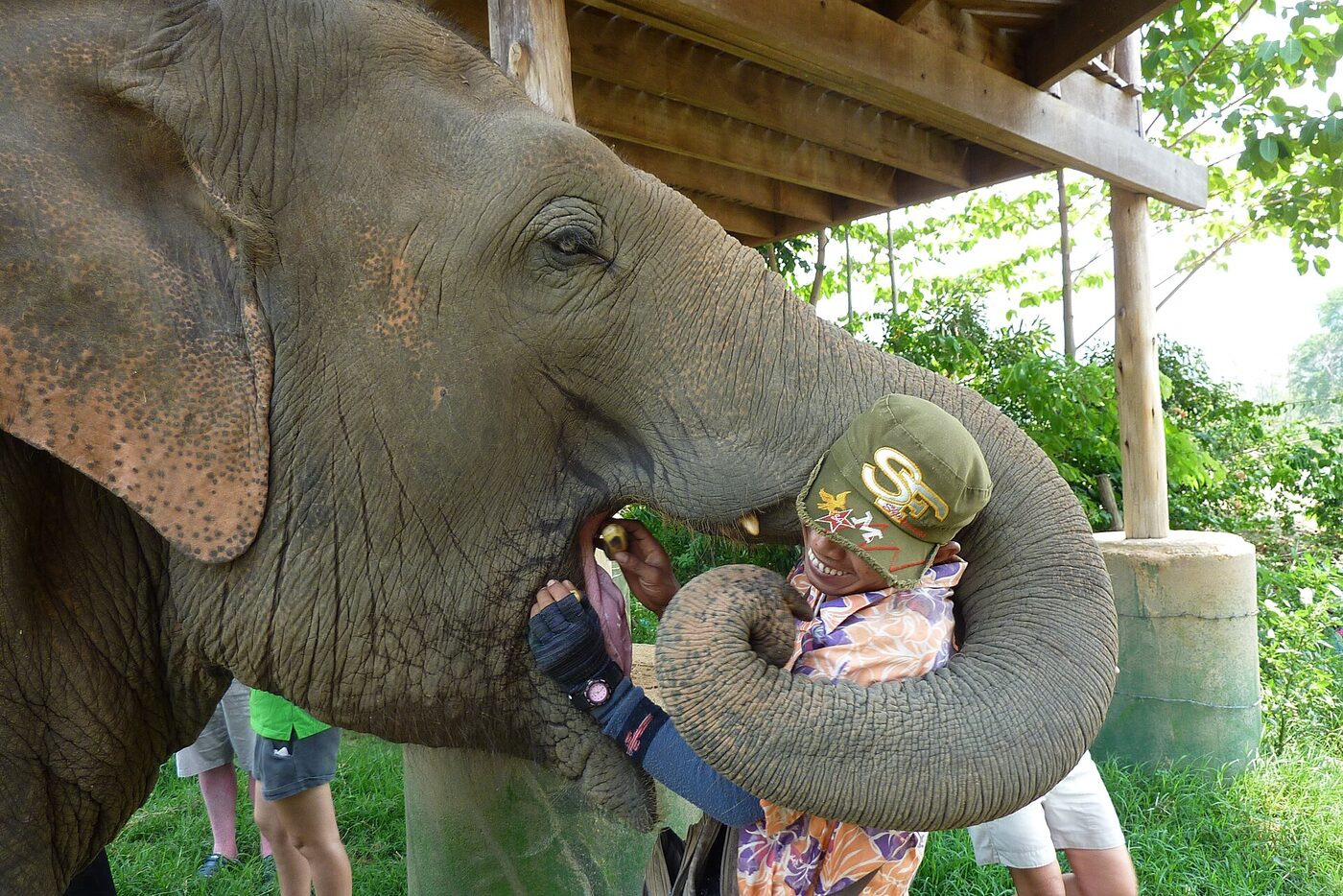
The elephant is Thailand’s national animal and its vocabulary reaches a long way past the zoo. ช้าง (cháang) is on beer bottles, bank branches, football shirts and the letter ช. A ควาญช้าง (khwaan cháang) is a mahout, the keeper who works with one elephant for years, and a ปางช้าง (bpaang cháang) is an elephant camp — a phrase worth recognising when you compare sanctuaries. A ช้างเผือก (cháang phùeak), a white elephant, is royal, and the same phrase is used warmly for a brilliant student from a poor village. Learn Thai vocabulary in families like this and one animal hands you five words instead of one.
Learn Thai vocabulary for the street: หมา, แมว and the soi dog
This is the set that earns its keep daily in Thailand, and it comes with a register problem that no phrasebook warns you about. Thai has two words for dog. หมา (mǎa) is the everyday one you will hear in the street; สุนัข (sù-nák) is the polite, written one used on signs, in vet clinics and on official notices. Both mean dog. Aimed at a person, though, หมา is a real insult, so keep it for actual dogs and use สุนัข when you are reading or writing anything formal — a small but reliable marker of careful Thailand expat language.
- หมา / สุนัข (mǎa / sù-nák) — dog, casual and formal
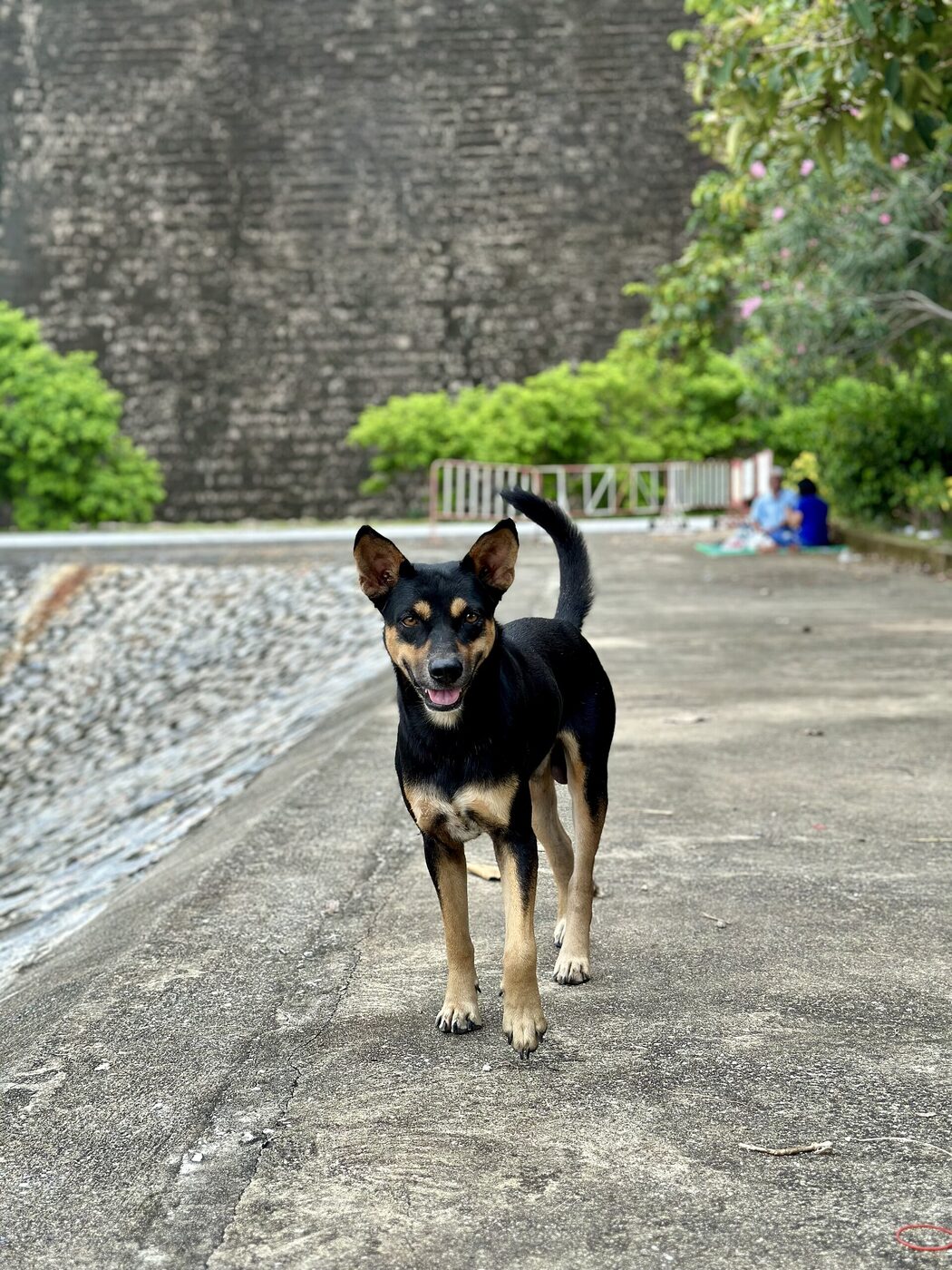
- หมาจรจัด (mǎa jaawn-jàt) — stray dog, literally “wandering dog”; the soi dog you meet on every lane
- แมว (maew) — cat. The word sounds like the animal, which is the easiest Thai pronunciation win available.
- ดุ (dù) — fierce; กัด (gàt) — to bite
- น่ารัก (nâa-rák) — cute, the single most useful adjective near any animal in Thailand
- หมาบ้า (mǎa bâa) — rabid dog, literally “mad dog”; the clinic word for rabies is พิษสุนัขบ้า (phít sù-nák bâa)
- โรงพยาบาลสัตว์ (rohng phá-yaa-baan sàt) — animal hospital, the sign above every Thai vet
ควาย: the buffalo word that doubles as an insult
Here is the one to handle with care. ควาย (khwaai) is the water buffalo, the animal that ploughed Thailand’s rice fields for centuries and still appears on the letter ค. Said about a person, it means stupid — ไอ้ควาย (âi khwaai) is a serious insult, not banter, and a foreigner using it will not be heard as funny. The formal word กระบือ (grà-bue) carries none of that and is what you see in writing. It is the part of learning Thai you cannot get from a word list: to learn Thai vocabulary properly you have to learn who each word may be aimed at.
- ควาย / กระบือ (khwaai / grà-bue) — water buffalo, everyday and formal
- วัว (wua) — cow; โค (khoo) is its formal twin, seen on dairy packaging
- หมู (mǔu) — pig, and the word you will read on a hundred menus
- ไก่ (gài) — chicken; เป็ด (bpèt) — duck
- ม้า (máa) — horse. Mind the tone: ม้า is a horse, หมา is a dog, มา is “come”.
- นา (naa) — rice field, where the buffalo belongs; see our guide to Thai rice vocabulary
Monkeys, geckos and the wildlife that lets itself in
Some Thai animal words you learn because you read them; these you learn because something is sitting on your wall. จิ้งจก (jîng-jòk) is the small pale house lizard that patrols the ceiling for mosquitoes, and ตุ๊กแก (dtúk-gae) is its much larger cousin, the tokay gecko, named for the bark it makes at two in the morning. Both are welcome: they eat the ยุง (yung), mosquitoes.
- ลิง (ling) — monkey; ขโมย (khà-mooei) — to steal, a pairing you will hear in Lopburi and on Khao Yai roadsides
- จิ้งจก (jîng-jòk) — house lizard; ตุ๊กแก (dtúk-gae) — tokay gecko
- ยุง (yung) — mosquito; มด (mót) — ant; แมลง (má-laeng) — insect
- งู (nguu) — snake; นก (nók) — bird; ปลา (bplaa) — fish
- สวนสัตว์ (sǔan sàt) — zoo, literally “animal garden”
Speak Thai about animals: one counting word and five sentences
To speak Thai about animals you need one piece of grammar: the counting word ตัว (dtua), which covers every animal from an ant to an elephant. Thai puts the noun first, then the number, then the counting word — แมวสองตัว (maew sǎawng dtua), “cats two bodies”. Our Thai classifiers guide covers the rest of the system. The other essential is the polite particle: men end with ครับ (khráp), women with ค่ะ (khâ) for statements and คะ (khá) for questions, as set out in our guide to khrap and kha.
- หมาดุไหมครับ (mǎa dù mǎi khráp) — “Is the dog fierce?” Ask before you open the gate.
- ที่นี่มีงูไหมคะ (thîi nîi mii nguu mǎi khá) — “Are there snakes here?”
- ผมมีแมวสองตัวครับ (phǒm mii maew sǎawng dtua khráp) — “I have two cats.”
- น้องชื่ออะไรคะ (náawng chûe à-rai khá) — “What’s its name?” Thai people often call a pet น้อง, little sibling.
- ให้อาหารได้ไหมครับ (hâi aa-hǎan dâai mǎi khráp) — “May I feed it?” The answer at most temples and parks is no.
A study tip: name three animals a day
Do not sit down with a list of forty. Pick three animals you will physically see tomorrow — the soi dog, the gecko on the wall, the chicken behind the restaurant — and name them in Thai out loud every time they cross your path. A word attached to a living thing in front of you survives in a way a flashcard rarely does, and three a day is a hundred animals by Songkran.
Then close the loop with the writing system: the fastest way to learn Thai vocabulary permanently is to be able to read it. Twelve of these creatures are already waiting for you on the Thai alphabet chart, one per letter, and the moment you can spot ช in the wild you will realise that the beer bottle, the bank and the road sign have all been saying “elephant” at you for months.