Why Thai Has 44 Consonants but Only 21 Sounds
Thai has 44 consonant letters for about 21 distinct initial sounds. The duplicates are not a design flaw — they are how the writing system encodes tone. Here is what that means when you sit down to memorise them.
Anyone who opens a Thai alphabet chart for the first time runs into the same puzzle. There are 44 consonant letters. There are only about 21 distinct consonant sounds at the start of a syllable. So several letters are, phonetically, identical twins — ท, ธ, ฑ and ฒ all give you the same t sound. Why keep four of them?
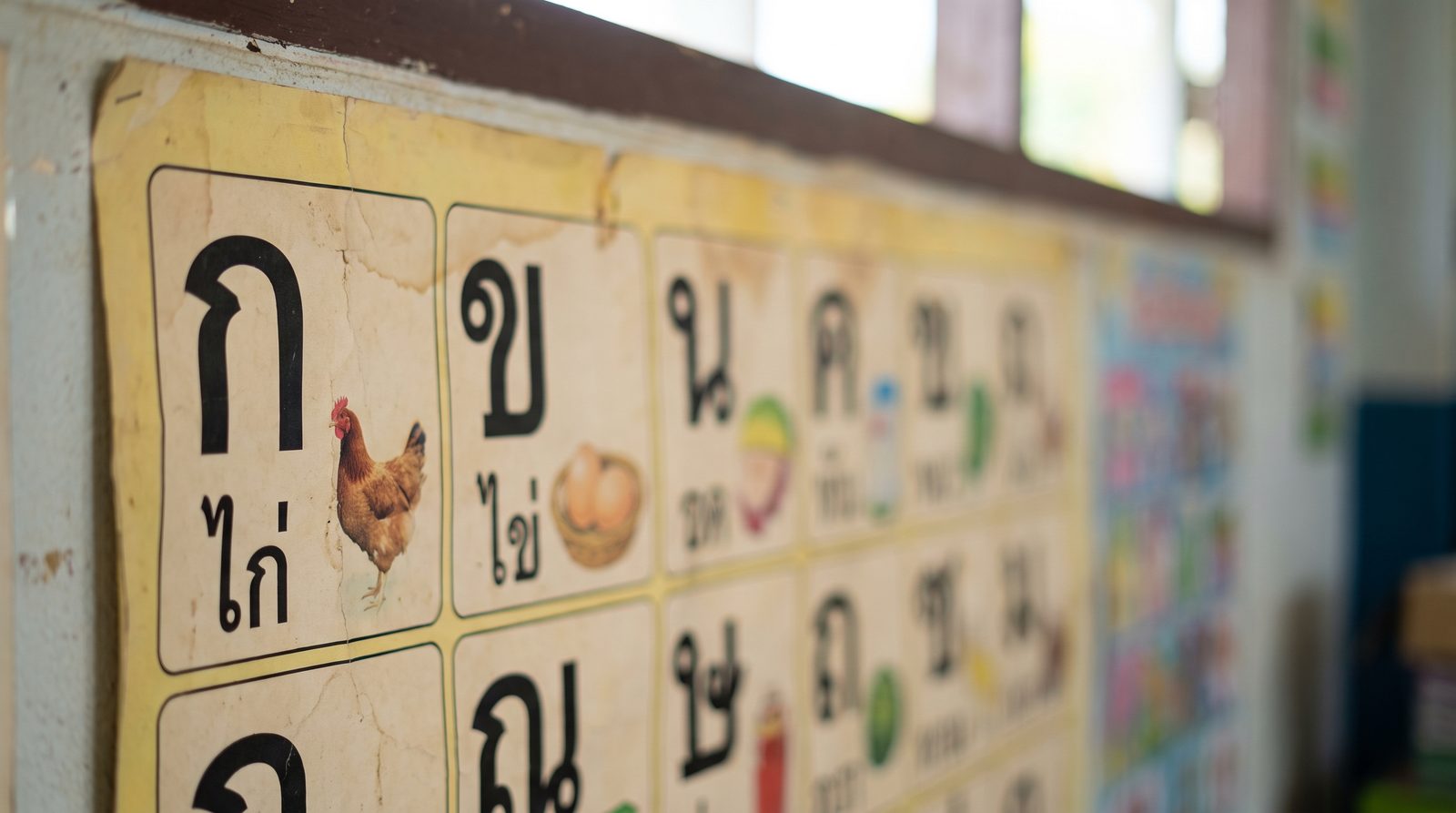
The duplicates carry tone, not sound
The answer is that a Thai consonant letter does two jobs at once. It tells you what sound to make, and it tells you — in combination with the vowel and any tone mark — what tone to make it on.
Every consonant belongs to one of three classes: high (อักษรสูง), mid (อักษรกลาง) and low (อักษรต่ำ). The class of the initial consonant is the first input into the tone rule. So ข and ค both sound like kh, but ข is high class and ค is low class, and a syllable built on one will land on a different tone from the same syllable built on the other. The letters are not redundant. They are spelling out something English simply does not write down.
This is why the classes are worth learning early, even though they feel like extra homework on day one. They are not trivia bolted onto the alphabet — they are half of how reading works.
Where the extra letters came from
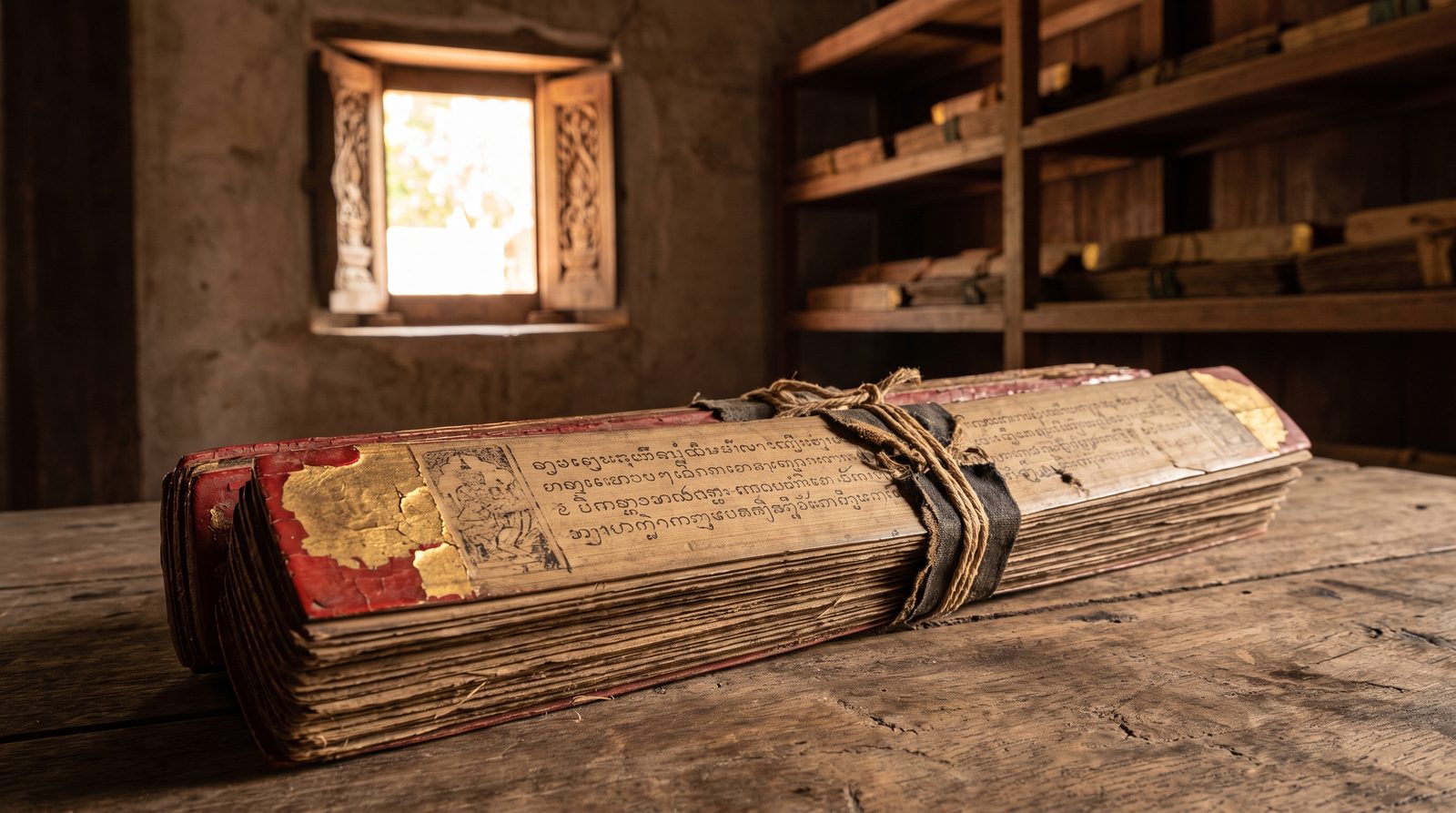
The other reason for the surplus is history. A large share of Thai vocabulary is borrowed from Sanskrit and Pali, and those loanwords were brought across with their original spellings largely intact. Sanskrit distinguished sounds — retroflex consonants, voiced aspirates — that Thai speakers do not distinguish. The letters came along anyway and were absorbed into the tone-class system.
The practical upshot: letters like ฑ, ฒ, ฬ and ฌ turn up almost exclusively in words of Indic origin, and often in formal, royal or religious vocabulary. You still need to recognise them. You will just meet them far less often than ก or ม.
Two letters you can safely retire
Two of the 44 are genuinely obsolete: ฃ (ขวด, khor khuat, "bottle") and ฅ (คน, khor khon, "person"). They fell out of use in the early twentieth century — the usual explanation being that early Thai typewriter keyboards had no room for them — and modern Thai simply spells those sounds with ข and ค instead.
They still appear on alphabet charts, because the chart is a traditional recitation list, and Thai children still learn all 44 in order. You should be able to recognise them. You will not need to write them.
And at the end of a syllable, the picture shrinks again
Here is the part that makes the whole thing feel manageable. In final position, Thai collapses all those consonants down to just eight possible sounds: k, t, p, m, n, ng, w and y. Any consonant letter that ends a syllable gets mapped onto one of those eight. A word ending in ส, ช, ธ or จ all finish with the same unreleased t.
So the honest summary is: 44 shapes to recognise, roughly 21 initial sounds, 8 final sounds, and 3 classes that decide tone. That is a much smaller mountain than "44 new letters" suggests.
What this means for how you practise
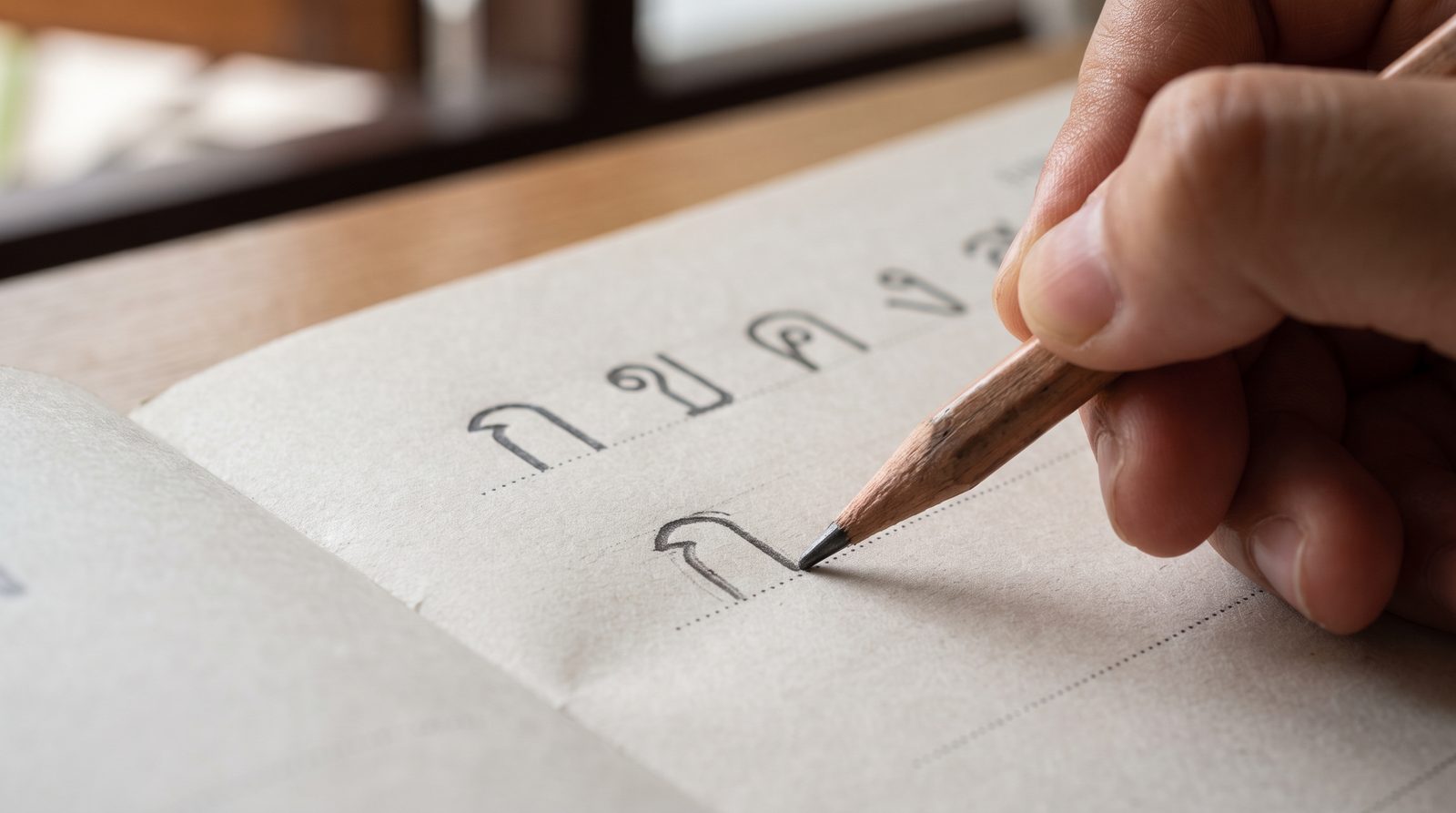
Learn the shape and the traditional name together — ก ไก่ (gor gai, chicken), ข ไข่ (khor khai, egg). The name-word is how every Thai speaker refers to the letter, so it is the version that will actually be useful when you ask someone how something is spelled.
Then tag each letter with its class as you go, rather than treating classes as a separate later topic. Recognition and class learned together is far less work than recognition now and class again in three months.
The three classes, with examples
Seeing a few members of each class side by side makes the abstraction concrete. Mid class (อักษรกลาง) is the smallest group, nine letters: ก (g), จ (j), ด (d), ต (t), บ (b), ป (p), and อ. High class (อักษรสูง) includes ข (kh), ฉ (ch), ถ (th), ผ (ph), ฝ (f), ส (s) and ห (h). Low class (อักษรต่ำ) is the largest group by far, comprising roughly half the alphabet, and includes ค (kh), ช (ch), ท (th), พ (ph), ฟ (f), ม (m), น (n), ง (ng), ย (y), ร (r), ล (l) and ว (w).
Notice the pattern in the pairs from the introduction: ข (high) and ค (low) share a sound; ผ (high) and พ (low) share a sound; ฝ (high) and ฟ (low) share a sound. High/low pairs like these are common precisely because Thai needed a way to write the same consonant sound on two different tone paths — which is the entire reason the duplicate letters exist.
The flashcard trainer shuffles all 44 and shows the class on the answer side, and the alphabet reference lets you filter by class if you would rather drill one group at a time.