Thai Slang Words: Everyday Phrases Locals Actually Use
Learn essential Thai slang words with Thai script, pronunciation and real usage tips. A practical Thai language guide for beginners who want to speak Thai naturally.
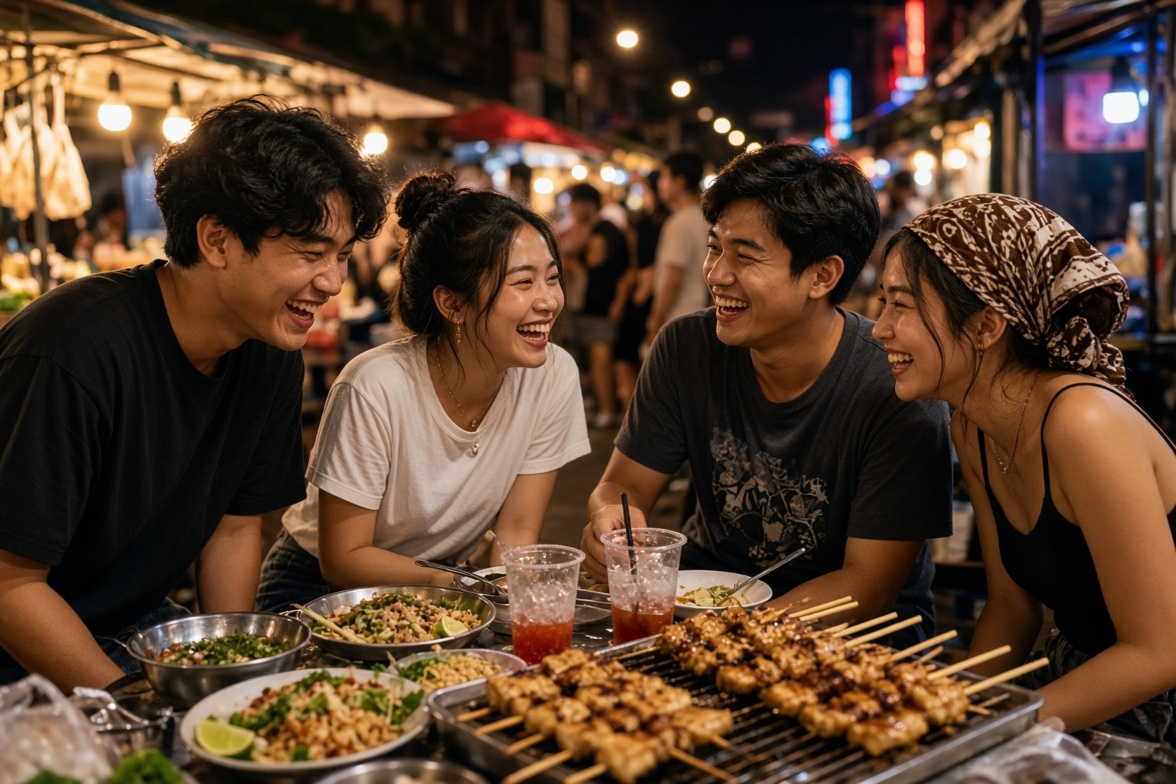
Most beginner Thai lessons stick to polite textbook phrases. That is useful, but it leaves a gap the moment you sit with Thai friends, join a group chat, or overhear people at a night market. Real conversation is full of short, flexible Thai slang words that never appear on formal word lists. Learning a focused set of them is one of the fastest ways to stop sounding like a phrasebook and start understanding what is actually being said around you.
Why Thai slang words matter for learners
Thai has a clear register system. The polite particles ครับ (khrap) and ค่ะ (kha) stay important, and you should keep using them with elders, service staff and anyone you have just met. Slang sits on top of that foundation rather than replacing it. Use it with people your own age or younger, in relaxed settings, and after you have already established a friendly tone.
These words also give you a window into how Thai speakers actually feel. A simple “good” becomes เจ๋ง or ปัง; a laugh becomes a string of fives. Once you recognise them, group chats, TikTok comments and market banter suddenly become readable instead of opaque.
Greetings and quick reactions
Formal สวัสดี still works everywhere, but among friends the language shortens and softens.
- หวัดดี (wat-dee) — casual “hi”. Dropped first syllable of สวัสดี. Safe with peers.
- เฮ้ย (hoey or hə̂i) — “hey!” Used to grab attention or express mild surprise. Keep the tone light.
- ว่าไง (waa ngai) — “what’s up?” Extremely informal greeting among close friends.
- จริงเหรอ (jing rə̌ə) — “really?” Shows mild disbelief without sounding rude.
- โอ้โห (oo-ho) — “wow!” Pure reaction to something impressive or unexpected.
Pair any of these with the polite particle when the situation is still a little formal: หวัดดีครับ or หวัดดีค่ะ works perfectly with younger colleagues or new friends.
Saying something is excellent
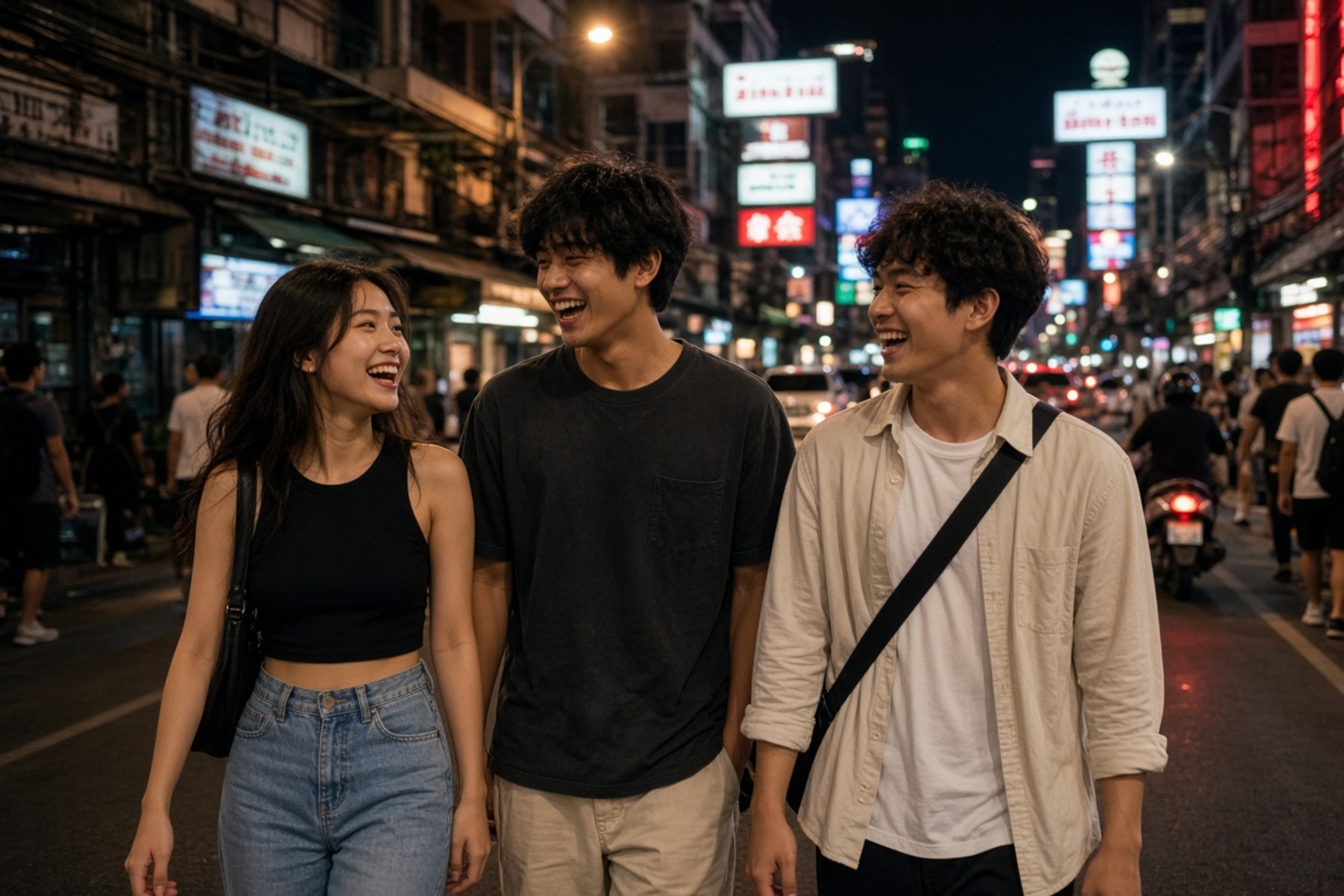
English “cool” or “awesome” has several Thai equivalents that carry slightly different flavours. These are among the most useful Thai slang words for everyday praise.
- เจ๋ง (jeng, rising tone) — cool, awesome, well done. Works for ideas, clothes, performances.
- ปัง (bpang) — a hit, stunning, successful. Common for food, outfits, social-media posts.
- เด็ด (det) — excellent, especially for food. “This dish is เด็ด” is high praise at a street stall.
- ฟิน (fin) — pure bliss, hit the spot. From English “finish” / endorphin. Used for food, music, moments.
- แซ่บ (saep) — originally Isaan for “delicious” or spicy-hot; now also means impressive or sexy in Bangkok speech.
- โคตร (khoot) — intensifier meaning “extremely” or “super”. โคตรดี = super good. Use only with people you know well; it is strong.
Notice the pattern: most of these are single syllables that attach easily to the thing you are praising. You do not need a full sentence. Point at the dish and say เด็ดมาก and the vendor will understand perfectly.
Internet and chat slang every learner meets
Thai texting has its own compact dialect. Even if you never type these yourself, you will see them constantly on LINE, Facebook and TikTok.
- 555 — the Thai “haha”. The number five is pronounced ห้า (haa), so 555 reads as laughter. More fives = harder laughing.
- ชิล (chil) — from English “chill”. Relaxed, no stress, easy-going.
- งง (ngong) — confused, puzzled. Useful when you genuinely do not follow.
- เซ็ง (seng) — disappointed or fed up.
- มโน (ma-no) — to fantasise or delude yourself. “Don’t มโน” = don’t get your hopes up unrealistically.
These forms also appear in spoken Thai among younger speakers. Hearing ชิล ๆ or งง เลย in real conversation is common once you start listening for them.
Politeness boundaries: when Thai slang words work (and when they do not)
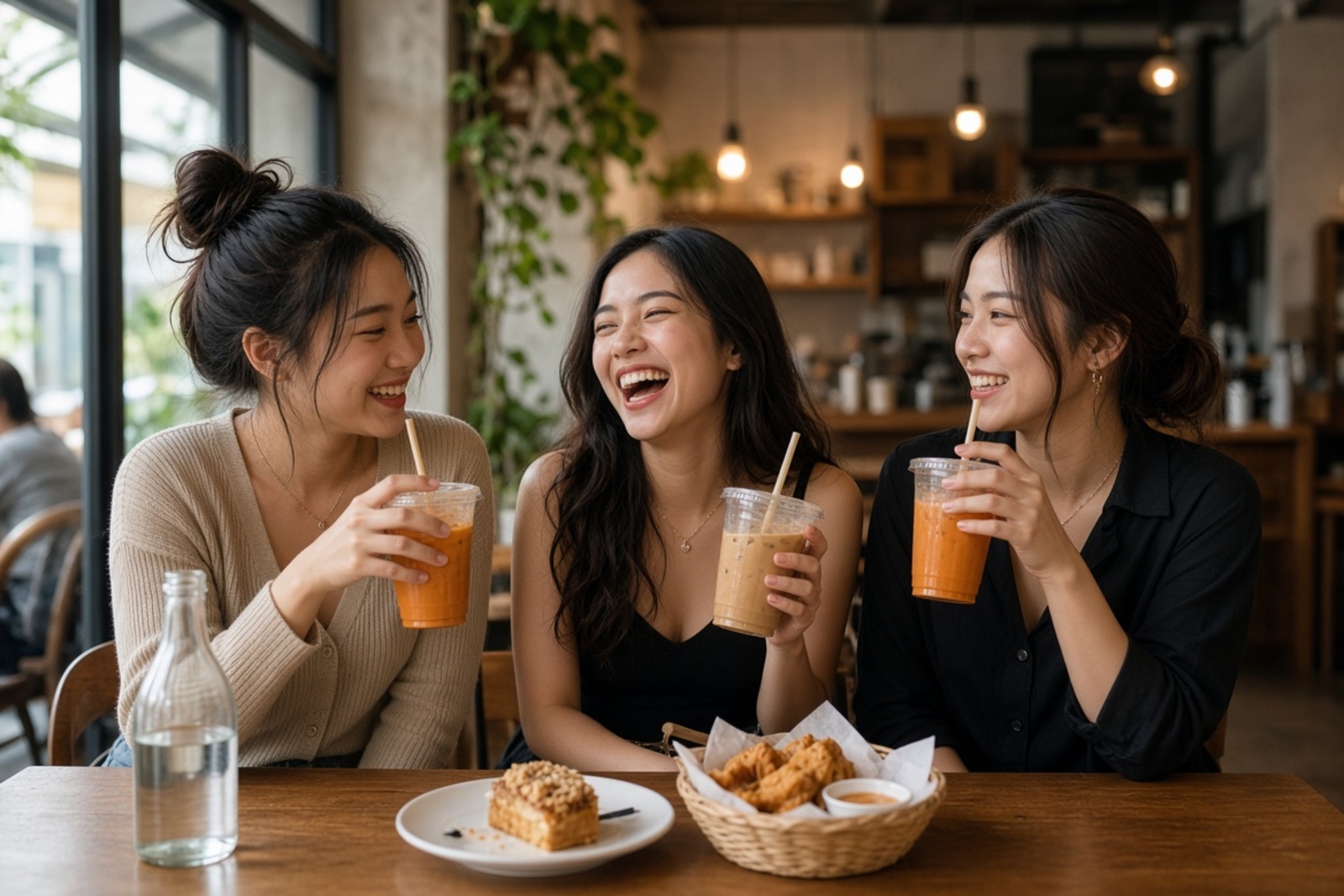
Slang is not a free pass to drop all formality. Thai still tracks age, status and relationship carefully. A few practical rules keep you safe:
- With anyone clearly older or in a position of authority, stick to standard polite Thai plus ครับ/ค่ะ.
- With new acquaintances of similar age, start polite and let them introduce slang first.
- Avoid intensifiers like โคตร and very casual address forms until the other person uses them with you.
- Never use slang that insults body parts, animals used as insults, or sexual terms — those exist, but they sit outside useful learner vocabulary.
The polite particles themselves have informal cousins in text (คับ, ค้าบ, จ้า), but spoken speech still prefers the standard forms with strangers. For a deeper look at how particles shape every sentence, see the particles guide.
How to study Thai slang words effectively
Do not memorise a giant list. Pick eight to ten of the highest-frequency items above and attach them to real situations you already experience: ordering food, chatting with a language partner, reading Thai comments under a video.
Write each word in Thai script first. Romanisation is only a temporary bridge; the script is unambiguous and trains your eye at the same time. The free Thai alphabet chart and flashcard trainer make that side of the work painless. Once the shapes are familiar, the slang becomes just another set of short, high-value words rather than mysterious noise.
Finally, listen more than you speak at the beginning. Thai friends and media will supply the natural rhythm and the situations where each word lands well. When you do use one, keep the rest of the sentence simple and polite. That combination — a few well-chosen Thai slang words inside otherwise clear, respectful Thai — is exactly what makes a foreigner sound like they are paying attention.