Thai Family Words: Aunts, Uncles and Sibling Terms
Learn Thai family words properly: mother's side versus father's side, older versus younger, with Thai script, pronunciation and when each word is polite to use.
If you have started to speak Thai beyond ordering food, Thai family words are the vocabulary set that repays the effort fastest. English gets by with "uncle" and "grandmother". Thai does not. It asks two questions before you are allowed to choose a word: which side of the family, and older or younger. That sounds like extra homework, and on day one it is. But these are also the words Thai people use with complete strangers every day — the woman at the noodle stall, the taxi driver, the neighbour — so getting them right is one of the quickest ways to stop sounding like a tourist.
Why Thai family words work differently
English kinship terms are deliberately vague — "cousin" covers eight relationships and four decades. Thai terms are deliberately precise: each one encodes generation, side of the family, and age relative to your parents, which is why a Thai speaker almost never has to add "on my mother's side".
The cost is that you cannot translate straight across from English. "My aunt" has four possible Thai answers, and you need to know the family before you can pick the right one. So learn the grid, not the glossary.
Parents and grandparents: mother's side versus father's side
Parents are the easy part, and they are among the first words in any beginner Thai lesson.
- พ่อ (phor, falling tone) — father
- แม่ (mae, falling tone) — mother
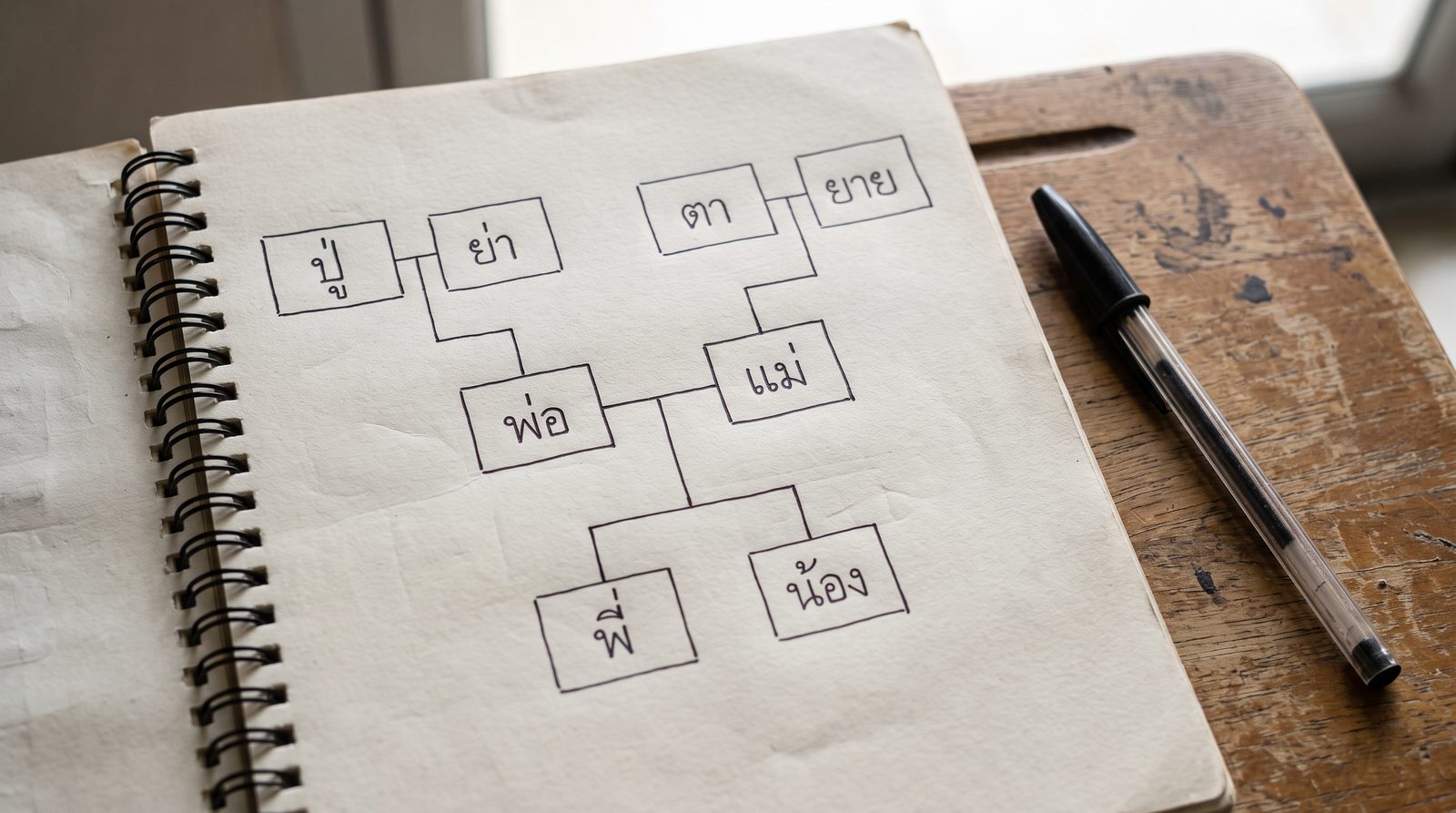
Grandparents are where the split appears. There is no general word for "grandfather" in everyday Thai. There are two, and which one you use tells everyone whose parent you are talking about.
| Relative | Father's side | Mother's side |
|---|---|---|
| Grandfather | ปู่ (bpoo, low tone) | ตา (dtaa, mid tone) |
| Grandmother | ย่า (yaa, falling tone) | ยาย (yaai, mid tone) |
The pairs travel together, so learn them as pairs rather than as four separate items: ปู่ and ย่า on your father's side, ตา and ยาย on your mother's. One useful hook: ตา is also the ordinary Thai word for "eye", which most learners meet early, and that oddity makes it stick.
One generation further up is ทวด (thuat, falling tone), a great-grandparent, and เหลน (len, rising tone) is a great-grandchild.
Aunts and uncles: age comes before side
This is the section that catches people out, because the logic quietly flips.
- ลุง (lung, mid tone) — an older brother of either parent
- ป้า (bpaa, falling tone) — an older sister of either parent
- น้า (naa, high tone) — a younger sibling of your mother, male or female
- อา (aa, mid tone) — a younger sibling of your father, male or female
Look at what each half of that list cares about. For the older generation, Thai marks the sex of the person and ignores which side of the family they came from. For the younger generation it does the opposite: it marks the side and ignores the sex. If you need to be specific with น้า or อา, add ชาย (chaai, male) or สาว (saao, female) — so น้าชาย is your mother's younger brother.
Brothers and sisters: Thai has no neutral word for "sibling"
Thai splits siblings by age before anything else, and there is no way around it.
- พี่ (phee, falling tone) — older sibling
- น้อง (nong, high tone) — younger sibling
Add ชาย or สาว to specify: พี่ชาย (older brother), พี่สาว (older sister), น้องชาย (younger brother), น้องสาว (younger sister). You cannot say "I have two brothers" in Thai without first deciding whether they are older or younger than you.
Using พี่ and น้อง with people you are not related to
These two escape the family altogether and become the most useful pronouns in the language. Calling a stranger slightly older than you พี่ is warm and respectful; it is how you address a waiter, a shop assistant or a colleague a few years your senior. น้อง works downward for someone clearly younger.
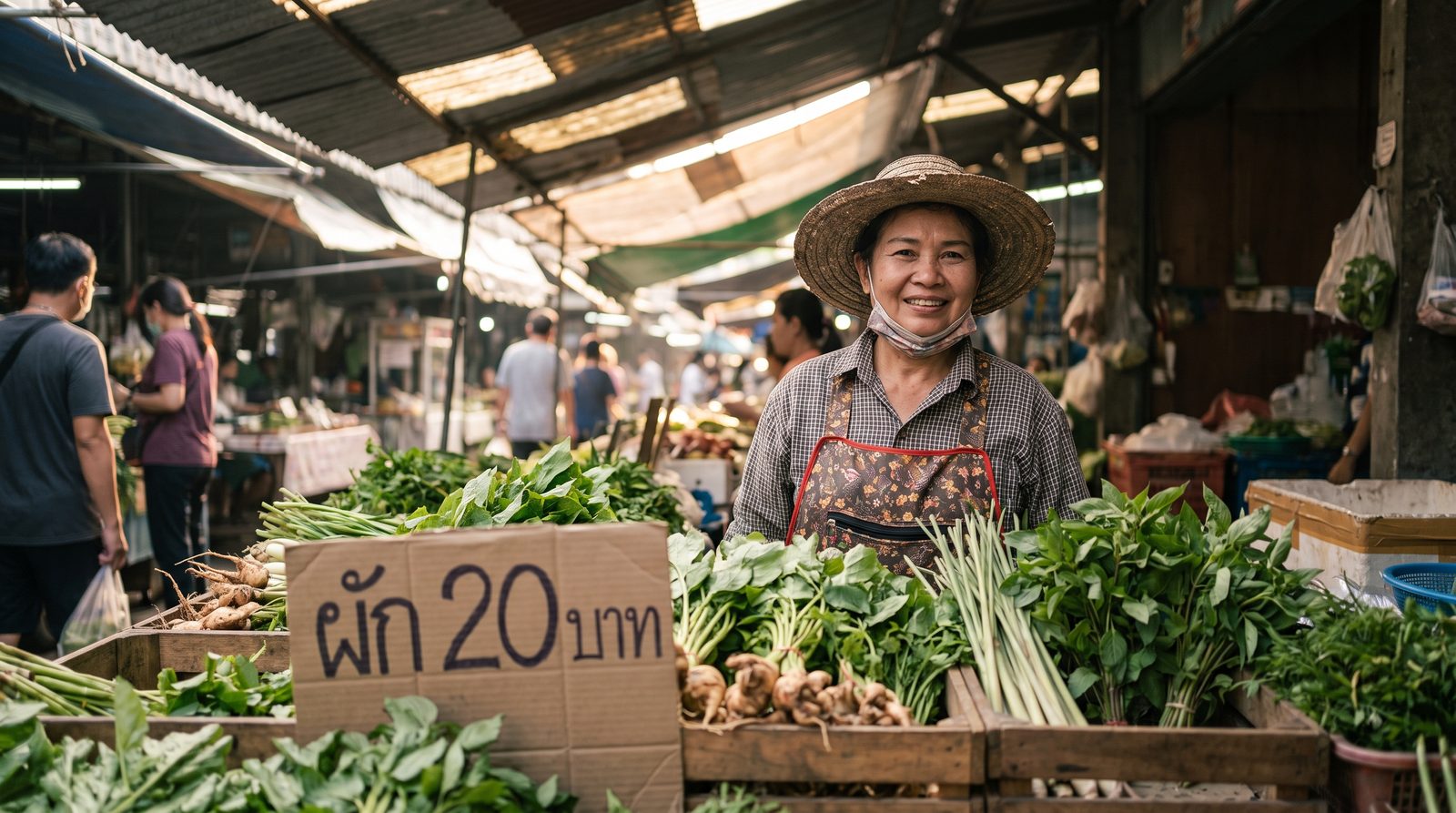
The same borrowing runs up the scale: ลุง and ป้า for people of your parents' generation, and น้า — friendly and slightly informal — with market vendors and drivers. One caution worth knowing for anyone navigating Thailand expat language day to day: calling someone ลุง or ป้า who does not consider themselves that old lands about as well as it would in English. If in doubt, พี่ is the polite default.
Children, grandchildren and the catch-all หลาน
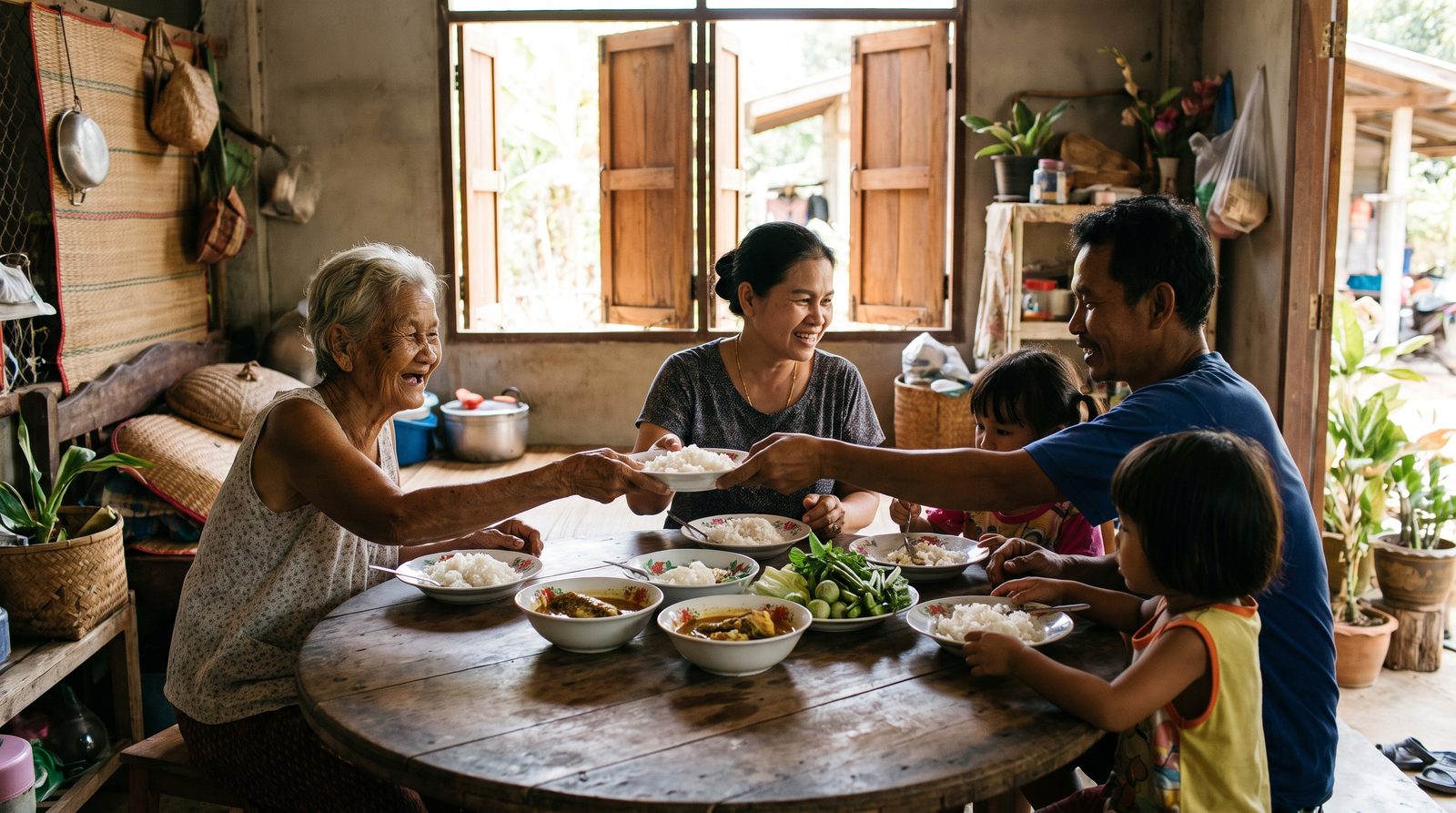
ลูก (look, falling tone) is a child — ลูกชาย a son, ลูกสาว a daughter. Then Thai does something unexpectedly relaxed. หลาน (laan, rising tone) covers grandchild, niece and nephew: essentially any relative a generation or two below you. After all that precision about aunts and uncles, the descending side of the tree is handled by one broad word.
To narrow it down, หลานชาย and หลานสาว mark sex; context supplies the rest.
Step-relatives, in-laws and cousins
Three small building blocks generate most of the remaining Thai family words.
- เลี้ยง (liang, high tone) means "to raise" and marks step-relatives: พ่อเลี้ยง stepfather, แม่เลี้ยง stepmother, ลูกเลี้ยง stepchild.
- เขย (khoei, rising tone) marks a man who married in: ลูกเขย son-in-law, พี่เขย an older sister's husband.
- สะใภ้ (sa-phai, high tone on the second syllable) marks a woman who married in: ลูกสะใภ้ daughter-in-law, น้องสะใภ้ a younger brother's wife.
Your wife's parents get a nice piece of recycling: พ่อตา and แม่ยาย — literally "father ตา" and "mother ยาย", built from the maternal grandparent words you already learned, because that is who they will be to your children. For a husband's parents, พ่อสามี and แม่สามี are the safe, polite forms.
And a cousin of any kind is ลูกพี่ลูกน้อง (look phee look nong) — literally "child of an older sibling, child of a younger sibling". Four syllables, but it is transparent once you can read the parts.
Reading Thai family words in Thai script
There is good news if you are still learning to read Thai script: this vocabulary set is unusually friendly. Almost every word is one short syllable, and they use the highest-frequency Thai consonants and vowels rather than the rare Indic letters. If you have worked through the basic Thai letters, you can decode most of this list on sight.
They are also an excellent tone workout, because several of them differ from a completely unrelated word by tone alone — which is exactly the point that Thai transliteration on menus and signs cannot show you:
- น้า (high tone) aunt or uncle · หน้า (falling tone) face, front · นา (mid tone) rice field
- ป้า (falling tone) aunt · ปา (mid tone) to throw
- ตา (mid tone) maternal grandfather — and also "eye"
This is the strongest argument for learning the script early rather than leaning on romanisation: written in Thai letters these words are unambiguous, and written as na, na and na they are not. To build that foundation, work through the Thai alphabet chart; the guide to tone marks explains how mai ek and mai tho combine with consonant class to produce the tones above.
Politeness: คุณ, ครับ and ค่ะ
Putting คุณ (khun) in front of a family word raises the register: คุณพ่อ, คุณแม่, คุณย่า. Use it when speaking about your parents to someone outside the family, or addressing an elder formally; dropping it is normal within a close family.
Then close the sentence with the polite particle: ครับ (khrap) if you are male, ค่ะ (kha) if you are female. Getting someone's attention in a market is just the family word plus the particle — พี่ครับ or น้าคะ (women use falling-tone ค่ะ for statements, high-tone คะ when calling out or asking). Skipping it is not rude exactly, but it is flat, and an elder will notice.
How to actually study this
Do not learn these as an alphabetical list of twenty items. Kinship terms only make sense in relation to each other. Draw your own family tree instead and label every branch in Thai script: the moment you have to choose between น้า and อา for a real person you know, the rule stops being abstract.
Then narrow it to the three or four you will genuinely say out loud this week: พี่, น้อง, ป้า and น้า cover almost every stranger you meet. Let the in-laws wait until you need them. Keep the letters sharp with the free flashcard trainer, and the Thai family words will follow far faster than a list ever suggests.