Learn Thai Vocabulary: Saying I and You in Thailand
Learn Thai vocabulary for saying I and you in Thailand: phom, dichan, nuu, khun, phi and nong in Thai script, with pronunciation and politeness rules.
The first Thai sentence most learners build falls apart on its smallest word. You have the verb, you have the noun, and then you need “I” — and Thai offers about fifteen of them, each one quietly announcing your age, your sex, your status and how close you are to the person in front of you. If you only learn Thai vocabulary in one area this month, make it this one. Pronouns are the words you cannot avoid, and they are the fastest way to sound either charming or rude in a language where tone of voice does almost none of that work for you.
This Thai language guide covers the handful of pronouns you actually need, the kinship words Thai uses instead of “you”, the two words that will get you into trouble, and the trick native speakers use constantly: leaving the pronoun out altogether. Every entry gives the Thai script, a Thai transliteration you can say out loud, and the literal meaning, because in Thai the literal meaning is usually the etiquette lesson. The four photographs are real scenes from Thailand, and each one shows a relationship that decides which word you would pick. Work through it once and you will learn Thai vocabulary that you use in literally every conversation you have in Thailand.
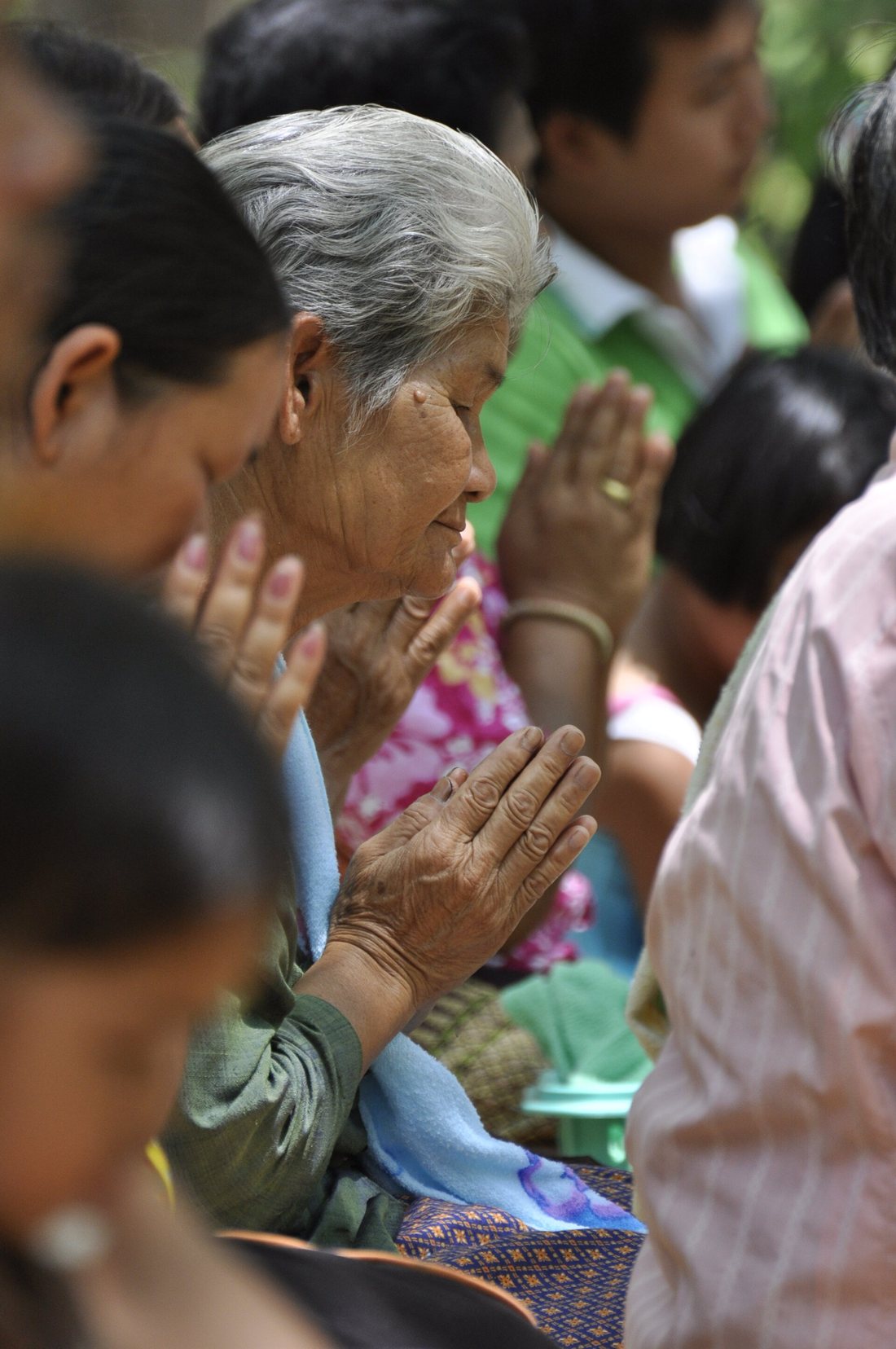
Saying “I”: ผม, ดิฉัน and หนู
Thai has no single neutral word for “I”. The one you choose says who you are, so start with the safe pair and add the others slowly:
- ผม (phǒm) — “I” for a man, polite in every situation from a market to a ministry. The same word also means “hair on the head”, which is a useful hook for remembering it
- ดิฉัน (dì-chǝn) — the formal “I” for a woman: job interviews, officials, anyone you want to show respect to
- ฉัน (chǝn) — the everyday “I” for a woman among friends. Softer and far more common in ordinary speech than ดิฉัน
- หนู (nǔu) — literally “mouse”. A child or a young woman uses it for “I” when speaking to someone older, and older people use it to mean “you” when speaking down the age ladder
- เรา (rao) — “we”, but also a relaxed “I” between friends of either sex
Thai speakers also use their own name or nickname where English would say “I” — ต้นหิว (Dÿon is hungry) rather than “I am hungry”. It sounds childlike in English and perfectly normal in Thai, and it is one of the easiest habits to copy once you have a Thai nickname of your own.
The “you” problem: why คุณ is not the answer
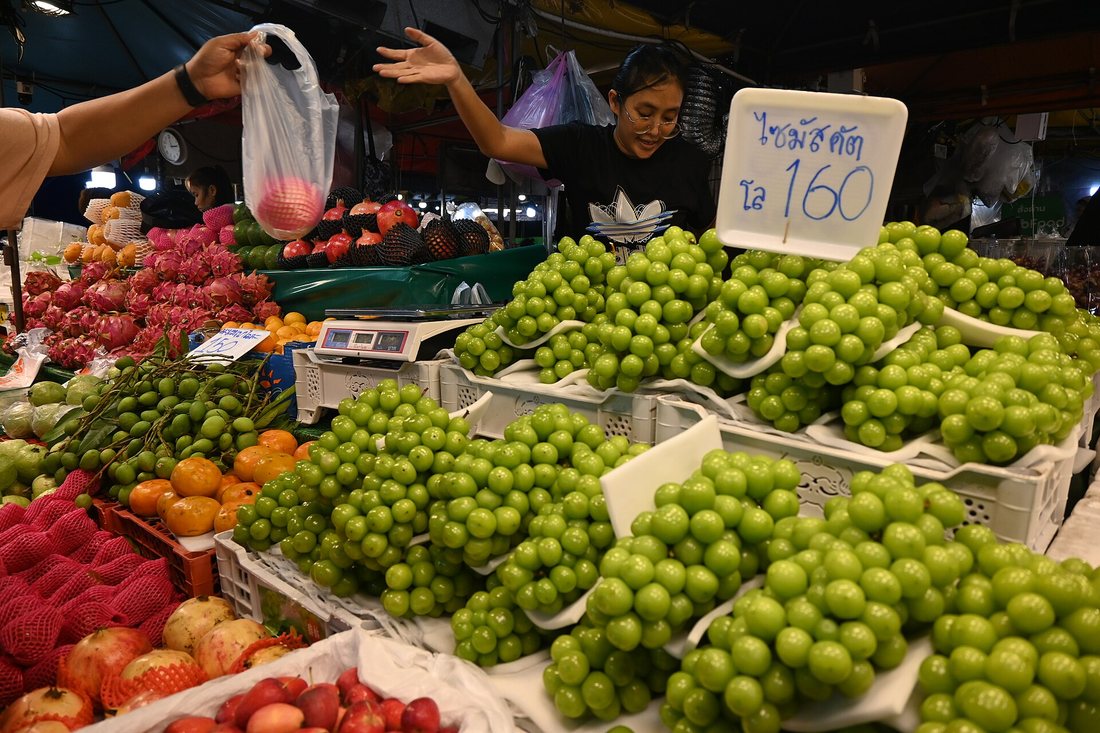
Every phrasebook teaches คุณ (khun) for “you”, and it is not wrong — it is polite, safe with strangers, and standard in offices and shops. But listen to Thai people talking to each other and you will rarely hear it. In ordinary life Thai replaces “you” with a kinship word that places the other person on an age ladder relative to you:
- พี่ (phîi) — older sibling. Use it for anyone up to roughly ten years older: a waiter, a landlord, a colleague, a taxi driver
- น้อง (náwng) — younger sibling. For anyone clearly younger than you, and the normal way to call a server across a restaurant
- ลุง (lung) — uncle · ป้า (bpâa) — aunt. For people around your parents’ age or older
- น้า (náa) and อา (aa) — the younger aunts and uncles. Warmer and less ageing than ลุง or ป้า for someone only a little older than your parents
- ตา (dtaa) and ยาย (yaai) — grandfather and grandmother. Add คุณ in front for strangers: คุณตา, คุณยาย
If that ladder feels familiar, it is the same system Thai uses at home, split between the mother’s side and the father’s side. Our guide to Thai family words maps the whole tree and is the best place to learn Thai vocabulary for relationships, and every rung of it doubles as a word for “you” on the street. Getting it slightly wrong is not a disaster: guessing a person younger than they are is flattering, and nobody has ever been offended by พี่.

Two words to recognise and never use: กู and มึง
You will hear กู (guu, “I”) and มึง (mueng, “you”) within a week of arriving — between teenagers, between old friends, in song lyrics and in every Thai film. They are genuinely affectionate among equals who have known each other for years. From a foreigner they land very differently, somewhere between a brawl and a joke that did not work. Learn them so you understand what is happening around you, and keep them out of your own mouth until a Thai friend uses them with you first. A few more worth sorting into the same mental box:
- เธอ (thǝə) — “you” to someone younger or close, and also “she”. Gentle, slightly intimate, risky with strangers
- แก (gae) — casual “you” between old friends; rude to anyone else
- ตัวเอง (dtua-eng) — literally “oneself”, used by couples as a sweet “you”. Charming in a relationship, bewildering at a bank
- ท่าน (thân) — the high-respect pronoun for officials, judges and senior monks. You will read it far more often than you say it
Talking to monks: อาตมา and โยม
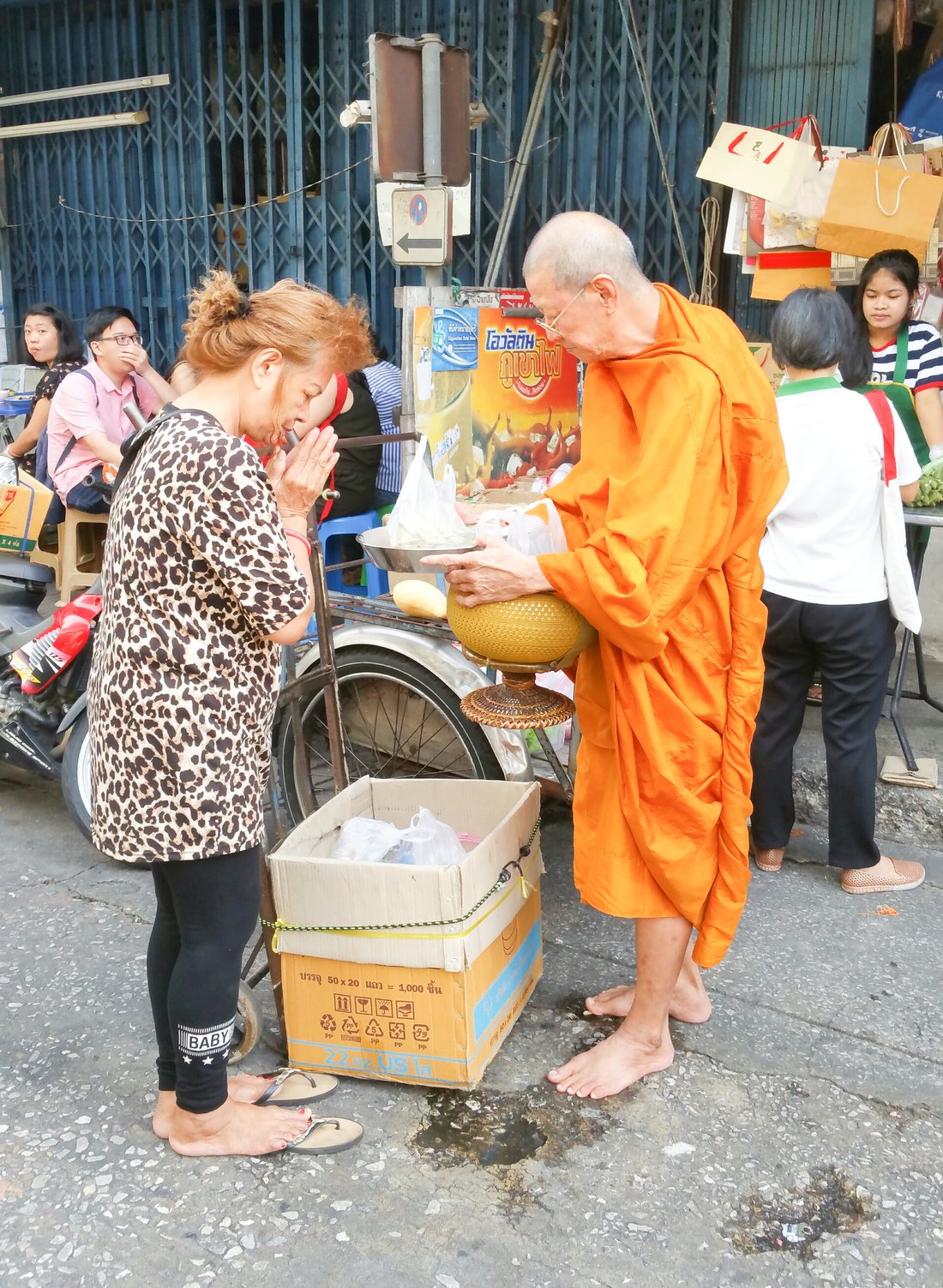
Monastic Thai is a separate register, and you only need four words of it to behave well at a temple:
- อาตมา (àat-dtà-maa) — “I”, spoken only by a monk
- โยม (yoom) — how a monk addresses you, and how you may refer to yourself when speaking to him
- หลวงพ่อ (lǔang phâw) — “revered father”, for an older monk · หลวงพี่ (lǔang phîi) for a young one
- ครับผม (khráp phǒm) — the extra-deferential “yes” a man uses when a monk or a very senior person speaks to him
The trick fluent speakers use: drop it
Here is the shortcut nobody tells beginners. Thai sentences do not need a subject. ไปไหน (bpai nǝi) is a complete, friendly question — “where are you going?” — with no pronoun anywhere in it. กินข้าวหรือยัง (gin khâao rǔe yang) is “have you eaten yet?”, likewise. When you are not sure whether someone is a พี่ or a น้อง, say the sentence without the word. This is not a learner’s dodge; it is what Thai people do all day, and it instantly makes your Thai sound less translated.
Then let ครับ and ค่ะ carry the politeness. The particle at the end of the sentence does more social work than the pronoun at the front of it, which is why a dropped ครับ is noticed and a dropped pronoun is not. If you have not read our explainer on khrap and kha, that is the ten minutes with the highest return in Thailand expat language learning.
A beginner Thai lesson in five words
Ignore the long list. For your first month, carry exactly five: ผม or ฉัน for yourself, พี่ and น้อง for almost everybody else, and คุณ in reserve for anyone in an office. It is a short enough list to learn Thai vocabulary from in one evening, it will carry you through a market, a clinic and a landlord conversation without a single misstep, and every other pronoun on this page can be added later as you meet it.
Two study habits make them stick. First, write them: these are short words built from common letters, so they are an ideal beginner Thai lesson in handwriting — keep our Thai alphabet chart open and copy each one five times, watching how the Thai consonants and vowels sit together. ผม is two Thai letters with an invisible vowel; พี่ hangs its vowel above the line and its tone mark above that. Second, drill them in the flashcard trainer for a week, saying each one aloud, because Thai pronunciation of หนู (rising) and น้อง (high) is what makes them land.
Then use them on someone. Order coffee as ผม, call the vendor พี่, and watch the face in front of you — the small warming that happens when a foreigner picks the right rung of the ladder is the whole reward. That is the honest way to learn Thai vocabulary and to start to speak Thai like someone who intends to stay: not fifty pronouns memorised, but five chosen correctly, a dozen times a day.