Learn Thai Vocabulary: Thai Lottery Words in Thailand
Learn Thai vocabulary for the Thai lottery in Thailand: salak kin baeng on the ticket, nguat draw dates, Buddhist Era years and prize words, with real photos.
On the first and the sixteenth of every month, half of Thailand is reading the same six digits. The lottery is the most widely shared piece of printed Thai in the country, and it is unusually kind to a learner: the same twenty-odd words appear on every ticket, every vendor's tray and every television ticker, in large clear letters, twice a month, forever. If you want to learn Thai vocabulary that comes with built-in repetition and a ready-made conversation on any street corner in Thailand, this is it.
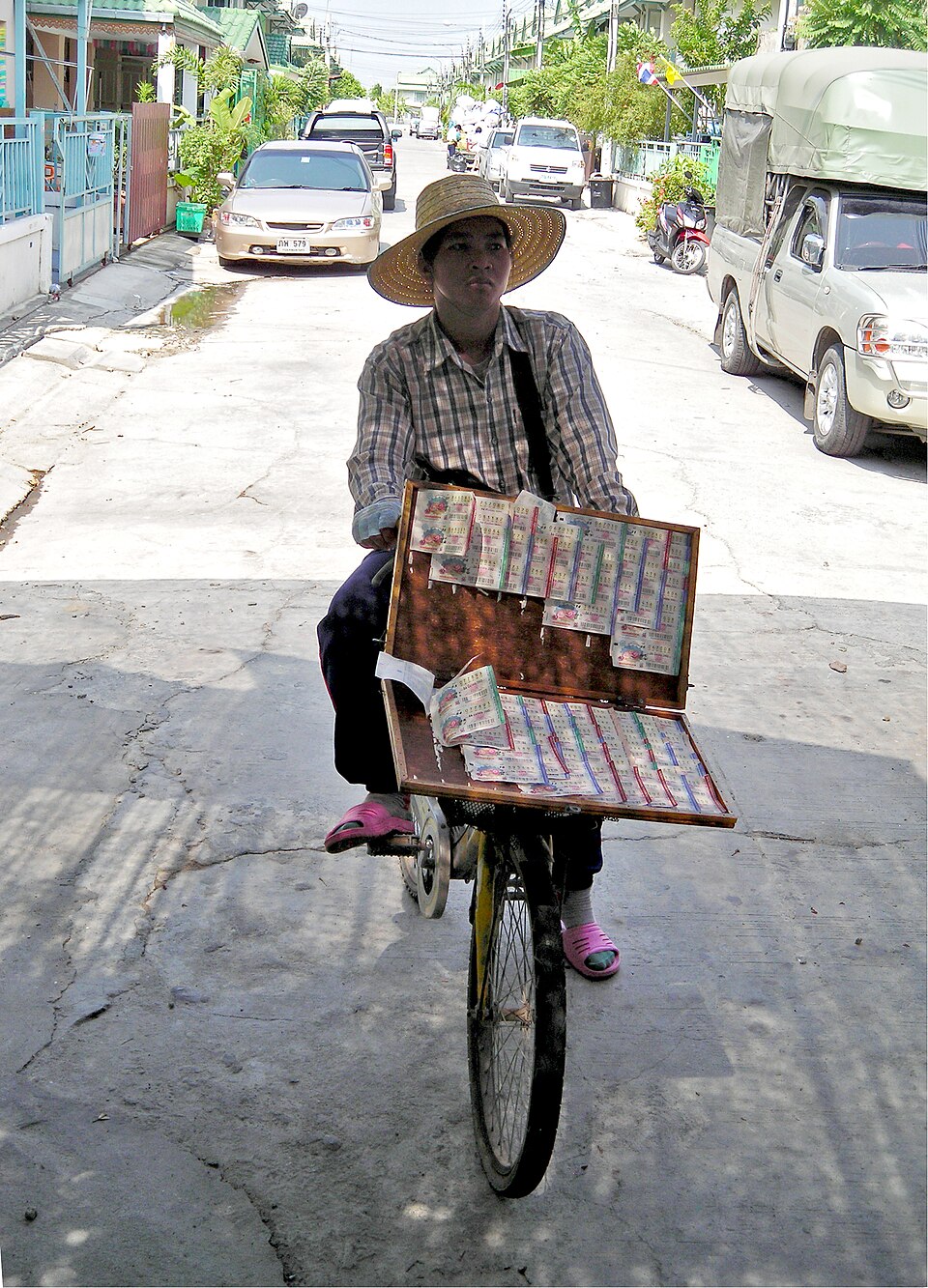
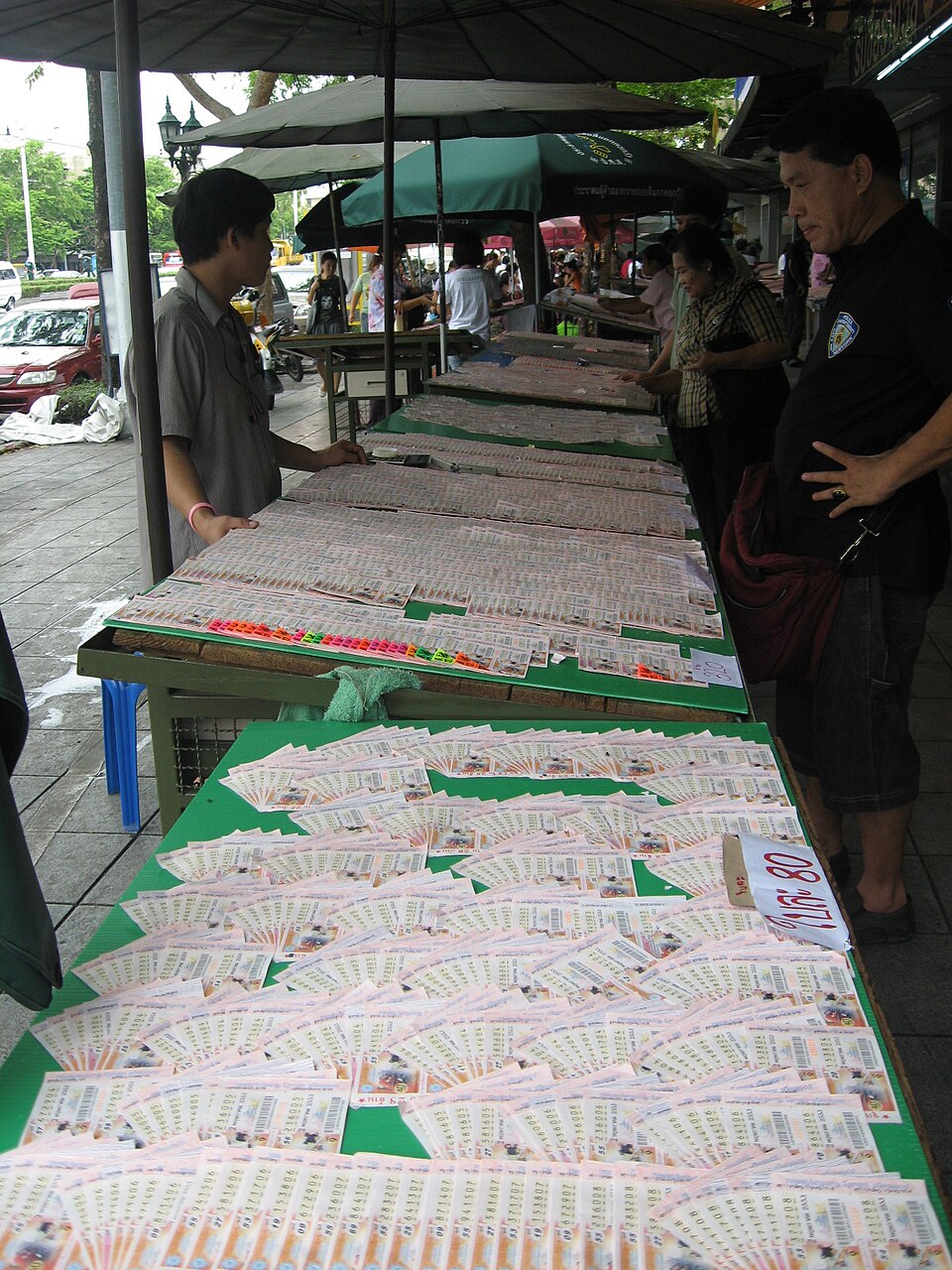
This Thai language guide works outward from the tray on the pavement to the small print on the ticket itself. Every entry gives the Thai script, a Thai transliteration you can say out loud, and the literal meaning, because the literal meaning is usually the lesson. The four photographs are real tickets and real sellers — look closely at each one and you will find the words from the list beside it.
สลากกินแบ่งรัฐบาล: the long name on every ticket
The official name looks terrifying and is actually four easy pieces. สลาก (sà-làak) is a lot or ticket; กินแบ่ง (gin bàeng) is literally “eat-share”, the old Thai way of describing a draw where the pot is divided among winners; and รัฐบาล (rát-thà-baan) is “government”. Put together: the government's share-out draw.
- สลากกินแบ่งรัฐบาล (sà-làak gin bàeng rát-thà-baan) — the official Government Lottery
- หวย (hǔay) — “the lottery” in everyday speech, the word people actually use
- ล็อตเตอรี่ (lót-dtəə-rîi) — the English word respelled in Thai letters, common on signs
- สำนักงานสลากกินแบ่งรัฐบาล (sǎm-nák ngaan …) — the Government Lottery Office, printed on the back
- เสี่ยงโชค (sìang chôok) — to try your luck, lit. “to risk fortune”
That กิน (gin, “eat”) turning up inside a financial term is a good early lesson in how Thai builds vocabulary: a handful of plain, physical verbs get reused everywhere. Spotting them is half of learning to read Thai script with understanding instead of just sounding it out.
At the tray: the words you say to a seller
Buying is a thirty-second exchange and it follows the same script every time. Sellers are used to being asked to show a particular number, and this is one of the friendliest places to practise, because nobody is in a hurry and the answer is always a number you can see.
- คนขายหวย (khon khǎai hǔay) — lottery seller, lit. “person sells lottery”
- ใบละเท่าไหร่ครับ/คะ (bai lá thâo rài khráp/khá) — how much each? ใบ is the classifier for flat sheets
- ขอดูหน่อยครับ/ค่ะ (khǎw duu nòi khráp/khâ) — may I have a look?
- มีเลข ๕๕ ไหมครับ/คะ (mii lêek hâa-sìp-hâa mǎi khráp/khá) — do you have number 55?
- ขายเกินราคา (khǎai gəən raa-khaa) — selling above the set price, lit. “sell exceeding price”; the fixed 80 baht is the law, and pairs or popular numbers are where overcharging happens
End every one of those sentences with ครับ (khráp) if you are a man or ค่ะ (khâ) if you are a woman. Dropped particles are the single most common reason a beginner's perfectly correct Thai lands badly; our short explainer on khrap and kha covers when each form changes shape.
Read Thai script on the ticket itself
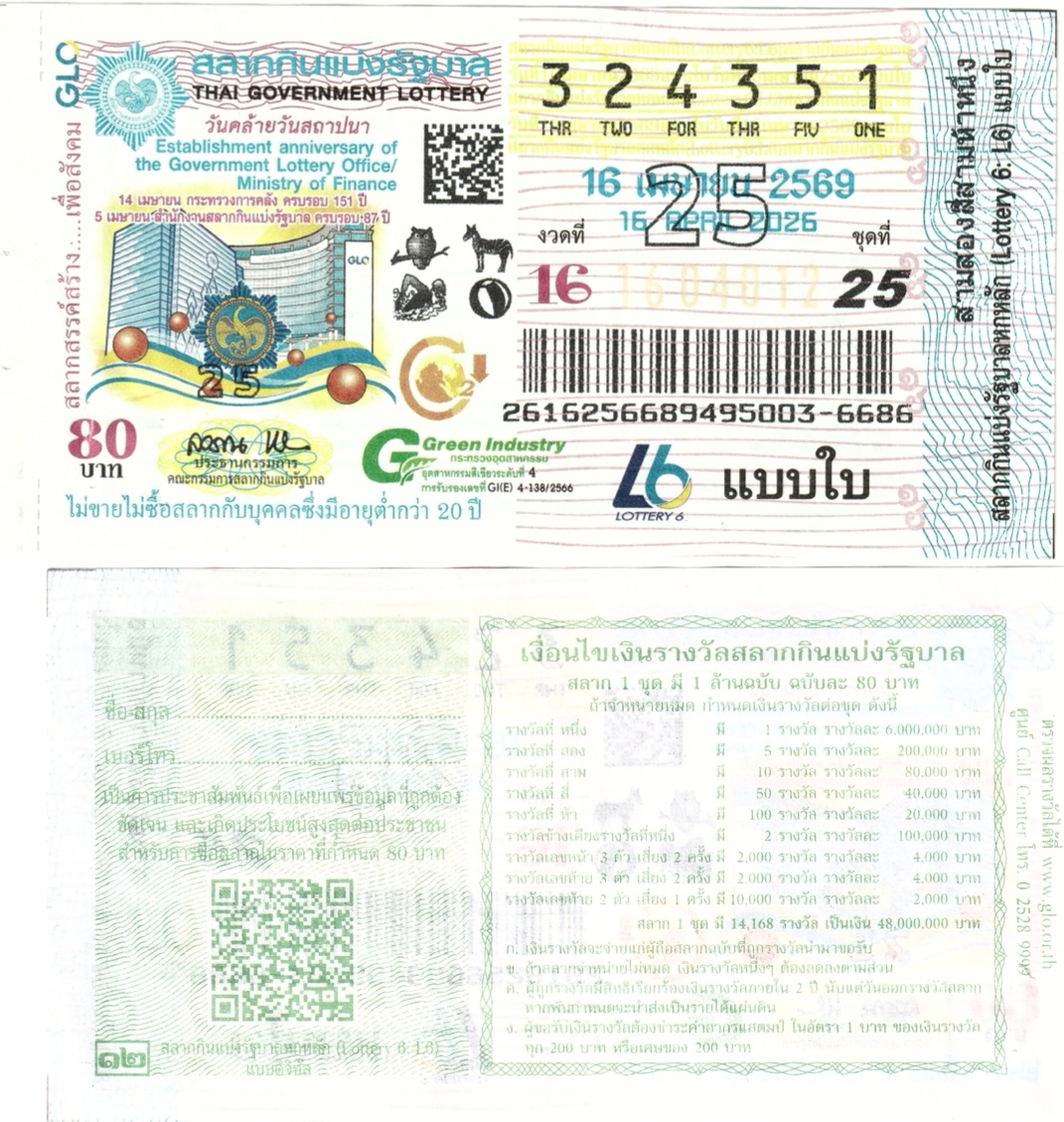
The ticket is a one-page beginner Thai lesson in official vocabulary, and the same labels appear on bills, receipts and forms all over the country:
- งวดที่ (ngûat thîi) — draw number. งวด alone means one instalment or round
- ชุดที่ (chút thîi) — set number; the same six digits are printed in many sets
- ออกรางวัล (àwk raang-wan) — to draw the prizes, lit. “to issue the prize”
- เงื่อนไขเงินรางวัล (ngûean-khǎi ngən raang-wan) — prize conditions, the small print filling the back
- แบบใบ (bàep bai) — the paper version, as opposed to สลากดิจิทัล (sà-làak dí-jì-than), the digital ticket bought in the เป๋าตัง (pǎo dtang) wallet app
งวด and the date: Buddhist Era years in the wild
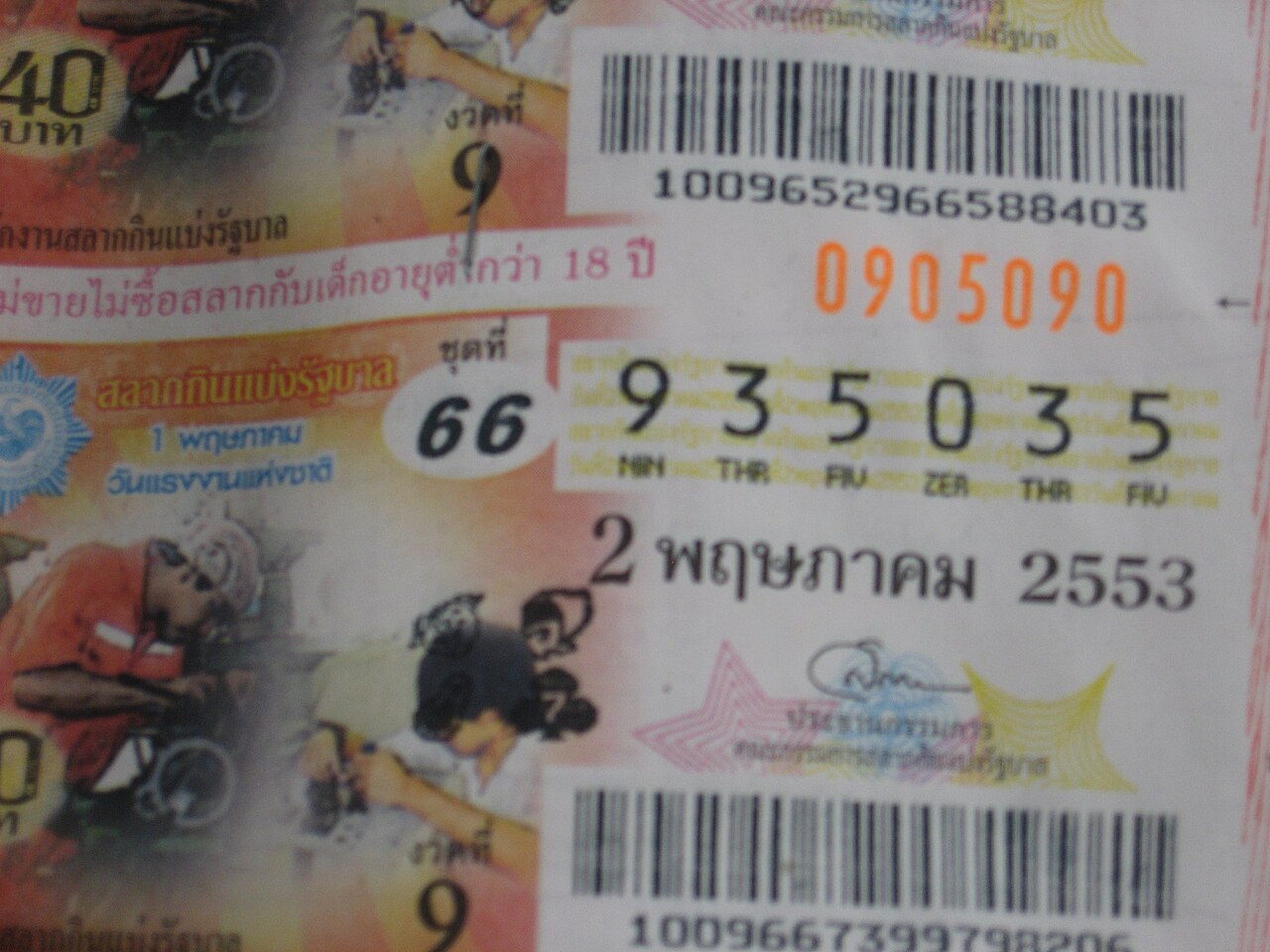
Thai dates run day, then month, then year — and the year is the Buddhist Era, 543 ahead of the Western one. 2553 is 2010; 2569 is 2026. Learn the three months that matter to you and the rest will follow:
- วันที่ (wan thîi) — “date”, the word before every day number
- พ.ศ. (phaw sǎw) — BE, Buddhist Era · ค.ศ. (khaw sǎw) — AD
- เมษายน (mee-sǎa-yon) — April · พฤษภาคม (phrúet-sà-phaa-khom) — May · พฤศจิกายน (phrúet-sà-jì-gaa-yon) — November
- Months ending -คม have 31 days, -ยน have 30, and -พันธ์ is February alone
Half the numbers on a tray are printed in Thai numerals — ๐ ๑ ๒ ๓ ๔ ๕ ๖ ๗ ๘ ๙ — and half in the digits you already know. Our Thai numbers guide drills both sets, and the Buddhist Era date calculator will convert any year you meet while you are still doing the arithmetic in your head.
Prize words: รางวัลที่หนึ่ง and เลขท้าย
Results day is where the vocabulary pays off, because the words are announced aloud and printed on every shop television. รางวัล (raang-wan) is “prize”, and everything else is built on it:
- รางวัลที่หนึ่ง (raang-wan thîi nùeng) — first prize, six million baht on a current ticket
- รางวัลข้างเคียง (raang-wan khâang khiang) — the “neighbouring” prize for the numbers either side of the first
- เลขท้าย 2 ตัว (lêek tháai sǎwng dtua) — the last two digits, lit. “tail numbers, two pieces”; the small prize most people actually win
- เลขหน้า 3 ตัว (lêek nâa sǎam dtua) — the first three digits, lit. “front numbers”
- ถูกรางวัล (thùuk raang-wan) — to win, lit. “to be hit by the prize” · ถูกหวย (thùuk hǔay) — the everyday version
- ตรวจหวย (dtrùat hǔay) — to check the results · ขึ้นเงิน (khûen ngən) — to cash a winning ticket
Two practical notes that the back of the ticket spells out: a winning ticket must be claimed within two years of its draw, and prizes carry a small stamp duty, so the figure you collect is a little under the figure announced. Keep the ticket flat and unmarked — ขูด ลบ ขีดฆ่า, scratching, erasing or crossing out, voids it.
The culture around the numbers
Ask a Thai friend why they chose a ticket and you will meet a whole second vocabulary. เลขเด็ด (lêek dèt) is a “hot number”, literally a “sharp” one; เลขมงคล (lêek mong-khon) is an auspicious number; and numbers are read out of dreams, licence plates on crashed vehicles, monks' ages and tree bark. เลข (lêek) is simply “number”, and it is worth memorising on its own — it fronts dozens of compounds you will meet far from any lottery tray.
A study tip: one tray, twice a month
Do not try to swallow this page at once. Buy a single 80-baht ticket on the 1st or the 16th, keep it in your wallet, and read one line of it a day with our free Thai alphabet chart open beside you — the title, then the price, then the date, then the small print. Lottery print is large, high-contrast and endlessly repeated, which makes it far gentler on a beginner than a menu or a newspaper, and the Thai consonants and vowels you keep meeting stay learned because they are attached to something in your pocket.
Then put the twenty words above into the flashcard trainer for a fortnight and ask a seller ออกรางวัลวันไหนครับ (àwk raang-wan wan nǎi khráp), “which day is the draw?”, out loud. That is the honest way to learn Thai vocabulary and to begin to speak Thai where it is actually spoken: one small printed thing, read slowly, twice a month. Few habits improve Thailand expat language skills so cheaply — and the ticket may even pay you back.