Learn Thai Vocabulary: Thai Musical Instruments in Thailand
Learn Thai vocabulary for Thai musical instruments: ranat, khong wong, saw and khim in Thai script, with pronunciation, the three ensembles and phrases to use.
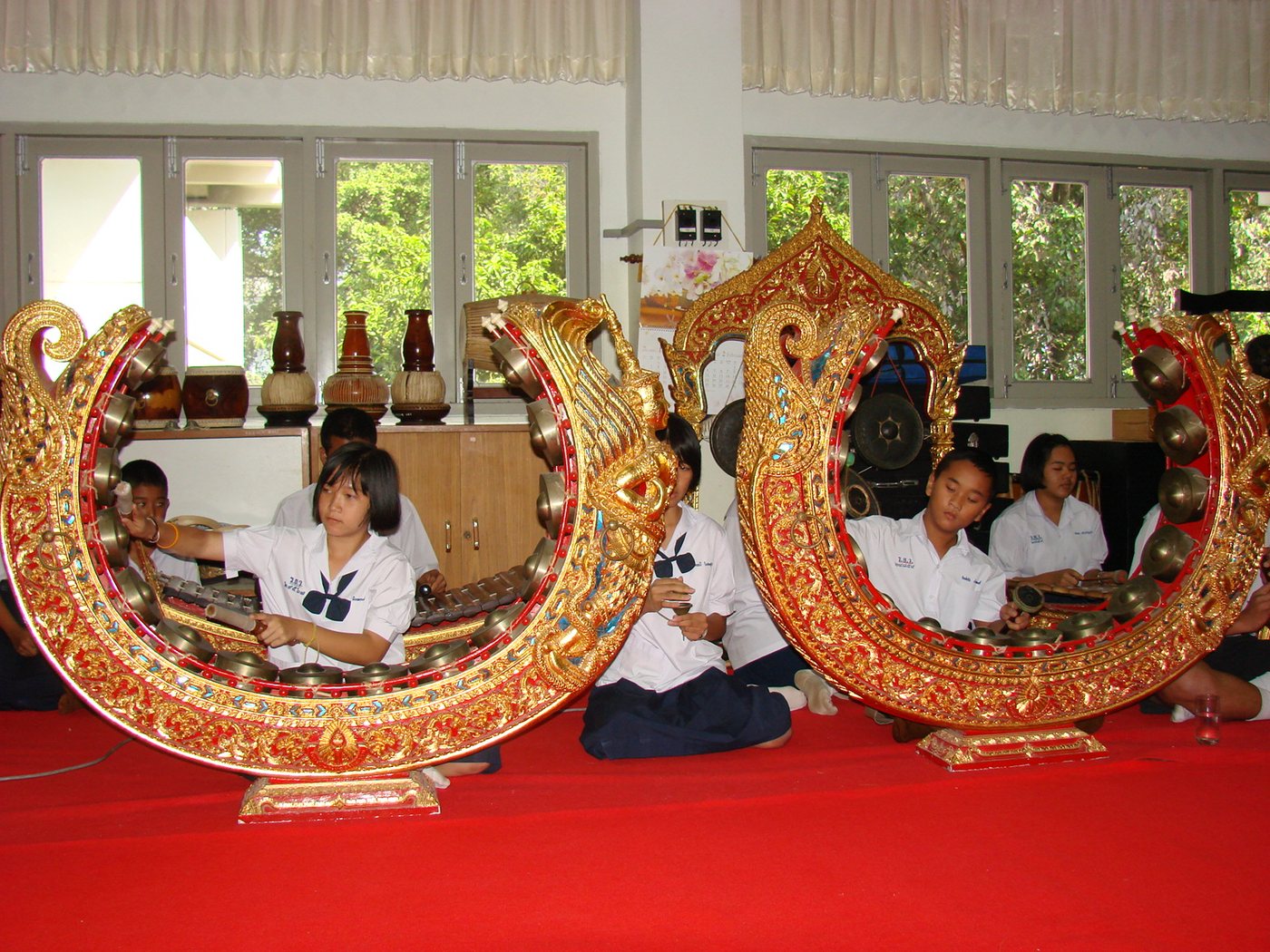
Walk past a Thai school hall on a weekday afternoon and you hear it before you see it: a wooden clatter of hammered notes, a ring of gongs underneath, and a reed instrument cutting over the top. Thai classical music is everywhere in Thailand once your ear catches it — at temple fairs, in hotel lobbies, behind every historical television drama — and it is a far better place to learn Thai vocabulary than most textbooks admit, because every instrument here is named with short, concrete words that you will meet again somewhere else.
This Thai language guide covers the instruments you will actually run into, the three ensembles they form, the regional sound of the north-east, and the few sentences that let you speak Thai to the person holding the mallets. Each term gives the Thai script, a Thai transliteration you can say out loud, and the literal meaning wherever it explains something. There is also a short beginner Thai lesson hidden in two letters that most courses leave until far too late.
ดนตรีไทย: six words that carry the whole subject
Before any instrument names, fix these six. They are ordinary daily words, and four of them have nothing to do with classical music at all — which is exactly why they are worth the five minutes.
- ดนตรี (don-trii) — music. ดนตรีไทย (don-trii thai) is Thai classical music specifically.
- เครื่องดนตรี (khrʉ̂ang don-trii) — a musical instrument. เครื่อง is the prefix Thai puts in front of machines, appliances and implements of every kind, from aeroplanes to air conditioners.
- นักดนตรี (nák don-trii) — a musician. นัก turns almost any field into the person who does it.
- เพลง (phleeng) — a song or a tune; ร้องเพลง (rɔ́ɔng phleeng) to sing, ฟังเพลง (fang phleeng) to listen to music.
- เล่น (lên) — to play. The same verb covers football, cards and the violin.
- เพราะ (phrɔ́) — beautiful to the ear. Thai has a separate word for this, and using it instead of สวย (pretty to the eye) is the kind of small accuracy that makes people look up.
Learn Thai vocabulary for the instruments you will hear
Thai names tend to describe the thing rather than honour an inventor, so most of them decode. Start with the two that lead every ensemble.
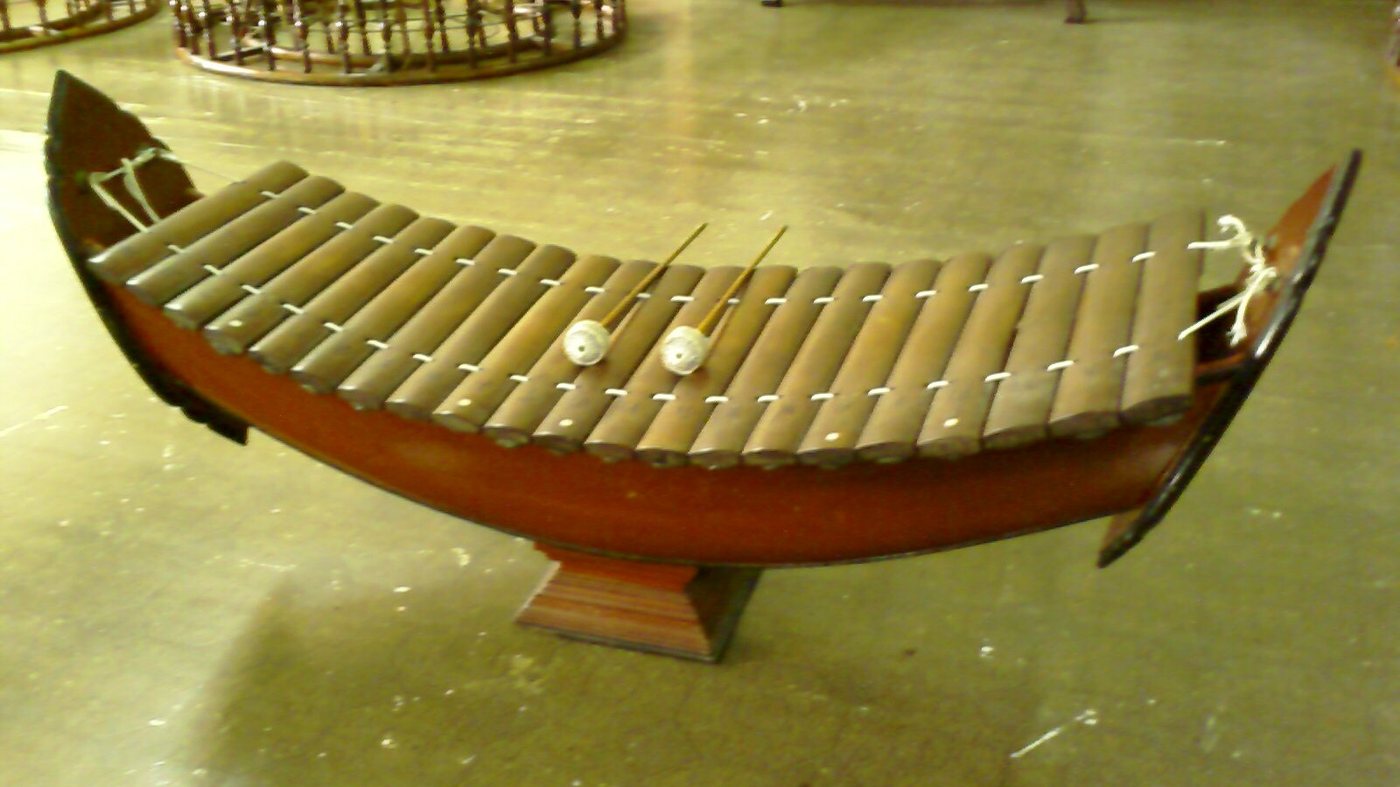
- ระนาดเอก (rá-nâat èek) — the high xylophone that carries the melody. เอก means “first” or “chief”, the same word used for a star actor.
- ระนาดทุ้ม (rá-nâat thûm) — its lower, wider partner. ทุ้ม means “mellow” or “deep-toned”, and you will hear it used about voices too.
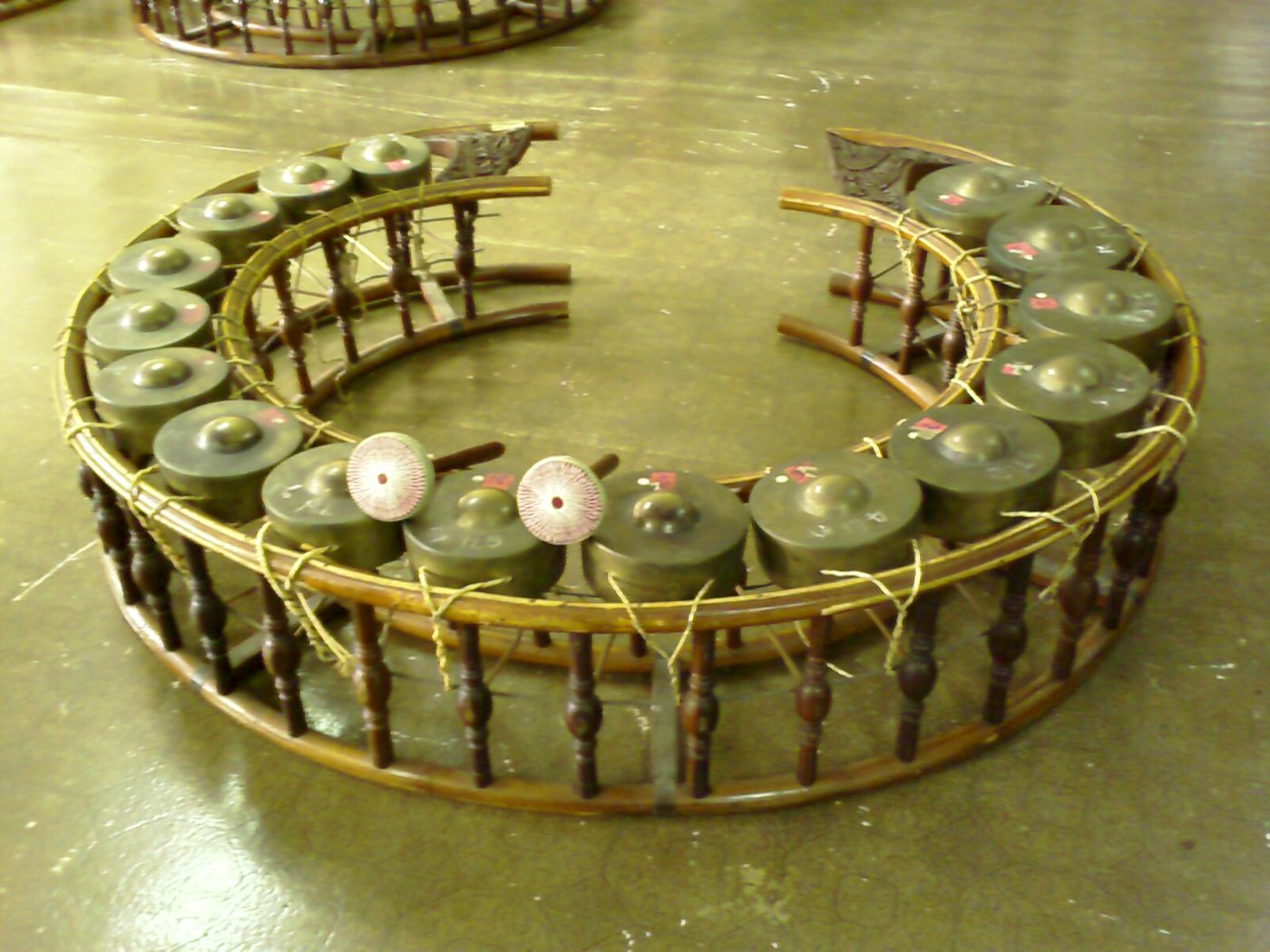
- ฆ้องวงใหญ่ (khɔ́ɔng wong yài) — the big gong circle: “gong · circle · big”. ฆ้องวงเล็ก (khɔ́ɔng wong lék) is the small one.
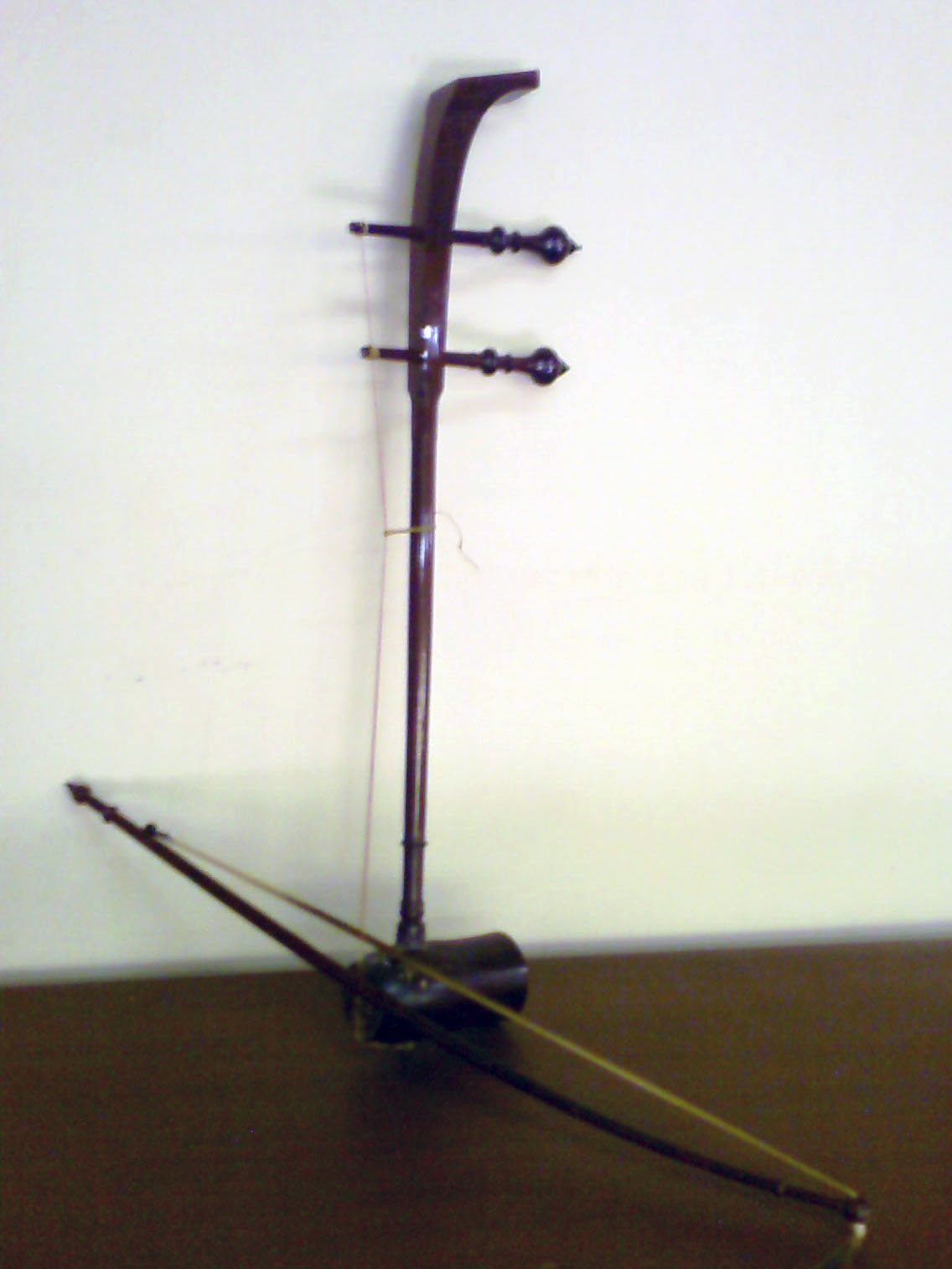
- ซอด้วง (sɔɔ dûang) — a bright two-string fiddle with a cylindrical sound box; ซออู้ (sɔɔ ûu) is the deeper one, its body made from half a coconut shell.
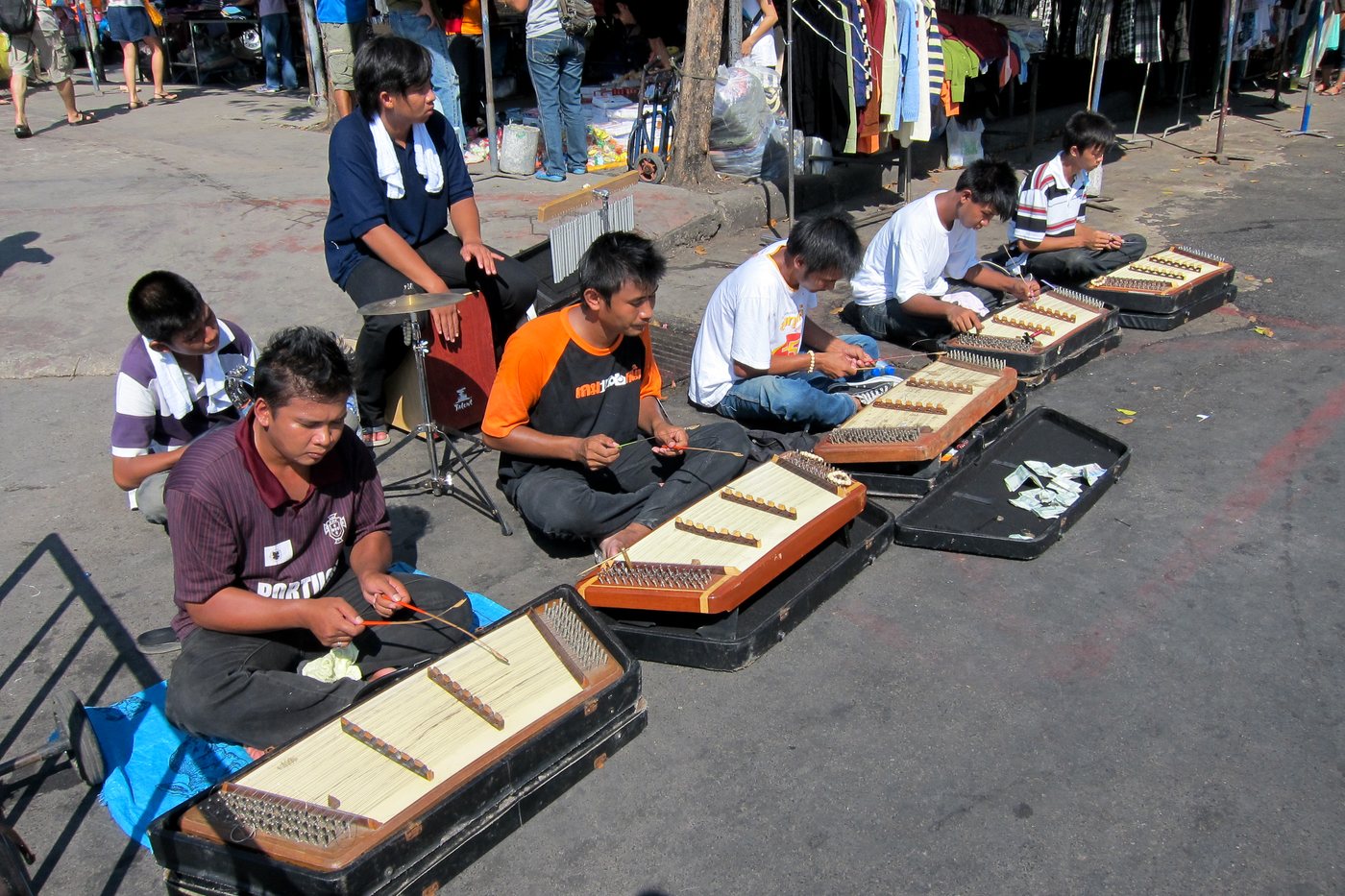
- ขิม (khǐm) — the hammered dulcimer, borrowed from Chinese music along with its name.
- ขลุ่ย (khlùi) — the bamboo flute; ปี่ (pìi) — the reed oboe with the piercing tone you hear at boxing matches.
The percussion that keeps the time
Thai ensembles are held together by two tiny cymbals, not by a conductor, and their names are pure sound effects — a useful piece of Thai pronunciation practice in itself.
- ฉิ่ง (chìng) — small thick cymbals. The name imitates the ringing “ching” of an open stroke; the damped stroke is ฉับ (chàp), and the pair of syllables is literally how Thai musicians count time.
- ฉาบ (chàap) — the larger, flatter crash cymbals.
- กลอง (klɔɔng) — drum, the general word. ตะโพน (tà-phoon) is the horizontal barrel drum played with the hands.
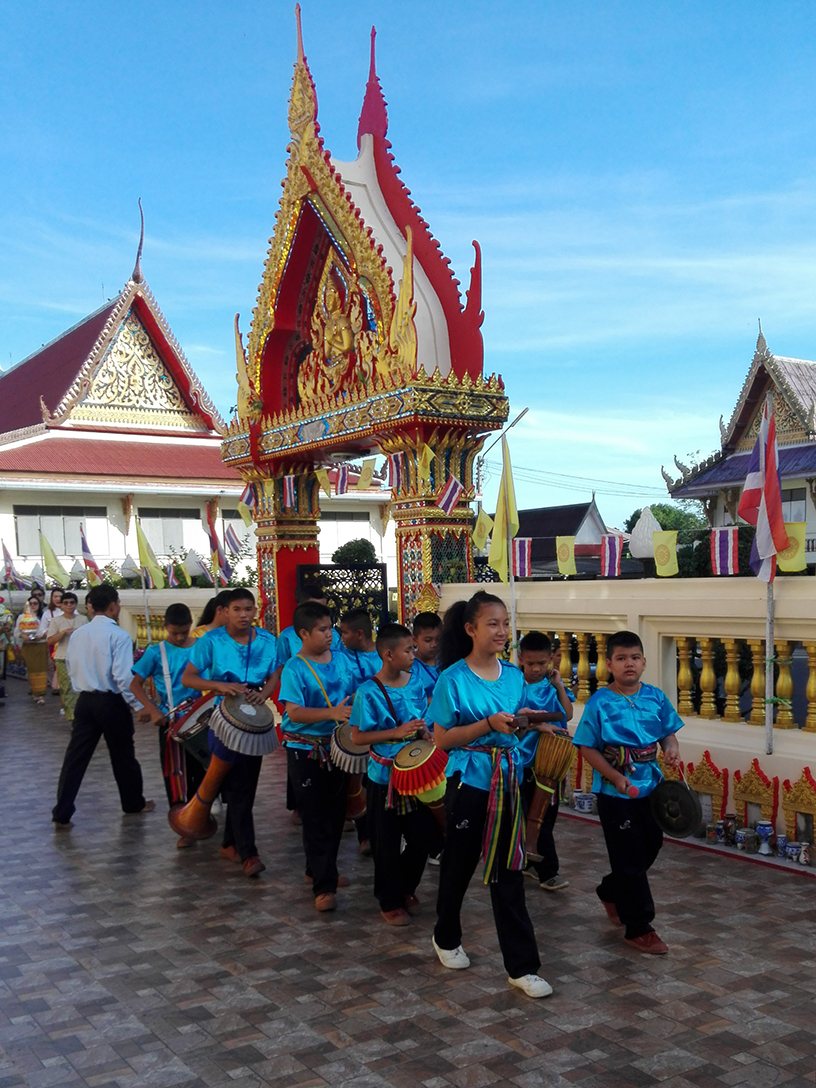
- กลองยาว (klɔɔng yaao) — the “long drum” slung over the shoulder in every parade in the country.
Read Thai script: two letters hiding in the instrument names
Here is where this topic pays off for anyone learning to read Thai script. Take ระนาด apart: ร (rɔɔ rʉa, the boat letter) with the short vowel ◌ะ, then น (nɔɔ nǔu) with the long า, closed by ด (dɔɔ dèk). That final ด is the lesson: at the end of a syllable it is pronounced t, never d, which is why the word comes out rá-nâat. The same rule explains why ตลาด is talàat, not talaad.
Then look at ฆ้อง (khɔ́ɔng), gong. It opens with ฆ, one of the rarest of the Thai consonants and vowels you will study — and its full name is ฆ ระฆัง (khɔɔ rá-khang), “the bell letter”. A bell letter at the front of the word for gong is the sort of thing that makes a chart stick in the memory. The mark above it is ไม้โท (máai thoo), and because ฆ is a low-class consonant that mark produces a high tone, not a falling one. If that rule is still slippery, our guide to Thai tone marks lays out all four, and the Thai alphabet chart shows exactly where the rare letters sit when you learn Thai alphabet order properly.
The three ensembles, and what วง really means
One word, วง (wong), turns any group of musicians into a band, and it sits at the front of all three traditional line-ups:
- วงปี่พาทย์ (wong pìi-phâat) — the loud percussion-and-oboe ensemble. This is the sound of a temple ceremony, a โขน masked drama, or a Muay Thai bout.
- วงเครื่องสาย (wong khrʉ̂ang sǎai) — the string ensemble, literally “instruments · of · string”. Quieter, indoor, built around the two ซอ fiddles.
- วงมโหรี (wong ma-hǒo-rii) — the mixed ensemble, strings and percussion together, historically the court music played for listening rather than ritual.
That same วง is what a Thai speaker uses for a rock band today, so the word is live Thailand expat language, not museum vocabulary. One more small thing to collect while you are here: instruments take their own counting words, and the flutes use a charming one — ขลุ่ยหนึ่งเลา (khlùi nʉ̀ng lao), “one flute”, with the classifier เลา reserved for pipes. Our explainer on Thai classifiers covers the ones you need every day.
Isan: a second set of words for the same question
Ask about music in the north-east and the answer uses different nouns entirely. These four come up constantly on radio, at festivals and on the back of pick-up trucks:
- แคน (khɛɛn) — the bamboo mouth organ of Isan, a double row of pipes played with both hands and a continuous breath.
- พิณ (phin) — a small plucked lute, often electrified now.
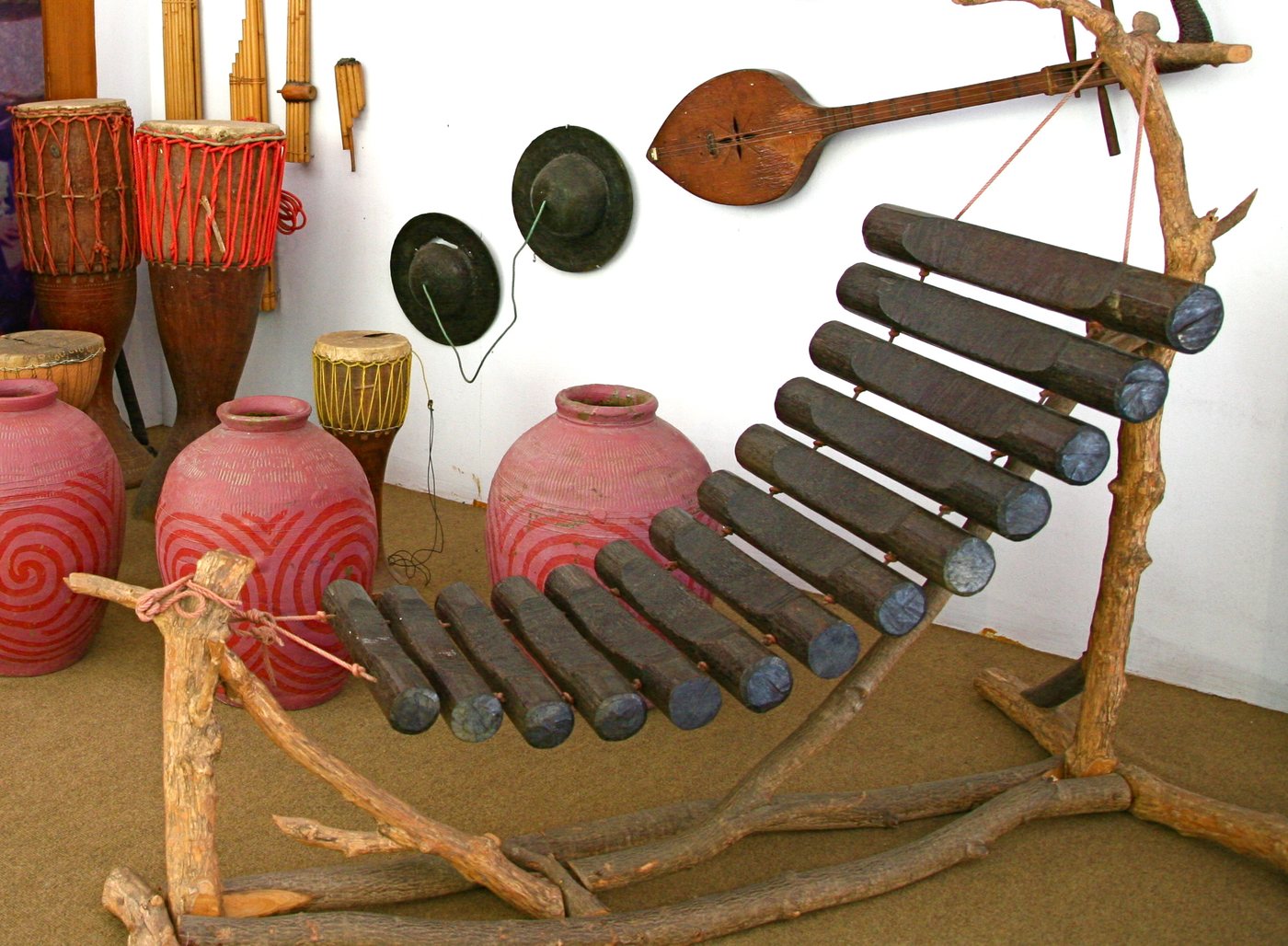
- โปงลาง (poong laang) — a wooden log xylophone hung vertically from a frame.
- หมอลำ (mɔ̌ɔ lam) — the sung-poetry style of the region. หมอ means an expert at something (it is also the word for a doctor), and ลำ is to recite in verse — so a หมอลำ is literally a “master of recitation”.
Keep ลูกทุ่ง (lûuk thûng) with them — Thai country music, literally “child of the field”. Say you like ลูกทุ่ง in a provincial town and the conversation will not be short.
Speak Thai to the musician: four sentences
Thai performers are used to being photographed and almost never spoken to, so a single sentence goes a long way. Men end each one with ครับ (khráp) and women with ค่ะ (khâ); without the particle a polite question turns into an instruction.
- เพราะมากครับ (phrɔ́ mâak khráp) — “that sounds beautiful.” The one sentence to learn if you learn nothing else here.
- เพลงนี้ชื่ออะไรคะ (phleeng níi chʉ̂ʉ à-rai khá) — “what is this song called?”
- นี่เครื่องดนตรีอะไรครับ (nîi khrʉ̂ang don-trii à-rai khráp) — “what instrument is this?”
- ขอถ่ายรูปได้ไหมคะ (khɔ̌ɔ thàai rûup dâai mǎi khá) — “may I take a photo?” Ask before the camera comes up, every time.
Two things to avoid. Do not clap between movements of a classical piece the way you would at a concert — Thai audiences generally do not — and never step over an instrument lying on the floor. Instruments are treated as teachers in their own right, honoured each year in the ไหว้ครู (wâi khruu) ceremony, and stepping over one is the same offence as stepping over a person. The wider logic of that, and of the particles above, is in our guide to speaking Thai politely with ครับ and ค่ะ.
A study tip: learn the words at the fair
Here is the method that makes this stick. Pick one temple fair or one hotel lobby performance, and before you go write just six words by hand in Thai script: ดนตรี, เพลง, ระนาด, ฆ้อง, ซอ, เพราะ. Six is a target you can finish in ten minutes, and handwriting them is what stops ฆ and ค blurring into each other later. At the event, match each written word to a real object or sound, then say เพราะมาก to one person before you leave. Vocabulary attached to a memory of using it does not need revising.
After that, widen out. The same เครื่อง prefix reads half the appliance labels in your kitchen, วง gets you through any conversation about bands, and the gong you now recognise by name is hanging in the first temple you walk into — our guide to the Thai temple fair has the rest of that vocabulary. When the letters themselves are the bottleneck, the free ThaiLetters flashcard trainer will drill the Thai letters until rare ones like ฆ stop ambushing you. That is the whole trick: pick a real thing in front of you, learn Thai vocabulary for it, and let the grammar catch up later.