Learn Thai Vocabulary: Temple Fair Words in Thailand
Learn Thai vocabulary for a Thai temple fair — ngan wat, rides, games, food, likay and merit words in Thai script, with pronunciation and five real photos.
From November to February, half the temples in Thailand turn into funfairs, and it is the easiest place in the country to learn Thai vocabulary by walking around with your eyes open. A งานวัด (ngaan wát) is a temple fair: a ferris wheel in the car park, twenty food stalls down the drive, a stage with a band on it, and somewhere in the middle, a monk and a donation box. Nobody charges you to go in. Nobody minds that you are a foreigner. And every single thing there has a label on it in Thai.
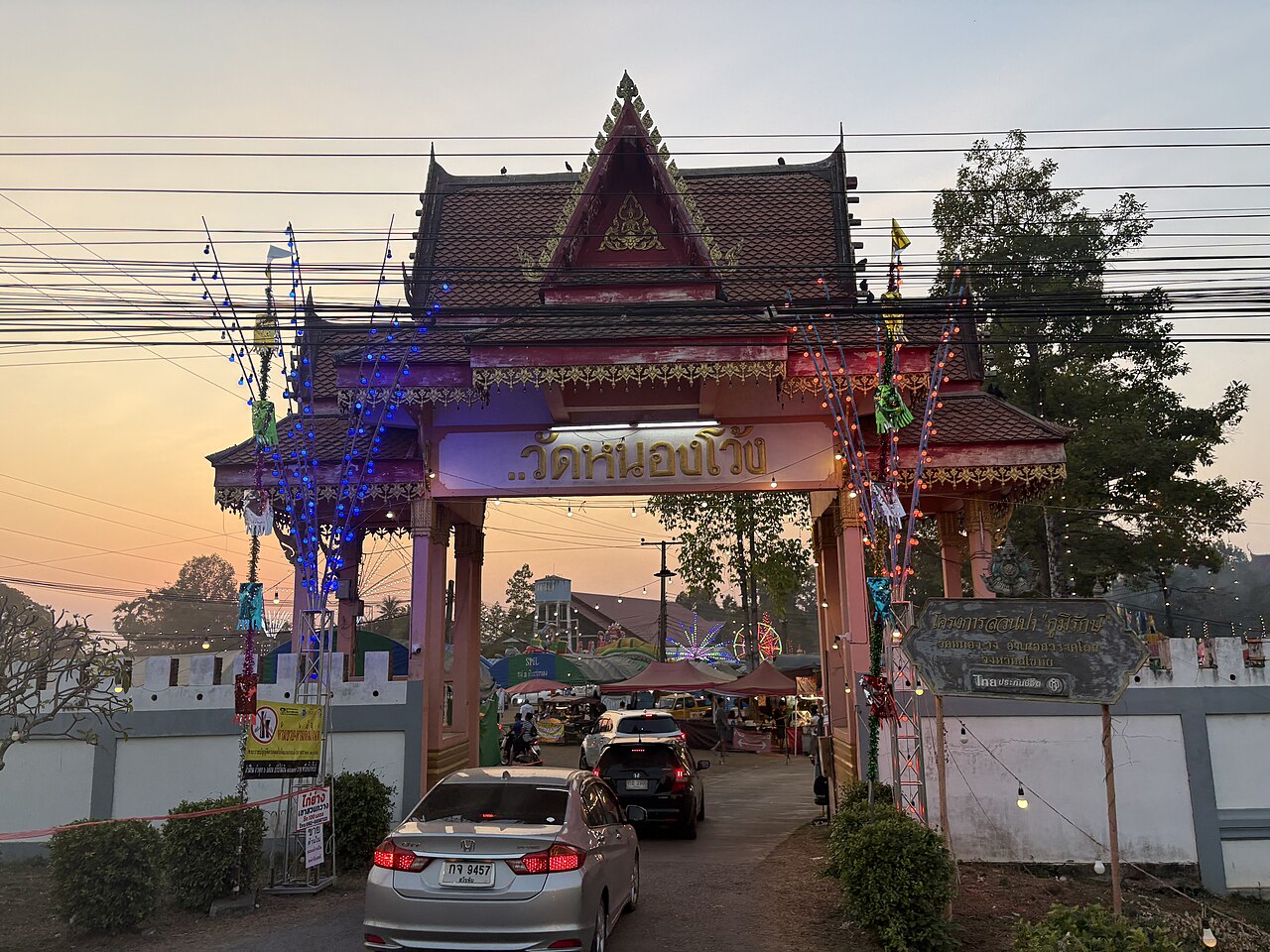
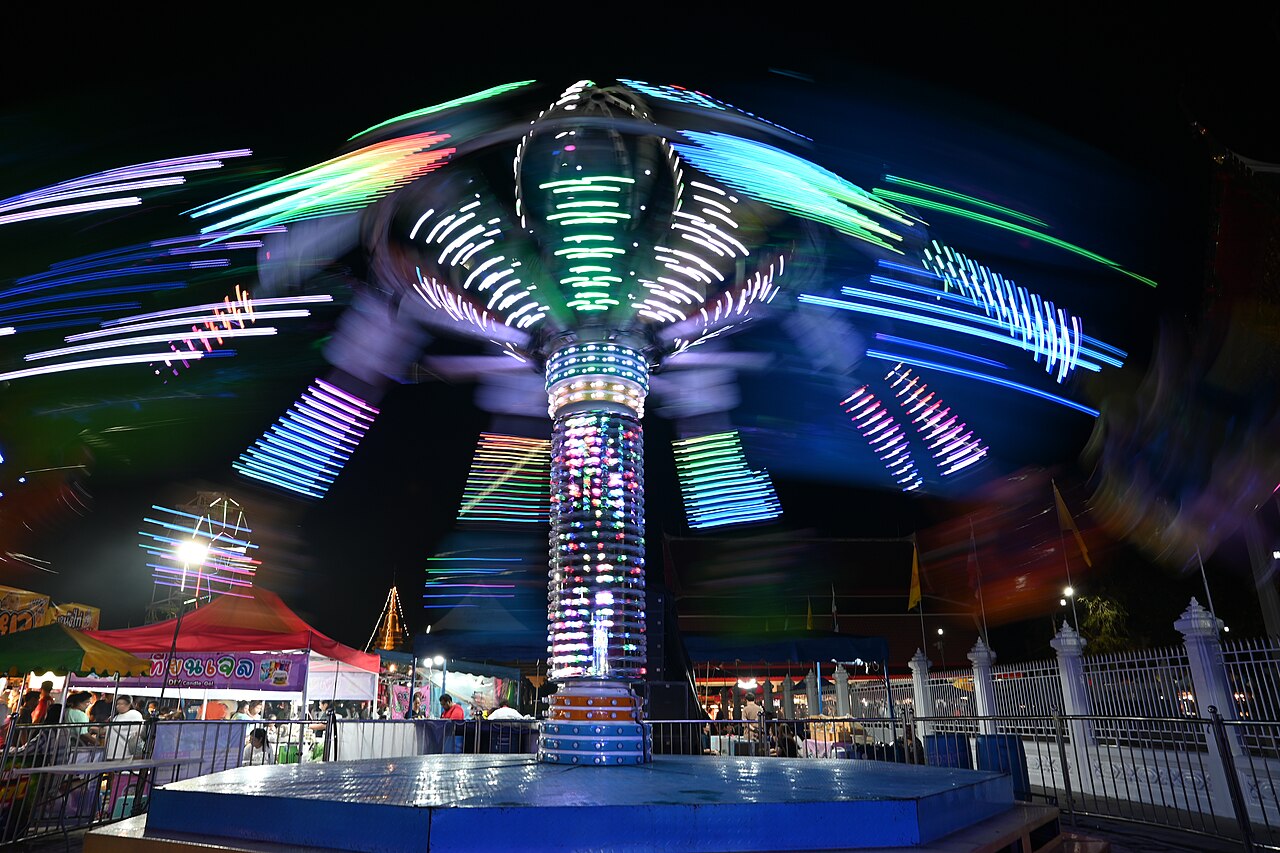
This Thai language guide gives you the words three ways — Thai script, a Thai transliteration you can say out loud, and the literal meaning, with a note on Thai pronunciation wherever the tones are likely to trip you, because with these words the literal meaning is what makes them stick. The five photographs are real ones from Thai temple fairs: a decorated gate in Sukhothai, a ferris wheel at dusk, stalls at a provincial wat, a ride spinning at night in Chon Buri, and a ลิเก stage in Bangkok.
งานวัด: the word on every banner
งาน (ngaan) is a wonderfully overworked Thai noun. It means work, a job, a party, a ceremony and an event, and which one it is depends entirely on the word stuck to the end of it. Learn the pattern once and you get a dozen words free:
- งานวัด (ngaan wát) — temple fair, literally “temple event”
- งานประจําปี (ngaan bprà-jam bpii) — the annual fair, the phrase you will see most often on the banner
- งานวัดหนองโว้ง — “the Wat Nong Wong fair”: just งาน plus the temple’s name
- ลานวัด (laan wát) — the temple yard, where the whole thing happens
- ออกร้าน (àwk ráan) — to set up a stall, literally “to put out a shop”
Two more that save you a lot of pointing: ร้าน (ráan) is a shop or stall, แผง (phǎeng) is a stand or counter, and ซุ้ม (súm) is a booth — also the word for the decorated archway you walked in under.
เครื่องเล่น: the rides, and the best compound in Thai
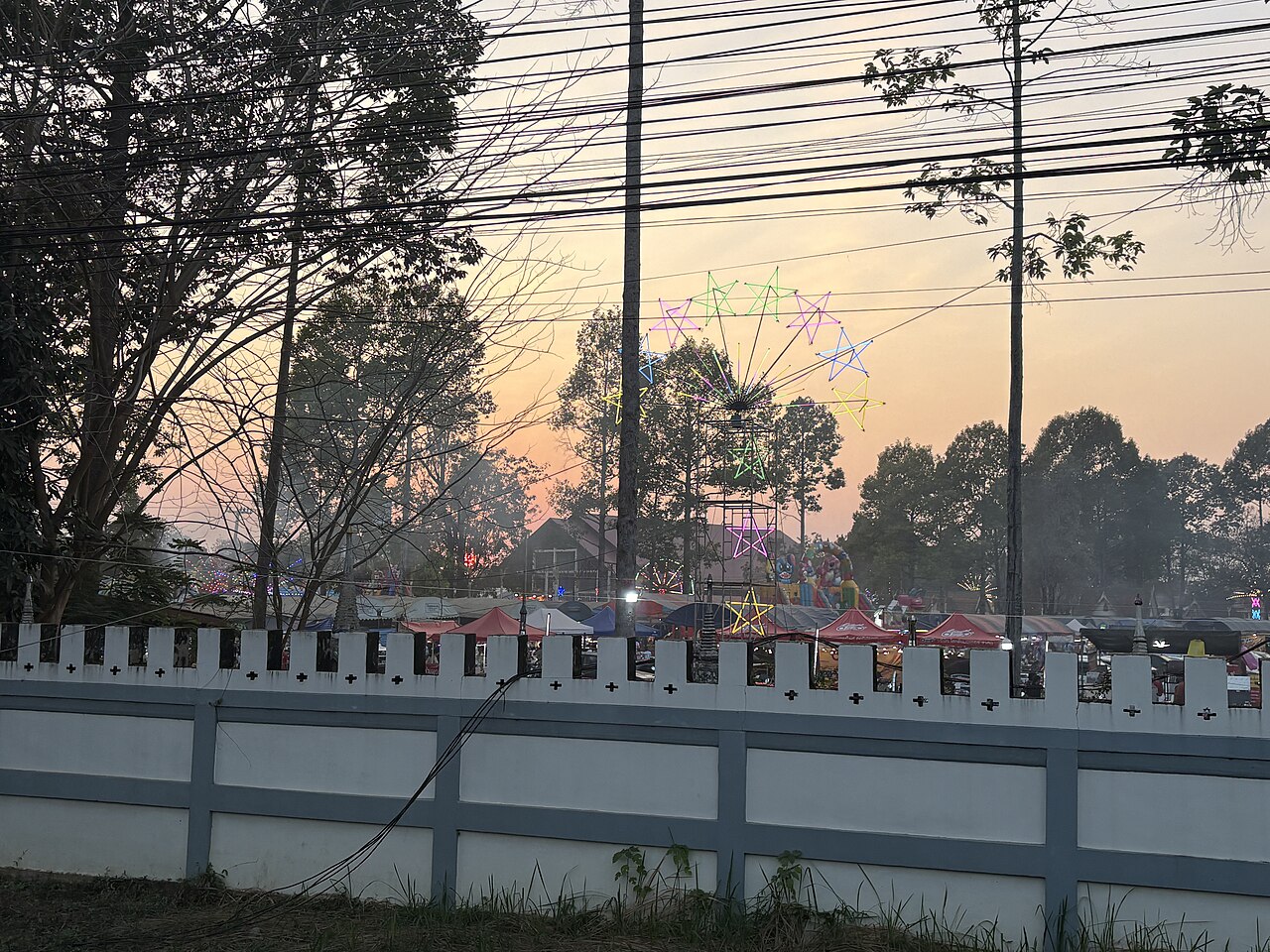
เครื่องเล่น (khrûeang lên) means “the rides” — literally “playing machines”. เครื่อง is the prefix for any machine or appliance, so once you can read Thai script well enough to spot it, you start collecting words in blocks instead of one at a time. The rides themselves are where Thai is at its most charming, and the quickest place on the whole fairground to learn Thai vocabulary that sticks:
- ชิงช้าสวรรค์ (ching-cháa sà-wǎn) — ferris wheel. ชิงช้า is a swing and สวรรค์ is heaven: a heaven swing
- ม้าหมุน (máa mǛn) — carousel, literally “spinning horses”
- บ้านผีสิง (bâan phǐi sǐng) — the ghost train, literally “a house a ghost haunts”
- รถไฟเหาะ (rót fai hàw) — roller coaster, literally “flying train”
- ตั๋ว (dtǜa) — ticket · คูปอง (khuu-bpawng) — coupon, which is what most fairs actually sell
Games, prizes and asking the price — a beginner Thai lesson that pays
The game stalls are the cheapest Thai lesson in Thailand, because the vendor will repeat the price at you until you understand it, and nothing on sale costs enough to make a mistake expensive.
- สอยดาว (sǎwy daao) — the lucky dip, literally “picking stars”: you unhook a numbered paper star and win whatever the number says
- ปาเป้า (bpaa bpâo) — throwing darts at a target · ยิงปืน (ying bpuen) — the shooting gallery
- ของรางวัล (khǎwng raang-wan) — the prize · ตุ๊กตา (dtúk-gà-dtaa) — the giant stuffed toy on the back wall
- เท่าไหร่ (thâo-rài) — “how much?” · กี่บาท (gìi bàat) — “how many baht?”
Prices at a fair are shouted, not written, so this is the moment to have your numbers solid. If they are still slow, spend twenty minutes with our guide to reading Thai numerals on prices and dates before you go — ๑๒๓ on a price card is a very different experience when you already know it.
Learn Thai vocabulary you can eat
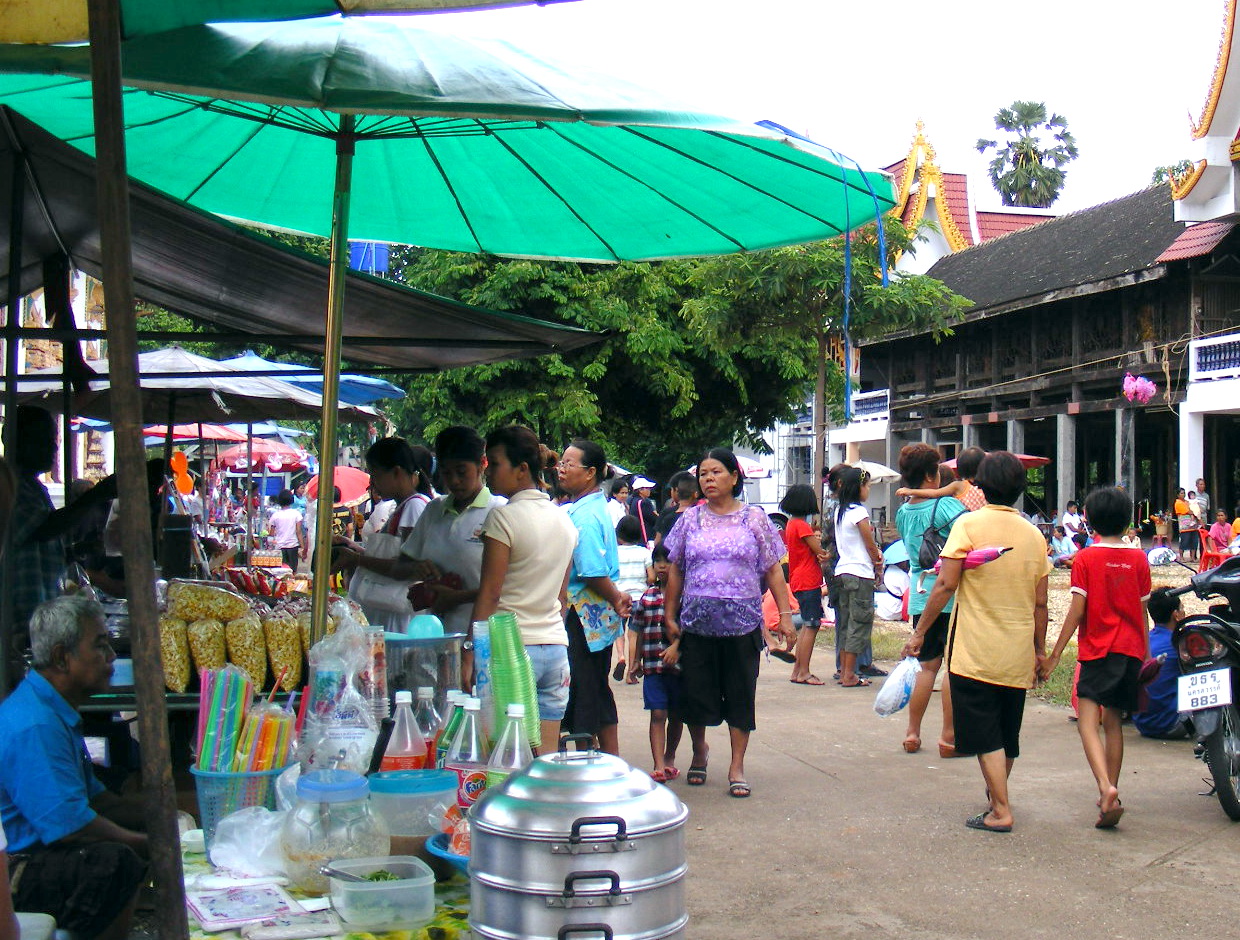
Fair food is its own small dialect, and it is the friendliest way to learn Thai vocabulary there is, because most of it is sold by pointing — which means you can learn the word and check it against the thing in the same second:
- ขนม (khà-nǒm) — sweets and snacks, a huge umbrella word
- สายไหม (sǎi mǎi) — candy floss, literally “silk thread”
- ลูกชิ้นปิ้ง (lûuk chín bpîng) — grilled meatball skewers, the default fair snack
- ไส้กรอก (sâi-gràwk) — sausage · ข้าวโพดคั่ว (khâao phôht khúa) — popcorn
- น้ําแข็งไส (náam khǎeng sǎi) — shaved ice · ลูกโป่ง (lûuk bpòhng) — balloon
- โรงทาน (rohng thaan) — the free-food tent run by donors. If a stall has no prices and someone waves you in, this is why
ลิเก and หมอลํา: what is on the stage
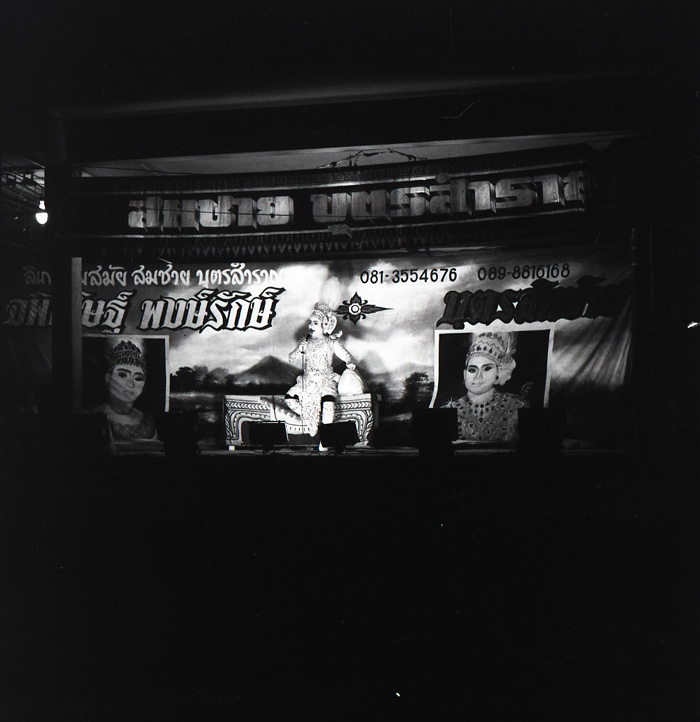
- เวที (weh-thii) — the stage · วงดนตรี (wong don-dtrii) — the band
- ลิเก (lí-gee) — likay: loud, sequinned, improvised folk opera, usually free and usually late
- หมอลํา (mǎaw lam) — the sung storytelling of the north-east, the Isan equivalent
- รําวง (ram wong) — the circle dance everybody joins in at the end
- หนังกลางแปลง (nǎng glaang bplaeng) — an open-air film, literally “a film in the middle of the field”
ทําบุญ: why the fair exists at all
This is the part visitors miss. A งานวัด is a fundraiser. The rides are there because the temple needs a new roof, and if you only learn Thai vocabulary from the loud end of the yard you will miss the words that explain why any of it is happening.
- ทําบุญ (tham bun) — to make merit, literally “to do merit”
- บริจาค (baw-rí-jàak) — to donate · ตู้บริจาค (dtûu baw-rí-jàak) — donation box
- กฐิน (gà-thǐn) — the robe-offering season that fills October and November with fairs
- ผ้าป่า (phâa bpàa) — a “forest robe” fundraising offering, often a money tree in the middle of the yard
- พระ (phrá) — a monk · หลวงพ่อ (lǜang phâw) — “revered father”, used for a senior monk and for the Buddha image a fair is held in honour of
The season matters for planning. Most fairs cluster in the cool months, from the end of Buddhist Lent in October through to Songkran in April, because that is when the weather allows it and when the merit calendar is busiest. A temple will usually run its fair for three to seven nights and advertise it on a vinyl banner at the roadside weeks in advance — which is, conveniently, a large piece of free reading practice at eye level.
Reading the banner: Thai letters you will actually meet
Gate signs are the best read Thai script practice there is, because you already know roughly what they say, so you are decoding letters rather than guessing meaning. Three things to look for on the one in the first photograph:
- วัด (wát) begins the name of every temple in the country. Four letters, and it unlocks thousands of signs
- หนอง (nǎwng) means a pond or marsh, and it starts hundreds of Thai place names. So do บาง (baang, a waterside village) and ห้วย (húay, a stream)
- The year will be a Buddhist Era one — ๒๕๖๙, 2569, is 2026. Add 543 to the Western year, or use our Thai date calculator
If the letters themselves are the bottleneck, fix that before the vocabulary. Keep our free Thai alphabet chart open on your phone to learn Thai alphabet shapes and the Thai consonants and vowels that build them, then drill the Thai letters for ten minutes a day in the flashcard trainer. Signs at a fair are short, repetitive and well lit — ideal for a first real-world read.
How to speak Thai politely at a temple fair
A fair is relaxed, but it is still a temple. Dress as you would for a wat: shoulders and knees covered. If you want to speak Thai to anyone there, end your sentence with ครับ (khráp) if you are a man and ค่ะ (khâ) if you are a woman — it costs one syllable and changes the whole temperature of the exchange.
- อันนี้เท่าไหร่ครับ/คะ (an níi thâo-rài khráp/khá) — “how much is this one?”
- ขอสองอันครับ/ค่ะ (khǎw sǎwng an khráp/khâ) — “two of those, please”. อัน is the all-purpose Thai classifier when you cannot remember the right one
- งานเลิกกี่โมงครับ/คะ (ngaan lêrk gìi mohng khráp/khá) — “what time does it finish?”
- ถ่ายรูปได้ไหมครับ/คะ (thàai rûup dâi mǎi khráp/khá) — “may I take a photo?” Worth asking at the เวที, and worth asking before photographing monks
One rule of thumb: inside the อุโบสถ (ù-boh-sòt), the ordination hall, you are in a temple; out by the ferris wheel you are at a fair. Thais switch register between the two without thinking, and so should you — quiet and shoes off at one end, laughing and eating at the other.
A study tip: take six words and spend one evening
Do not try to carry this whole page in. Take six — งานวัด, เครื่องเล่น, ขนม, เท่าไหร่, ทําบุญ and ลิเก — and use each one out loud at least once between the gate and the stage. That is twenty minutes of work, and you will learn Thai vocabulary better that way than from a month of app streaks, because every one of those words arrives attached to a smell, a noise and somebody’s face.
Then find the next fair. In Thailand expat language terms this is the cheapest immersion going: free entry, no pressure, patient people, and the same forty words repeated at every stall until they are yours. Ask a Thai colleague แถวนี้มีงานวัดที่ไหนบ้างครับ/คะ (thǎew níi mii ngaan wát thîi nǎi bâang khráp/khá) — “is there a temple fair around here?” — and you will almost certainly be taken to one.