Learn Thai Vocabulary: Renting a Room in Thailand
Learn Thai vocabulary for renting a room in Thailand: read hai chao signs, ho phak banners and meter bills in Thai script, with pronunciation and photos.
Nobody finds a long-term room in Thailand the way they find a hotel. The good places are rarely on a booking site at all — they are advertised on a vinyl banner wired to the front railing, on a sheet of A4 taped inside a glass door, and on a hand-painted board at the mouth of the ซอย. If you want to learn Thai vocabulary that changes your month rather than your afternoon, rental words are the best investment in the language: about forty of them, repeated on almost every building in the country, and most built from two short syllables you can learn in a sitting.
This Thai language guide takes the words in the order you actually meet them — the sign on the gate, the banner on the building, the meter on the wall, and the five questions you ask the owner. Every entry gives the Thai script, a Thai transliteration you can say out loud, and the literal meaning, because in rental Thai the literal meaning is nearly always the lesson. The four photographs are real: a bilingual rent sign, two Bangkok หอพัก buildings, and the kind of electricity meter your monthly bill is read from.
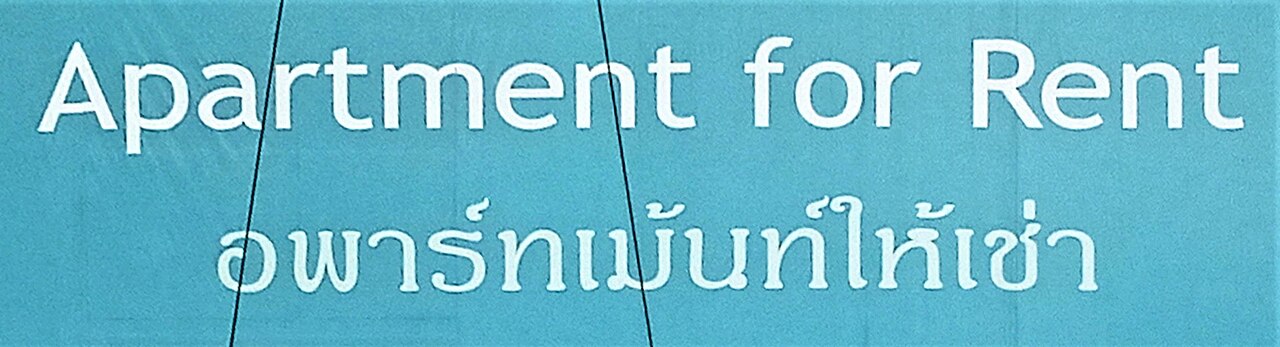
ให้เช่า: the two syllables that do all the work
เช่า (châo) means “to rent”, and ให้ (hâi) means “to give”. Put them together and ให้เช่า is literally “gives for renting” — an offer, not a request. Thai marks the direction of the deal inside the word itself, which is why the shortest possible sign tells you everything:
- ให้เช่า (hâi châo) — for rent · ขาย (khǎai) — for sale. Check which one you are reading
- ห้องเช่า (hâwng châo) — room to rent, lit. “room rent”
- ห้องว่าง (hâwng wâang) — vacancy, lit. “empty room” · เต็ม (dtem) — full, no rooms left
- ผู้ให้เช่า (phûu hâi châo) — landlord, lit. “person who gives for rent”
- ผู้เช่า (phûu châo) — tenant · เจ้าของ (jâo khǎwng) — owner, lit. “lord of the thing”
That ผู้ (phûu) prefix is worth a mental note: it turns a verb into the person who does it, the same way -er works in English. Once you spot it, dozens of official Thai words stop being frightening.
Four kinds of place: หอพัก, อพาร์ตเมนต์, คอนโด and บ้าน
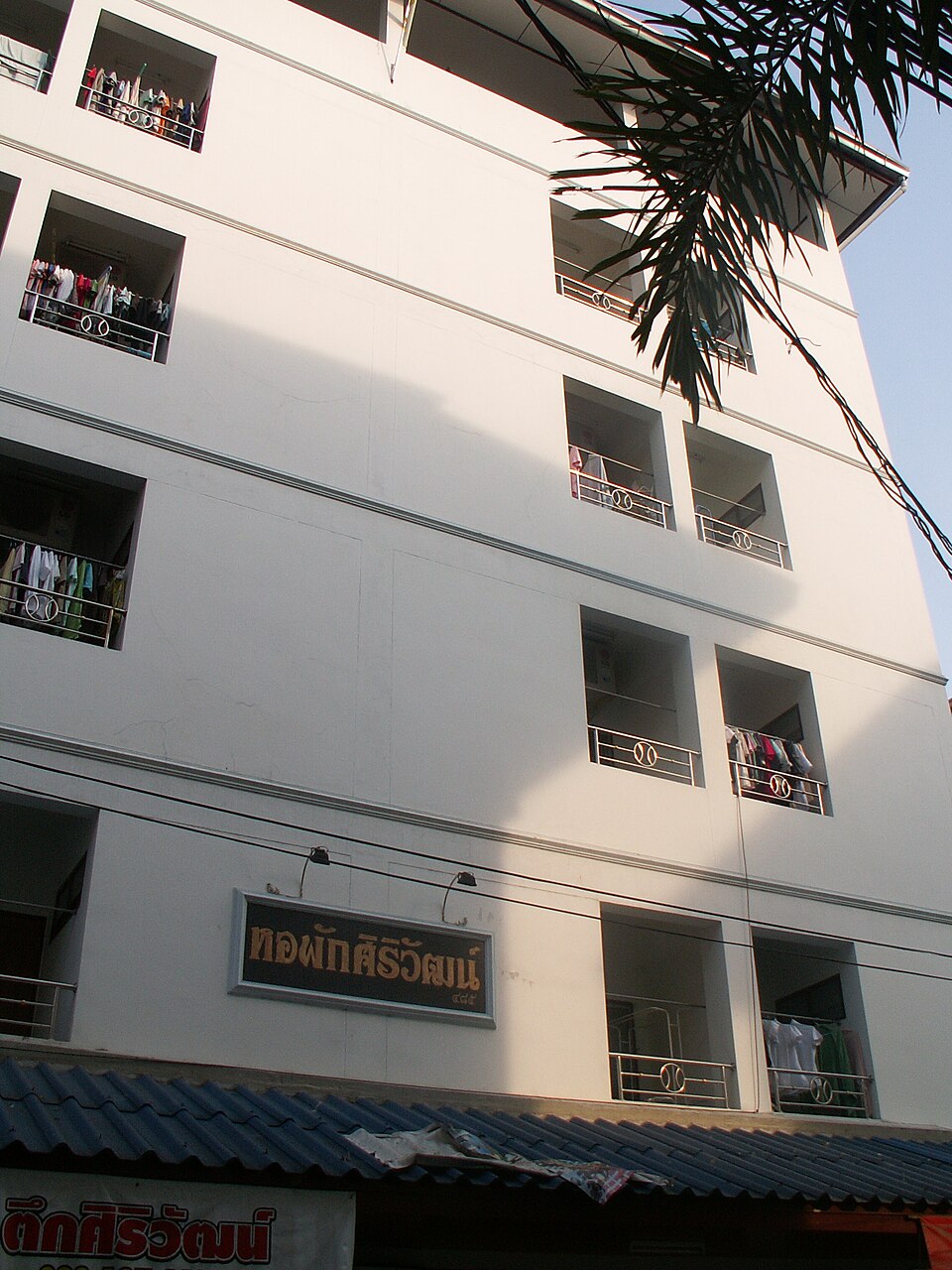
Thai sorts rented homes into categories that do not map neatly onto English ones, and the category sets the price, the contract and the neighbours:
- หอพัก (hǎw phák) — a rooming house, lit. “hall of rest”; cheap, monthly, often near a university
- หอพักหญิง (hǎw phák yǐng) — women-only · หอพักชาย (hǎw phák chaai) — men-only. This is printed on the gate and it is meant literally
- อพาร์ตเมนต์ (à-phâat-mén) and แมนชั่น (maen-chân) — one owner, many rented units
- คอนโด (khawn-doo) — a condominium, where each unit has a separate owner
- บ้านเช่า (bâan châo) — a house to rent · ทาวน์เฮาส์ (thaao-háo) — a townhouse
- ห้องพัก (hâwng phák) — “rest room” in the literal sense: a guest room or rented room, not a toilet
Read Thai script on the banner outside
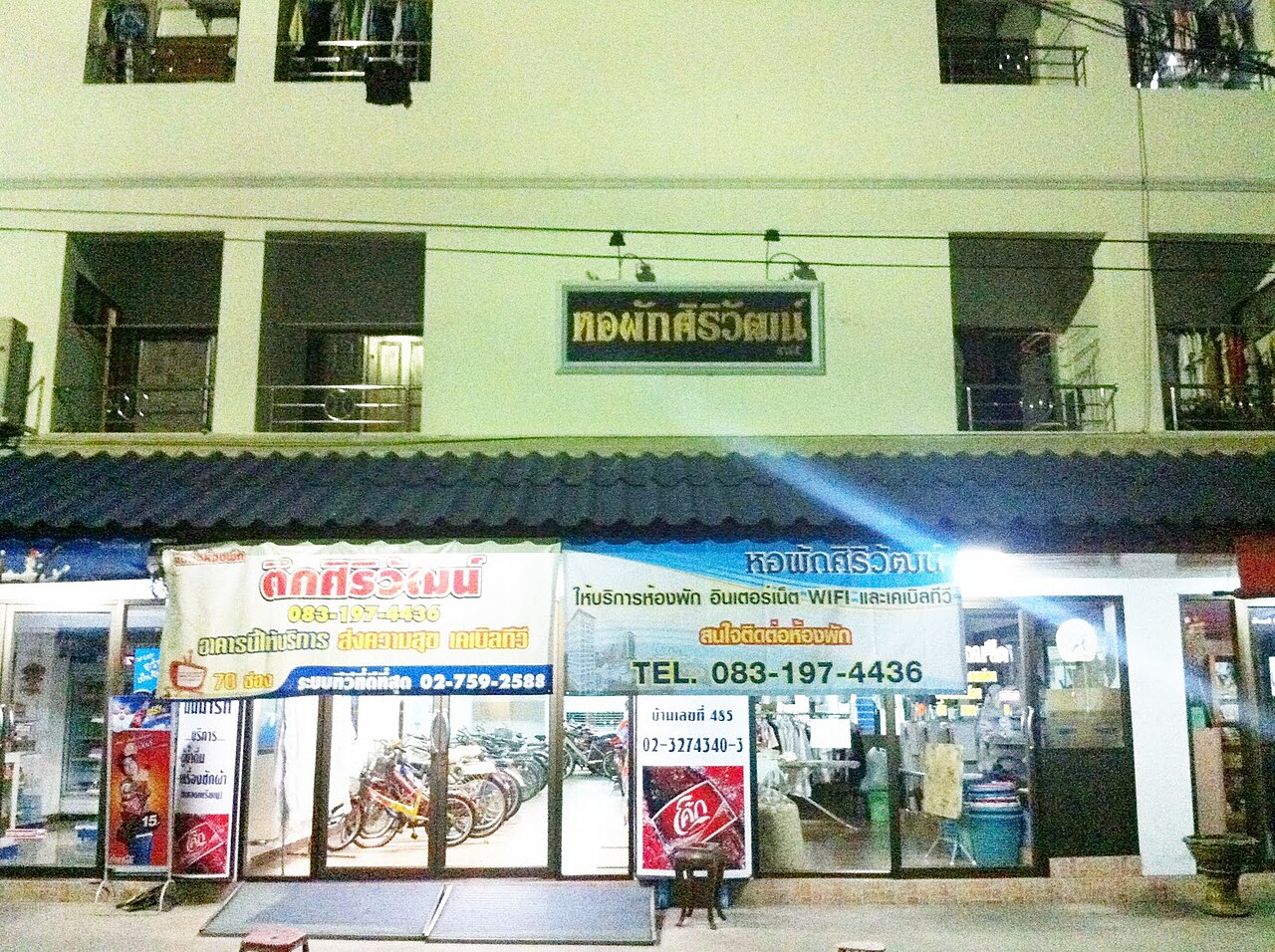
A banner like this is the single best free beginner Thai lesson on your street, because the layout never changes: what is offered, then how to ask, then a number. These are the words that fill it:
- ให้บริการ (hâi baw-rí-gaan) — “provides the service of…”, the standard opener
- สนใจติดต่อ (sǒn-jai dtìt-dtàw) — “interested? get in touch” · โทร (thoo) — call
- รายวัน (raai wan) — by the day · รายเดือน (raai duean) — by the month · รายปี (raai bpii) — by the year
- เฟอร์นิเจอร์ครบ (fəə-ní-jôe khróp) — fully furnished, lit. “furniture complete”
- ที่จอดรถ (thîi jàwt rót) — parking, lit. “place to park a vehicle”
- แอร์ (ae) — air conditioning · พัดลม (phát lom) — fan. The price gap between those two words is the biggest on the sign
The numbers will be in Arabic digits about half the time and in Thai ones the rest — ๐ ๑ ๒ ๓ ๔ ๕ ๖ ๗ ๘ ๙. An hour with our guide to reading Thai numerals and prices pays for itself the first time you decode a rent figure without asking.
The money words: ค่าเช่า, มัดจำ and the meter
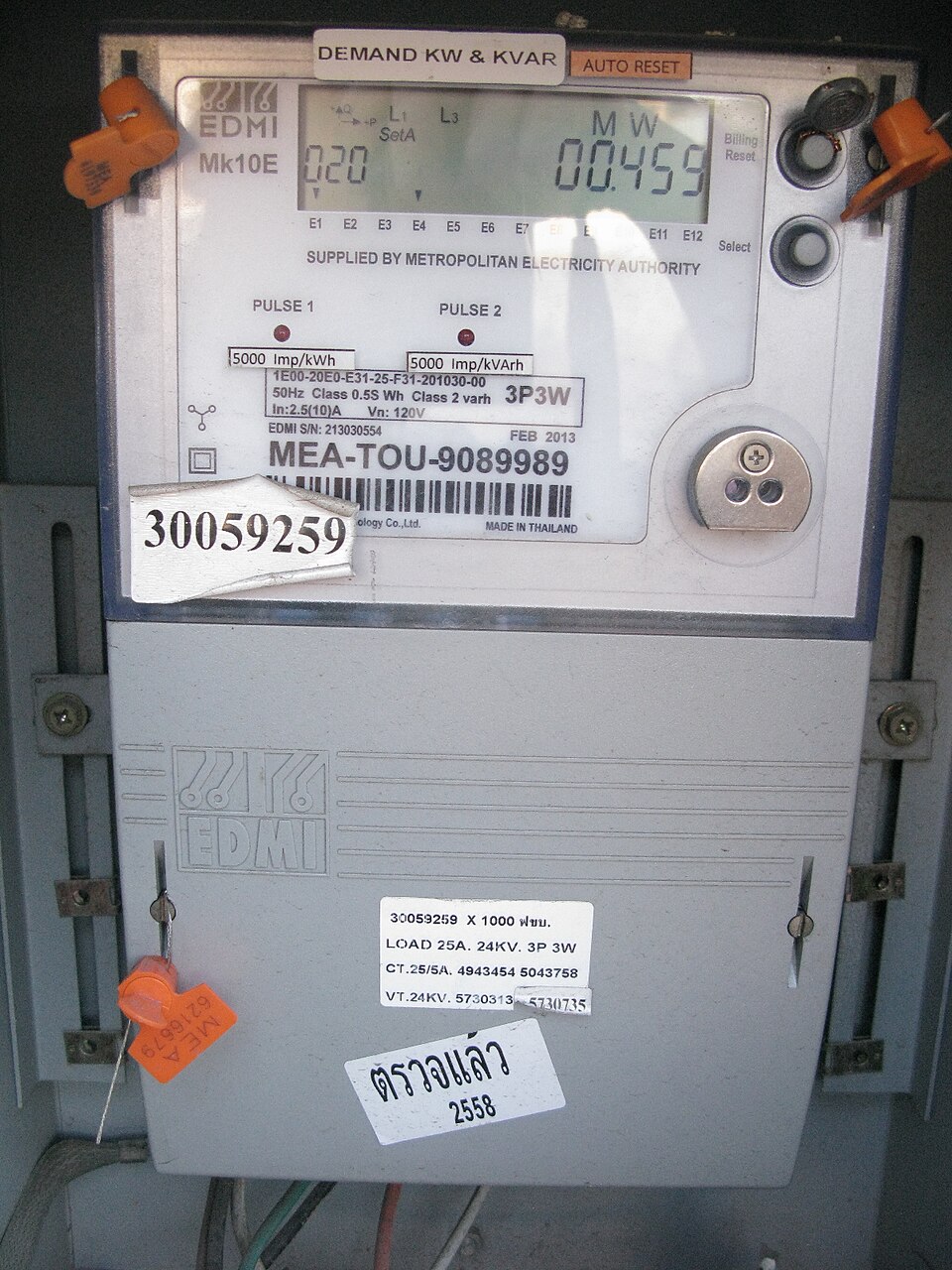
One syllable unlocks this whole section. ค่า (khâa) means “charge” or “fee”, and Thai builds bills by sticking it in front of the thing you are being charged for:
- ค่าเช่า (khâa châo) — the rent · ค่าน้ำ (khâa náam) — water · ค่าไฟ (khâa fai) — electricity, lit. “fire charge”
- ค่าส่วนกลาง (khâa sùan glaang) — common-area fee · ค่าขยะ (khâa khà-yà) — rubbish collection
- มัดจำ (mát-jam) — deposit · เงินประกัน (ngən bprà-gan) — security money, often two months of rent
- มิเตอร์ (mí-dtəə) — meter · หน่วย (nùay) — unit, the word printed beside the kilowatt-hours
- จ่ายล่วงหน้า (jàai lûang nâa) — to pay in advance · ใบเสร็จ (bai sèt) — receipt, lit. “finished sheet”
- สัญญาเช่า (sǎn-yaa châo) — the lease · เซ็นชื่อ (sen chûe) — to sign your name
Ask what rate the building charges per หน่วย before you sign anything. Many small หอพัก bill electricity above the government rate, and the question ค่าไฟหน่วยละเท่าไหร่ครับ (khâa fai nùay lá thâo rài khráp), “how much per unit?”, marks you instantly as someone who has done this before.
Inside the room: what you are actually renting
- ห้องน้ำ (hâwng náam) — bathroom, lit. “water room” · เครื่องทำน้ำอุ่น (khrûeang tham náam ùn) — water heater, lit. “machine that makes water warm”
- ตู้เย็น (dtûu yen) — fridge, “cold cupboard” · ตู้เสื้อผ้า (dtûu sûea phâa) — wardrobe, “clothes cupboard”
- เตียง (dtiang) — bed · โต๊ะ (dtó) — table · ระเบียง (rá-biang) — balcony
- ชั้น (chán) — floor or storey · ลิฟต์ (líp) — lift. A five-storey หอพัก usually has none
- กุญแจ (gun-jae) — key · คีย์การ์ด (khii-gáat) — key card
Five questions, and the politeness that carries them
Rental Thai is spoken to three people: the เจ้าของ (owner), the แม่บ้าน (mâe bâan), the live-in caretaker who in practice decides everything, and the ยาม (yaam), the guard at the gate. Address anyone older than you as พี่ (phîi), “older sibling”, and end every sentence with ครับ (khráp) if you are a man or ค่ะ (khâ) if you are a woman. Dropping the particle while asking a caretaker for a favour is the one mistake that costs you goodwill; our explainer on khrap and kha is ten minutes well spent before you go looking.
- มีห้องว่างไหมครับ/คะ (mii hâwng wâang mǎi khráp/khá) — do you have a room free?
- ขอดูห้องได้ไหมครับ/คะ (khǎw duu hâwng dâi mǎi khráp/khá) — may I see the room?
- ค่าเช่าเดือนละเท่าไหร่ครับ/คะ (khâa châo duean lá thâo rài khráp/khá) — how much is the rent per month?
- รวมค่าน้ำค่าไฟไหมครับ/คะ (ruam khâa náam khâa fai mǎi khráp/khá) — does that include water and electricity?
- มัดจำกี่เดือนครับ/คะ (mát-jam gìi duean khráp/khá) — how many months’ deposit?
One more is worth memorising for the day you leave: ขอเงินมัดจำคืนได้ไหมครับ (khǎw ngən mát-jam khuen dâi mǎi khráp), “may I have the deposit back?” — คืน (khuen) is the verb for returning something, and saying it calmly in Thai at the end of a tenancy is worth more than any amount of English.
A study tip: one banner a day
Do not try to memorise this page. Walk your own ซอย once and photograph every rental banner on it — there will be more than you expect — then work through one a day with our free Thai alphabet chart open beside you. Banner Thai is printed in large, plain letters with generous spacing, which makes it far kinder to a beginner than a menu or a newspaper, and the same twenty words repeat on all of them. By the fourth banner you will be reading ห้องว่าง at a glance instead of spelling it out, and the Thai consonants and vowels you keep meeting will have attached themselves to something real.
Then put the words you actually met into the flashcard trainer for a week, and ask the caretaker one of the five questions above out loud — Thai pronunciation only starts to fix itself when somebody answers you. That is the honest way to learn Thai vocabulary and to start to speak Thai where it counts: one street, one short list, and a pair of syllables like ให้เช่า that quietly hand you a place to live. Few things improve Thailand expat language skills faster than negotiating your own roof in Thai.