Learn Thai Vocabulary in Thailand: Motorbike Taxi Words
Learn Thai vocabulary for motorbike taxis in Thailand: วิน, ซอย and ค่าโดยสาร in Thai script, with transliteration, real photos and rider phrases.
In Thailand the quickest way across town is usually the back of somebody else’s motorbike. Almost every busy corner has a วิน (win) — a stand where riders in numbered vests wait for passengers — and the whole transaction takes about twelve seconds. That makes it one of the best places in the country to learn Thai vocabulary you will use several times a day, because you only need about fifteen words and you will hear every one of them again tomorrow.
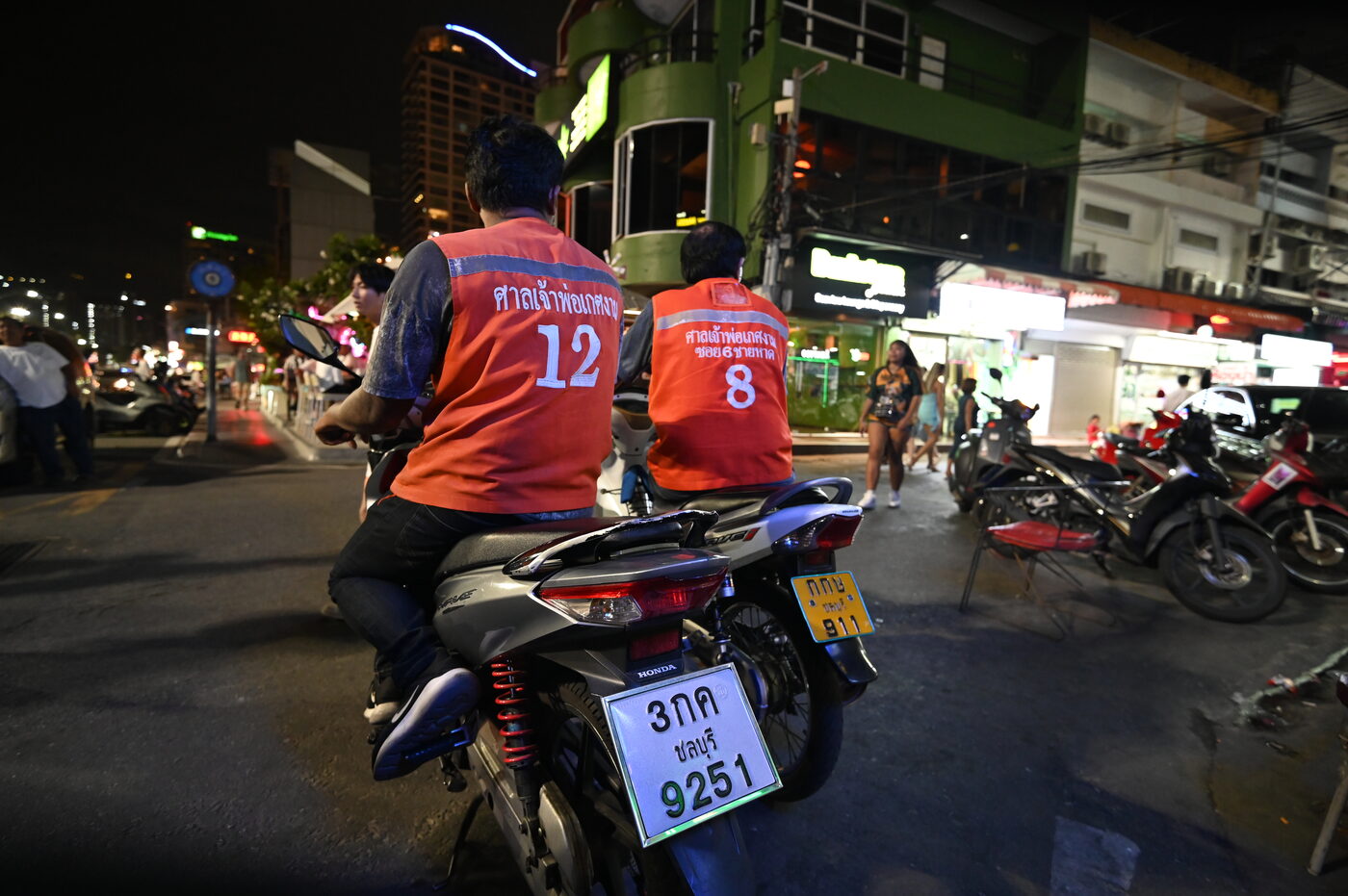
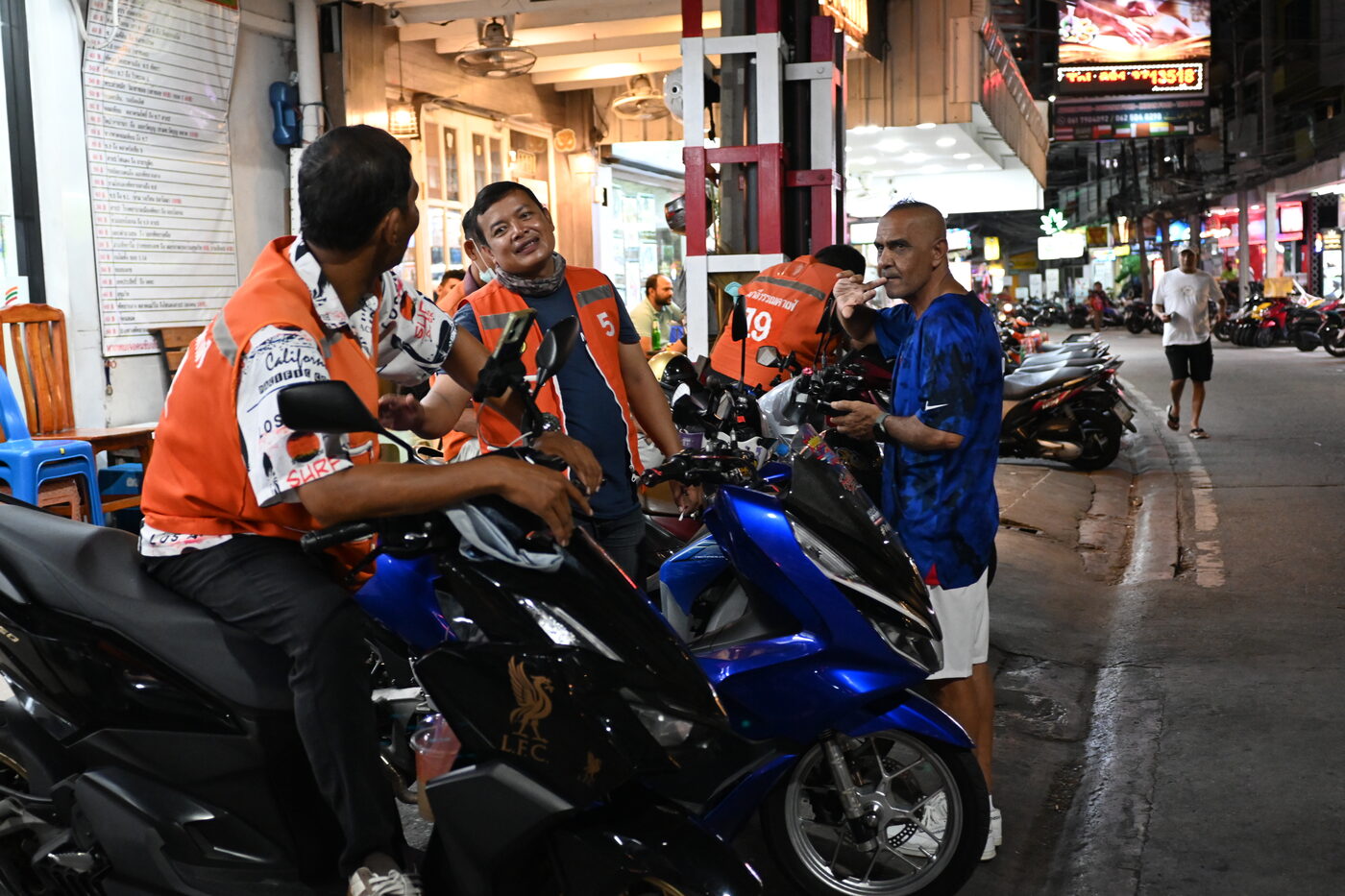
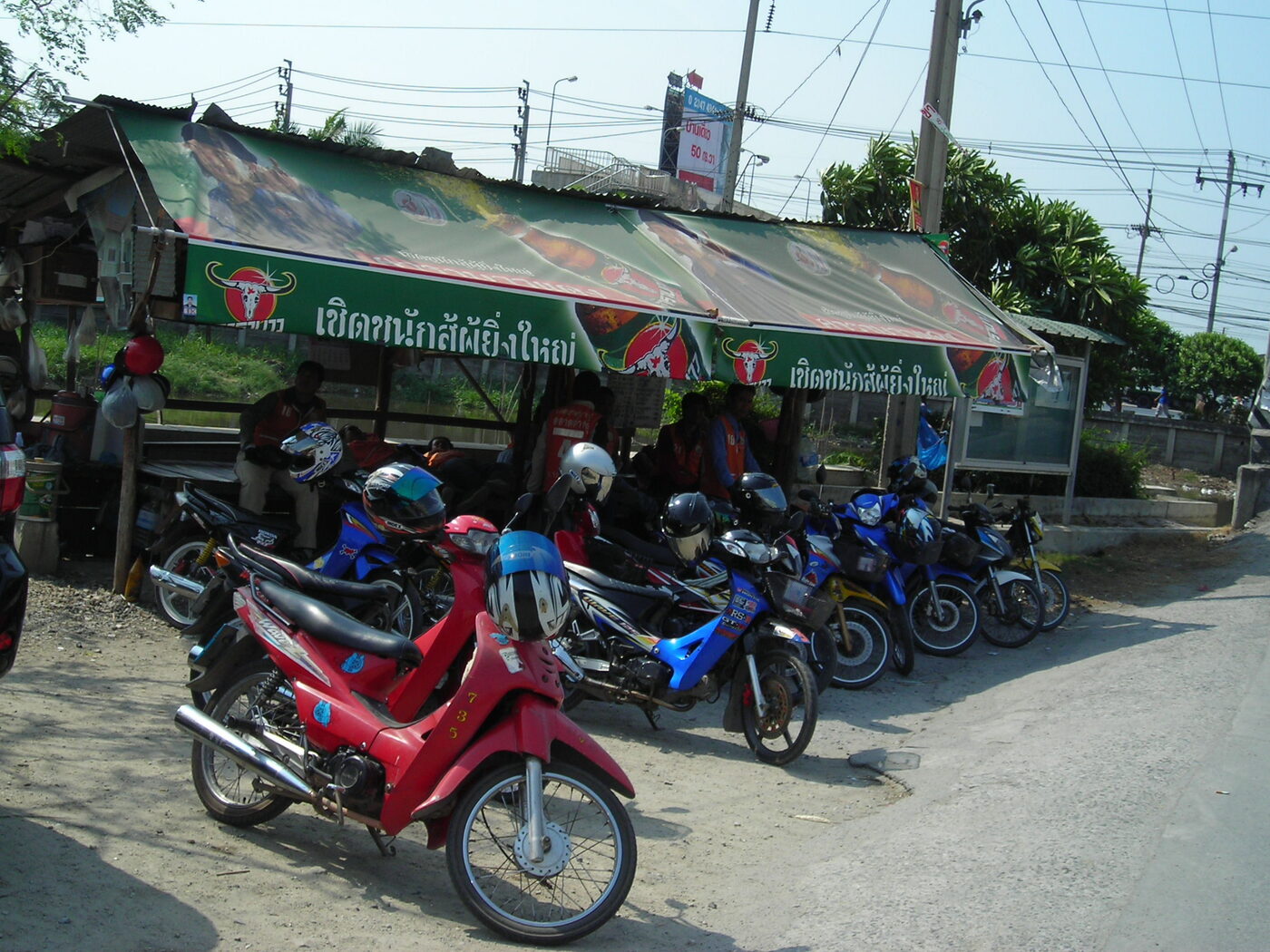
This beginner Thai lesson gives you those words in Thai script, with Thai transliteration and the literal meaning where it helps, plus four real photographs — vests, a fare board and two win stands from Pattaya, Samut Prakan and Cha-am. Taxis and apps exist, but the win is what Thai people actually use for the first and last kilometre of a journey, and it is the one corner of Thai transport where almost nobody speaks English. For anyone living here, this is Thailand expat language at its most useful.
What a วิน is, and the six words that describe it
Start with the stand itself. These six words do most of the work, and none of them is long — a good reminder that to learn Thai vocabulary efficiently you want the handful of words that repeat, not a long list. Thai pronunciation matters less here than confidence — the rider already knows what you want — but get the tones roughly right and you will be understood first time.
- วิน (win) — the stand itself: the fixed spot where for-hire riders queue. Three letters, and it is painted on half the corners in Bangkok.
- มอเตอร์ไซค์ (maw-dtoe-sai) — motorbike. An English loanword spelled straight into Thai letters, so it is a free win once you can read Thai script.
- วินมอเตอร์ไซค์ (win maw-dtoe-sai) — the two together: the motorbike-taxi rank, and what everyone calls the service.
- มอเตอร์ไซค์รับจ้าง (maw-dtoe-sai ráp jâang) — the official term, literally “hire-accepting motorbike”. You will see it on signs and in news reports.
- พี่วิน (phîî win) — literally “older-sibling win”, and the right way to address the rider. Using พี่ for anyone a bit older than you is the single friendliest habit in Thai.
- เสื้อกั๊ก (sÿea gák) — the vest. Numbered, colour-coded by stand, and legally required: no vest, no official rider.
Learn Thai vocabulary for the fare before you get on
Agree the price first. Bangkok wins post a fare board and short hops are cheap, but outside the capital the number is spoken, not printed, and asking politely costs nothing. These are the words that settle it.
- ค่าโดยสาร (khâa dooi-sǎan) — the fare, literally “passenger cost”. ค่า (khâa) on its own is any fee.
- เท่าไหร่ (thâo-rài) — how much. The single most useful question word in Thailand.
- กี่บาท (gìe bàat) — how many baht. Blunter, and perfectly polite with ครับ or คะ on the end.
- แพง (phaeng) — expensive. Say it with a smile, never a frown.
- ลดหน่อยได้ไหม (lót nòi dâi mǎi) — “could you come down a little?”
- เหมา (mǎo) — to hire the whole thing for a flat price, for a round trip or a wait-and-return.
Read Thai script on the vest and the number plate
A win rider is covered in reading practice, and it is short enough to decode at a red light. This is the cheapest way to learn Thai vocabulary and reading at the same time, because every word below is also a word you will meet on a shop front. Work through these and the photograph above stops being a street scene and becomes a page.
- ศาล (sǎan) — a shrine. With เจ้าพ่อ (jâo phâw, “lord father”, a guardian spirit) it names the landmark a stand sits beside.
- ซอย (soi) — a side lane off a main road, and the destination on most win trips.
- ชายหาด (chaai hàat) — beach, literally “shore-sand”. หาด alone is the sand.
- ป้ายทะเบียน (bpâai thá-bian) — number plate. ป้าย (bpâai) by itself means any sign or board.
- จังหวัด (jang-wàt) — province. Every Thai plate prints its province underneath, so plates are a painless way to learn Thai letters and place names at once — ชลบุรี (chon-bù-rii) on the bike above.
- สาธารณะ (sǎa-thaa-rá-ná) — public. A yellow plate marks a registered public vehicle; a white one is private.
Speak Thai from the back seat: the direction words
You will not need a sentence for most of the journey. A word and a pointed finger is how Thai passengers do it, and these are the words they use.
- ปากซอย (bpàak soi) — the mouth of the lane, where it meets the main road. Literally “mouth of the soi”.
- ท้ายซอย (tháai soi) — the far end of the lane.
- ตรงไป (dtrong bpai) — straight on.
- เลี้ยวซ้าย / เลี้ยวขวา (líao sáai / líao khwǎa) — turn left / turn right.
- สี่แยก (sÎi yâek) — crossroads, literally “four-split”.
- สะพาน (sà-phaan) — bridge, including the pedestrian flyovers used as landmarks everywhere.
- จอดตรงนี้ (jàwt dtrong níe) — stop right here. The one you will use most.
Eight sentences that cover the whole ride
End every one of these with ครับ (khráp, male speaker) or ค่ะ / คะ (khâ / khá, female speaker). It is one syllable and it changes how the whole exchange feels. Thai transliteration can only get you so close, so copy the rider’s own pronunciation back at him — that is how most people who learn Thai vocabulary on the street end up sounding natural.
- ไปตลาดไหมครับ/คะ (bpai dtà-làat mǎi khráp/khá) — “will you go to the market?” Swap in any destination.
- ไปปากซอยเท่าไหร่ครับ/คะ (bpai bpàak soi thâo-rài khráp/khá) — “how much to the top of the soi?”
- ขอหมวกกันน็อกหน่อยครับ/ค่ะ (khǎaw mùak gan nók nòi khráp/khâ) — “a helmet, please.”
- ช้าๆ หน่อยครับ/ค่ะ (cháa cháa nòi khráp/khâ) — “a bit slower, please.” Never rude, always understood.
- เลี้ยวซ้ายตรงนี้ครับ/ค่ะ (líao sáai dtrong níe khráp/khâ) — “left here.”
- จอดตรงนี้ครับ/ค่ะ (jàwt dtrong níe khráp/khâ) — “stop right here.”
- รอแป๊บนึงได้ไหมครับ/คะ (raw bpáep nûeng dâi mǎi khráp/khá) — “can you wait a moment?”
- ขอบคุณครับ/ค่ะ (khàwp khun khráp/khâ) — “thank you.” Say it as you hand over the money.
Politeness, helmets and a little common sense
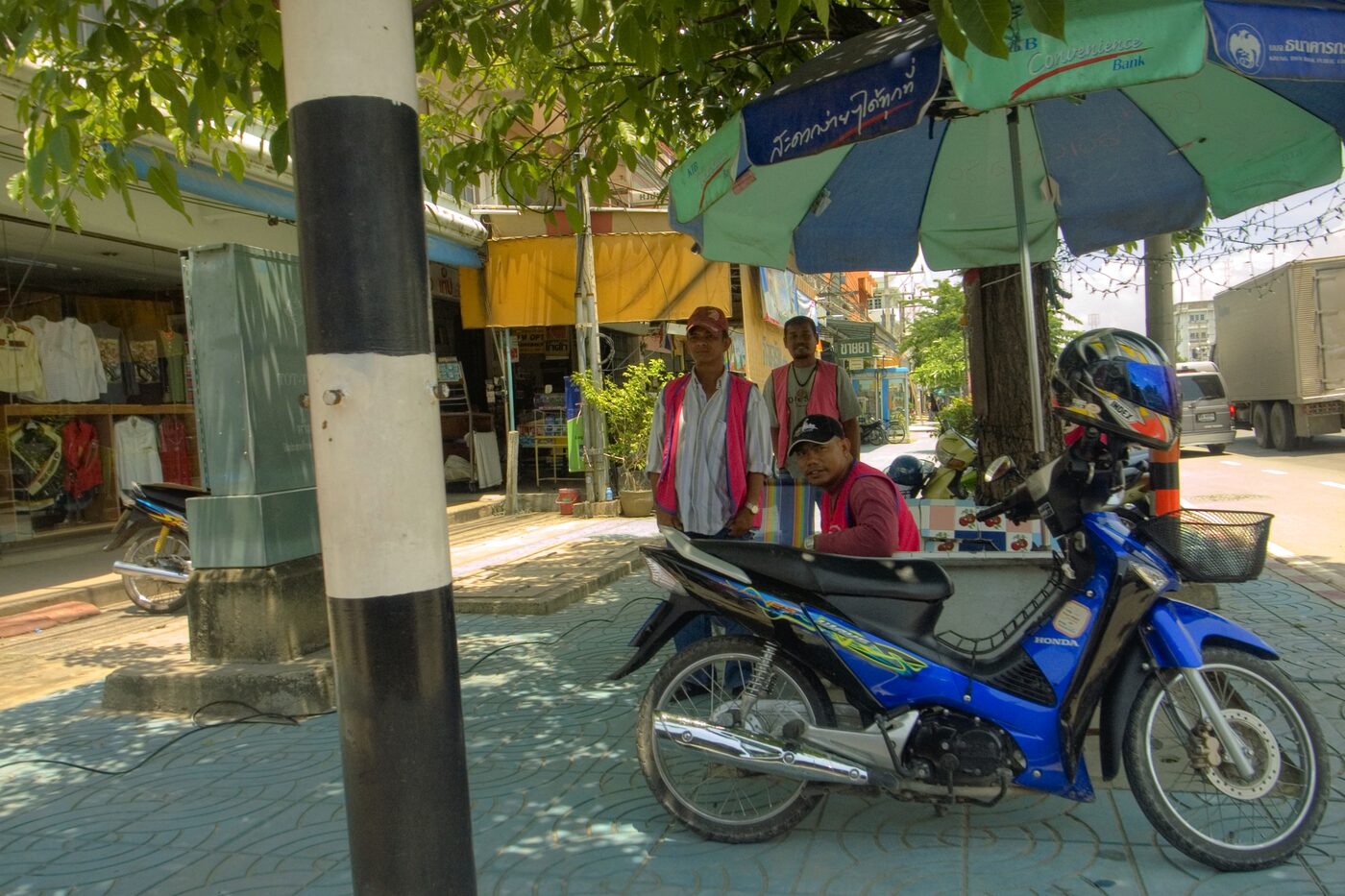
Two habits matter more than vocabulary. Wear the helmet — it is the law for the passenger as well as the rider, and police do stop wins on main roads. And use พี่ (phîî) when you speak: Thai sorts almost every conversation by relative age, and calling a rider พี่วิน treats him as the older sibling in the exchange. If he is clearly much younger, น้อง (náwng, younger sibling) is the matching word. Skip the win for long trips, late at night, or in heavy rain, when a metered taxi is the better call — and if you are carrying luggage, say มีกระเป๋า (mii grà-bpǎo, “I have a bag”) before you agree a price.
A study tip: one corner, one word, every day
Here is a drill that costs nothing and works. Pick the win nearest your flat and read one thing off it each time you pass — the shrine name on the vest one day, the province on a plate the next, a single line of the fare board the day after. Say it out loud, then write it by hand that evening. Handwriting is what teaches you where each loop starts, and it is the step most people skip. A single word attached to a corner you walk past daily will outlast fifty words on a list, which is how people who really learn Thai vocabulary in Thailand tend to do it.
When you want the letters behind the words, start with the free Thai alphabet chart — all 44 Thai consonants and vowels in one place — then drill recognition with the ThaiLetters flashcard trainer until บ and ป stop looking alike. Our guide to reading a Thai address and soi numbers covers the other half of giving directions, and if the trip is a long one, speaking Thai in a Bangkok taxi picks up where this leaves off. Begin with วิน — three letters, one word, and every street corner in Thailand suddenly has a name.