Learn Thai Vocabulary in Thailand: Fish & Seafood Words
Learn Thai vocabulary for fish and seafood in Thailand: ปลา, กุ้ง, ปู and หอย in Thai script, with transliteration, real market photos and stall phrases.
Thailand runs on อาหารทะเล (aa-hǎan thá-lee) — seafood, literally “sea food” — and in almost every town there is a stall of it on ice by seven in the morning. That makes the fish counter the best place in the country to learn Thai vocabulary you will use the same week you learn it. The words are short, they are painted in big letters on handwritten price tags, and the person selling them will happily say each one twice while you try to copy it.
You do not need a fish encyclopaedia. Thai builds nearly all of these names out of a few blocks — a category word, then a describing word — so once you own the blocks, a stall holding forty species becomes readable. Everything below comes with Thai script, Thai transliteration and the literal meaning, and five real photographs from markets in Phuket, Bangkok and Chiang Mai show you what each word looks like in the wild, price tags and all.
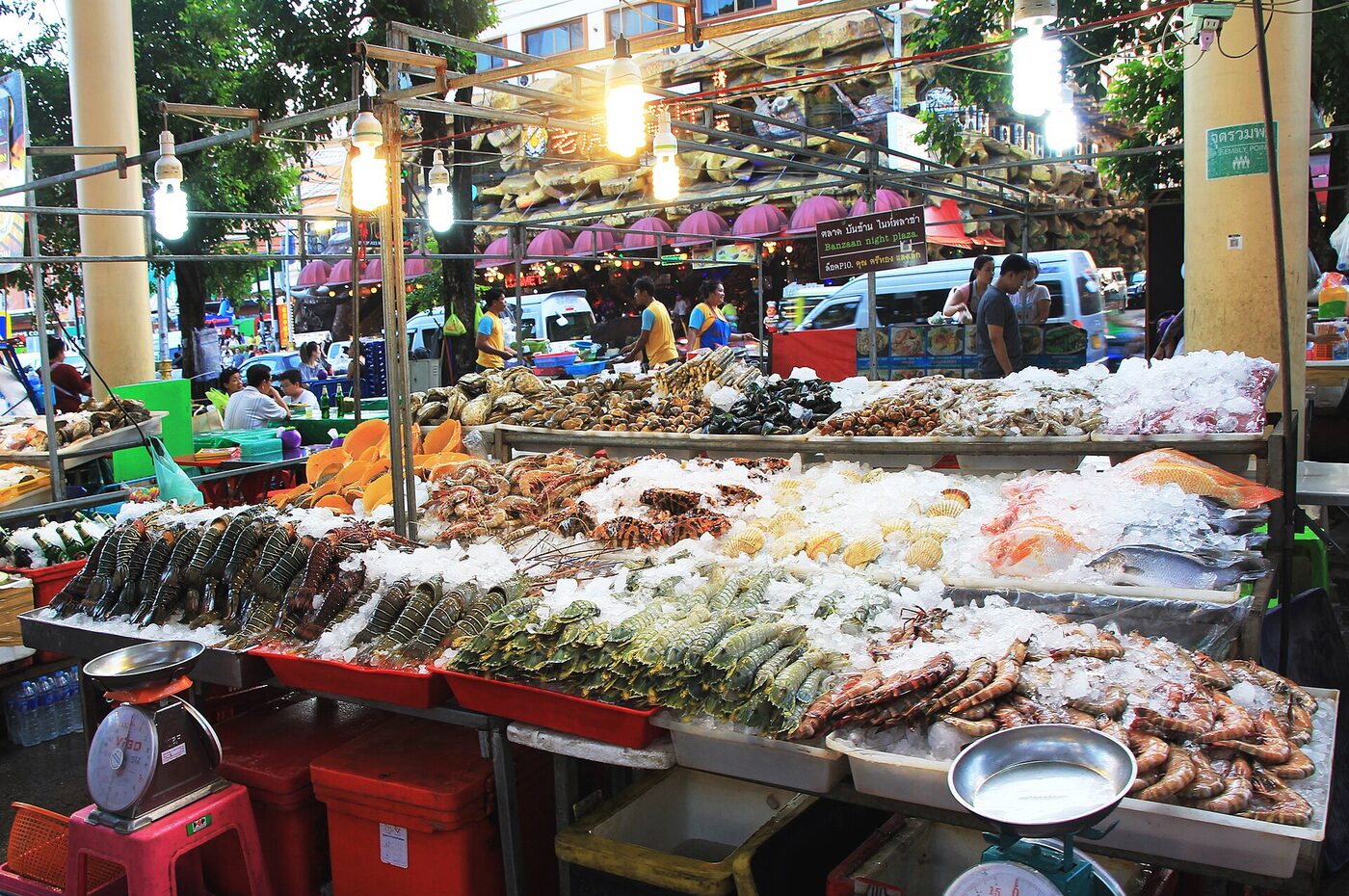
Six words that unlock any Thai seafood counter
Start with the category words. Everything on that ice is one of these six plus a describing word, which is why they repay the effort more than any individual fish name. Learn each one with its tone: Thai pronunciation does real work here, because ปลา (bplaa, fish) and ป่า (bpàa, forest) differ only in the tone and one small mark.
- ปลา (bplaa) — fish. Mid tone, no tone mark, three letters: a perfect first word.
- กุ้ง (gûng) — prawn or shrimp. Thai does not separate the two.
- ปู (bpuu) — crab.
- หอย (hǒi) — anything in a shell: clams, cockles, mussels, oysters.
- ปลาหมึก (bplaa mùek) — squid, literally “ink fish”. หมึก on its own means ink.
- ทะเล (thá-lee) — sea. Add it to อาหาร (aa-hǎan, food) and you have seafood.
Learn Thai vocabulary for the fish you will see on the ice
Thai names fish head-first: ปลา comes first and the distinguishing word follows, exactly the way dish names work. That single rule turns a long list into a short one, and it is why a beginner Thai lesson on seafood is really about the second half of each word — the fastest way to learn Thai vocabulary here is to collect describing words, not species.
- ปลาทู (bplaa thuu) — short mackerel, the everyday fish of Thailand, sold already steamed.
- ปลาเก๋า (bplaa gǎo) — grouper. On price tags it is usually shortened to just เก๋า.
- ปลากะพง (bplaa gà-phong) — sea bass or barramundi; ปลากะพงแดง is the red snapper version.
- ปลานิล (bplaa nin) — tilapia, the farmed freshwater staple, named by King Bhumibol after the fish was introduced in the 1960s.
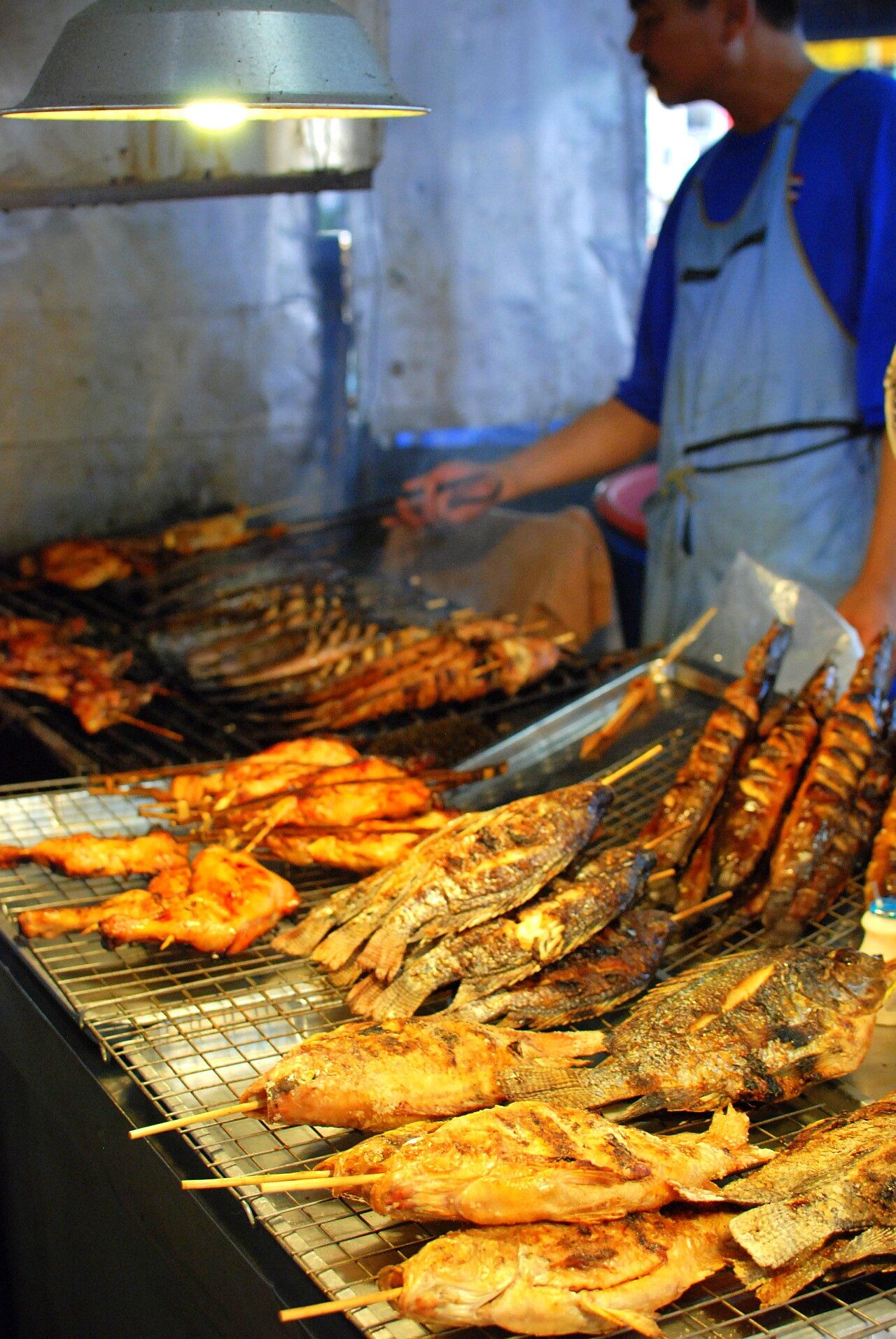
- ปลาดุก (bplaa dùk) — catfish, the whiskered one grilled whole at roadside stalls.
- ปลาแดง (bplaa daeng) — literally “red fish”: market shorthand for the red snapper family.
- ปลาสด (bplaa sòt) — fresh fish. สด (sòt) is the word you want on the sign.
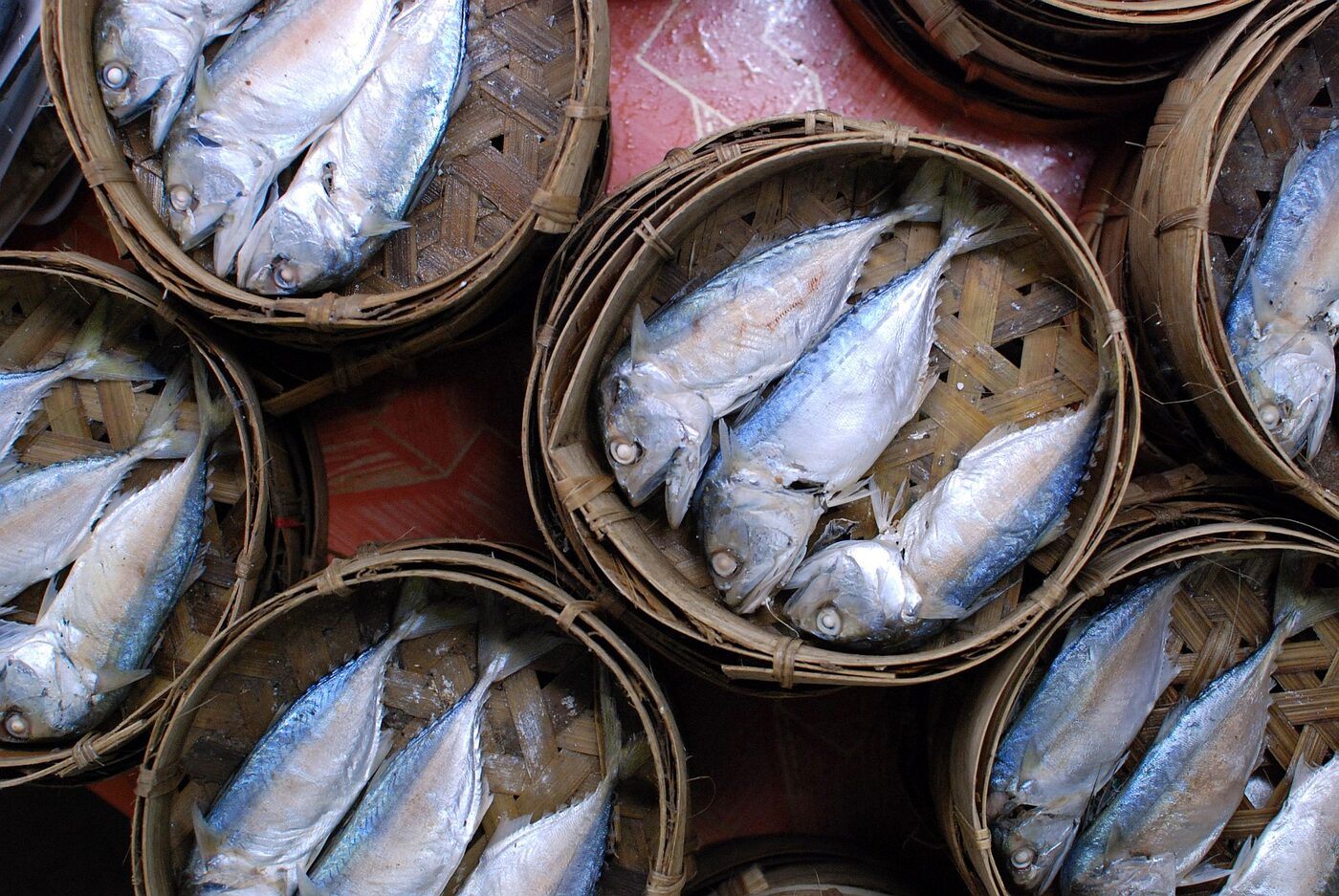
Read Thai script on a fish-stall price tag
Price tags are the friendliest place in Thailand to practise reading and to learn Thai vocabulary at the same time, because they are short, repetitive and written by hand — which is exactly the skill the printed charts do not give you. The numbers are almost always Arabic numerals, so the only unknown is a word or two of Thai letters.
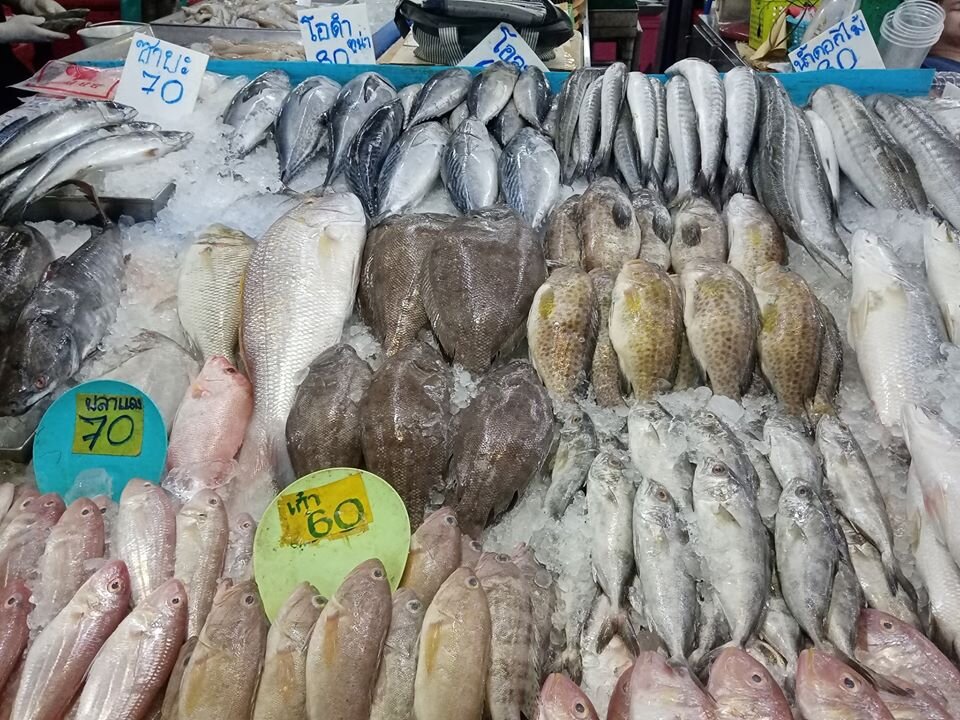
- กิโล (gì-loh) — kilo. Spoken, Thai often clips it to just โล (loh).
- ขีด (khìt) — 100 grams. สองขีด is 200g, and it is how ordinary shopping is done.
- ตัว (dtua) — the classifier for an animal; “60/ตัว” means 60 baht each, not per kilo.
- บาท (bàat) — baht. Worth knowing by sight even though tags usually leave it out.
If the handwriting defeats you, that is normal and fixable: Thai letters are drawn from their little head-loop outward, and once you know where the loop belongs, a scrawled เก๋า stops being a squiggle. Work through the free Thai alphabet chart for all 44 Thai consonants and vowels, and use the Thai numbers guide when a tag is written in Thai numerals instead.
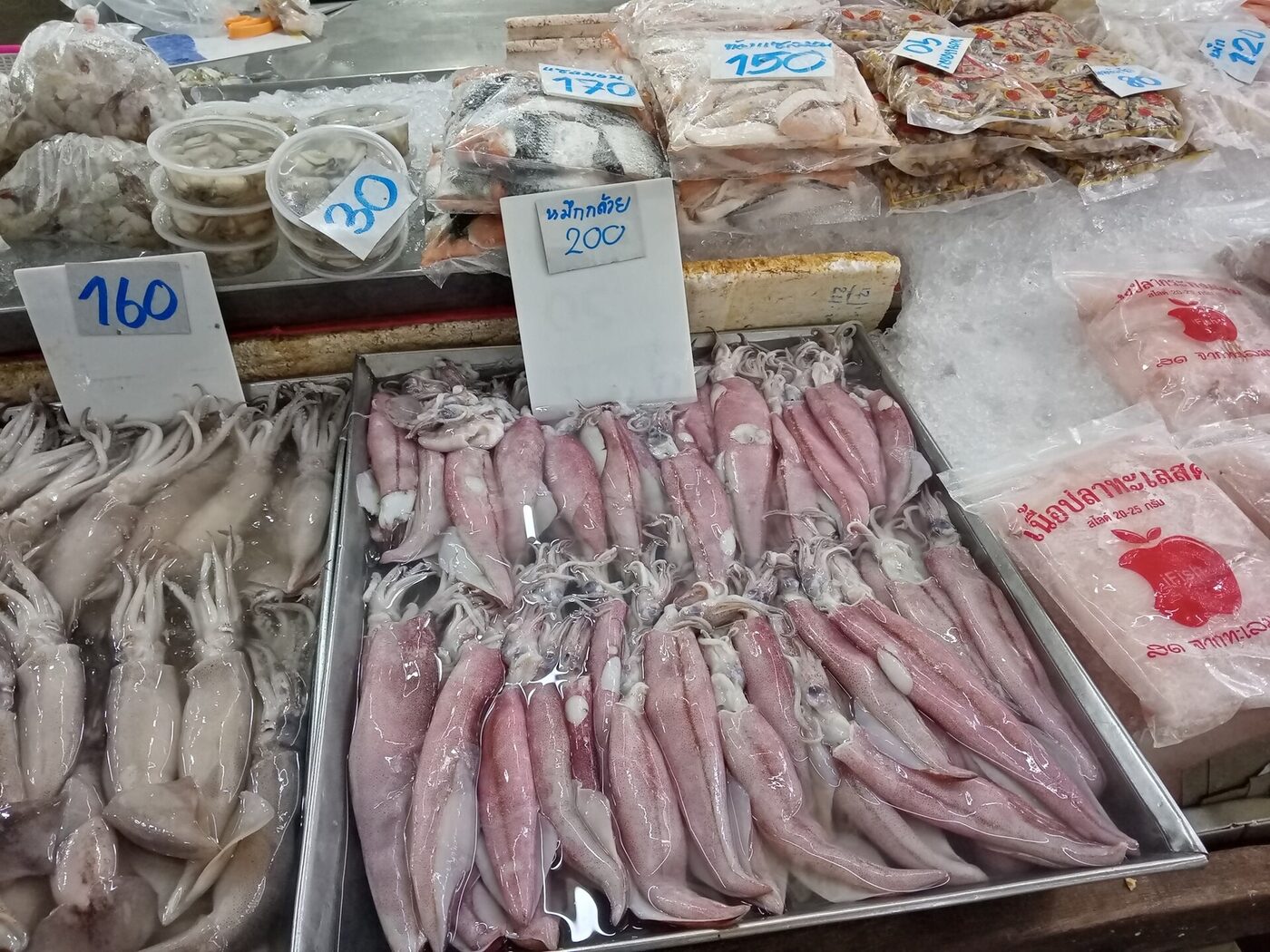
กุ้ง, ปู and หอย: the shellfish half of the stall
The same head-first logic runs through the shellfish, and several of these names are small jokes once you unpack them — which is exactly why they stick, and why they are easy words to learn Thai vocabulary lists always leave out. These are the ones worth knowing before you point at anything.
- กุ้งขาว (gûng khǎao) — white shrimp, the default in a stir-fry.
- กุ้งแม่น้ำ (gûng mâe náam) — giant river prawn, literally “mother-of-water prawn”, the big blue-clawed one.
- ปูม้า (bpuu máa) — blue swimmer crab, literally “horse crab”.
- ปูทะเล (bpuu thá-lee) — mud crab, the heavy one sold tied with string.
- หอยแครง (hǒi khraeng) — blood cockle, blanched and eaten with chilli sauce.
- หอยแมลงภู่ (hǒi má-laeng phûu) — green mussel, literally “carpenter-bee shellfish”.
- หอยนางรม (hǒi naang rom) — oyster.
How do you want it cooked? The verbs on every seafood menu
Thai dish names are usually just ingredient plus cooking verb, so these six verbs convert your new nouns into whole menu items. This is where the effort to learn Thai vocabulary starts paying rent, and where Thailand expat language stops being a phrasebook and starts being reading.
- เผา (phǎo) — roasted over coals in its own shell or skin: กุ้งเผา, ปลาเผา.
- ย่าง (yâang) — grilled over a grate, usually marinated.
- ทอด (thâwt) — deep-fried; หอยทอด is the crisp mussel pancake.
- นึ่ง (nûeng) — steamed; ปลานึ่งมะนาว is steamed fish with lime and garlic.
- ผัด (phàt) — stir-fried; ปูผัดผงกะหรี่ is crab in curry powder.
- ต้ม (dôm) — boiled, as in ต้มยำกุ้ง, the soup you already know by name.
Speak Thai at the seafood counter: seven sentences
A market is a forgiving place to speak Thai out loud, because the vendor already knows roughly what you want. Finish every sentence with ครับ (khráp, male speaker) or ค่ะ (khâ, female speaker) — that one syllable buys more goodwill than perfect tones, and leaving it off sounds abrupt to anyone older than you.
- อันนี้ปลาอะไรครับ/คะ (an níí bplaa à-rai khráp/khá) — “what fish is this?”
- สดไหมครับ/คะ (sòt mǎi khráp/khá) — “is it fresh?”
- กิโลละเท่าไรครับ/คะ (gì-loh lá thâo rai khráp/khá) — “how much per kilo?”
- เอาสองขีดครับ/ค่ะ (ao sǎwng khìt khráp/khâ) — “two hundred grams, please.”
- ขอตัวนี้ครับ/ค่ะ (khǎw dtua níí khráp/khâ) — “this one, please.” Point as you say it.
- ย่างให้หน่อยได้ไหมครับ/คะ (yâang hâi nòi dâi mǎi khráp/khá) — “could you grill it for me?”
- ผม/ดิฉันแพ้อาหารทะเลครับ/ค่ะ (phǒm/dì-chǎn pháe aa-hǎan thá-lee) — “I am allergic to seafood.” Worth memorising even if you never shop.
A study tip: one tag, one word, every market trip
Here is a drill that costs nothing. Every time you pass a fish stall, photograph exactly one price tag — not the whole stall, one tag — and that evening copy the word out by hand five times, saying it aloud as you write. Handwriting forces you to notice where each loop starts, which is the part of reading that charts alone never teach. One word a week attached to a real object beats fifty on a list you never look at again, and it is how people who genuinely learn Thai vocabulary in Thailand tend to do it. Within a month you will be reading tags from the pavement without stopping.
When you want the letters behind the words, start with the free Thai alphabet chart and then drill recognition with the ThaiLetters flashcard trainer until ป and บ stop looking alike. If markets are your classroom, our guide to Thai fresh-market vocabulary covers the vegetable and fruit side of the same walk. Start with ปลา — three letters, one word, and half the signs in Thailand suddenly make sense.