Learn Thai Vocabulary: Hardware & Repairs in Thailand
Learn Thai vocabulary for hardware shops and repairs in Thailand: shop names, tools, fault words, tradesmen and the exact phrases to get something fixed.
Sooner or later something in your life in Thailand breaks. The shower drips, the fan dies, a plug socket stops working, a motorbike mirror snaps off. At that moment you discover that the holiday Thai you learned — ordering food, asking directions — does nothing for you at all. This guide fixes that gap. Learn Thai vocabulary for the hardware shop and the repair man, and you gain something most long-term foreigners never pick up: the ability to describe a broken thing, name the part, and get it mended without a translation app or a Thai friend standing beside you.
Everything below gives the Thai script, a plain Thai transliteration you can say out loud, and the literal meaning wherever the literal meaning helps you remember it. Nothing here needs grammar you do not have yet.
First, know which shop you need
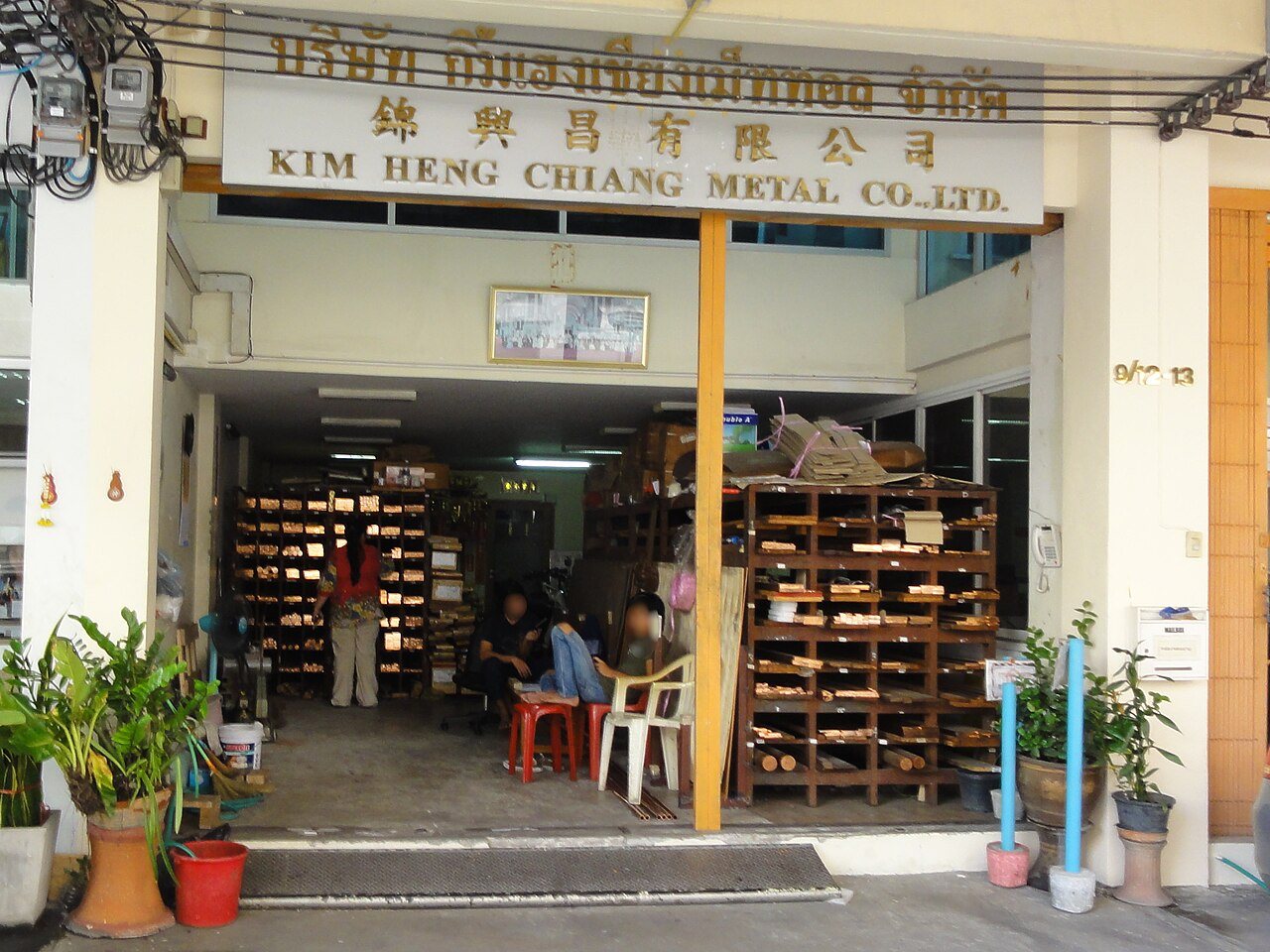
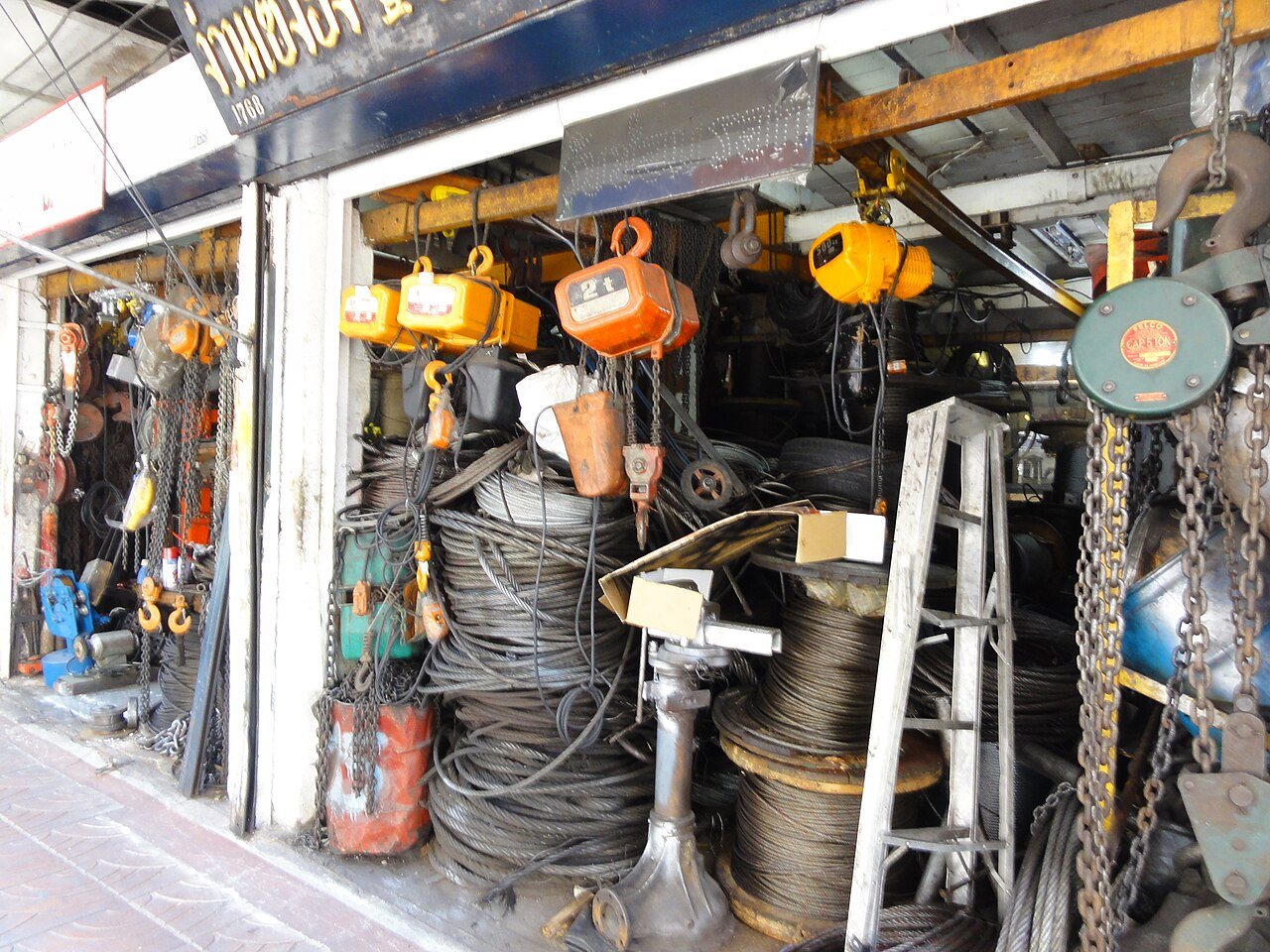
Thai hardware retail is specialised to a degree that surprises newcomers. One shop sells nothing but chain and wire rope; the shop next door sells nothing but pipe. Walking into the wrong one wastes everybody’s afternoon, so start with the shop names:
- ร้านวัสดุก่อสร้าง (ráan wát-sà-dù kòɔ-sâang) — builder’s merchant, literally “shop · materials · construction”. Cement, timber, roofing, sand.
- ร้านเครื่องมือช่าง (ráan khrûəang-məə châang) — tool shop. เครื่องมือ is literally “machine · hand”, the standard word for a tool.
- ร้านไฟฟ้า (ráan fai-fáa) — electrical shop. ไฟฟ้า is “fire · sky”, the Thai word for electricity.
- ร้านสี (ráan sǒɔi) — paint shop. สี means both “colour” and “paint”.
- ร้านเหล็ก (ráan lèk) — metal supplier. เหล็ก is iron or steel.
- ร้านซ่อม (ráan sôɔm) — repair shop, from ซ่อม, “to repair”.
Notice that every one of them begins with ร้าน (ráan), “shop”. This is the single highest-value word on any Thai street, and it is worth a moment of Thai pronunciation work: ร is a low-class consonant, and a low-class consonant carrying ◌้ (mai tho) produces a high tone, not a falling one. Say it bright and up. If that sentence meant nothing to you yet, our Thai alphabet chart lays out the three consonant classes in one screen.
Learn Thai vocabulary for the tools in your hand
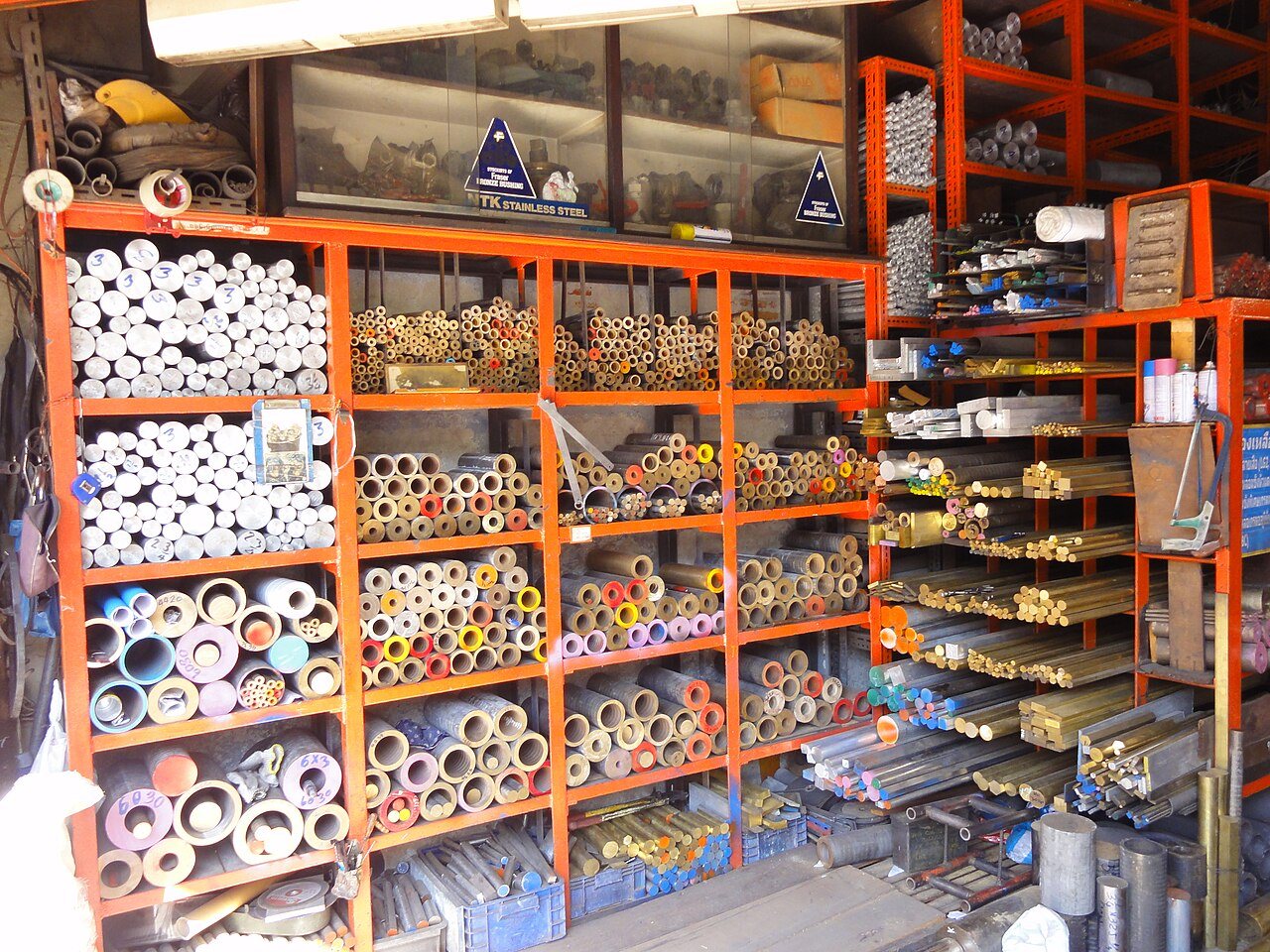
Twelve words cover almost every errand. Say the word, point, and hold up fingers for the quantity:
- ค้อน (khóɔn) — hammer
- ตะปู (tà-puu) — nail
- สกรู (sà-kruu) — screw; น็อต (nót) is a bolt or nut, from English “nut”
- ไขควง (khǎi-khuang) — screwdriver, literally “to turn · a twisting thing”
- คีม (khiim) — pliers
- เลื่อย (lûəay) — saw
- สว่าน (sà-wàan) — drill
- ตลับเมตร (tà-làp mét) — tape measure, literally “a small case · of metres”
- บันได (ban-dai) — ladder, and also the everyday word for stairs
- กาว (kaao) — glue
- หลอดไฟ (lòɔt fai) — light bulb, “tube · of fire”
- สายไฟ (sǒɔai fai) — electrical wire, “cord · of fire”
Two of these are a useful beginner Thai lesson in how Thai builds words. ไฟ (fai) means fire, and it quietly turns up inside anything electrical — the bulb, the wire, the lighter, the traffic light. And น็อต carries the little mark ◌็, called ไม้ไต่คู้ (máai tài khúu), which shortens the vowel underneath it. You will see that mark on imported words constantly once you start looking.
Counting things: one quick grammar point
Thai counts with classifiers, and in a hardware shop you mostly need one: อัน (an), the general classifier for small objects. The pattern is noun – number – classifier, so two screwdrivers is ไขควงสองอัน (khǎi-khuang sǒɔng an), literally “screwdriver · two · item”. Nails and screws are usually sold by weight or by the bag, so ถุง (thǒǒng, bag) does the same job there. Our guide to Thai classifiers covers the rest.
Broken, leaking, blocked: the words that start every repair
You rarely need to name the fault precisely. You need one verb and one gesture. These are the six that do the work:
- เสีย (sǒɔia) — broken, not working. The universal one: แอร์เสีย = “the air-con is broken”.
- พัง (phang) — broken in the physical, fallen-apart sense.
- รั่ว (râua) — leaking. Roofs, taps, tyres.
- ตัน (tan) — blocked, clogged. Drains and sinks.
- แตก (tɜèk) — cracked, shattered.
- หลุด (lùt) — come off, come loose.
Stack any of them in front of ครับ (khráp, said by men) or ค่ะ (khâ, said by women) and you have a complete, polite sentence. Thai does not need “is” here: ก๊อกน้ำรั่วครับ (kóɔk náam râua khráp) is simply “tap · leak · politeness”, and it is perfectly good Thai. Dropping the particle is the fastest way to sound rude by accident, so attach it to everything while you are learning.
Speak Thai to the ช่าง
The word for any skilled tradesman is ช่าง (châang), and Thai simply bolts the trade on the end. Learn the prefix and you get the whole profession list for free:
- ช่างไฟ (châang fai) — electrician
- ช่างประปา (châang prà-paa) — plumber; ประปา is the mains water supply
- ช่างแอร์ (châang ɜɜ) — air-conditioning technician
- ช่างกุญแจ (châang kun-jɜɜ) — locksmith; กุญแจ is a key or a lock
- ช่างไม้ (châang máai) — carpenter, “craftsman · wood”
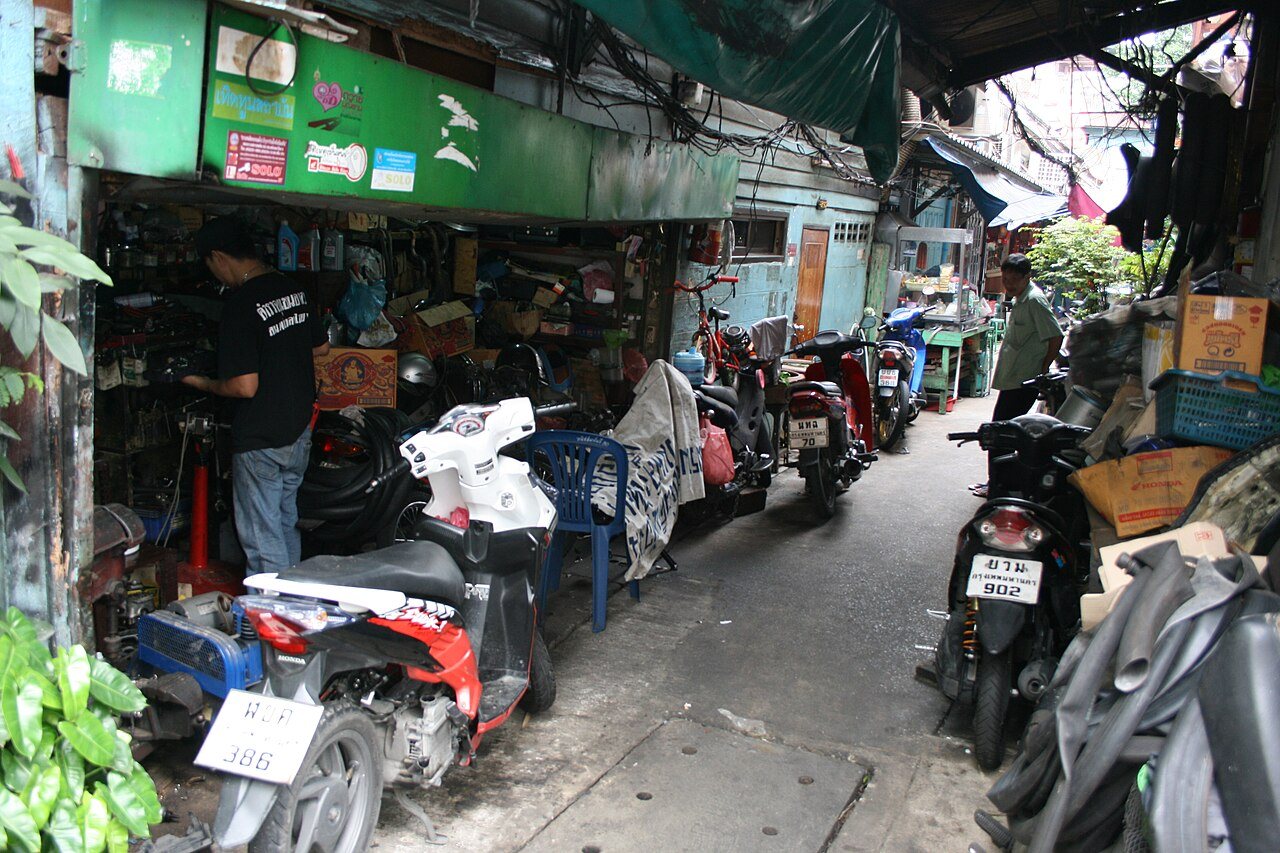
- ช่างซ่อมมอเตอร์ไซค์ (châang sôɔm mɔɔ-təə-sai) — motorbike mechanic
Four phrases carry almost every transaction. Add ครับ or ค่ะ to each:
- ซ่อมได้ไหม (sôɔm dâai mǎi) — “can you fix it?”
- มีไหม (mii mǎi) — “do you have one?” Hold up the broken part as you say it.
- ราคาเท่าไหร่ (raa-khaa thâo-rài) — “how much?” Ask before the work starts, not after.
- เสร็จเมื่อไหร่ (sèt mûəa-rài) — “when will it be done?”
One piece of Thailand expat language etiquette that no phrasebook prints: haggling belongs in tourist markets, not here. Hardware and repair prices are close to fixed and the margins are thin. Asking ลดได้ไหม (lót dâai mǎi, “can you reduce it?”) once is normal; pushing twice is not. If you are furnishing a new place, the vocabulary in our guide to renting a room or apartment in Thailand pairs directly with this list.
Read Thai script on the shop sign
Hardware signs are some of the easiest real-world reading in the country, because they reuse the same six or seven words. Once you can read Thai script at this level you can identify a shop from a moving taxi:
- ขาย (khǎai) — sell
- รับซ่อม (ráp sôɔm) — “repairs accepted here”
- บริการ (bɔɔ-rí-kaan) — service
- ทุกชนิด (thúk chá-nít) — “every kind”
- ปลีก-ส่ง (plìik-sòng) — retail and wholesale
- โทร. (thoo) — “tel.”, an abbreviation of โทรศัพท์
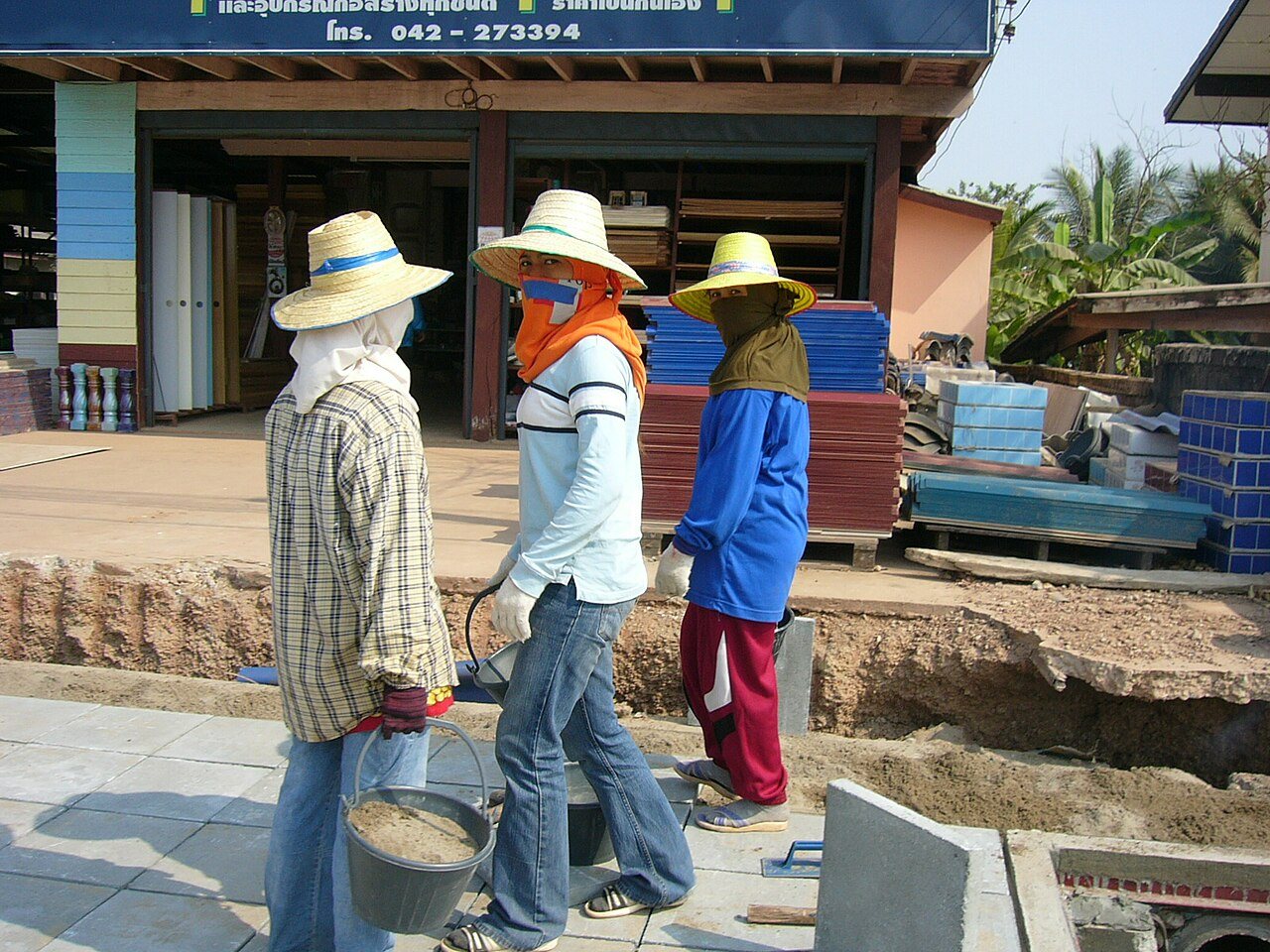
Try taking ขาย apart as Thai consonants and vowels practice, because it is a textbook case. It is ข (khǒɔ khài, the egg letter, high class) plus the long vowel ◌า plus ย: kh-aa-i. No tone mark is written anywhere, yet the word is pronounced with a rising tone, because a high-class consonant in a live syllable with no tone mark always rises. That one rule decodes a startling number of signs. Drill the individual letters with the free ThaiLetters flashcard trainer and the rest follows.
A study tip: the broken-thing notebook
Here is the method that makes this stick, and it costs nothing. Every time something in your home or on your bike breaks, write three lines in a notebook before you go out: the object in Thai, the fault word, and the question you will ask. Three lines, maybe two minutes. Then go and use them on a real person.
This works where flashcards alone fail because the vocabulary arrives attached to a problem you actually have, which is the strongest memory hook there is — nobody forgets the word รั่ว after a week of standing in a wet bathroom. Over a year in Thailand that notebook quietly becomes fifty or sixty words deep, and every one of them was earned in conversation rather than memorised from a list.
That is the right way to learn Thai vocabulary as an adult: take one narrow slice of life, learn the twenty words that run it, and use them the same week. You now have the shop names, the tools, the fault words, the trades and the sign words for the whole repair world. Next time the fan stops turning, you will not be looking for someone to translate — you will be walking to the ร้านไฟฟ้า yourself, and that is the moment the language stops being homework.