Learn Thai Vocabulary: Elephants and Mahouts in Thailand
Learn Thai vocabulary for elephants in Thailand: ช้าง chang, mahout and camp words, road signs, classifiers and idioms, with Thai script and real photos.
Almost everyone who sets out to learn Thai vocabulary meets the elephant on the first page, long before they can order lunch. The tenth consonant of the alphabet is ช, and every Thai child learns it as ช ช้าง — chɔɔ cháang, “ch for elephant.” The animal is stitched into the writing system, the road signs, the beer labels and the everyday idioms of Thailand, which makes ช้าง one of the highest-value words a beginner can own.
This Thai language guide collects the elephant words that actually earn their keep: the parts of the animal, the people who work with them, the words painted on the gate of a camp, the questions worth asking before you book one, and the handful of idioms Thai speakers use every week without thinking about elephants at all. Every entry comes with Thai script, a Thai transliteration you can say out loud, and a literal translation wherever the literal meaning is the interesting part. All four photographs are real, and three of them were taken at working elephant centres in Thailand.
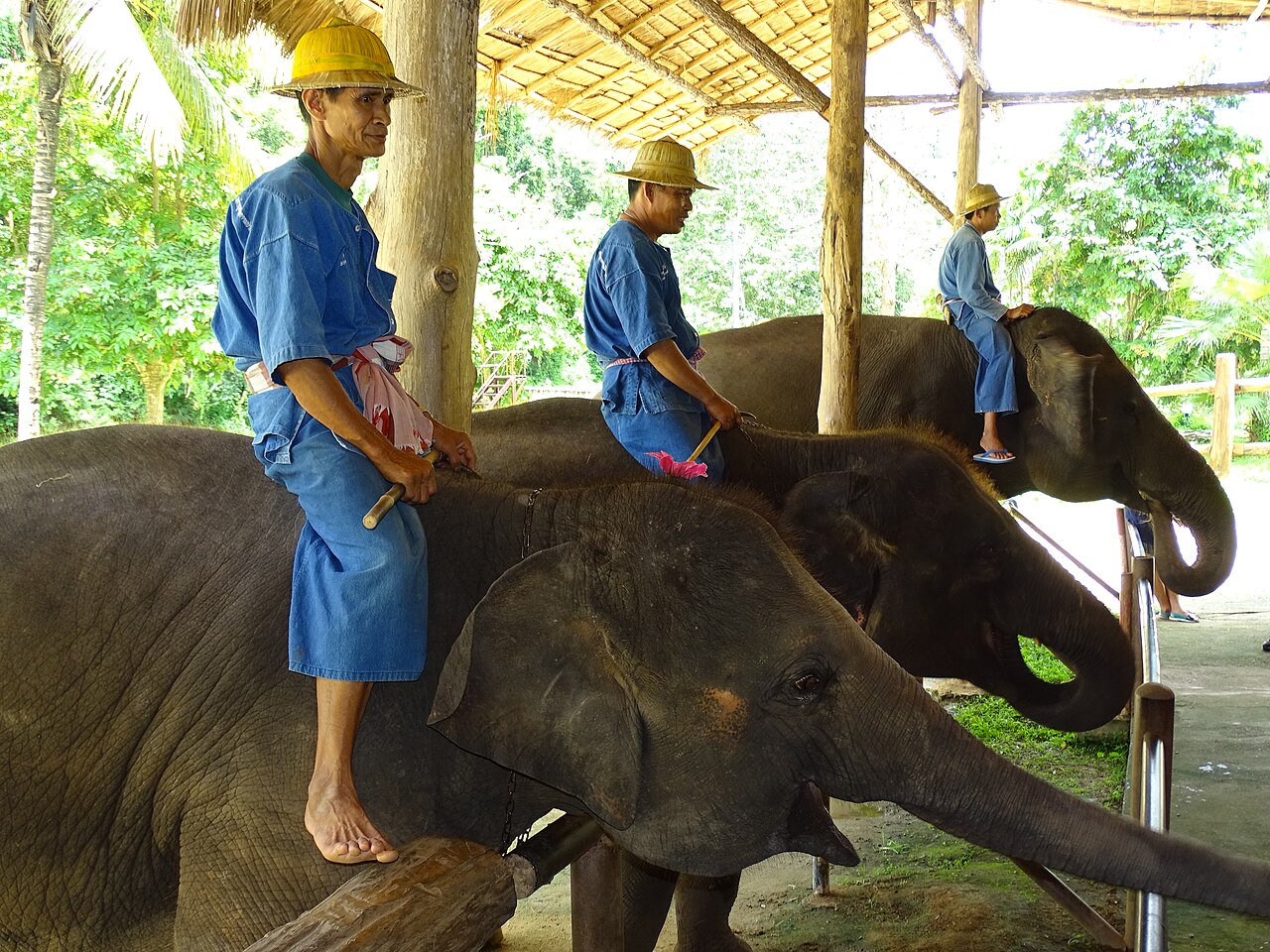
Learn Thai alphabet basics: ช ช้าง and the tone that trips people up
Thai does not teach its forty-four consonants as bare letters. Each one comes with an anchor word, the way English teaches “A is for apple,” and ช's anchor is the elephant. So the word is doing double duty from your first week: it is both a piece of vocabulary and the name of a letter. If someone spells a word aloud for you and says chɔɔ cháang, they mean the letter ช.
- ช้าง — cháang — elephant. Four pieces: ช + า + the tone mark ้ + ง.
- The tone is the part foreigners get wrong. ช is a low-class consonant, and a low-class consonant carrying ้ (mái thoo) produces a high tone — not the falling tone the mark's name suggests. Say it up and bright: cháang.
- Drop the final ง and you get ช้า (cháa), “slow.” One letter apart, and both are painted on signs along the same road.
If the class system behind that tone is still fuzzy, our tone marks explainer works through which mark gives which tone on which class of consonant, and the full Thai alphabet chart lists all forty-four anchor words in order.
Learn Thai vocabulary for the elephant, part by part
These are the words a mahout will use while standing next to you, and the ones that turn up on information boards at every camp:
- งวง — nguang — trunk. The same word is used for an airport jet bridge, which is งวงช้าง, “elephant trunk.”
- งา — ngaa — tusk, and also ivory.
- หู — hǔu — ear · หาง — hǎang — tail · เท้า — tháo — foot.
- พลาย — phlaai — a male elephant with tusks · พัง — phang — a female · สีดอ — sǐi-dɔɔ — a tuskless male.
- ลูกช้าง — lûuk cháang — a calf. ลูก is “child of,” and it builds dozens of other words the same way.
- ช้างป่า — cháang pàa — wild elephant (literally “forest elephant”) · ช้างบ้าน — cháang bâan — a domesticated one (“house elephant”).
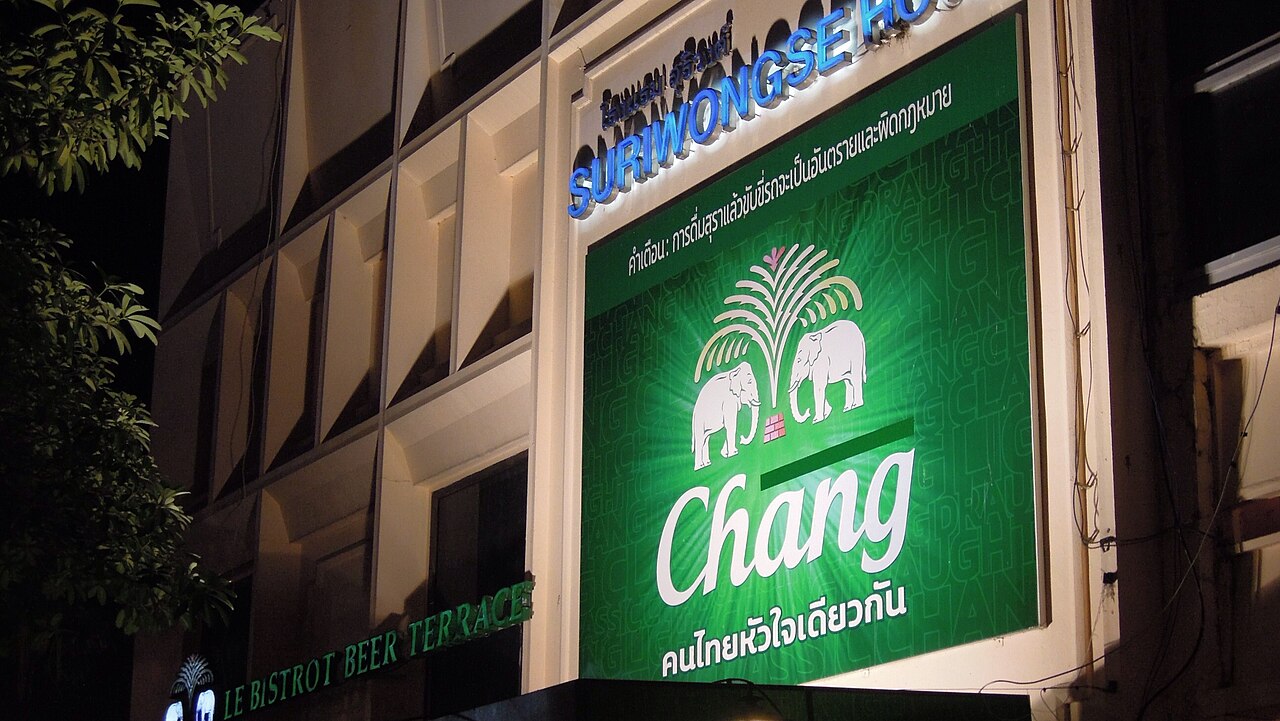
The people and the places: ควาญช้าง and ปางช้าง
Beyond the animal itself, the words that matter are the ones on the gate and the booking page. These five are the backbone of any visit, and the fastest way to learn Thai vocabulary that is specific to Thailand rather than translated out of an English phrasebook:
- ควาญช้าง — khwaan cháang — mahout, the person who works with and cares for a particular elephant. Often shortened to ควาญ.
- ปางช้าง — paang cháang — elephant camp. ปาง on its own is an old word for a temporary forest camp, which is why it turns up on brown tourist signs all over the north.
- ศูนย์อนุรักษ์ช้างไทย — sǔun à-nú-rák cháang thai — the Thai Elephant Conservation Centre, the state-run centre in Lampang where two of these photos were taken. อนุรักษ์, “conserve,” is worth learning on its own; it appears on every national park sign in the country.
- อาบน้ำช้าง — àap náam cháang — “bathe the elephant,” the phrase on roughly half the tour boards in Chiang Mai.
- ให้อาหารช้าง — hâi aa-hǎan cháang — feed the elephants.
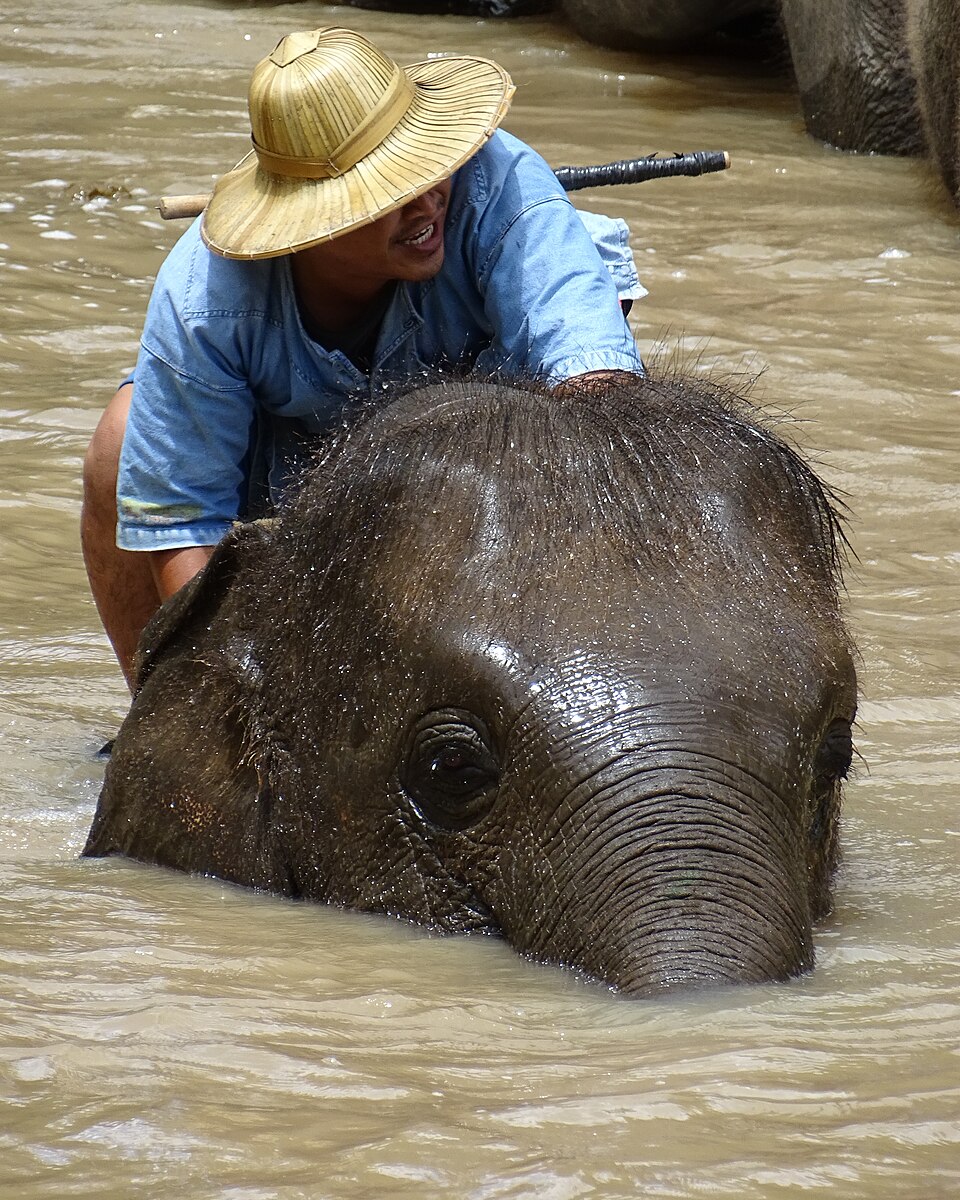
Read Thai script in the wild: elephant words on signs
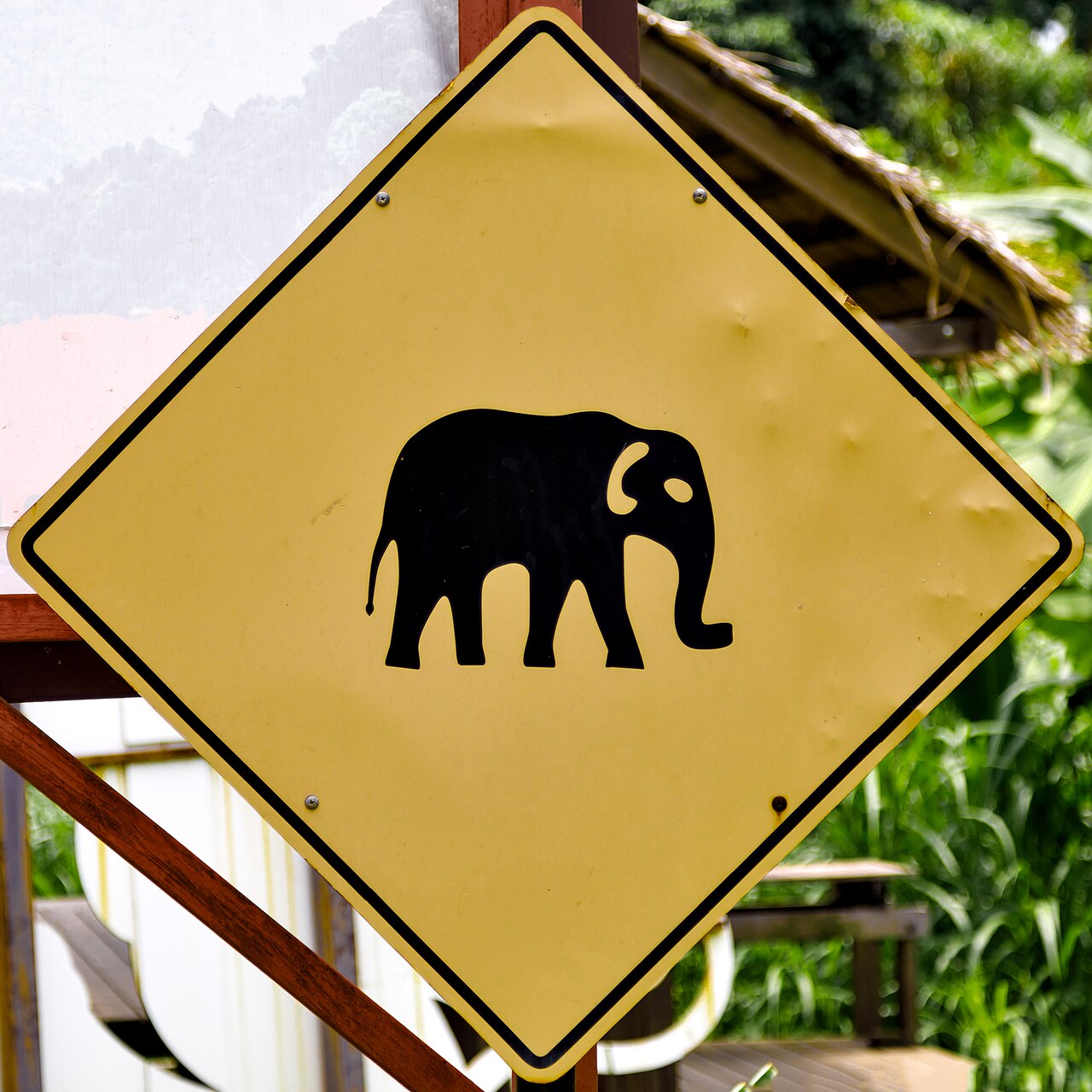
Up-country roads in Kanchanaburi, Chanthaburi and the northeast run through genuine elephant country, and the signs there are not decoration. These four are worth being able to read Thai script for at speed:
- ระวังช้าง — rá-wang cháang — “beware of elephants.” ระวัง is the standard Thai warning word; you will also meet it before รถ (cars) and สุนัข (dogs).
- เขตช้างป่า — khèet cháang pàa — wild elephant zone.
- ห้ามให้อาหารช้าง — hâam hâi aa-hǎan cháang — do not feed the elephants. ห้าม is the prohibition word on every sign in Thailand; learn it once and a hundred signs open up.
- ขับช้าๆ — khàp cháa cháa — drive slowly. That ๆ is the repetition mark, not a letter.
Counting elephants: the classifier nobody expects
Nobody gets far trying to learn Thai vocabulary without meeting classifiers, and the elephant has one of the strangest in the language. A domesticated elephant is counted with เชือก (chʉ̂ak) — which on its own means rope, a leftover from the days when a working elephant came tethered.
- ช้างสองเชือก — cháang sǎawng chʉ̂ak — two (domesticated) elephants. The pattern is noun + number + classifier, in that order.
- A wild elephant takes the ordinary animal classifier ตัว (dtua) instead — so ช้างป่าสามตัว, three wild elephants.
- Useful question at a camp: ที่นี่มีช้างกี่เชือกครับ/คะ — thîi nîi mii cháang kìi chʉ̂ak khráp/khá — “how many elephants do you have here?”
Men end that question with ครับ (khráp), women with คะ (khá), and leaving the particle off entirely makes a perfectly polite question sound blunt. Our guide to Thai classifiers covers the three dozen that handle everything else you will ever need to count.
Four elephant idioms Thai speakers actually use
This is where the payoff sits. Learners who learn Thai vocabulary only as lists of nouns stall at the point where Thai people start speaking in images — and Thai speaks in elephants constantly:
- ขี่ช้างจับตั๊กแตน — khìi cháang jàp dták-ka-tɛɛn — “ride an elephant to catch a grasshopper.” Enormous effort, trivial result. The closest English is using a sledgehammer to crack a nut.
- ช้างตายทั้งตัว เอาใบบัวปิดไม่มิด — cháang taai tháng dtua, ao bai bua bpìt mâi mít — “you cannot cover a whole dead elephant with a lotus leaf.” Said of a scandal too big to hide. You will hear it on the news.
- ช้างเท้าหน้า / ช้างเท้าหลัง — cháang tháo nâa / cháang tháo lǎng — “the elephant's front feet / back feet,” a traditional saying about a husband leading and a wife following. It is still well known, but these days it is quoted about as often to argue against it as for it.
- ช้างเผือก — cháang phʉ̀ak — “white elephant,” and this one is a trap for English speakers. In Thai it is not a useless burden at all: it means something rare and precious. A โครงการช้างเผือก is a scholarship scheme for exceptionally bright students from poor rural schools.
Why the white elephant is on everything
That last word explains a lot of what you will see. White elephants were royal property and a sign of a reign's legitimacy, so the flag of Siam carried a white elephant on a plain red field until 1917, when it was replaced by the five-striped ธงไตรรงค์ (thong dtrai-rong) used today. The country's old order of merit is still the Order of the White Elephant, and เอราวัณ (ee-raa-wan), the three-headed elephant of Hindu-Buddhist myth, gives its name to shrines, hotels and a Bangkok museum you can see from the expressway.
The modern calendar keeps it going: วันช้างไทย (wan cháang thai), National Thai Elephant Day, falls on 13 March every year, and camps mark it with enormous fruit buffets laid out for the animals. If you are in Thailand in March, it is the single best day to hear all of this vocabulary used at once.
A study tip: one word, five contexts
The reason ช้าง is worth this much attention is not the animal — it is that the same four letters reappear as a letter name, a brand, a road sign, a classifier phrase and four idioms. That is how Thai rewards depth over breadth. Take one word a week and chase it through every context you can find rather than collecting fifty words you meet once each; it is a far faster way to learn Thai vocabulary that actually surfaces when you need it.
Then drill the recognition separately, because reading and speaking improve at different speeds. Ten minutes a day on our free flashcard trainer will fix ช and its neighbours in place, and our guide to Thai animal words picks up the dogs, geckos and water buffalo you will meet long before you meet an elephant. Learn the letter, and the elephant comes free.