BTS and MRT in Thai: Station Signs and Ticket Words
Learn Thai vocabulary for the BTS Skytrain and MRT: station signs, ticket machines, direction words and polite phrases with Thai script, transliteration and practical study tips.
If you live in Bangkok or visit regularly, the BTS Skytrain and MRT are daily tools. Learn Thai vocabulary for these systems and you stop relying on English screens or phone maps. This beginner Thai lesson covers the high-frequency words on station signs, ticket machines and platform announcements — Thai script, clear Thai transliteration and the politeness particles that keep every interaction smooth. For Thailand expat language learners, these words repay the effort on the very first ride.
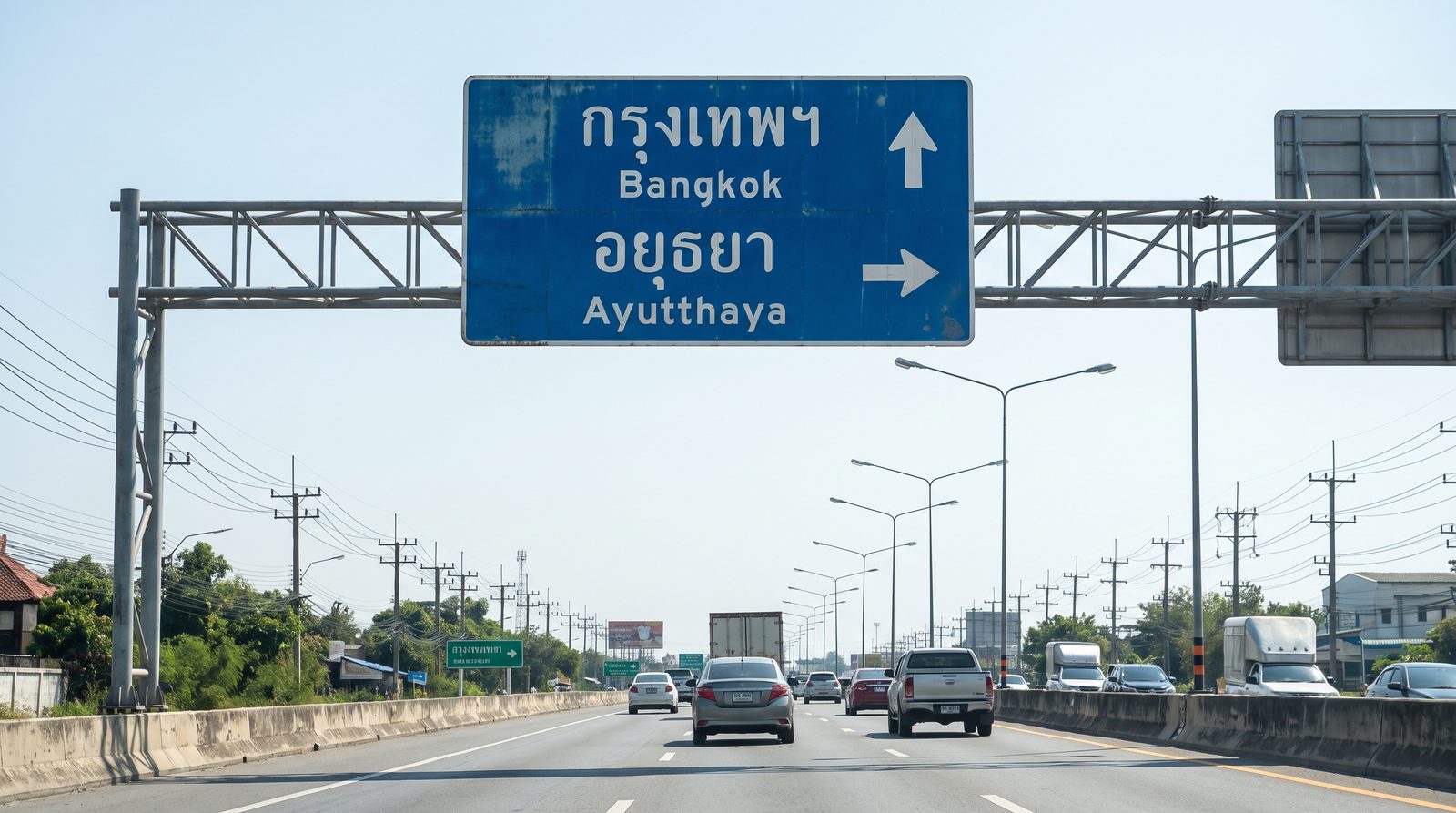
Core station and train words
Start with the nouns that appear on every map and sign. Learning these is a practical way to learn Thai vocabulary that you will see hundreds of times a week.
- รถไฟฟ้า (rot-fai-faa) — electric train / skytrain / subway. Literally “fire-car electricity”.
- สถานี (sa-thaa-nee) — station.
- สถานีรถไฟฟ้า (sa-thaa-nee rot-fai-faa) — skytrain or MRT station.
- ทางเข้า (thaang khao) — entrance.
- ทางออก (thaang ork) — exit.
- บัตร (bat) — card / ticket.
- เติมเงิน (dterm ngern) — top up (money).
These form the backbone of a focused Thai language guide for urban travel. Pair them with the free Thai alphabet chart so the shapes become automatic.
Ticket machines and buying a ride
Most machines have English, but reading the Thai speeds everything up and prepares you for smaller stations.
- ซื้อบัตร (seu bat) — buy a ticket.
- ราคา (raa-khaa) — price.
- ปลายทาง (bplaai thaang) — destination.
- ออกจากสถานี (ork jaak sa-thaa-nee) — exit the station.
A complete polite sentence: ขอซื้อบัตรไปสยามครับ (khor seu bat bpai sa-yaam khrap) — “I would like a ticket to Siam, please.” Male speakers use ครับ; female speakers use ค่ะ.
Direction words on the platform
These appear on overhead signs and help you board the correct train.
- ทิศทาง (thit-thaang) — direction.
- ไป (bpai) — go / to.
- ขาไป (khaa bpai) — outbound.
- ขากลับ (khaa glap) — inbound / return.
- เชื่อมต่อ (cheuam dtor) — transfer / connect.
Reading these in Thai script is a strong secondary practice for Thai consonants and vowels. Once you recognise ทางออก you can find any exit without looking at the English.
Politeness and addressing staff
Station staff and security are usually addressed with kinship terms. พี่ (phee) is the safe default for someone slightly older. Finish every request with the particle. This is core Thailand expat language etiquette and makes the whole interaction warmer.
For a deeper look at the particles themselves, see the particles guide. For the family words used as pronouns, the Thai family words guide explains the system.
Study tip
On your next three rides, give yourself one job only: read every ทางออก and ทางเข้า sign before you look at the English. Then try buying a single-journey ticket using only Thai. Keep the letters sharp with the free flashcard trainer. Fifteen minutes of deliberate practice turns the BTS and MRT into a free daily classroom for anyone who wants to learn Thai vocabulary that actually matters.