Thai Romanisation: Why Signs Spell Words Differently
Phuket, Phetchaburi, Suvarnabhumi — Thailand's romanised signage is famously inconsistent, and even the official system throws away the information you most need. A short guide to reading it anyway.
Spend a week in Thailand and you will see the same place name romanised two or three different ways within a few kilometres. It is not carelessness, exactly. It is what happens when you map a tonal, 44-consonant writing system onto 26 Latin letters and then let several agencies do it independently over a century.
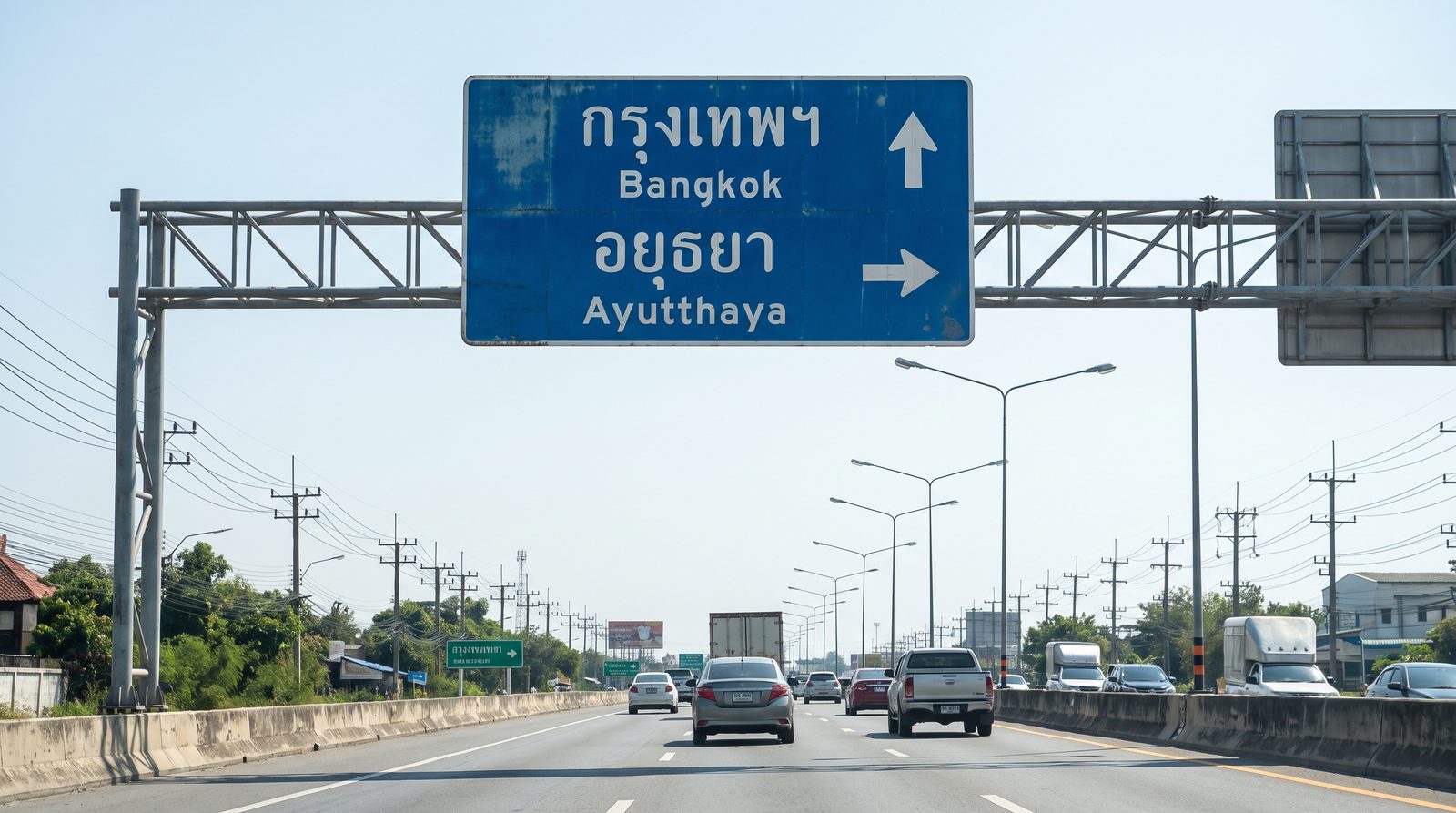
The official system, and what it deliberately leaves out
Thailand does have a standard: the Royal Thai General System of Transcription, or RTGS, maintained by the Royal Society of Thailand. It is what you see on most road signs and government documents.
RTGS is built for legibility, not for accuracy, and it makes two decisions that matter enormously to a learner. It does not mark tone, and it does not mark vowel length. Both are phonemic in Thai — they change which word you have said. Strip them out and the romanisation cannot tell you how to pronounce the word; it can only tell you roughly which letters were there.
It also merges distinctions the script keeps. Thai has both an aspirated kh and an unaspirated k, and RTGS handles that pair well. But it writes several different Thai vowels with the same Latin sequence, so the mapping only runs one way. You can go from Thai to RTGS mechanically. You cannot reliably go back.
Why the same name gets spelled differently
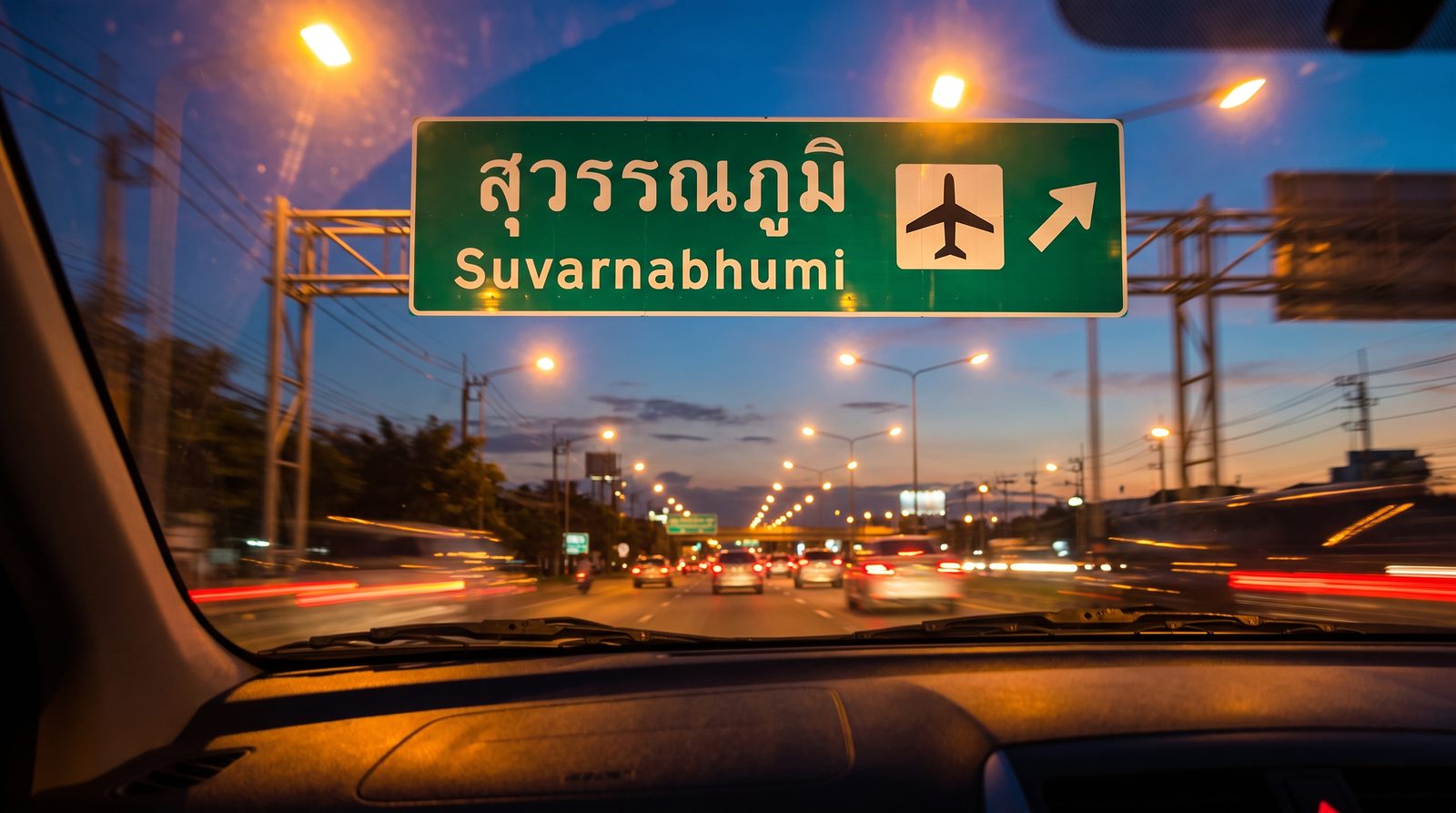
Three things pull signage away from the standard.
- Older transcriptions stuck. Phuket, Bhumibol and Suvarnabhumi reflect Sanskrit-derived spelling conventions rather than modern RTGS output — they preserve the letters of the original loanword rather than the sound of the modern Thai pronunciation. Suvarnabhumi is pronounced closer to su-wan-na-poom.
- Different agencies romanised independently. Highway signs, rail stations, maps and municipal signs were not produced from a single database, and each inherited its own habits.
- Businesses romanise by ear. A shop or hotel spells its own name however it likes, and that spelling then propagates onto maps and delivery apps.
The practical workaround
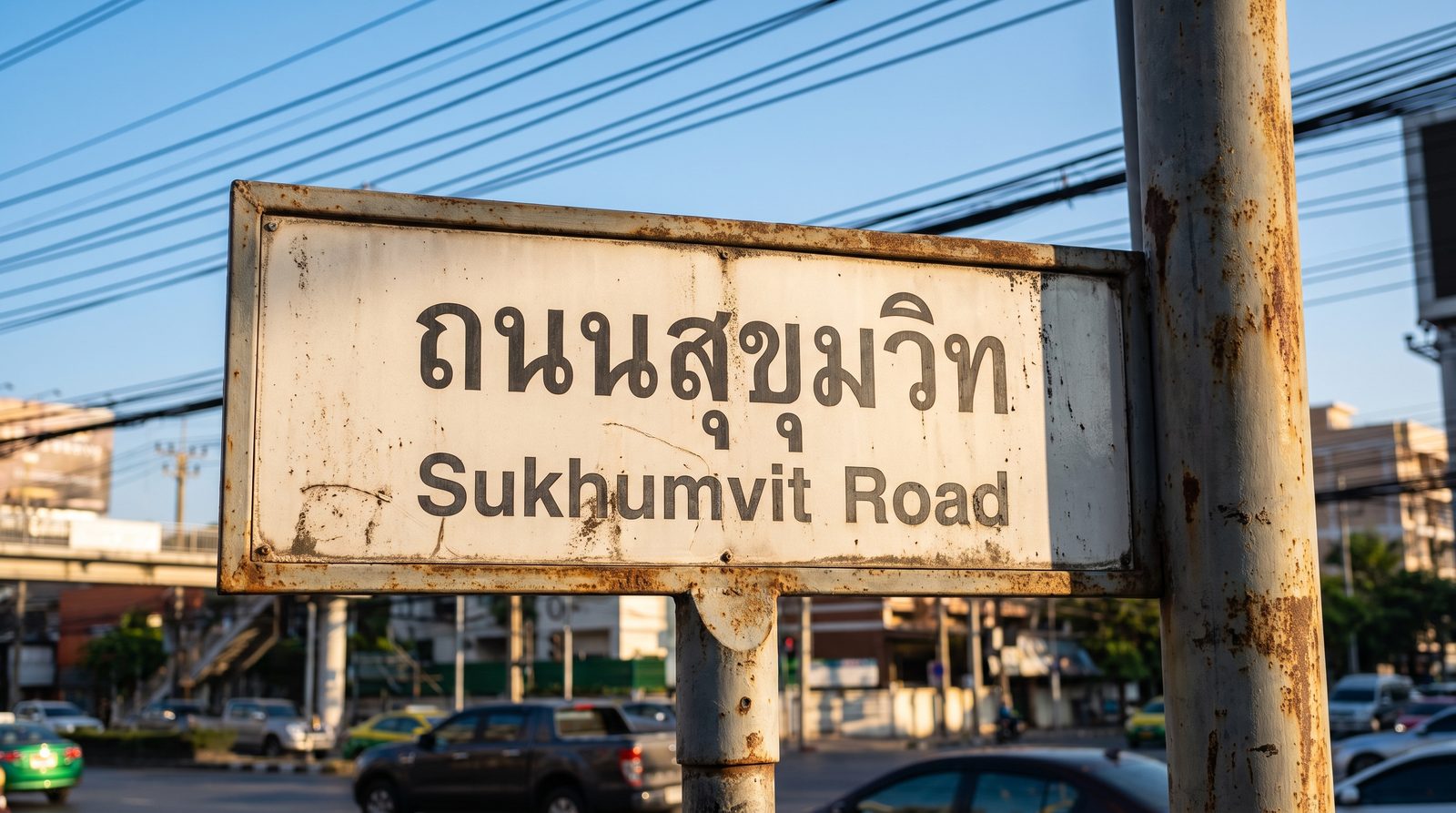
The reliable fix is the one nobody wants to hear on day one: learn to read the Thai. The Thai text on a road sign is unambiguous in a way the romanisation below it can never be, and place names are actually a gentle place to start — they are short, they repeat constantly, and you get instant feedback when the bus goes where you expected.
Until then, three habits help:
- Treat romanised spellings as approximate keys, not pronunciations. If a search fails, try the obvious variants: ph for p, th for t, u for oo, doubled vowels for single.
- Remember that ph is not f. Phuket starts with an aspirated p, as in "pot", not an f. Same for th — it is an aspirated t, never the sound in "the".
- Save the Thai spelling. When you find a place, copy the Thai name into your notes. It will work in every app, on every sign, forever.
A glossary of romanised words you'll meet on every map
A handful of romanised words carry most of the load on Thai signage. Once you recognise them, they behave exactly like "Street" or "Mount" in English place names — labels announcing the type of place, sitting in front of the proper name.
- Thanon (ถนน) — road, street. Precedes the name: Thanon Sukhumvit.
- Soi (ซอย) — a side lane branching off a main road, usually numbered: Soi 11 is a lane off Thanon Sukhumvit.
- Wat (วัด) — Buddhist temple. Precedes the temple's name: Wat Pho, Wat Arun.
- Amphoe (อำเภอ) — district, the administrative unit below a province.
- Tambon (ตำบล) — subdistrict, the unit below an amphoe.
- Muang (เมือง) — town or city; also names the "capital district" of every province, so "Amphoe Muang [Province]" turns up constantly.
- Ban (บ้าน) — village or house; opens the name of thousands of villages.
- Nam (น้ำ) — water; appears in river and waterfall names, e.g. Nam Tok, literally "water falls."
- Talat (ตลาด) — market.
- Sathani (สถานี) — station, as in Sathani Rot Fai, train station.
The substitution patterns worth memorising
Most of RTGS's quirks reduce to a handful of predictable swaps. Knowing them turns an unreadable sign into a guessable one.
- ph is an aspirated p, never f. Phuket (ภูเก็ต), Phetchaburi (เพชรบุรี).
- th is an aspirated t, never the English "th" sound. Thonburi (ธนบุรี); Trang, spelled with an unaspirated "Tr," is the plain version of the same consonant.
- kh is an aspirated k. Khon Kaen (ขอนแก่น); Krabi (กระบี่) keeps the unaspirated "Kr" because the Thai consonant there is unaspirated.
- u often stands for an "oo" sound, not the short "uh" an English speaker expects: Phuket rhymes with "poo-ket," not "puck-et."
- Doubled vowels mark length, so a name spelled with "aa" or "uu" is signalling a long vowel — worth lingering on if you want to be understood.
These five patterns cover a large share of the place names you will meet, from Krabi to Hat Yai (หาดใหญ่).
If you want to start with the shapes that appear most often on signage, the alphabet reference is searchable, and the tone marks guide covers the diacritics that RTGS quietly discards.