Read Thai Script in Thailand: Bangkok Pier & Boat Signs
Read Thai script on Thailand's rivers: decode Bangkok pier signs, express boat flag colours and the Thai words and phrases you need to board with confidence.
If you can read Thai script for exactly one situation in Thailand, make it the river. Bangkok’s Chao Phraya express boats are cheap, fast and gloriously free of traffic — and almost every pier is labelled in Thai first, with the English romanisation squeezed underneath in smaller type or missing altogether. The vocabulary you need is astonishingly small: one word for pier, one for boat, a handful of colours, and the names of the stops. This beginner Thai lesson walks through all of it, in Thai script, transliteration and literal English, so you can stand on a pontoon in Bangkok and know which boat is yours before anyone shouts at you.
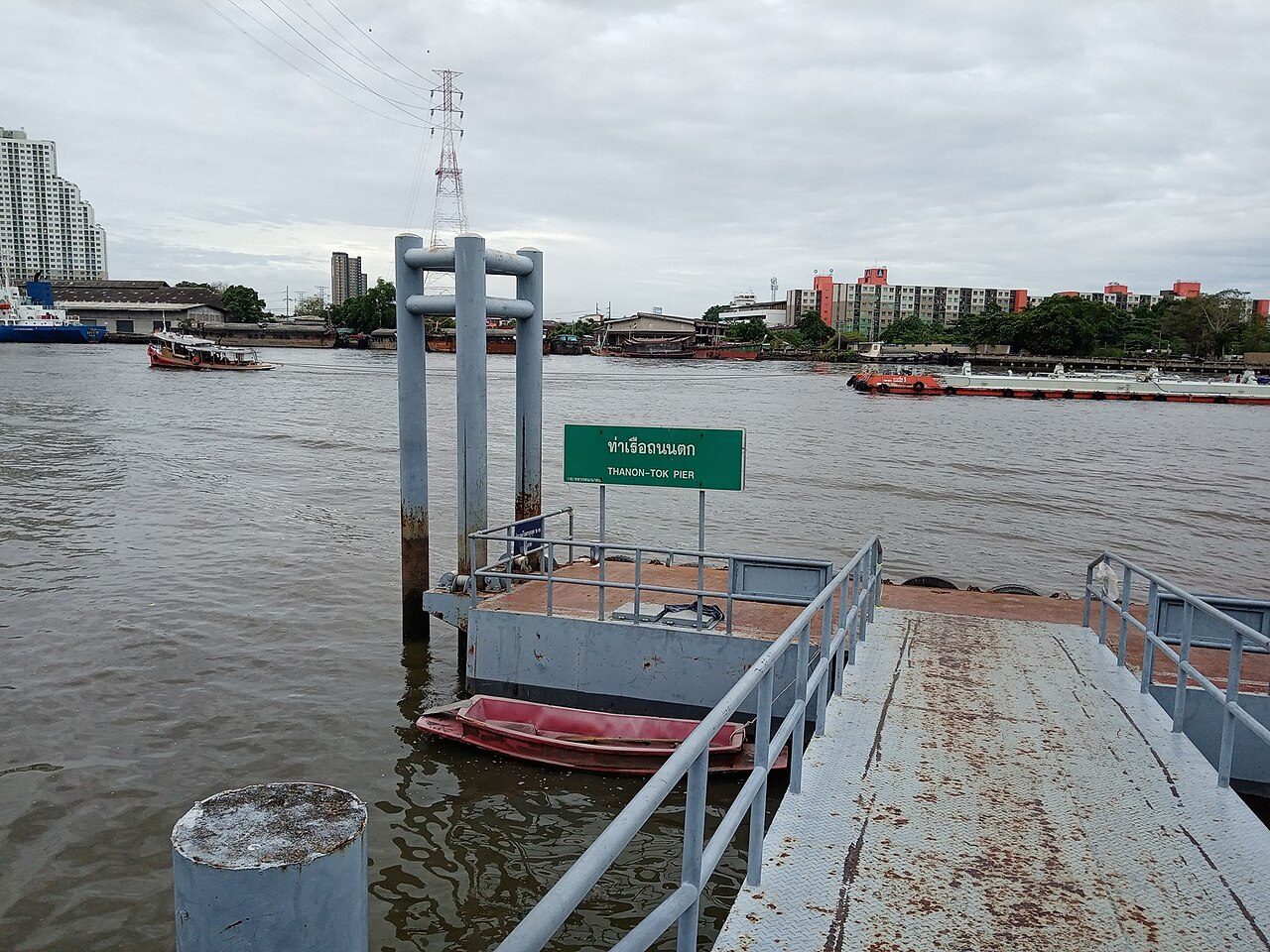
One Thai word does most of the work: ท่า
Thai builds place words out of small pieces, and the piece you want is ท่า (thâa), which means a landing place — the spot where something meets the water. Add the word for boat and you get the sign you will see a hundred times:
- เรือ — ruea — boat
- ท่า — thâa — landing place, quay
- ท่าเรือ — thâa ruea — pier, literally “boat landing”
- ท่าน้ำ — thâa náam — “water landing”, the local steps down to the river
Here is the practical trick. On signage, ท่า is usually glued straight onto the name with no space, because Thai does not put spaces between words. So ท่าช้าง is not two words to a Thai reader, it is one label: thâa cháang, Elephant Pier. Once your eye learns to chop ท่า off the front, the rest of the sign is just a name — and names are the easiest Thai there is, because you only have to recognise them, never conjugate them.
Two shapes are worth memorising before you go. ท is a low-class consonant pronounced like an aspirated th, and -า is the long vowel aa that hangs to the right. Put them together and you have ทา; add the tone mark ่ (mai ek) on top and you have ท่า. If tone marks are still a blur, our free Thai alphabet chart lays out every one of the Thai letters, consonants and vowels, class by class, with Thai pronunciation for each, and the flashcard trainer will drill these four or five characters in an afternoon.
Read Thai script on the boat: flag colours and the hull name
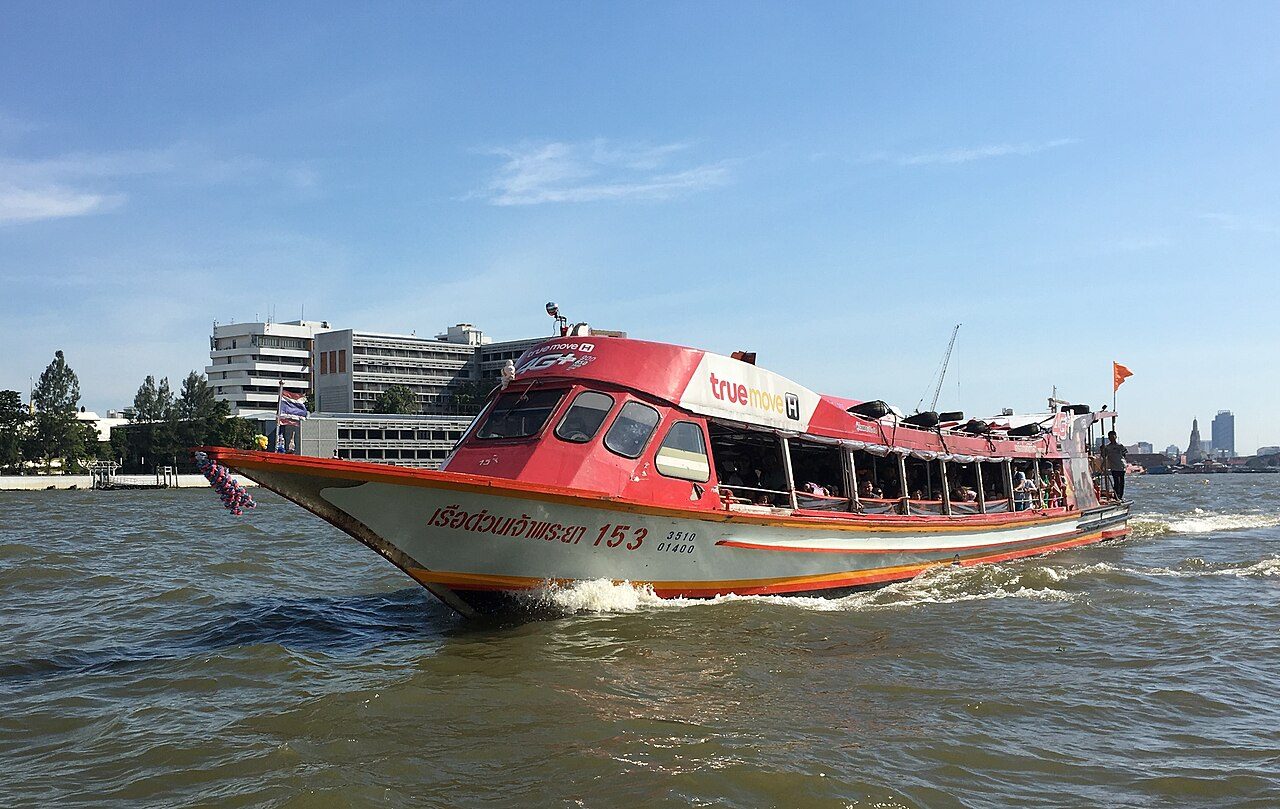
The express boats are run under the name เรือด่วนเจ้าพระยา (ruea dùan jâo phrá-yaa), painted in big letters along the hull. ด่วน (dùan) means express or urgent — the same word you will see on courier envelopes. What actually tells you where a boat goes, though, is the coloured pennant at the stern. The word for flag is ธง (thong), and the colour follows it:
| Thai | Pronunciation | Literal | What it means on the river |
|---|---|---|---|
| ธงส้ม | thong sôm | “flag orange” | The workhorse line, the one most visitors ride |
| ธงเหลือง | thong lʉ̌ang | “flag yellow” | Rush-hour express, skips many stops |
| ธงเขียว | thong khǐao | “flag green” | Long-distance commuter run to the far north |
| ธงแดง | thong daeng | “flag red” | Limited-stop peak service |
| ธงฟ้า | thong fáa | “flag sky” | The blue tourist boat, pricier, hop-on hop-off |
Notice that ส้ม (sôm) also means orange the fruit, and ฟ้า (fáa) also means sky. Thai colour words are borrowed from things, which makes them stick. Timetables and which flags run on a given day do change, so treat the table above as vocabulary rather than as a schedule — check the board at the pier, where the colours are printed in Thai exactly as written here.
Ten Bangkok pier names and what they actually say in Thai
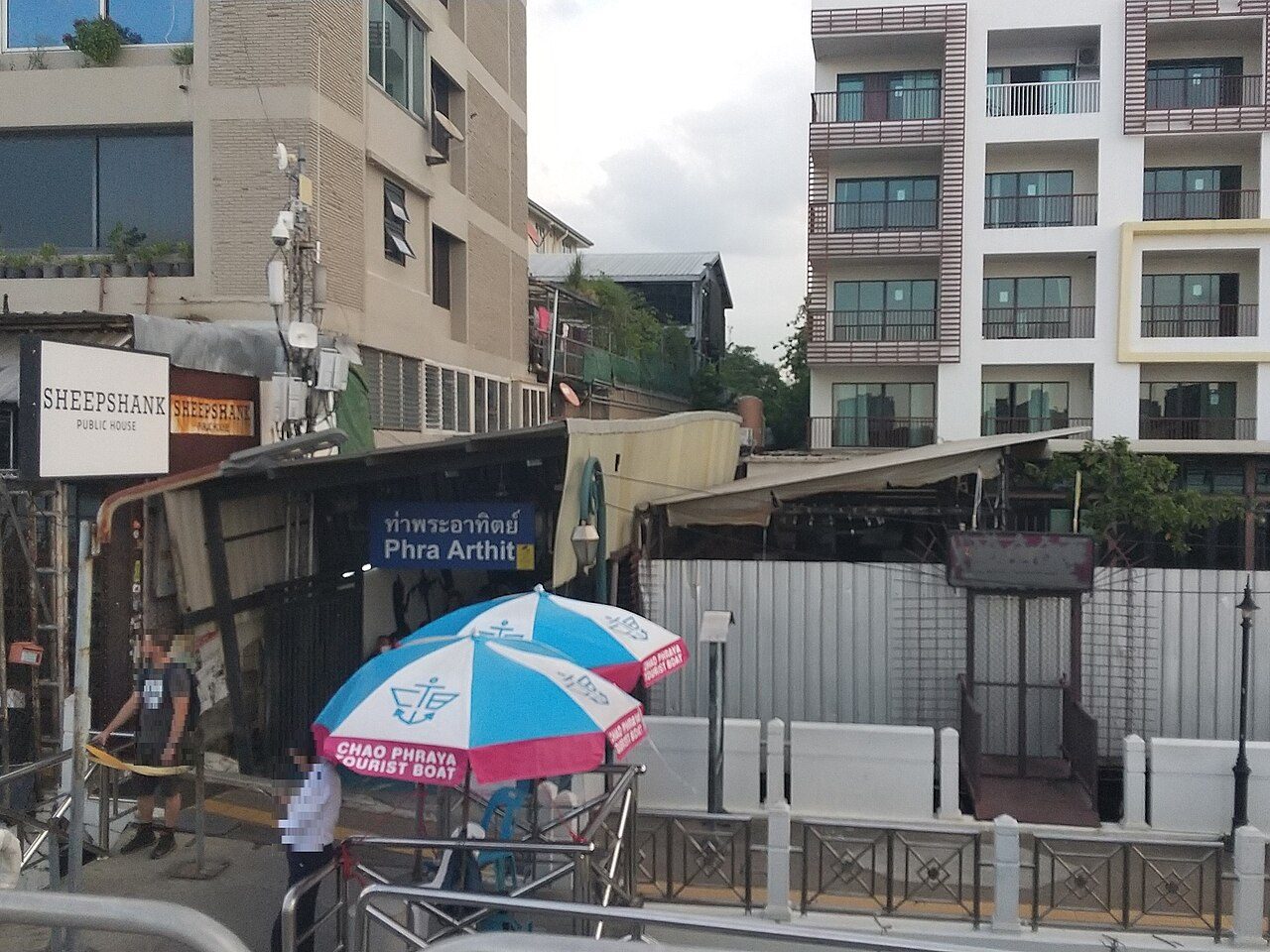
Piers are numbered from the central interchange at Sathorn: N going north, S going south, and CEN for Sathorn itself. The numbers are written in Arabic figures, so you can lean on those while your ability to read Thai script catches up. The names, though, are where the fun is — every one of them means something.
| Thai | Pronunciation | Literal meaning | Why you would get off |
|---|---|---|---|
| ท่าสาทร | thâa sǎa-thɔɔn | Sathorn landing | CEN — the interchange, steps from BTS Saphan Taksin |
| ท่าโอเรียนเต็ล | thâa oh-rian-dten | “Oriental”, spelled out in Thai letters | N1 — the old riverside hotels |
| ท่าสี่พระยา | thâa sìi phrá-yaa | “four Phraya” | N3 — ferry across to Khlong San |
| ท่าราชวงศ์ | thâa râat-chá-wong | “royal lineage” | N5 — Chinatown and Yaowarat |
| ท่าเตียน | thâa dtian | “bare, levelled” | N8 — Wat Pho, and the cross-ferry to Wat Arun |
| ท่าช้าง | thâa cháang | “elephant landing” | N9 — the Grand Palace |
| ท่ามหาราช | thâa má-hǎa-râat | “great king” | N11 — riverside food and the amulet market |
| ท่าพระอาทิตย์ | thâa phrá-aa-thít | “sun landing” | N13 — Khao San Road |
| ท่าเทเวศร์ | thâa thee-wêet | “of the gods” | N15 — the old flower and plant markets |
| ท่าถนนตก | thâa thà-nǒn dtòk | “road falls”, where the road ends | S3 — the quiet southern end of the line |
Two of these are worth a second look. ท่าโอเรียนเต็ล is an English word written in Thai letters, and sounding it out slowly is superb practice at Thai transliteration in the other direction. And ท่าเทเวศร์ ends in ร์ — a consonant wearing the little cancellation mark ์ (gaa-ran), which means “do not pronounce this letter”. Thai inherited a pile of Sanskrit spellings and politely silences the leftovers. If that sort of thing interests you, our guide to reading Thai place names on road signs goes further into it.
Speak Thai at the pier: six phrases and the politeness rule
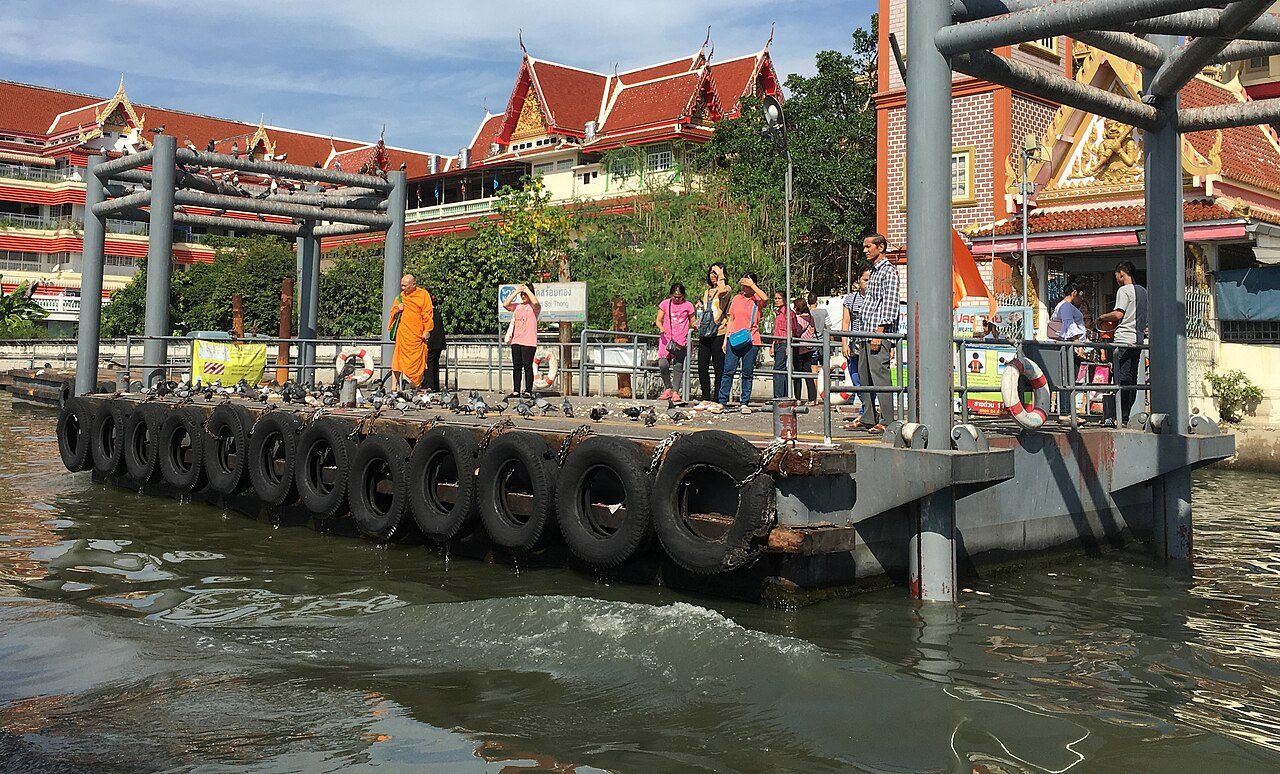
Boats stop for a few seconds, the deckhand whistles, and nobody has time for a full sentence. You will not have time to read Thai script off a sign mid-manoeuvre either, so these short spoken phrases carry the load:
- ไปท่าช้างไหมครับ — bpai thâa cháang mǎi khráp — “go Tha Chang, yes?” Swap in any pier name.
- ลงท่าไหน — long thâa nǎi — “get off which pier?” Useful when you show someone a map.
- ท่าต่อไป — thâa dtɔ̀ɔ bpai — “next pier”. You will hear this called out.
- กี่บาทครับ — gìi bàat khráp — “how many baht?”
- ขึ้น / ลง — khʉ̂n / long — to board and to get off, literally “go up” and “go down”.
- ระวัง — rá-wang — “careful”. On a rocking pontoon you will hear it, and it is worth obeying.
Now the part foreigners skip and Thais notice immediately: the politeness particle on the end. Men say ครับ (khráp), women say ค่ะ (khâ) for statements and คะ (khá) for questions. You attach it to the whole utterance, not to a word, and you use it with strangers, staff and anyone older than you — which on a public boat is everyone. Leaving it off is not rude exactly, but it lands the way a bare “Coffee.” lands at a counter. The ticket collector working her way down a rolling deck with a coin tube in her hand has earned the extra syllable.
One thing not to do: do not hand your fare to the woman with the coin tube while she is still on the gangway, and do not try to pay before the boat has pulled away. She will come to you. The Thai rhythm here is patient, and a foreigner waving money at the wrong moment is the one thing that reliably causes a scene.
Fares, Thai numbers and the ticket words
Fares on the regular flag lines are small — usually a handful of baht, more for the long green-flag run and considerably more for the blue tourist boat. The words that come with paying are short and reusable anywhere in Thailand:
- ตั๋ว — dtǔa — ticket
- ค่าโดยสาร — khâa dooi-sǎan — the fare, literally “cost of being carried”
- บาท — bàat — baht
- เงินทอน — ngern thɔɔn — change (money back)
Prices at the pier window are written in Arabic figures, but Thai numerals still turn up on older signs and on the boats themselves, so anyone learning to read Thai script should know them too; our Thai numbers guide covers ๑ ๒ ๓ and the counting words that go with them.
A study tip for learning to read Thai script
Do not try to memorise all ten pier names. Learn ท่า cold — the shape, the tone mark, the sound — and then let the river teach you the rest. Every sign you pass begins with that syllable, which means every sign gives you a free, correctly-spelled example and an instant check on your own reading. This is the single best reason to learn Thai vocabulary on the water rather than out of an app: the repetition is built into the route.
Pick one trip, ride it end to end, and give yourself one job only — read the Thai line on each pier sign before the boat reaches it, then check yourself against the English underneath. You will get maybe three right on the first run and nine on the second. That gap, crossed in about forty minutes for the price of a coffee, is what learning to read Thai script actually feels like.